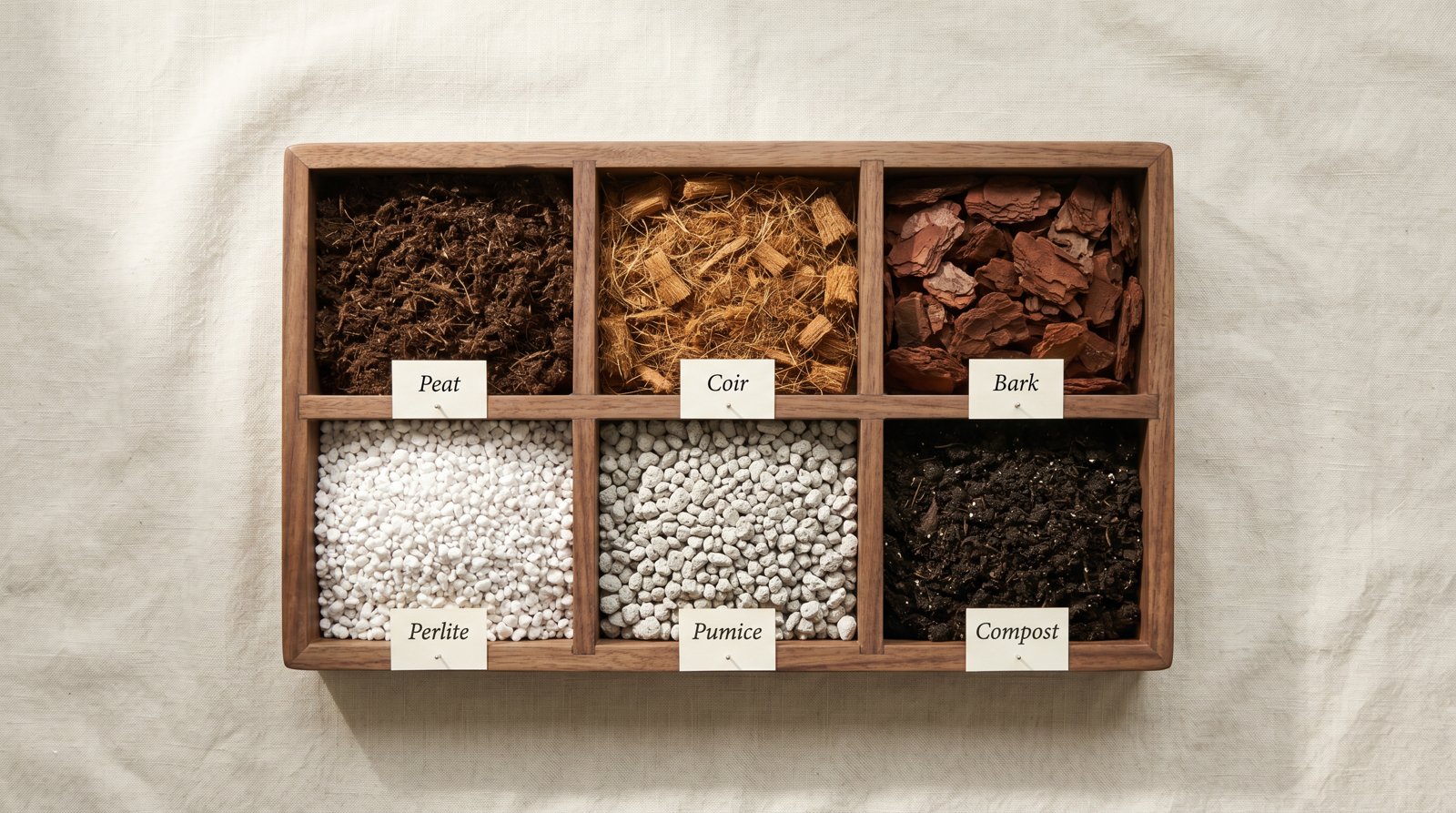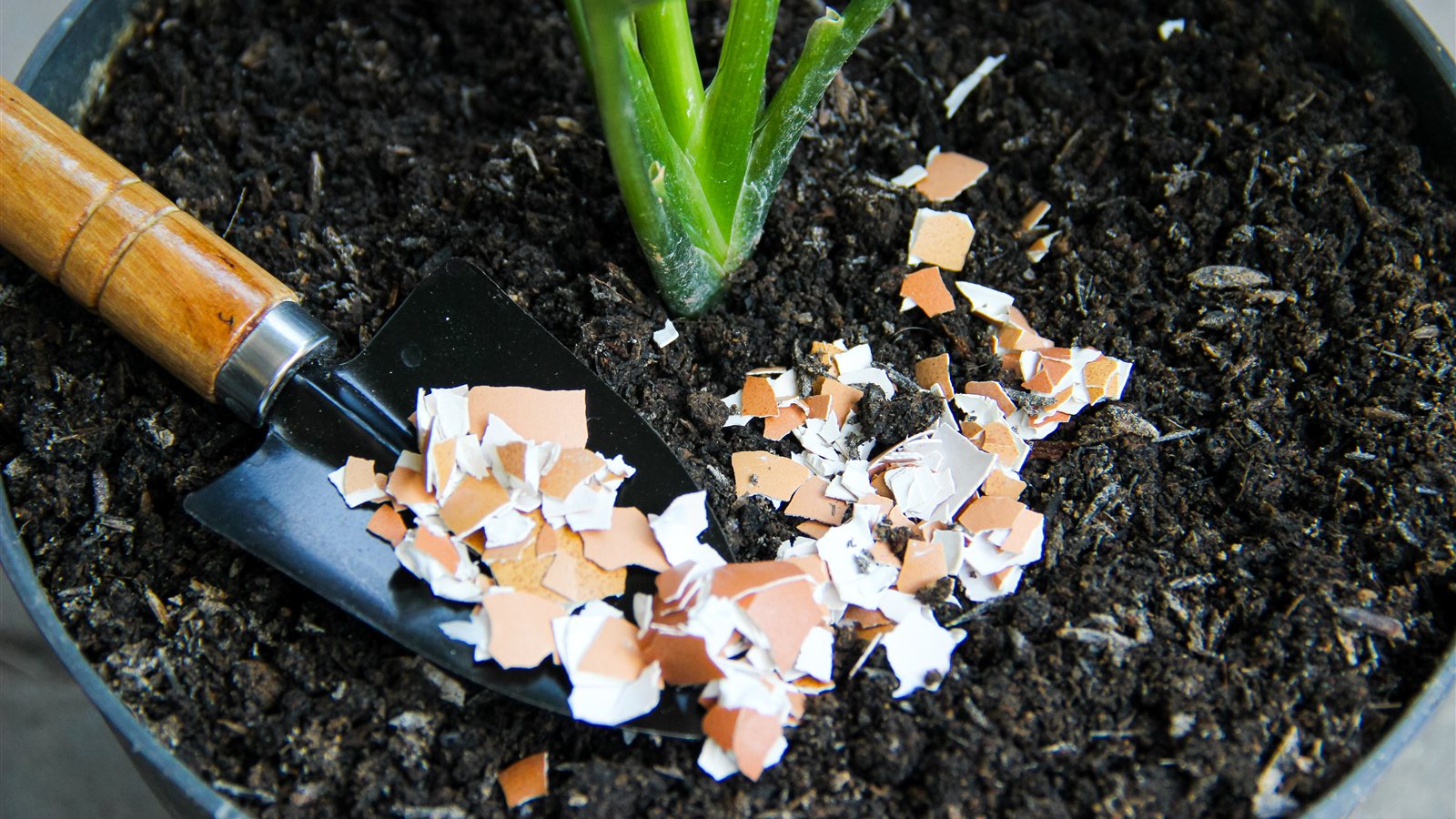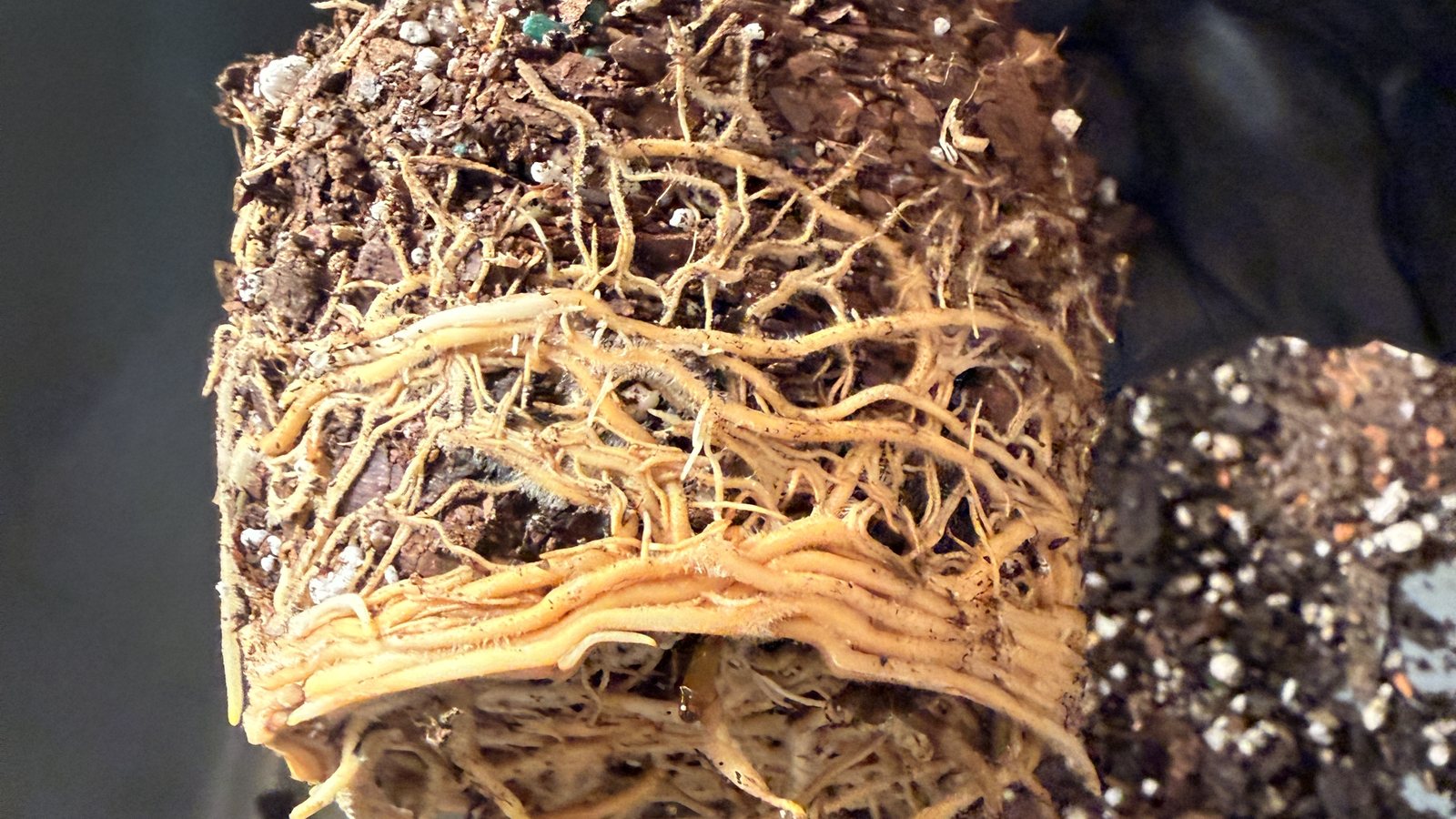
Add mycorrhizal fungi to the pot and your plant grows stronger roots. The partnership behind that promise is real: most plants can form one, and aroids such as alocasia and syngonium have been found forming it. The products are where it falls apart. When independent labs open the packages and test them, many hold far fewer fungi than the label claims, and a lot of them never get the fungus growing into a single root. In one recent greenhouse test, none of the seven products sold for home gardening did.
On this page
9 sections
The claim
The claim goes like this: add mycorrhizal fungi to the pot, and your plant builds a better root system and takes up more water and food. These products, called inoculants, come as powders, granules and liquids, and at least one home-garden product comes ready-mixed into a growing substrate (Boussageon et al., 2025). Labels often give a count of propagules, which can include spores, fungal threads and pieces of colonized root (Koziol et al., 2024).
That pitch bundles two things: whether the partnership is real, and whether the product in your hand delivers it.
The partnership is real
Mycorrhizae are fungi that live on and inside plant roots. University of Arizona Extension describes it as a trade in which both sides gain: the fungus helps the plant take up water and mineral nutrients, and the plant pays it in sugars (Schalau, 2023). The same fact sheet says about 80% of higher plants in nature can be colonized by mycorrhizae, meaning the fungus grows into their roots (Schalau, 2023).
The products tested in the studies below contain the arbuscular type, which grows into the root cells themselves (Schalau, 2023; Koziol et al., 2024). Houseplant aroids take part. A field survey of 25 aroid species at six sites in southern India found this partnership in every one of them, including species of Alocasia, Anthurium, Epipremnum (pothos), Spathiphyllum (peace lily) and Syngonium (Anaswara et al., 2023). That was a survey of plants where they grew, not a test of potted plants.
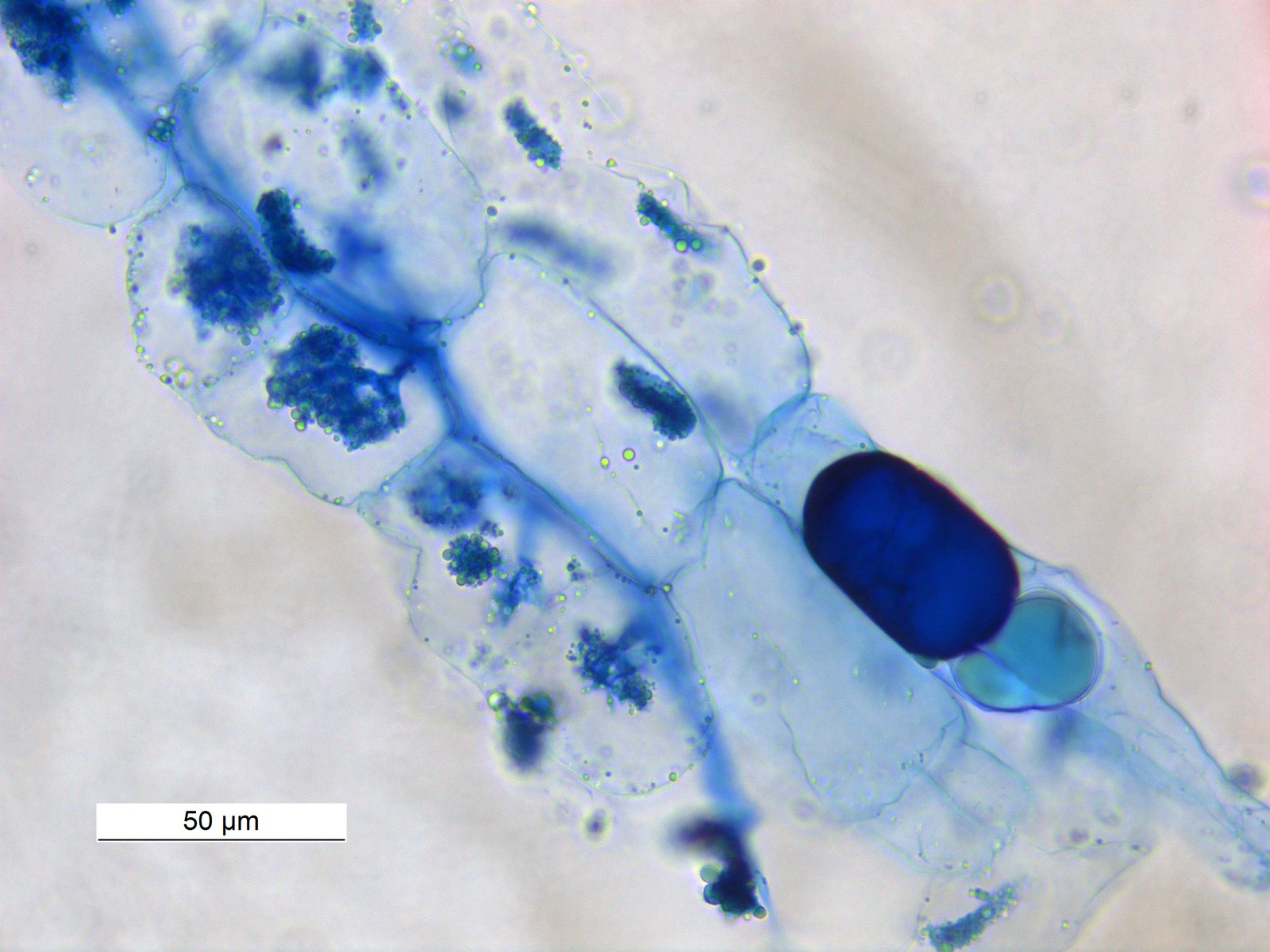
So the premise holds, and the questions start with the package.
What independent tests find in the package
A Kansas test of sixteen US products
Liz Koziol and colleagues at the University of Kansas tested sixteen commercial products sourced in the US, alongside fungi grown in their own lab (Koziol et al., 2024). They picked products by availability in US stores and by high rankings on Amazon, and added two from a hardware store and two handed out at a vendor show (Koziol et al., 2024). All the work ran in university greenhouses (Koziol et al., 2024).
First they counted spores. For every product but one, the spores they found fell 72% to 100% short of the propagule count on the label (Koziol et al., 2024). A label count can include fungal fragments as well as spores, so that gap doesn’t prove the rest was missing.
They added each product to pots of sterilized sand and soil, planted sorghum seedlings and checked the roots after 60 days. Eight of the commercial products colonized no roots in any pot. That held even at label doses as high as 81,455 propagules (Koziol et al., 2024). With the best commercial product, fungal threads showed up in about 6% of the roots examined. Ordinary field soil did better, at 11%. Most of the lab-grown fungi reached between 11% and 49% (Koziol et al., 2024).
Five commercial products carried something unwanted. The roots they were given were colonized by Olpidium, a fungus the authors identified as an obligate root parasite, one that can only grow on a living host (Koziol et al., 2024).
The lead author reports holding equity in a company called MycoBloom (Koziol et al., 2024). The Swiss study below comes from a different team.
A Swiss test that included home-garden products
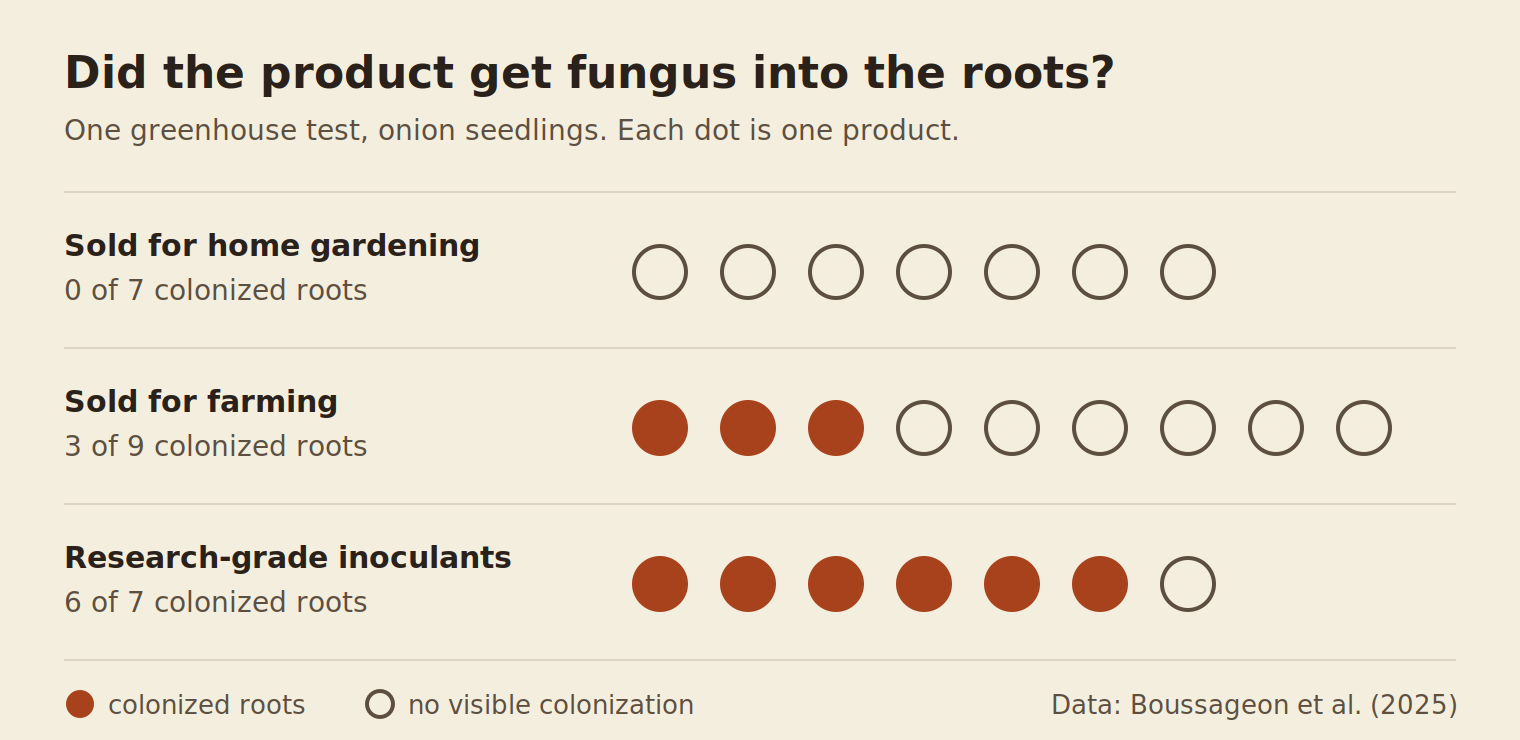
Raphaël Boussageon and colleagues tested sixteen products bought on the European market: nine sold for farming and seven for home gardening. They compared them with seven research-grade inoculants in a greenhouse in Zurich (Boussageon et al., 2025). The test plant was onion, grown in a sterilized mix of sand and farm soil (Boussageon et al., 2025).
None of the seven home-gardening products produced any root colonization they could see (Boussageon et al., 2025). Those products also held the fewest fungi. On average each gram or milliliter held 2.7 spores and 0.7 root fragments, and most of the products had none at all or nearly none (Boussageon et al., 2025). Wherever a label gave a number, the authors counted fewer propagules than it promised (Boussageon et al., 2025).
The research inoculants did much better. Six of the seven colonized the onion roots, most of them above 40%, and four of the seven made the plants grow significantly larger (Boussageon et al., 2025).
An older test in nursery potting mixes
The closest test to a potted plant we found is older. In a study published in 2004, Lea Corkidi and colleagues grew corn under nursery conditions with ten commercial products, in a soil-based mix and in two soilless mixes, one built on bark and one mainly sphagnum peat (Corkidi et al., 2004). Colonization ran from 0 to 50% depending on the product (Corkidi et al., 2004). In the second round, three products colonized no roots at all (Corkidi et al., 2004). The mix mattered too: some products did best in the peat mix and others in the bark mix (Corkidi et al., 2004).
When a product does make plants grow
Some products do give a growth bump. The evidence suggests it often isn’t the fungus.
In the 2004 nursery test, colonization didn’t make the corn grow any better (Corkidi et al., 2004). The only products that raised growth over the untreated plants were two of the ones that colonized nothing, which the authors read as a sign of other growth promoters in the package (Corkidi et al., 2004).
The Kansas team built a control for this. They sterilized a sample of every product and compared plants given the live product with plants given the same product sterilized, so the fertilizer and carrier counted equally on both sides (Koziol et al., 2024). Growth differences between products were strongly driven by those non-living ingredients (Koziol et al., 2024). Sterilizing the products didn’t change crop growth overall, though a few individual products did behave differently once sterilized (Koziol et al., 2024). The authors scored each product by comparing growth with the live product against growth with the same product sterilized, so a score above zero means the living organisms helped. The lab-grown fungi averaged +0.60 on lettuce and carrots, and the commercial products averaged −0.06 (Koziol et al., 2024). Products with more fertilizer in them also got less fungus onto the roots (Koziol et al., 2024).
In the Swiss test, two home-garden products made the onions grow more even though neither colonized a root, and one made them grow less (Boussageon et al., 2025). The authors suggest that growth without colonization may come from other microbes added to the products, such as Trichoderma fungi or growth-promoting bacteria (Boussageon et al., 2025). They judged that the products’ nutrient content didn’t explain the growth effects, except for the one product that set growth back (Boussageon et al., 2025).
Non-living ingredients drove the differences in one test; in another, the authors suspect other microbes. Either way, a plant that grows better after a dose of the product isn’t proof the fungus moved in.
Why feeding works against the fungus
Feeding changes how much fungus a root will host. In a study of potted petunias, phosphorus and nitrogen were the main nutrients deciding how much the fungus colonized the roots. Of the nutrients tested, only phosphorus strongly held the fungus back (Nouri et al., 2014). Nitrogen shortage could override that: in petunias short of nitrogen, the fungus still colonized the roots even when phosphorus was high (Nouri et al., 2014).
The same pairing of plant and fungus could swing from helpful to costly with the feeding. When the petunias were fed phosphate (a form of phosphorus) and nothing else, colonized plants held lower nutrient levels than uncolonized plants on the same feed (Nouri et al., 2014). The authors note that plants in natural settings may face less extreme conditions than their treatments (Nouri et al., 2014).
That fits what the Kansas team saw across products. It also fits advice from extension: Arizona Extension, summarizing Linda Chalker-Scott’s reviews, lists cutting back on fertilizer, especially phosphorus, among the practices that support beneficial soil microbes in gardens and landscapes (Schalau, 2023).
The garden-soil argument, and why a pot is different
The usual case against these products comes from the garden. Linda Chalker-Scott writes on The Garden Professors blog that "mycorrhizal spores are EVERYWHERE in landscape and garden soils" (Chalker-Scott, 2021). Arizona Extension, summarizing her literature reviews, says that adding packaged mycorrhizae to healthy, undisturbed soils is a waste of money (Schalau, 2023). A growth-chamber study in live grassland soil found few responses to six commercial products across nine grassland species, and some of those responses were declines (Duell et al., 2022).
A pot of bagged mix isn’t garden soil. The Kansas team described the bagged potting soil in their growth test, a sandy loam with sphagnum peat, as containing no mycorrhizal fungi (Koziol et al., 2024). So the “they’re already there” argument may not hold for a pot. That makes the product question more important for a pot, since a package that holds no fungi can’t supply what the mix lacks.
The counterpoint
Fungi that are alive and in good numbers can help. In both greenhouse tests above, research-grade fungi colonized roots far more reliably than the commercial products, and they often improved growth (Koziol et al., 2024; Boussageon et al., 2025). A meta-analysis, a study that combines the results of many earlier experiments, looked at 106 pot and field experiments on potato. Taken together, adding these fungi had a positive effect on six of seven measures, though the effect varied a lot by potato variety (Oladele et al., 2024). In that analysis, whether the inoculum was commercial or not made no difference to the effect on tuber number (Oladele et al., 2024). The same authors detected publication bias, the tendency for positive results to get published more often than results showing no effect, in four of the seven measures (Oladele et al., 2024).
The evidence supports the partnership. It doesn’t support the leap from “this partnership is real” to “this package delivers it to your pothos.”
I went looking for a test of a commercial mycorrhizal product on a houseplant grown in potting mix, and I didn’t find one. Every product test above used onion, corn, sorghum, lettuce, carrot or grassland plants, and the meta-analysis covered potato.
What we do now
Until this review, the Guild sprinkled mycorrhizae on the roots when we transplanted, especially on plants that were struggling. We’ve stopped. In the tests above, none of the seven home-garden products and eight of the sixteen US commercial products got any fungus into the roots, so we had little reason to think a product like ours was doing so. A struggling plant is also the last one we’d want to expose to a product that might carry a root parasite, as five of the commercial products in the Kansas test did (Koziol et al., 2024).
We wouldn’t pay extra for a bag because it says “with mycorrhizae.” Choose the mix for what it’s made of and how it drains, and treat the badge as a sales line. Our guide to reading the bag covers the rest of the label.
If a product seems to perk a plant up, check its label for fertilizer or other microbes before giving the fungus the credit.
And if you want roots to have a chance at a partnership, go easy on phosphorus-heavy feeding.
The one thing to remember
The fungi are real and can help. The products sold to add them have a poor record in independent tests, and nobody we found has shown one helping a houseplant.
Anaswara, S., Ajithkumar, V., Balachandar, M., & Muthukumar, T. (2023). Endorrhizal fungal symbiosis in aroids of the Western Ghats, southern India. Notulae Scientia Biologicae, 15(4), 11651. notulaebiologicae.ro
Boussageon, R., Eigenmann, M., Frommenwiler, J., & van der Heijden, M. G. A. (2025). Poor quality of commercial arbuscular mycorrhizal inoculants used for agriculture and home gardening. Journal of Sustainable Agriculture and Environment, 4(4), e70107. doi.org/10.1002/sae2.70107
Chalker-Scott, L. (2021, June 24). Mycorrhizae: “If you build it, they will come.” The Garden Professors. gardenprofessors.com
Corkidi, L., Allen, E. B., Merhaut, D., Allen, M. F., Downer, J., Bohn, J., & Evans, M. (2004). Assessing the infectivity of commercial mycorrhizal inoculants in plant nursery conditions. Journal of Environmental Horticulture, 22(3), 149–154. jeh.kglmeridian.com (Several authors were at the University of California, Riverside.)
Duell, E. B., Cobb, A. B., & Wilson, G. W. T. (2022). Effects of commercial arbuscular mycorrhizal inoculants on plant productivity and intra-radical colonization in native grassland: Unintentional de-coupling of a symbiosis? Plants, 11(17), 2276. doi.org/10.3390/plants11172276
Koziol, L., Lubin, T., & Bever, J. D. (2024). An assessment of twenty-three mycorrhizal inoculants reveals limited viability of AM fungi, pathogen contamination, and negative microbial effect on crop growth for commercial products. Applied Soil Ecology, 202, 105559. doi.org/10.1016/j.apsoil.2024.105559
Nouri, E., Breuillin-Sessoms, F., Feller, U., & Reinhardt, D. (2014). Phosphorus and nitrogen regulate arbuscular mycorrhizal symbiosis in Petunia hybrida. PLoS ONE, 9(6), e90841. doi.org/10.1371/journal.pone.0090841
Oladele, S., Gould, I., & Varga, S. (2024). Is arbuscular mycorrhizal fungal addition beneficial to potato systems? A meta-analysis. Mycorrhiza, 35(1), 5. doi.org/10.1007/s00572-024-01178-0
Schalau, J. (2023). Mycorrhizae in the landscape (Backyard Gardener #105). University of Arizona Cooperative Extension. extension.arizona.edu