Pillar 01 · More than soil from a bag

The Substrate Library

More than soil from a bag. The Guild's reference shelf on growing media, with recipes you can actually mix. New entries the second Tuesday of every month.

What it is

Growing media, treated as a system

Each entry covers a single concept or recipe — the science and the practice in the same place. Foundation reading first, then the recipes that fix specific problems.

Who it's for

Growers who want recipes that hold

For people building a substrate practice that works across plant families, not chasing the next trendy mix. Apprentices start with the foundation entries; Growers and Educators reach for the recipes.

How it's written

Tested at the bench

Every recipe runs in the Guild's own collection — hundreds of plants, real failure modes, documented refresh windows. No claims without a cited source or a documented test.

Ten entries · Updated second Tuesday of each month

The reference shelf.

Root system in clear glass with substrate cross-section Foundation

Foundation

The Root Zone

What plants are actually asking for from substrate, and the three-ingredient recipe that fixes most struggling houseplants.

ApprenticesGrowers
Substrate ingredients arranged on linen background Going deeper

Going deeper

How Substrate Actually Works
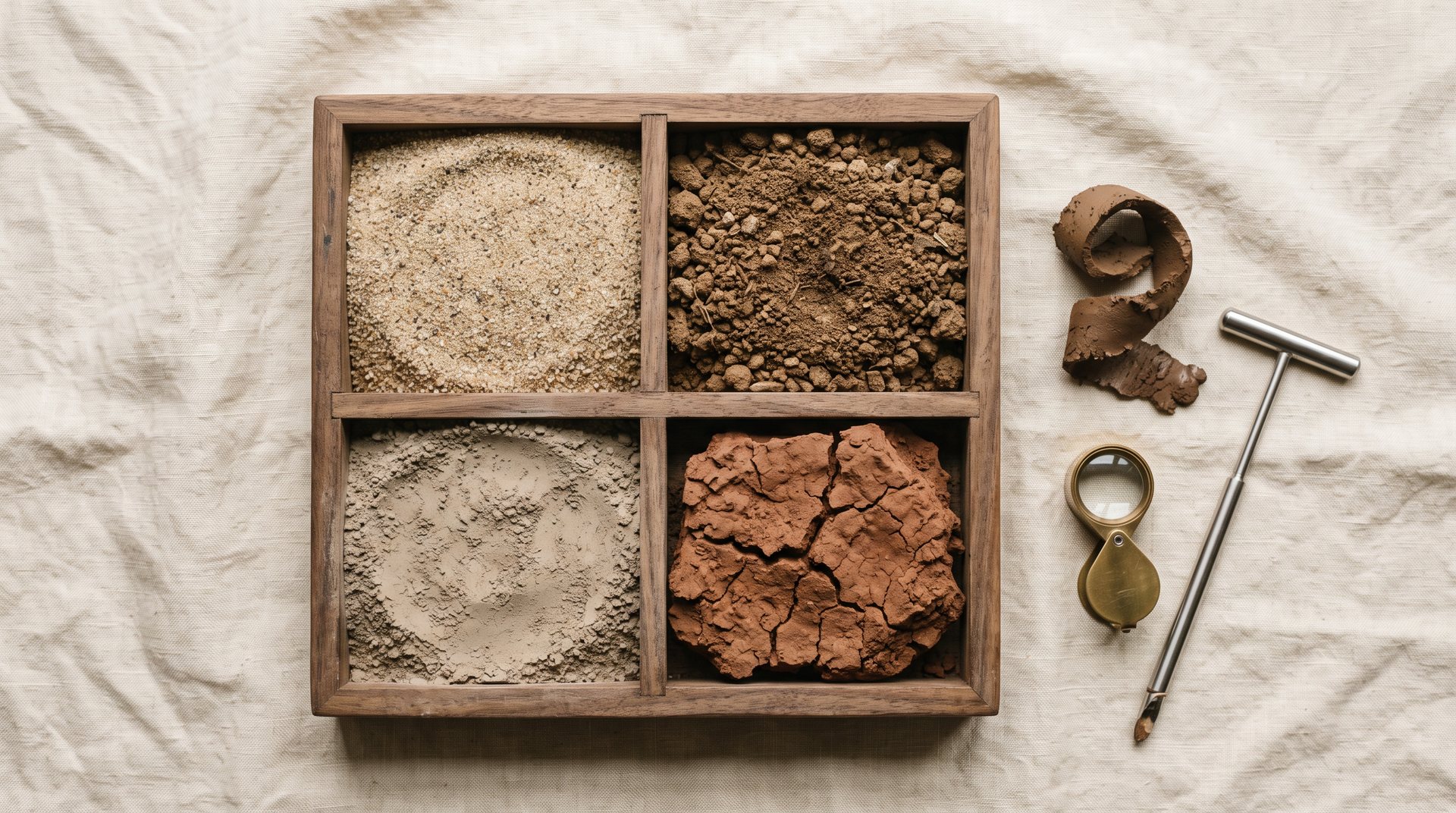
Air-filled porosity, capillary water, perched water tables, CEC, pH, and the oxygen variable nobody measures. The physics underneath every potting decision.

GrowersEducators
Botanical specimen tray with horticultural ingredients Reference

Reference

The Aroid Ingredient Glossary
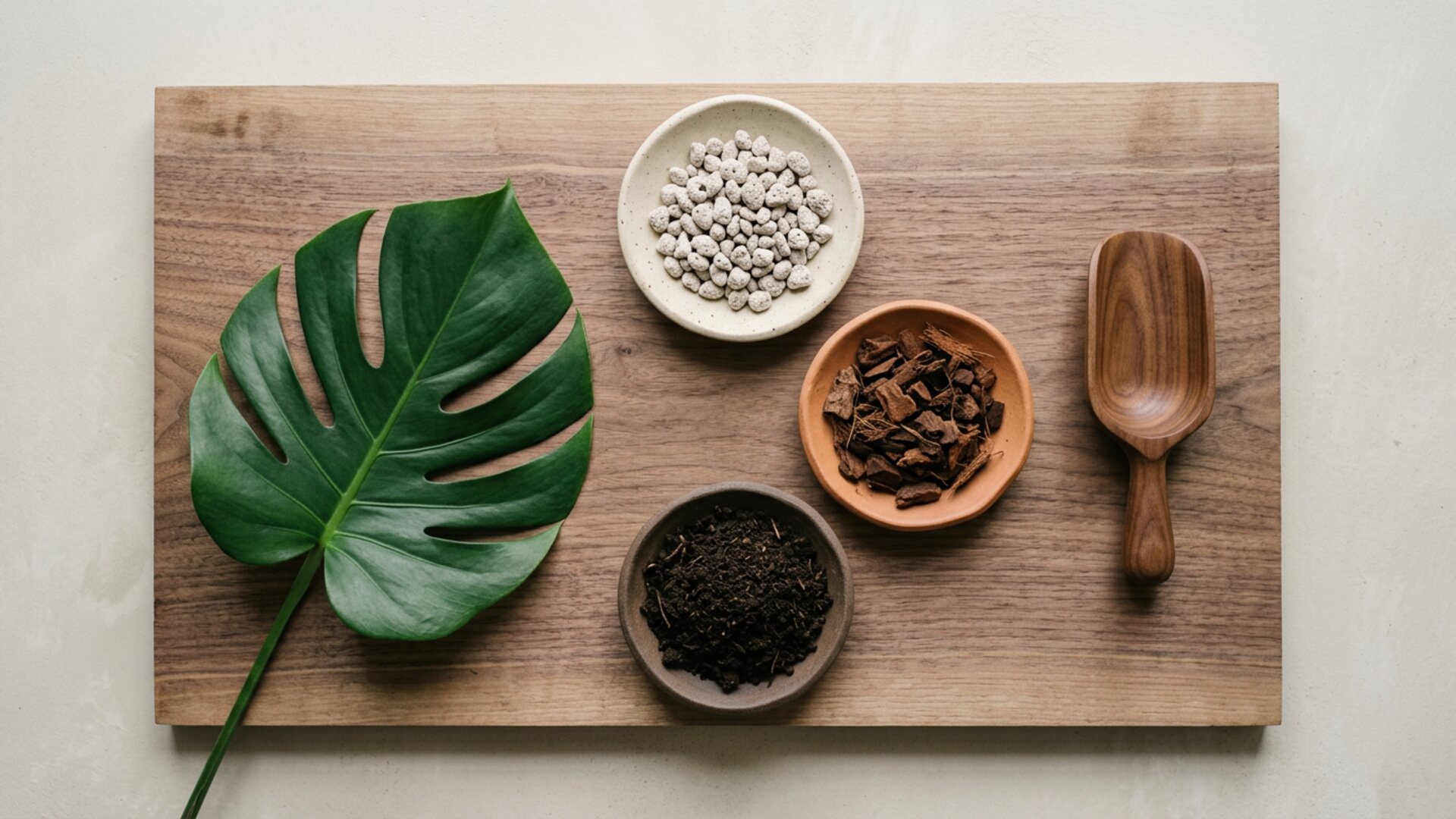
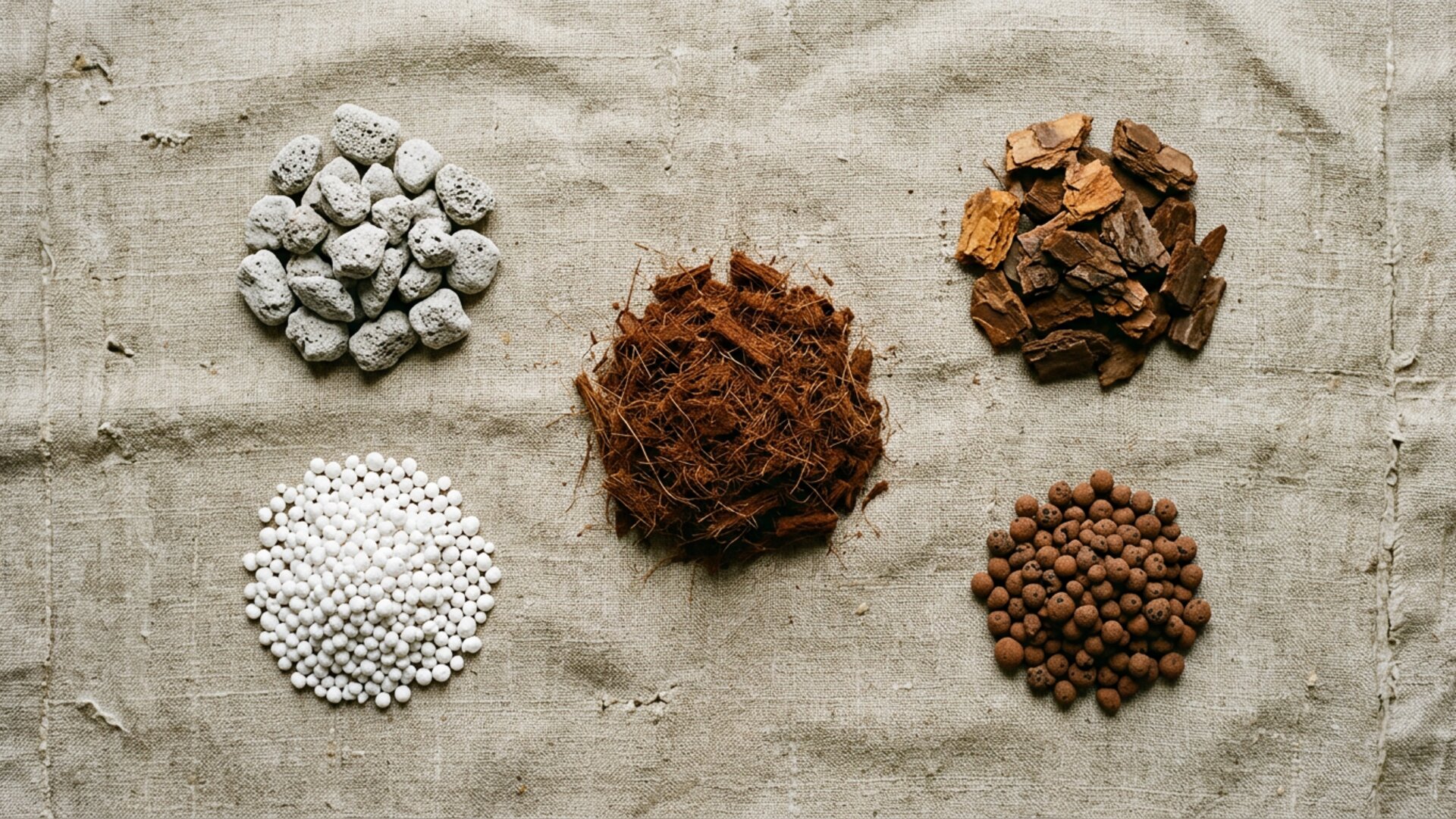
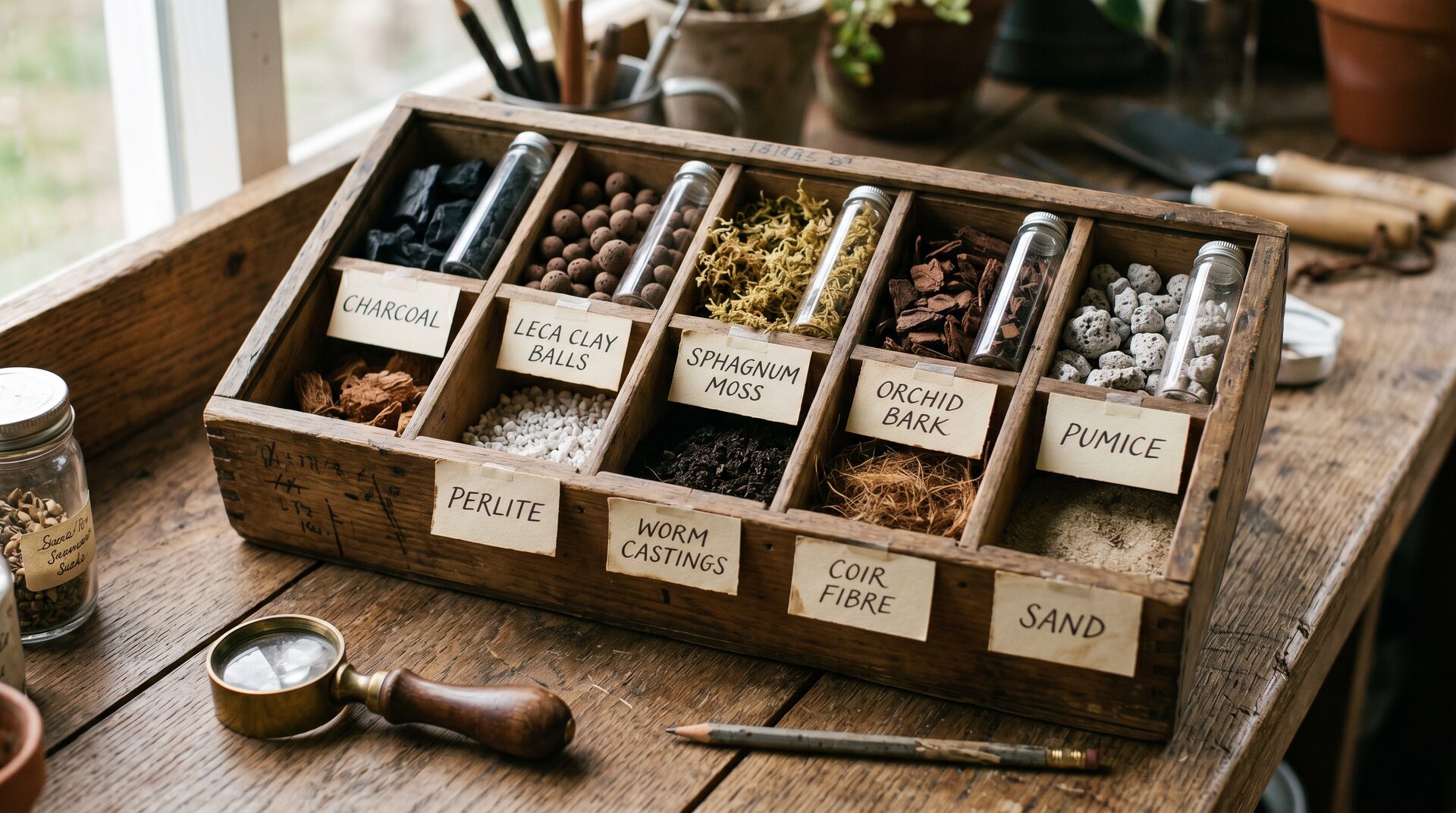
Pumice, perlite, zeolite, charcoal, coir, sphagnum, castings — every ingredient that goes in a chunky aroid mix, with the Guild's verdict on each. Including the ones we avoid.

GrowersEducators
Substrate ingredients in ceramic bowls with brass scale Practice

Practice

Designing a Mix: The Logic Behind the Ratios
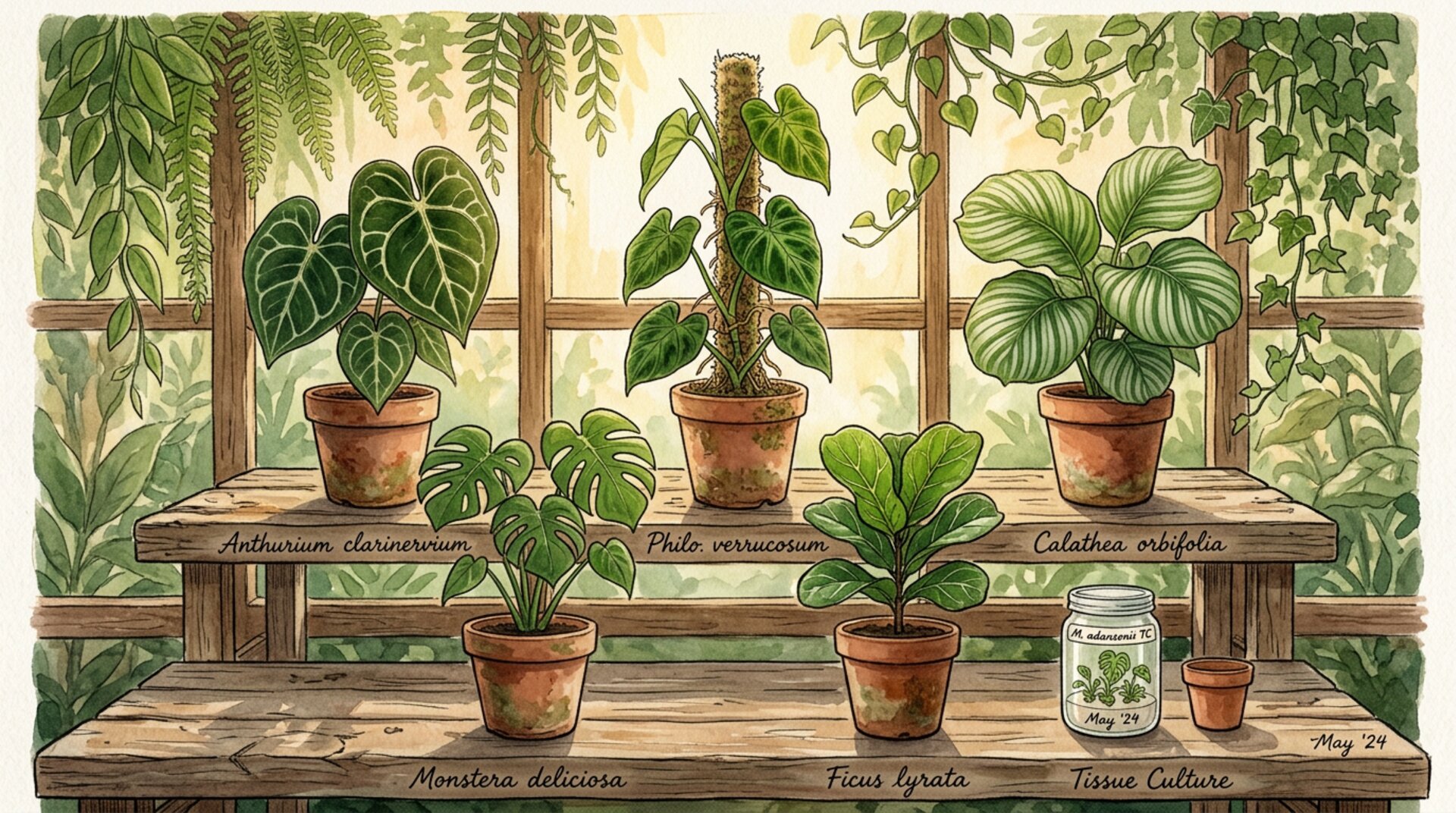
The framework behind every substrate recipe. How to work backward from what the plant needs and adapt any published mix for your own humidity, temperature, pot, and feeding style.

GrowersEducators
Six labeled mason jars on a walnut workbench, each showing a different aroid substrate recipe through the glass System

System Overview

The Petruscio Substrate System
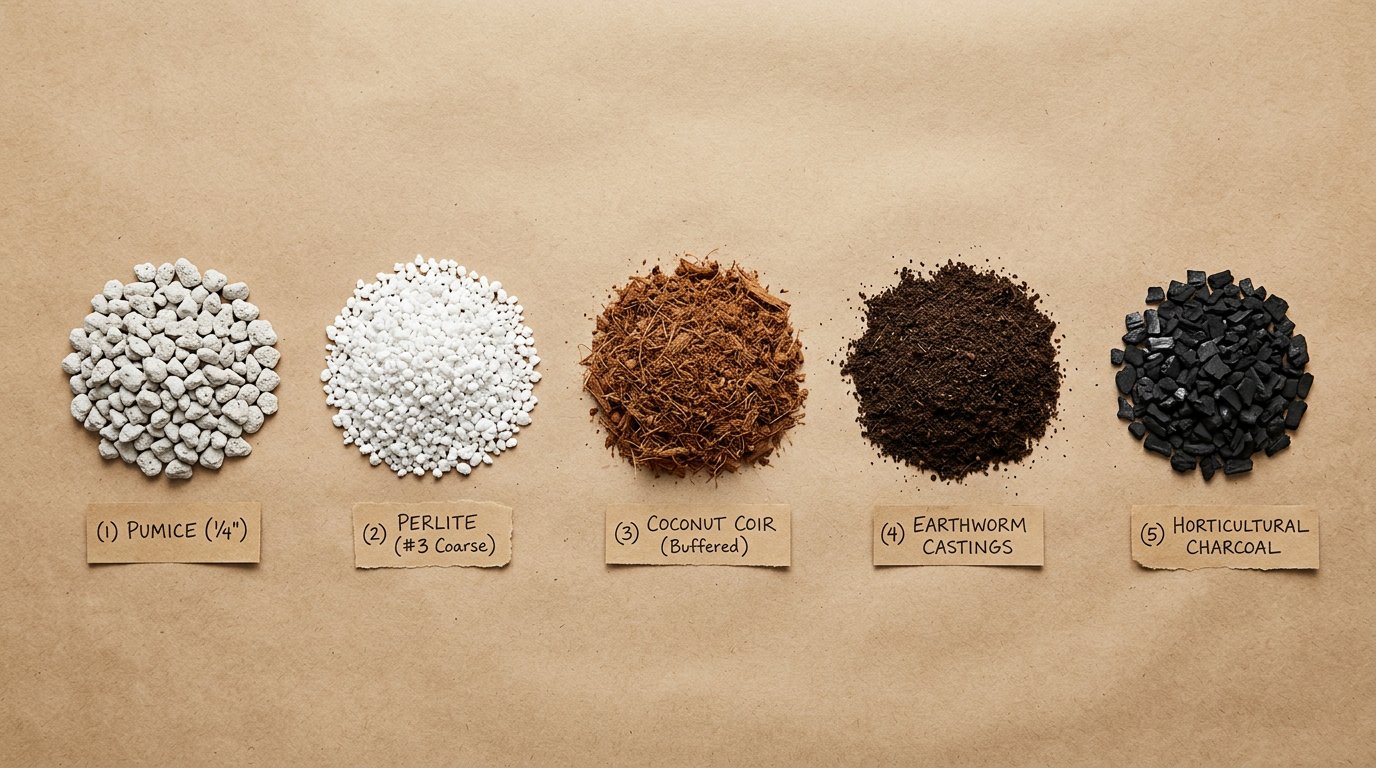
Six recipes, three layers, zero bark. The map of which mix fits which use case — from root rot recovery to tissue culture acclimation to everyday aroid maintenance.

GrowersEducators
A grouping of healthy Philodendron, Syngonium, Alocasia, and Hoya in terracotta pots on a wood shelf — the daily-driver substrate at work Daily-driver

Daily-Driver Recipe

Standard Mineral Mix v5
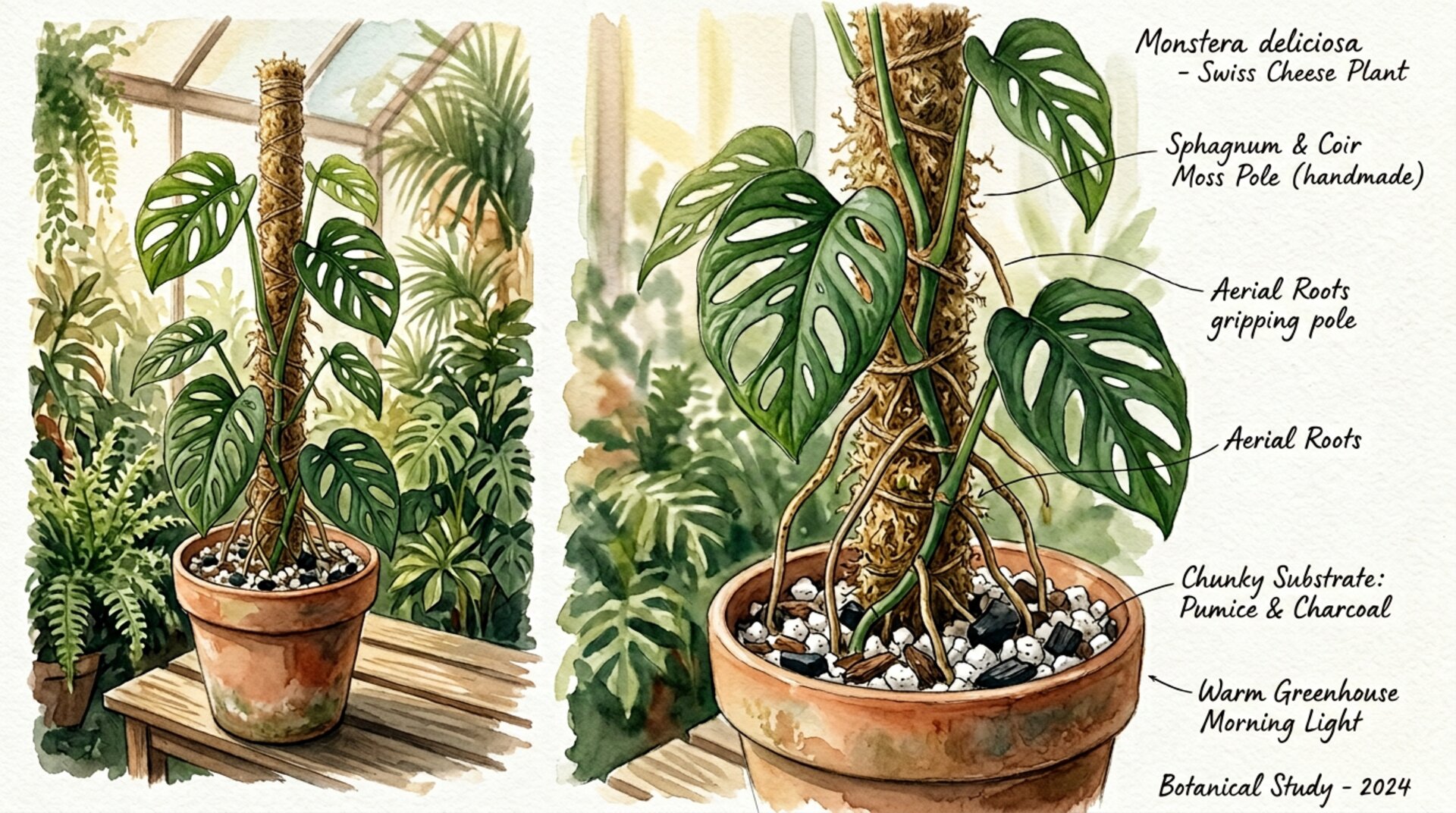
Sixty percent mineral, forty percent organic. The substrate most plants in the Guild's collection spend most of their lives in — the third leg of the system, after recovery and architecture for epiphytes.

GrowersEducators
Kraft tray of chunky aroid mineral mix showing pumice, perlite, charcoal, and a young aroid plantlet with a handwritten label Epiphyte

Specialist Recipe

Aroid Mineral Mix v5
Eighty percent mineral, twenty percent organic, zero bark. The mix built for climbing Philodendron, Monstera, Anthurium and the rest of the epiphyte rack — engineered around how aerial roots actually work.

Growers
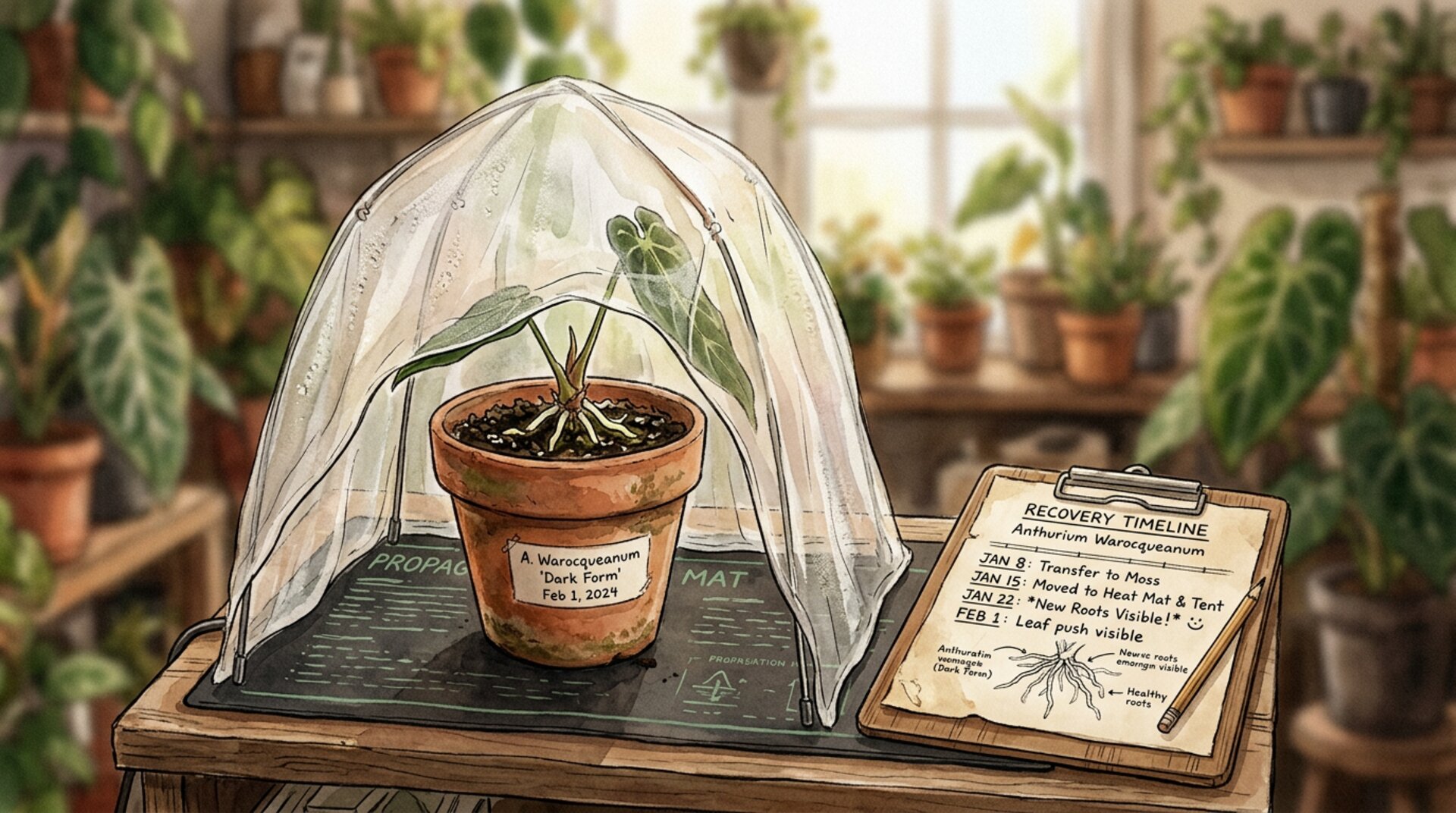
Terracotta pot half-buried in pure white pumice and charcoal mineral substrate, recovering aroid plantlet beside a handwritten recovery timeline Recovery

Recovery Recipe

ICU Mix v5

Seventy percent mineral, ten percent zeolite, zero bark. The recovery substrate the Guild reaches for when a plant arrives with black roots, plus the week-by-week protocol that gets it back.

Growers
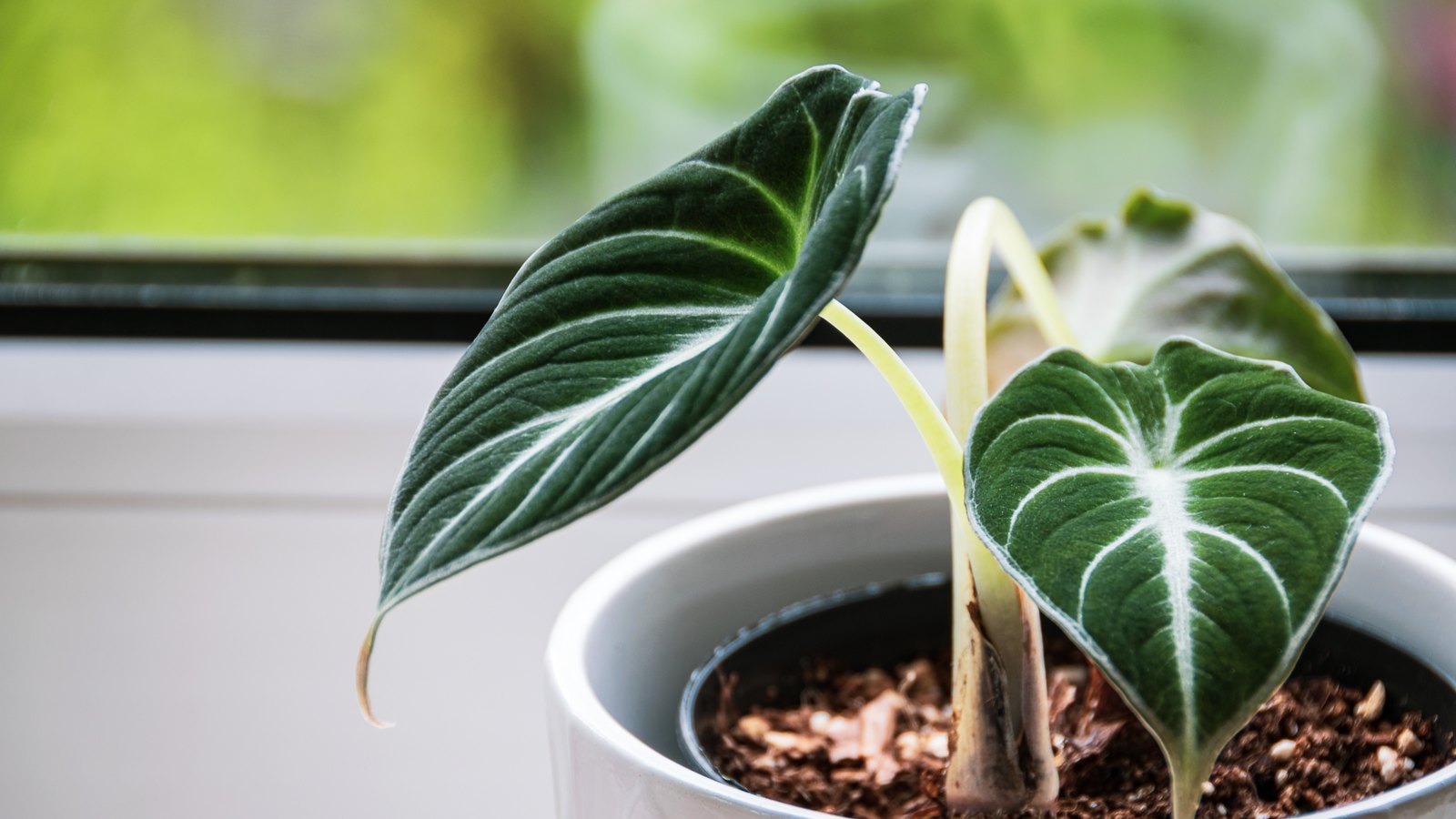
Tissue culture plantlet in a clear deli cup of white pumice, beside a humidity dome and a handwritten TC Day 14 kraft tag Specialist

Specialist

Tissue Culture Acclimation
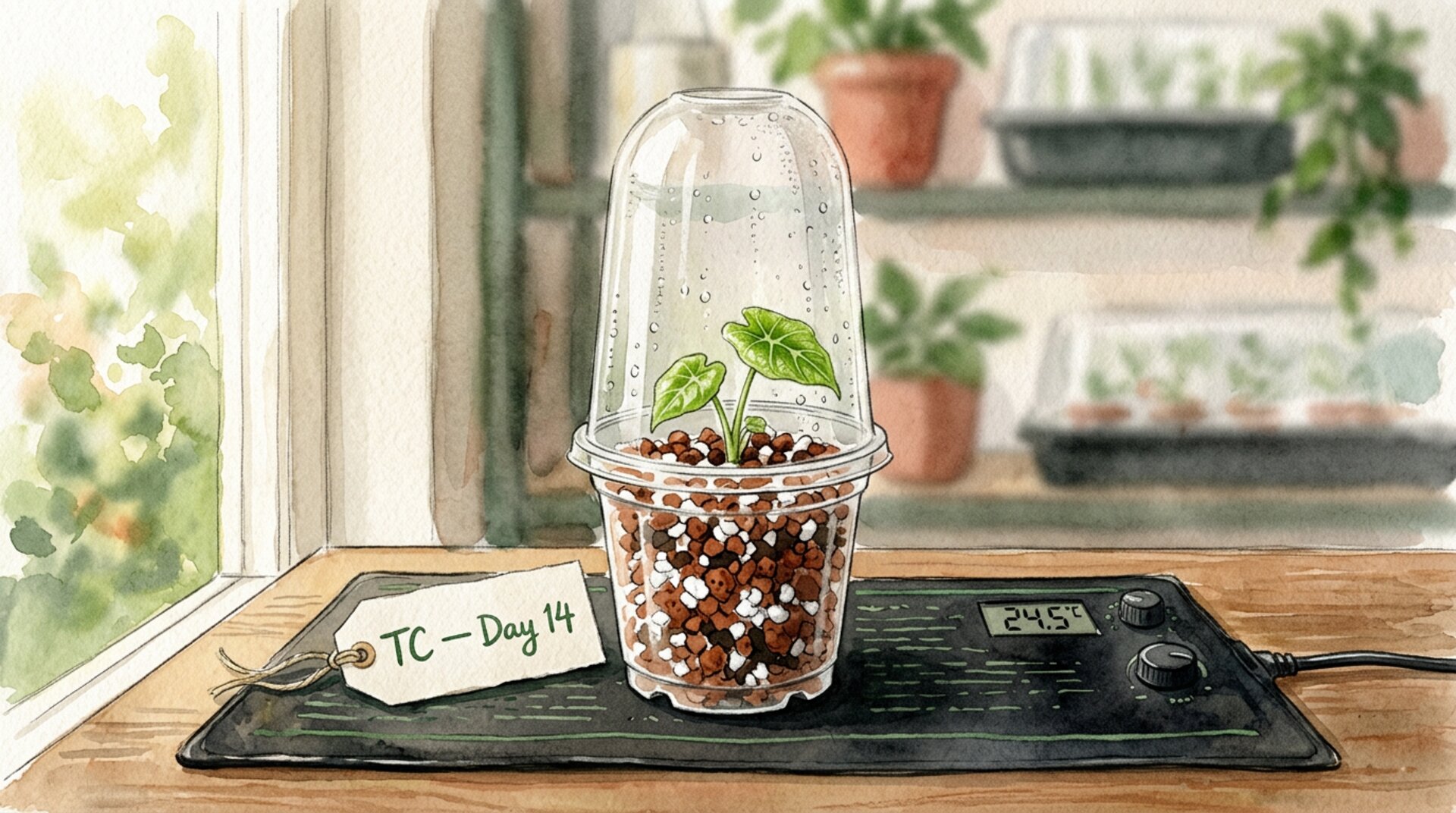
Substrate is a chassis, not a cure. What actually drives TC plantlet survival, and the mineral-based mixes the Guild uses across hundreds of acclimations.

GrowersEducators
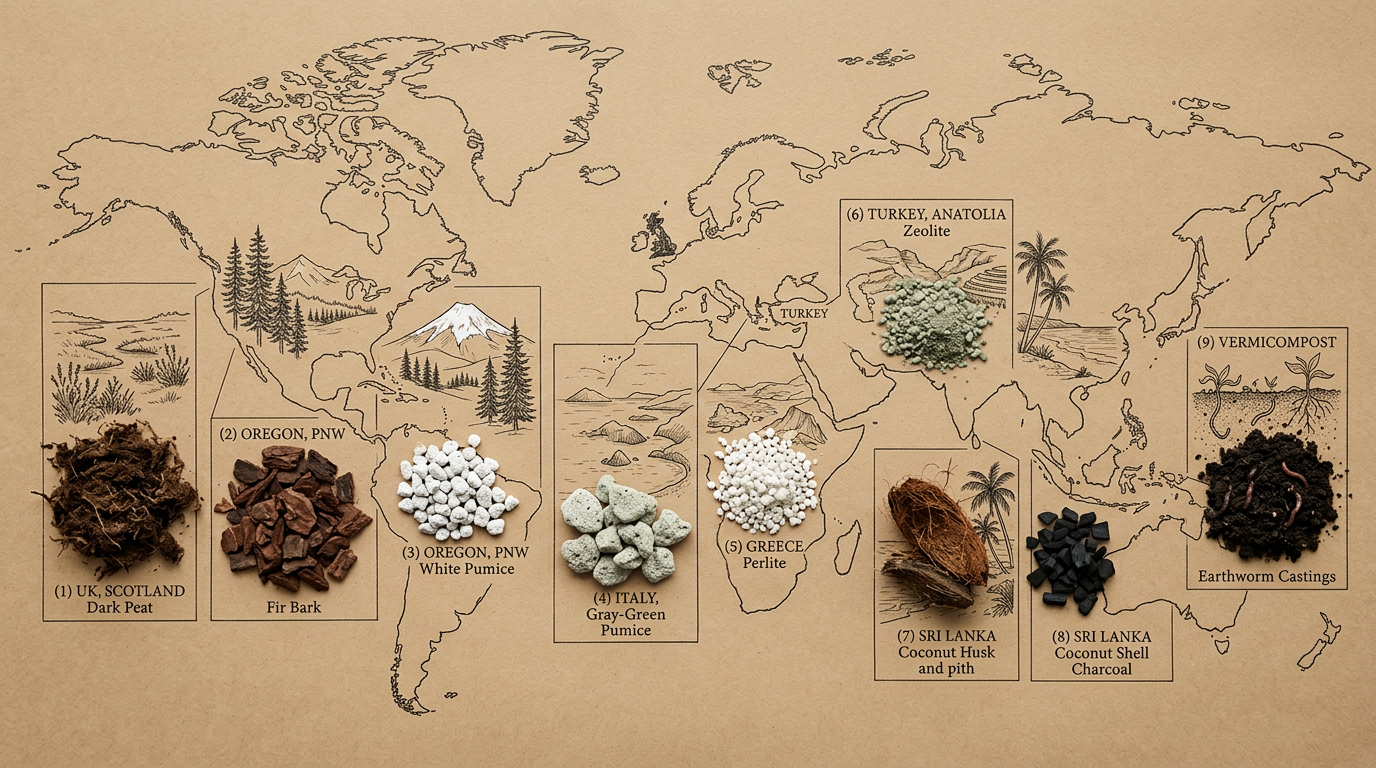
Map of substrate ingredients traced to their global origins: peat, coir, bark, pumice, perlite, zeolite, charcoal, vermicompost Finale

Finale · Stewards-tier

Substrate at Scale: Why a Bag of Mix Is a Supply Chain
Every ingredient in a chunky aroid mix has a backstory. Tracing each one back to its origin (bog, beach, forest, volcano, mine) for Growers who think about how their bench connects upstream.

StewardsGrowers
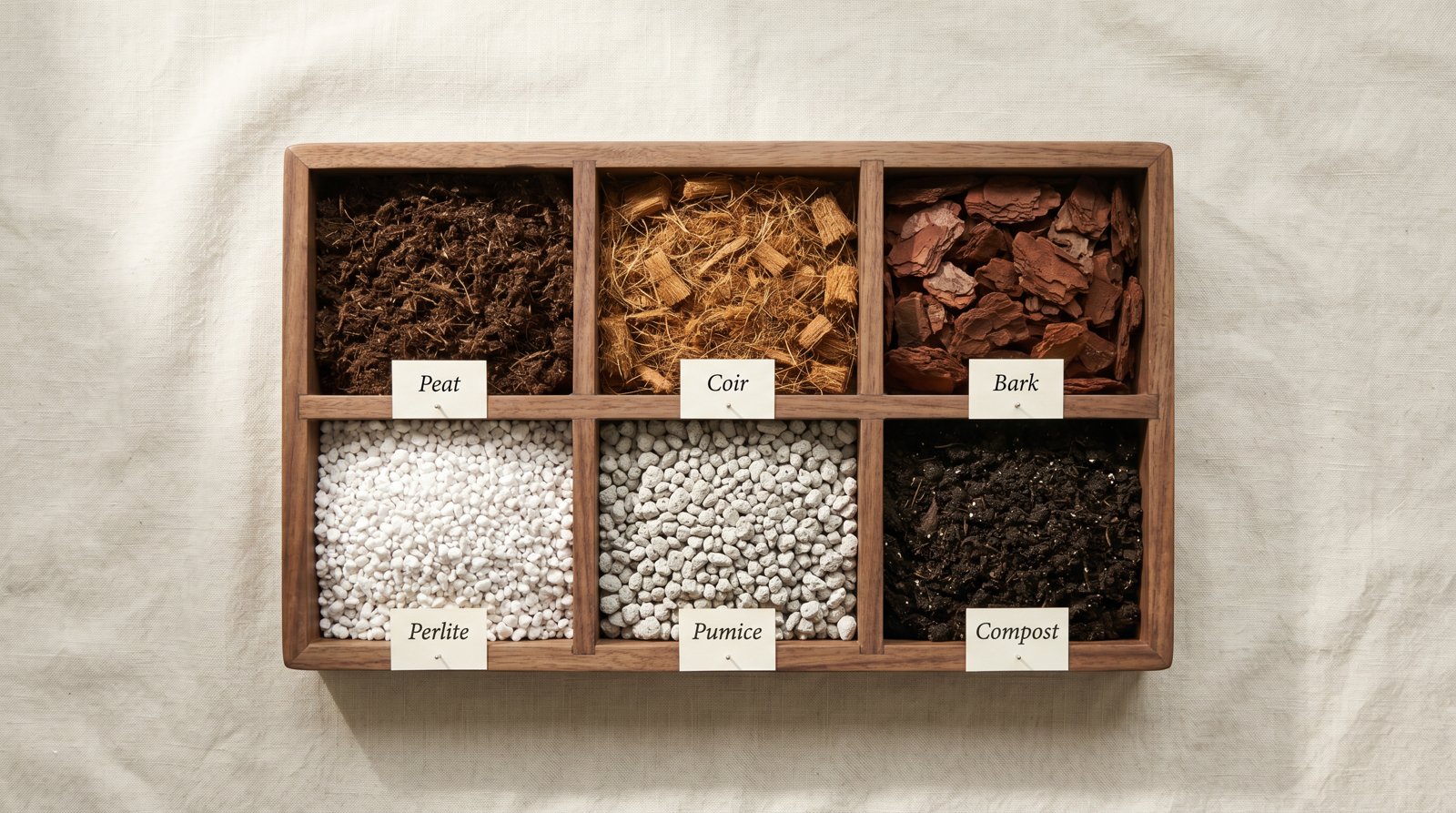
A walnut specimen tray holding the building blocks of any bagged mix: peat, coir, bark, perlite, pumice, and earthworm-cast compost Buyer's Guide

Deep Dive · Buyer's Guide

Reading the Bag
Every bag of commercial potting mix is four decisions stacked together: base, aeration, charge, and biology. How to read them off any bag, plus a brand-by-brand look at FoxFarm, Espoma, Pro-Mix, Coast of Maine and more.

ApprenticesGrowers