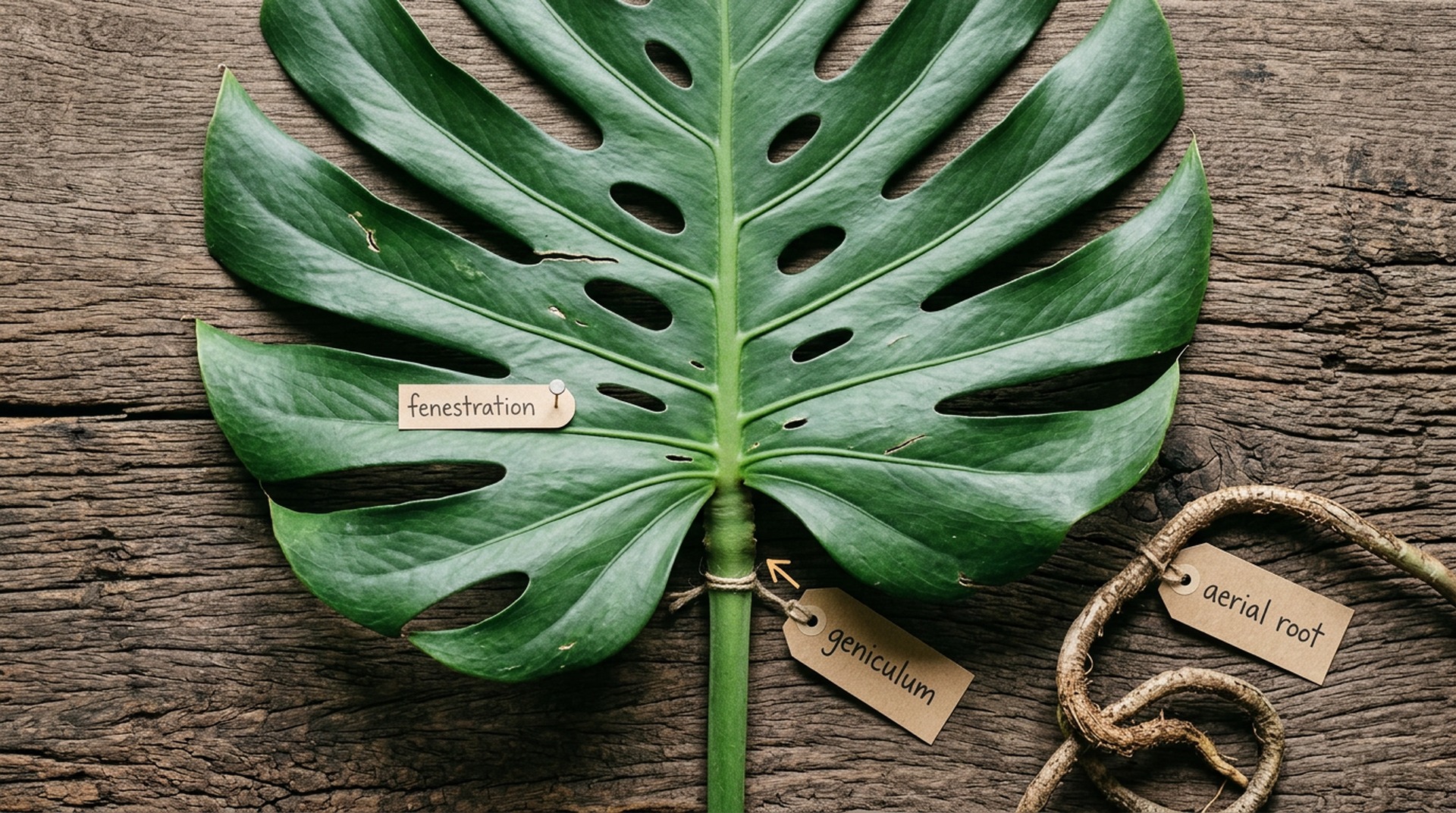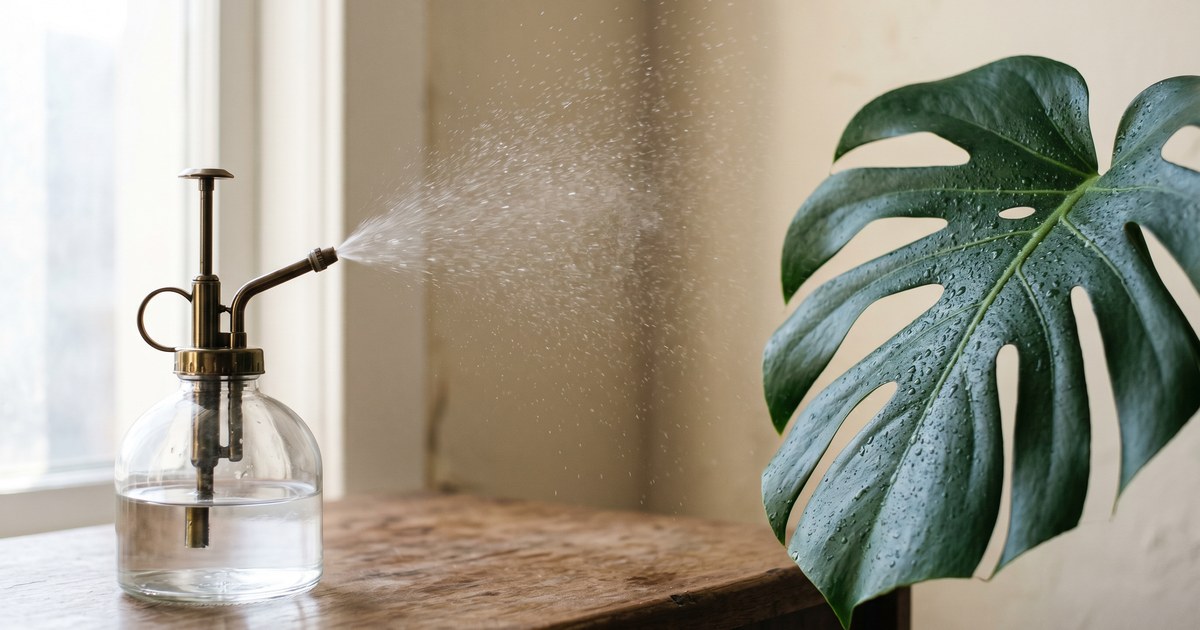
It's the most repeated piece of houseplant advice there is. Mist your tropical plants every morning, the line goes, and you'll give them the humidity they crave. The reading really does spike for a few minutes. Then the water evaporates, the humidity drops back to the room, and your plant goes on breathing the same air it was breathing before.
On this page
6 sections
The claim
Mist your tropical plants every morning and you'll give them the humidity they crave. It's probably the most repeated piece of houseplant advice there is. It also barely works.
What actually happens when you mist
Spray a plant and you do raise the humidity right around the leaves. The problem is timing. That moisture evaporates fast, often within a few minutes, and the reading drops right back to where the room was. Penn State Extension puts it plainly: a rise in humidity "only lasts until the water evaporates," so "even daily misting does nothing to raise the humidity levels around a plant" (Penn State Extension, n.d.).
Think about the gap you're trying to close. Most houseplants prefer a relative humidity around 40 to 50%, and many tropicals want more (Iowa State University Extension and Outreach, 2022). A heated home in winter can easily sit below 30% (Penn State Extension, n.d.). A thirty-second mist can't bridge that, and it can't hold it for the hours your plant is actually breathing.
So why does everyone swear by it?
Two reasons. It feels like care. You're doing something, the leaves look fresh, and the plant seems happier for a minute. And the humidity reading really does spike while you're standing there with the bottle. The spike just doesn't last, and a hygrometer (a humidity meter) would tell you so a few minutes later.
There's also a small kernel of truth that keeps the myth alive. Misting is a genuine watering method for air plants, the Tillandsia (a genus of soil-less bromeliads that absorb water through their leaves) that have nothing to drink from below (Penn State Extension, n.d.). That's watering, not humidity, and it doesn't transfer to your Monstera.
The part nobody mentions: wet leaves
Now the cost. Water sitting on foliage for long stretches isn't neutral. It's why University of Maryland Extension recommends misting early in the day "so the leaves dry before evening," and why they tell you to skip fuzzy-leaved plants like African violets altogether (University of Maryland Extension, 2024). Leaves that stay damp, especially overnight in still air, are friendlier to fungal and bacterial trouble (think leaf-spot diseases and rot) than dry ones. The daily ritual can quietly work against you.
What actually raises humidity
If your plant genuinely needs more humidity, three things do the real work.
Group your plants. Clustered plants release moisture together and lift the humidity in their own pocket of the room (Iowa State University Extension and Outreach, 2022).
Use a pebble tray, with realistic expectations. Set pots on a tray of pebbles and water, keeping the pot bases above the waterline. It helps the air right around a single plant (Iowa State University Extension and Outreach, 2022). Worth knowing: the effect is local and modest, because the evaporated moisture diffuses into the whole room (Penn State Extension, n.d.).
Run a humidifier. This is the one that actually moves a room's humidity and holds it there. The sources agree: a humidifier is the dependable option (Iowa State University Extension and Outreach, 2022; University of Maryland Extension, 2024).
The verdict
Misting isn't evil. If you enjoy it and you let the leaves dry, it won't hurt most plants. Just don't mistake it for a humidity strategy. The bottle gives you a few minutes of damp air and a feeling of having helped. Your plant wants the room changed, not the moment.
Iowa State University Extension and Outreach. (2022). How can I raise the relative humidity indoors for my houseplants? yardandgarden.extension.iastate.edu
Penn State Extension. (n.d.). Humidity and houseplants. extension.psu.edu
University of Maryland Extension. (2024). Temperature and humidity for indoor plants. extension.umd.edu