The Planters' Guild · A Pillar of the Guild

The Pollinator Library

The creatures that close the loop. A field guide to twelve Bay Area pollinators paired with the flowers their bodies fit, biweekly from Late 2026.

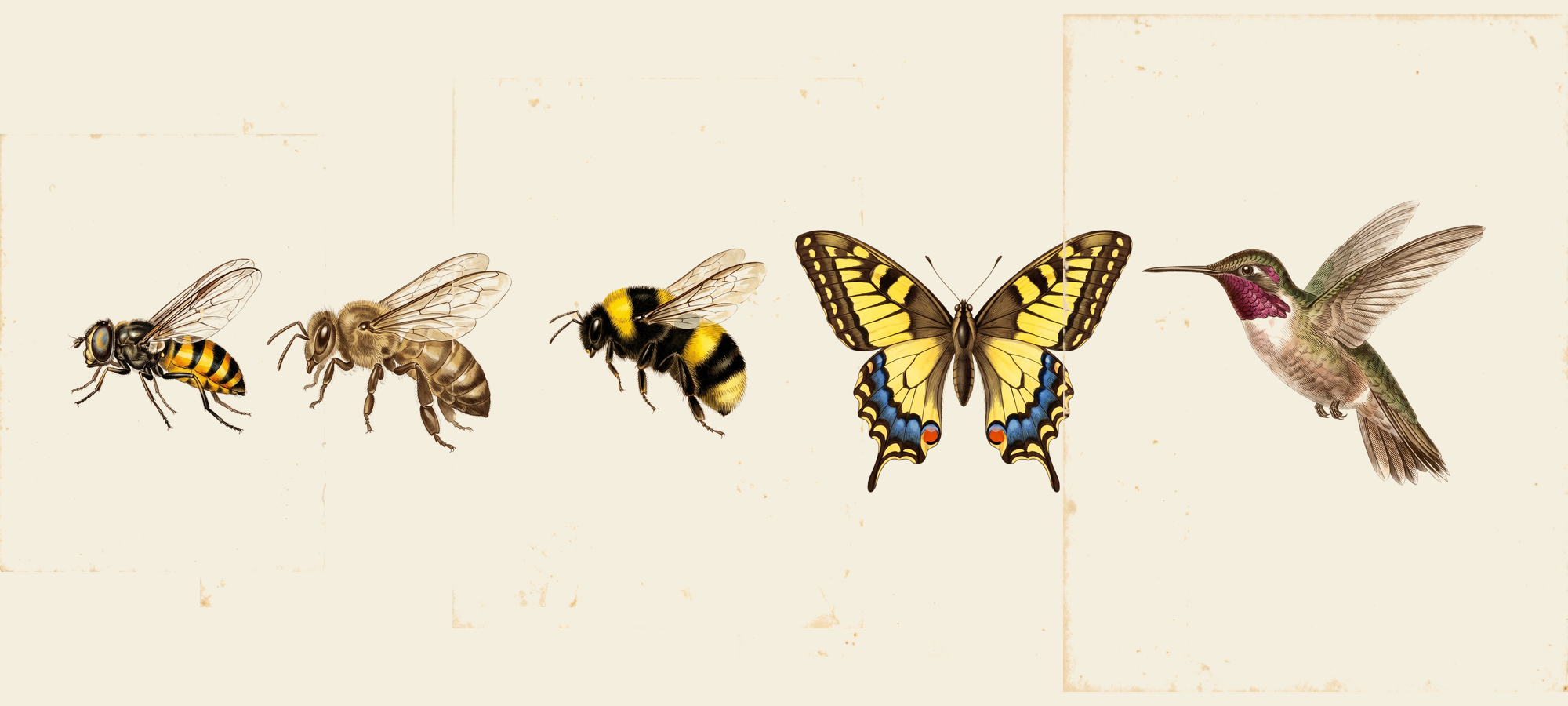
Five Bay Area pollinators — hover fly, honey bee, bumble bee, anise swallowtail, and Anna's hummingbird — illustrated in vintage natural history register on cream paper

Most pollinator writing starts with the bee. Honey, bumble, sometimes the cultural anchor that everyone already knows. We start with the relationship.

A long-tubed flower exists because something with a long tongue lives nearby. A flat composite head exists because short-tongued flies and small bees needed a landing pad. Read the pollinators and you read the garden.

The Pollinator Library covers twelve Bay Area pollinators biweekly across Late 2026 and into Spring 2027. Each entry takes one creature, pairs it to the flowers its body fits, and teaches you to recognize both the pollinator in flight and the floral architecture that needs it. The arc moves from short-tongued generalists through specialist long-tongues to the only vertebrate on the shelf, Anna's hummingbird.

This page is the gallery. The twelve plates below open the pillar, drawn in vintage natural history register on cream paper, the same family register used for the Leaf and Flower Libraries. Each plate gets its own deep-dive article once the production trigger hits in late summer 2026.

Publication cadence · biweekly Fridays · Late 2026 through Spring 2027

Alternating with The Leaf Library and The Flower Library. Specific publication dates lock in late summer 2026 when production opens. Subscribe to The Window Box via the Join page to be notified when entries begin.

The shelf · 12 plates

Arranged left to right by tongue length and foraging fit. Generalist short-tongued pollinators first, specialist long-tongues and the only vertebrate last.

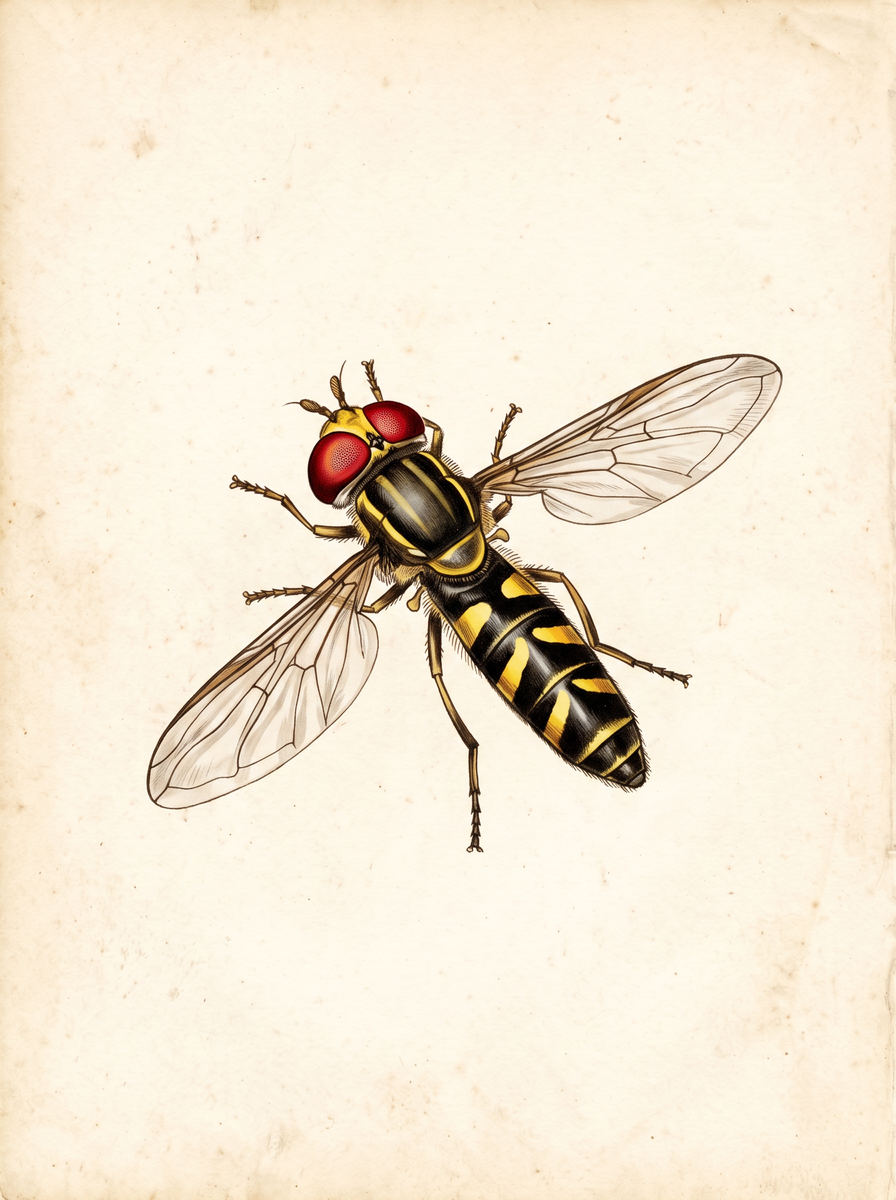
Hover fly (Syrphidae) natural history plate

No. 01 · Generalist · Short tongue

The Hover Fly

Syrphidae spp.

Bee mimic, not a bee. The most underappreciated pollinator in the garden. Works open umbels and composite heads that bees often overlook.

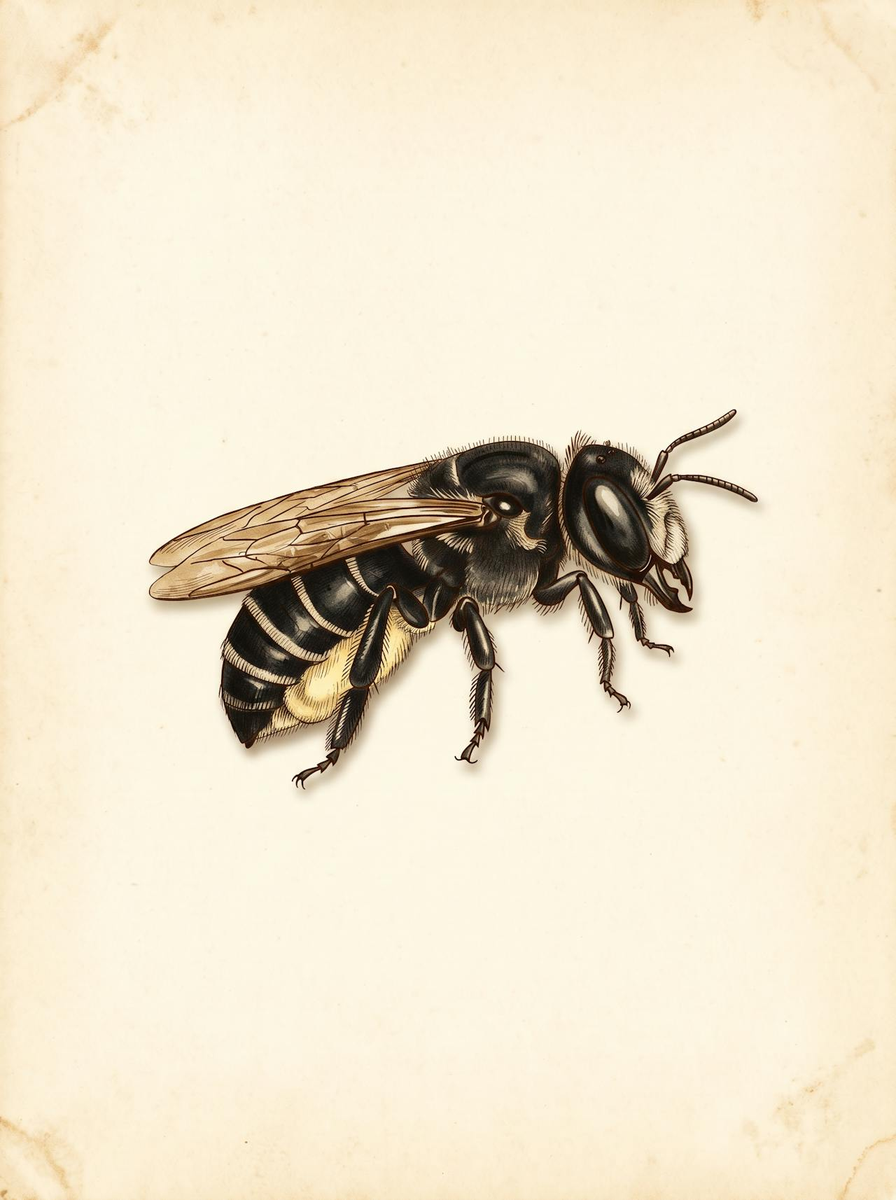
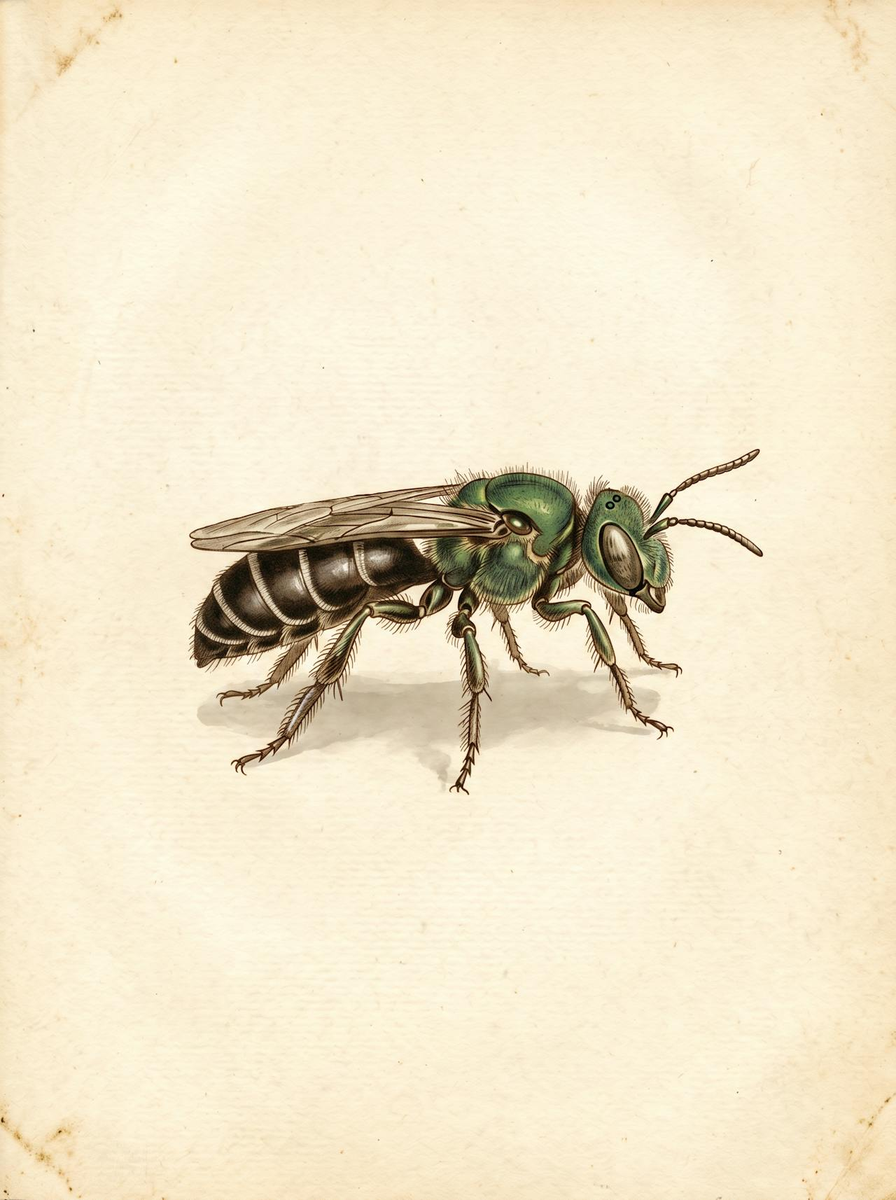
Sweat bee (Halictidae) natural history plate

No. 02 · Generalist · Short tongue

The Sweat Bee

Halictidae spp.

Tiny, often metallic green. Ground-nesting solitary bee. If you've seen a small flying jewel on a daisy, this was probably it.

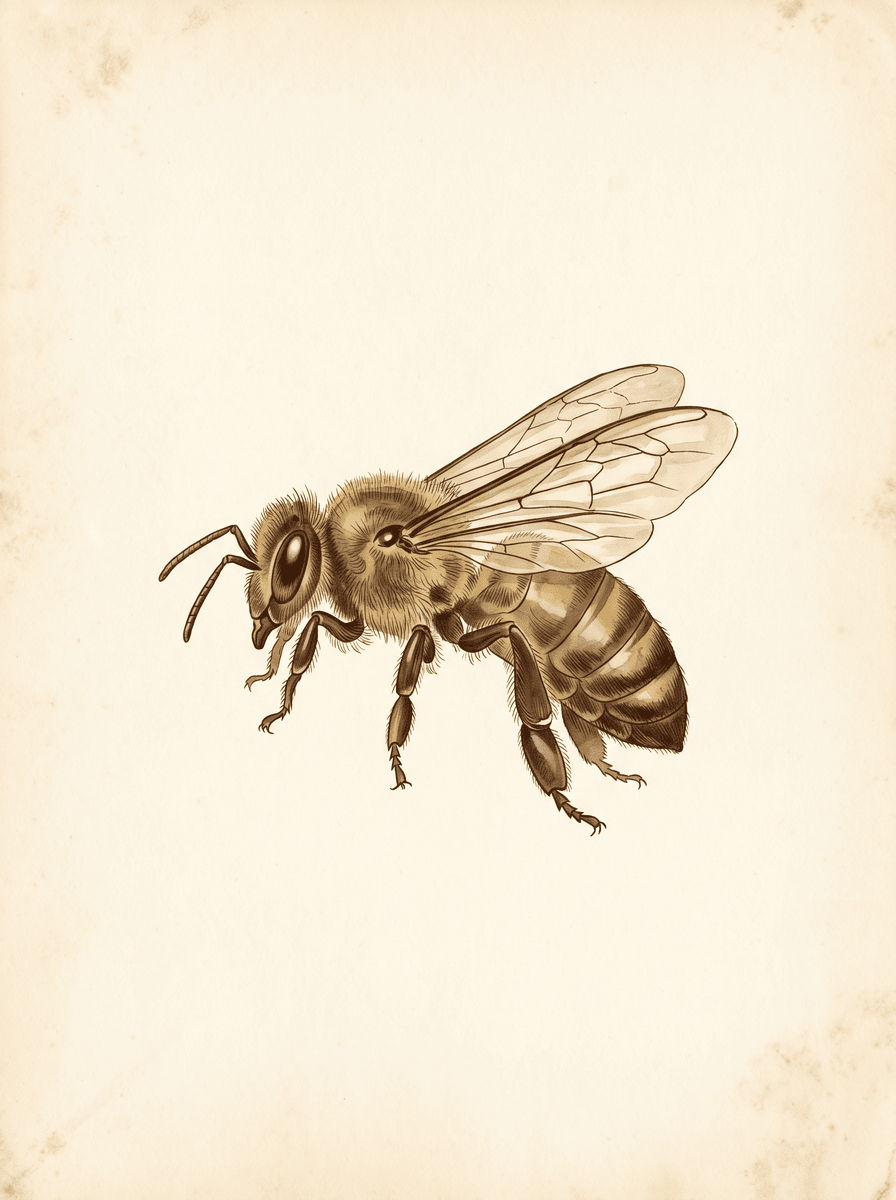
Honey bee (Apis mellifera) natural history plate

No. 03 · Generalist · Medium tongue

The Honey Bee

Apis mellifera

The cultural anchor. Non-native, but the baseline most readers already know. We start here, then move outward.

Mason bee (Osmia lignaria) natural history plate

No. 04 · Spring specialist

The Mason Bee

Osmia lignaria

The orchard's first pollinator. Solitary, early-spring, faster on fruit blossoms than honey bees in cold weather.

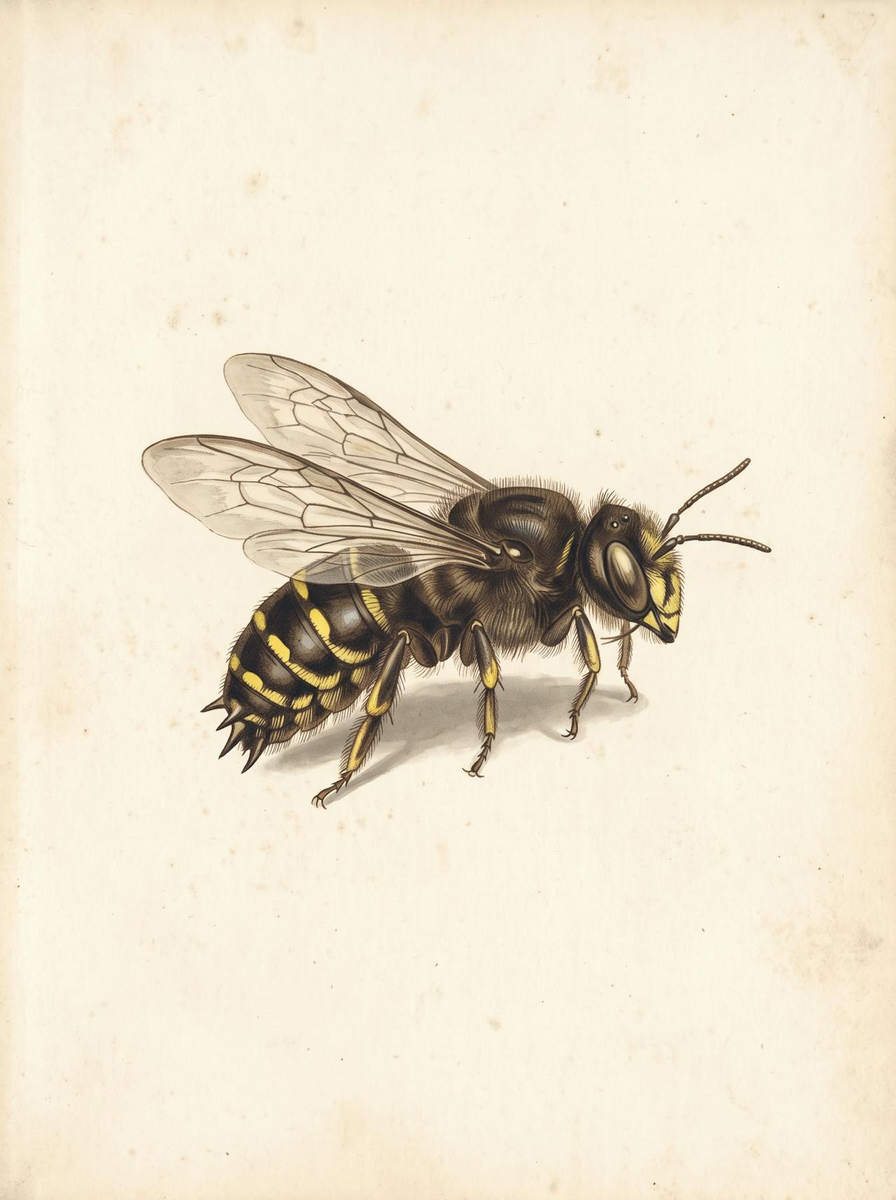
Leafcutter bee (Megachile) natural history plate

No. 05 · Native generalist

The Leafcutter Bee

Megachile spp.

The bee responsible for the perfectly circular notches in your rose leaves. Distinctive nest behavior, important native generalist.

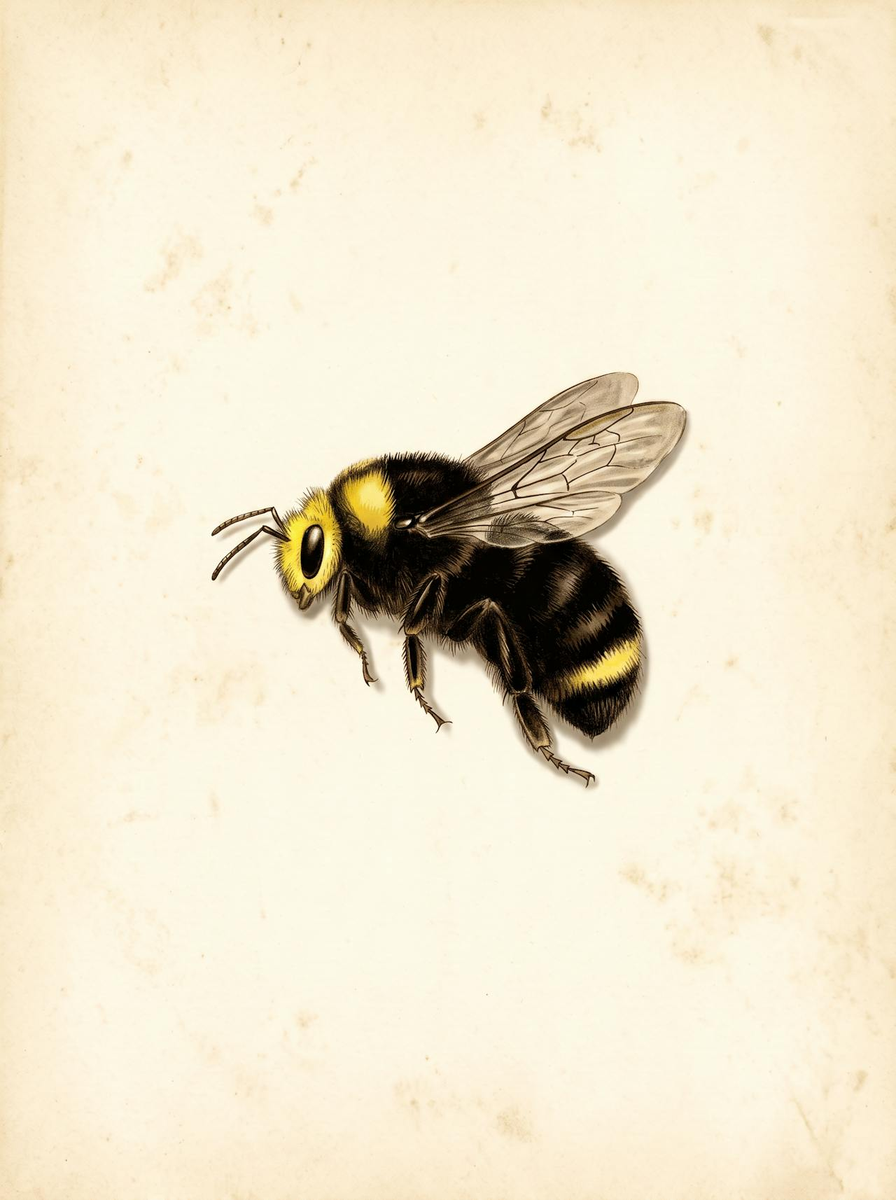
Bumble bee (Bombus vosnesenskii) natural history plate

No. 06 · Buzz pollinator

The Bumble Bee

Bombus vosnesenskii & spp.

The primary Bay Area buzz-pollinator. Sonicates flower anthers to shake pollen loose. The reason your tomatoes, blueberries, and eggplants set fruit.

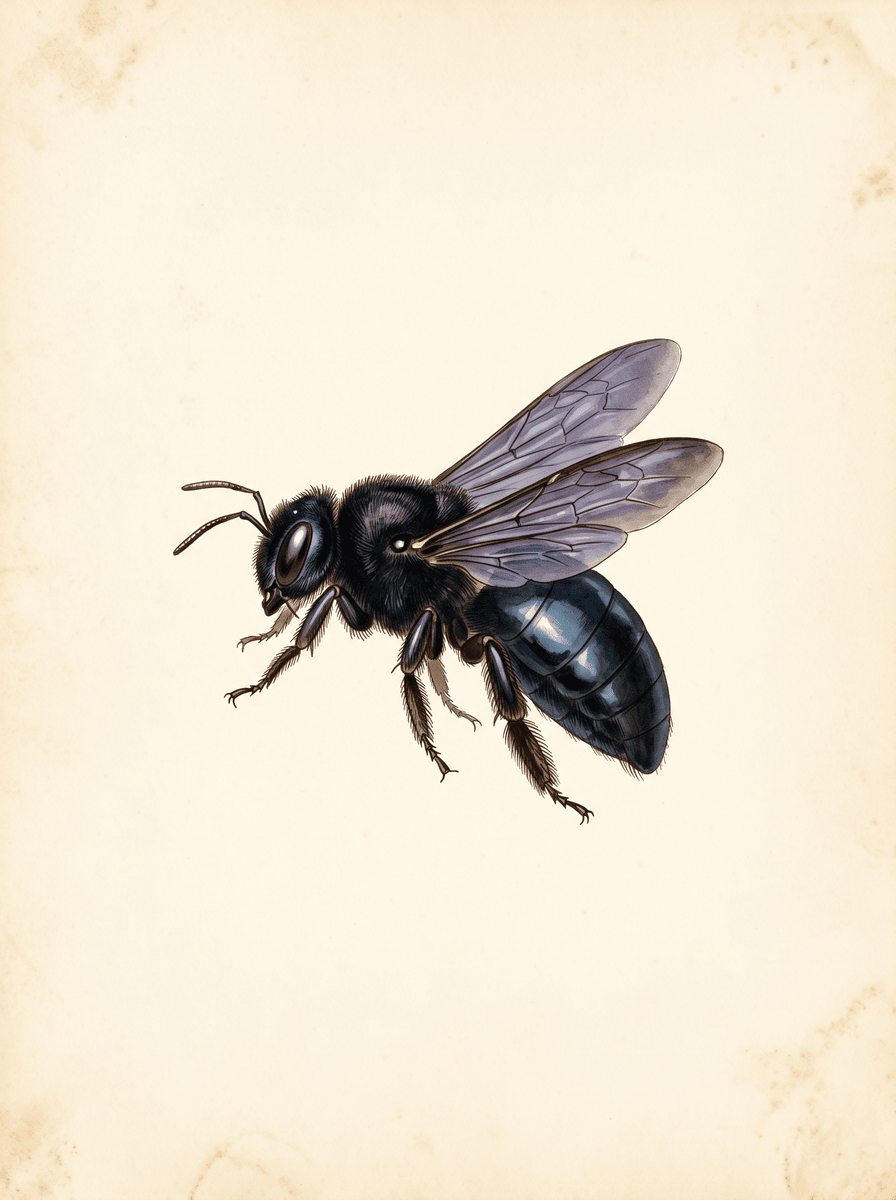
Carpenter bee (Xylocopa) natural history plate

No. 07 · Large-bodied · Sometimes thief

The Carpenter Bee

Xylocopa spp.

The biggest native bee. Will chew through corolla bases to nectar-thieve when flowers are deeper than her reach. An ecological side door.

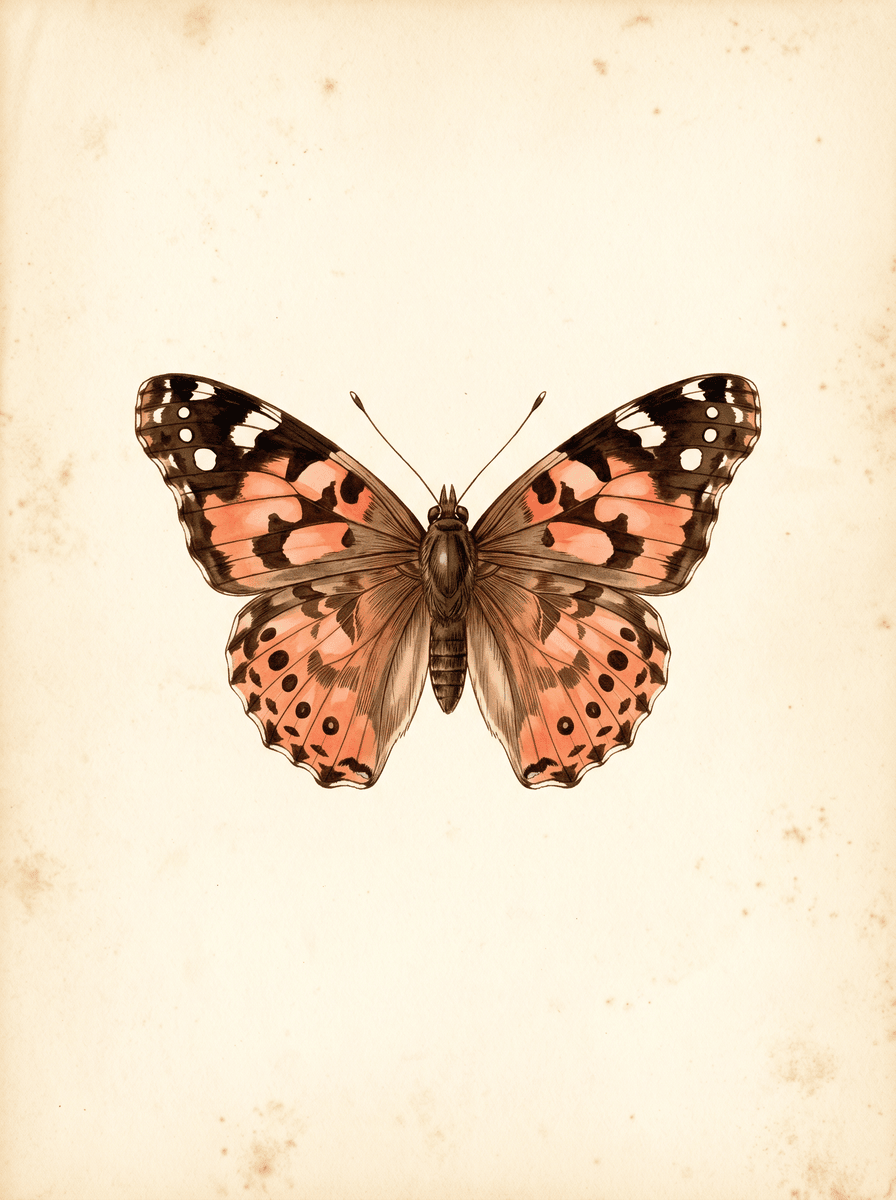
Painted lady butterfly (Vanessa cardui) natural history plate

No. 08 · Long proboscis · Migratory

The Painted Lady

Vanessa cardui

The Bay Area's mass-migration butterfly. Generalist nectar feeder, larval host on thistles and mallows. A common doorway into butterfly identification.

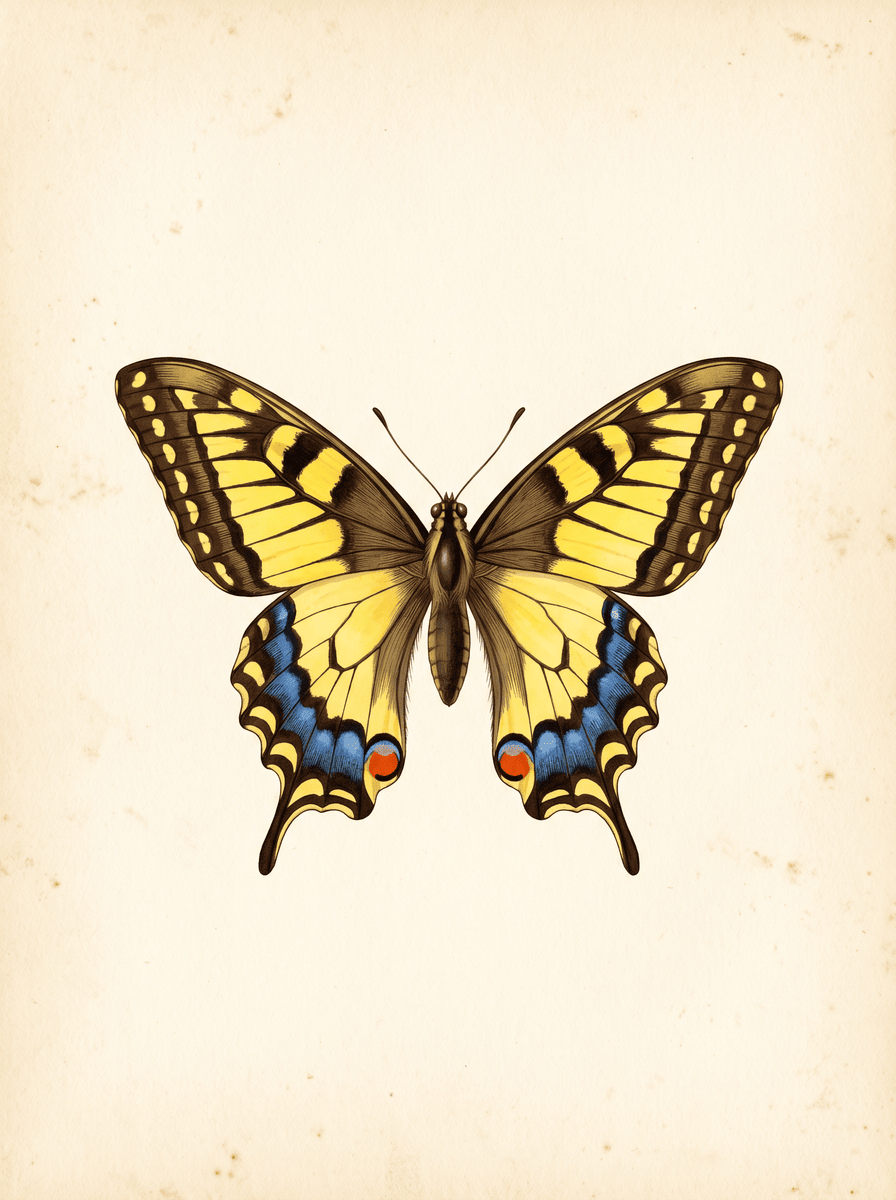
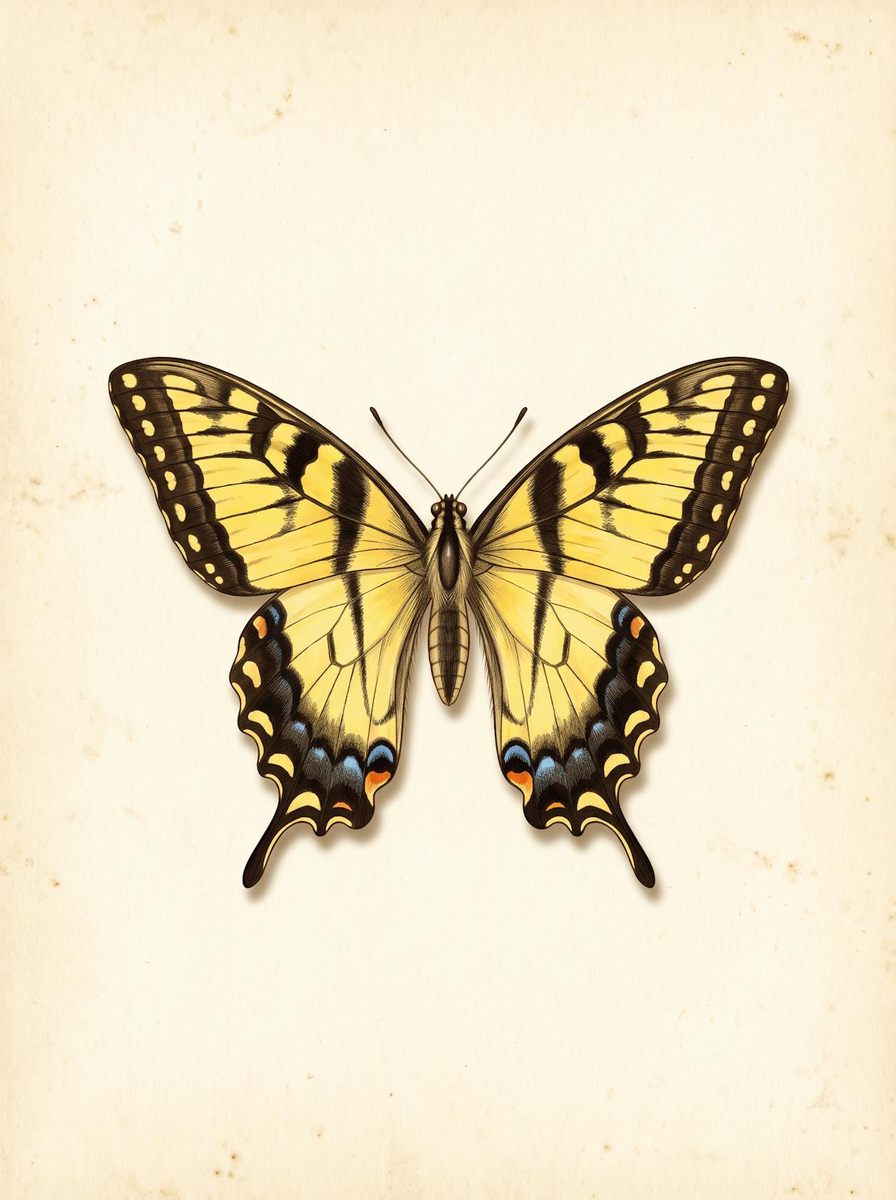
Anise swallowtail butterfly (Papilio zelicaon) natural history plate

No. 09 · Native swallowtail · Larval host specialist

The Anise Swallowtail

Papilio zelicaon

California native. Caterpillar host on fennel, parsley, citrus. The argument for host plant versus nectar plant lives here.

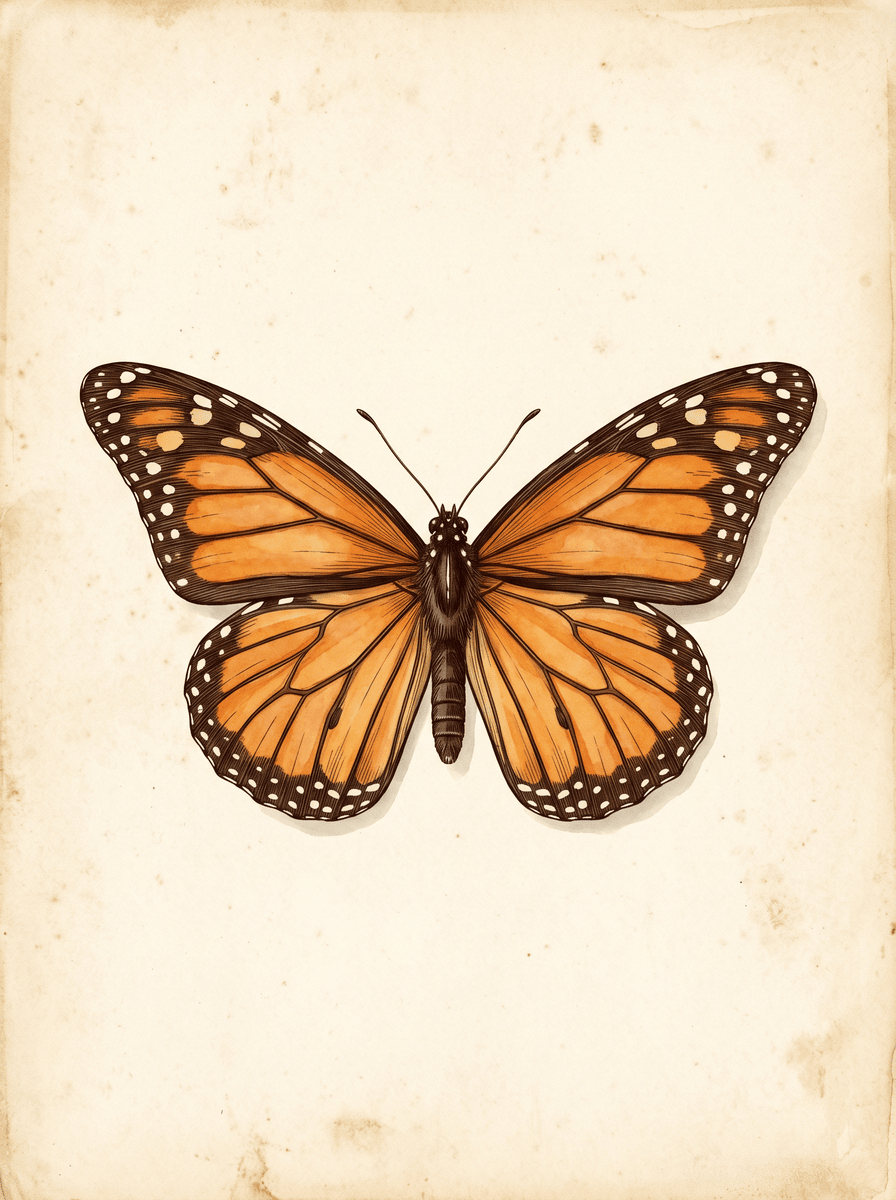
Monarch butterfly (Danaus plexippus) natural history plate

No. 10 · Obligate specialist · Pollinia mechanism

The Monarch

Danaus plexippus

Milkweed obligate. Carries pollen in unique sticky packets called pollinia, the same mechanism orchids use. A cultural and ecological anchor.

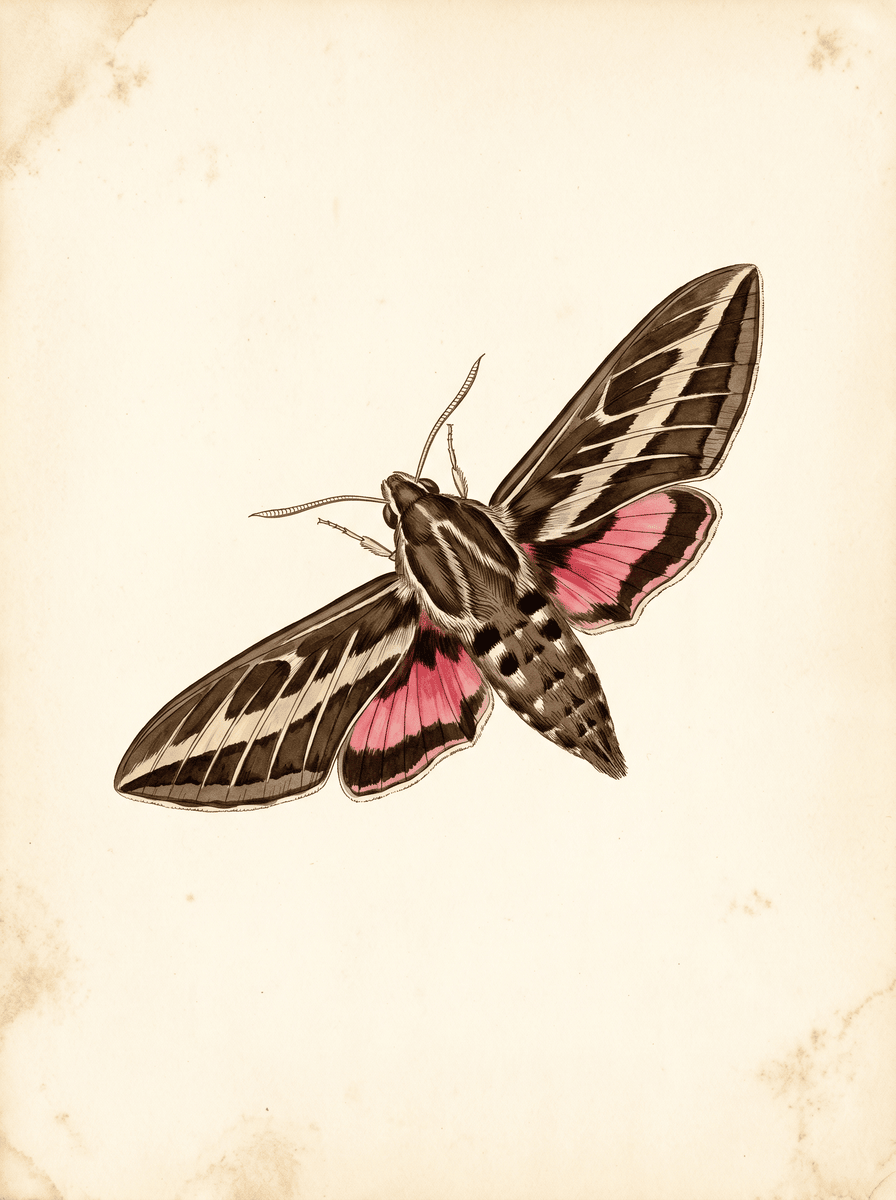
White-lined sphinx moth (Hyles lineata) natural history plate

No. 11 · Dusk pollinator · Long proboscis

The White-Lined Sphinx Moth

Hyles lineata

Hovers like a hummingbird at dusk. Tongue reaches deeper than almost any other Bay Area pollinator. The reason night-blooming flowers exist.

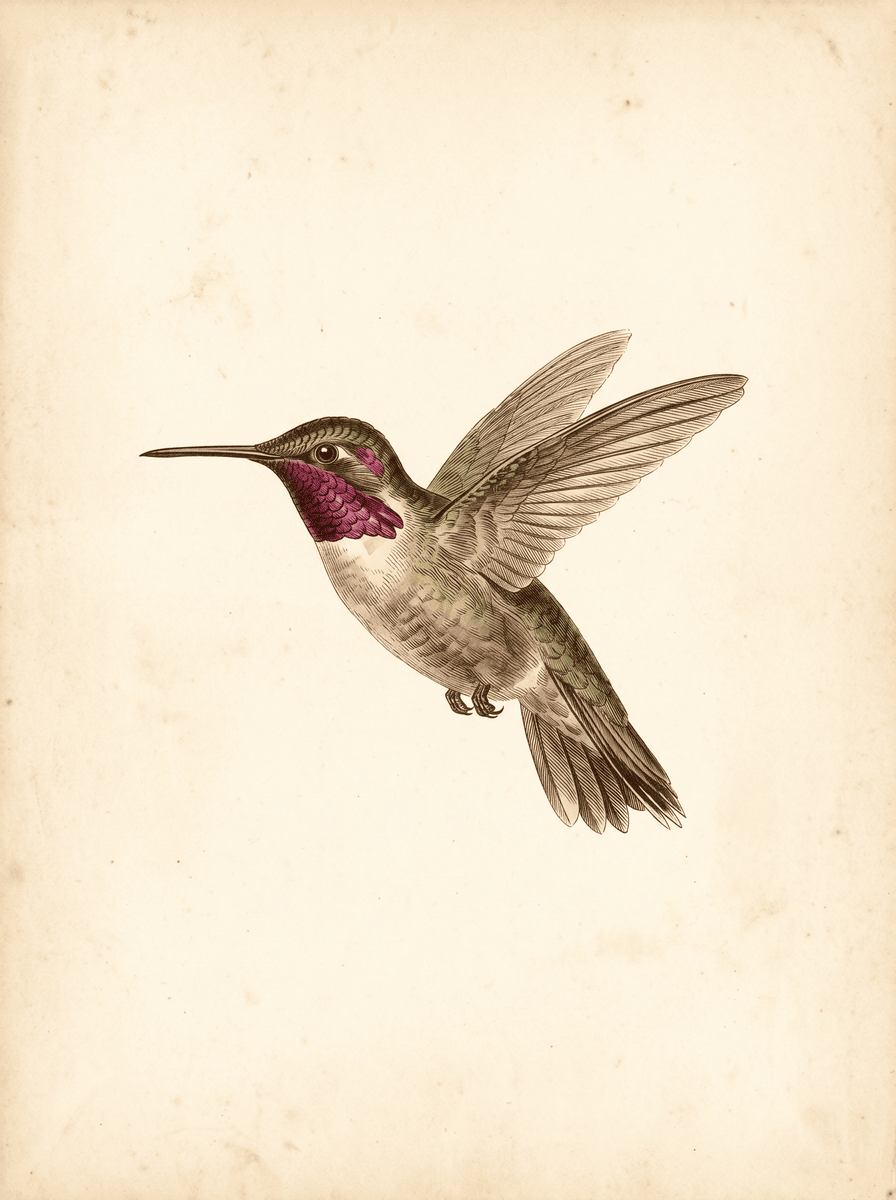
Anna's hummingbird (Calypte anna) natural history plate

No. 12 · Vertebrate · Red tubular coevolution

Anna's Hummingbird

Calypte anna

The only vertebrate in the Library. Year-round Bay Area resident. Red tubular flowers like California fuchsia, currants, and monkeyflower exist because she does.

How to use this hub

Bookmark the page or follow The Window Box newsletter to know when entries begin. If you're scanning to identify a pollinator you spotted in the garden, work the visual: small short-tongued flies and bees on flat composite flowers up top; long-tongued butterflies and the hummingbird on tubular flowers near the bottom of the shelf. The morphological ordering predicts what flowers each creature prefers, which is the editorial argument the pillar will spend twelve entries making.