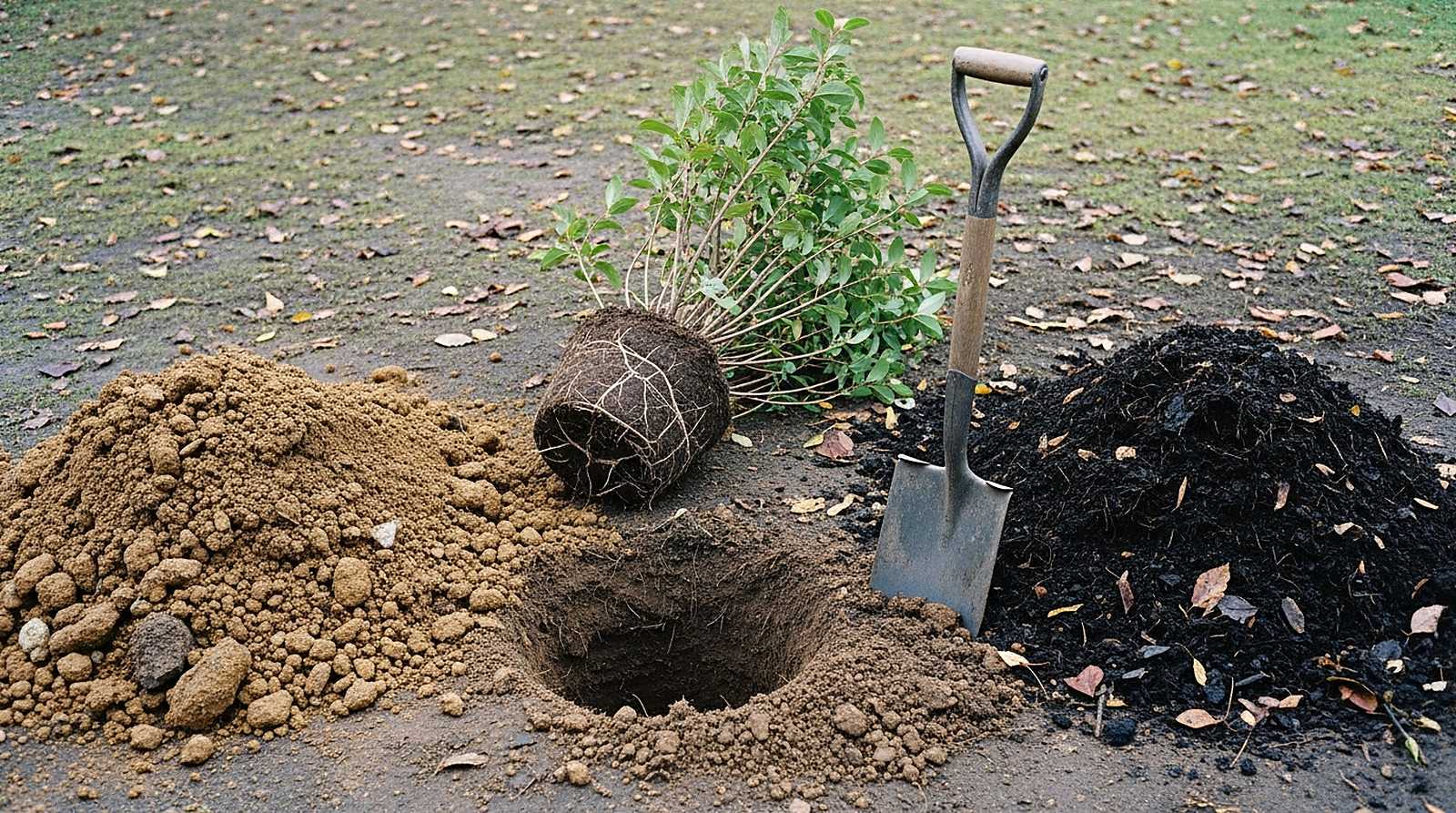
Dig a hole, work in a few handfuls of compost, set the tree in the good stuff. It's the most repeated planting advice there is. Whether it actually helps comes down to one thing: how far past the hole you're willing to dig.
On this page
5 sections
The claim
When you plant a tree or shrub, dig your hole and blend a generous helping of compost, peat, or bagged mix into the soil you shovel back around the roots (the backfill). Give the new roots a soft, rich landing and they'll take off faster. It feels tidy and generous, and some version of it is printed on the back of half the amendment bags at the garden center.
What actually happens
The roots don't cooperate. In a two-year field trial on live oak (Quercus virginiana), Gilman (2004) found no gain in top growth or root growth from amendments worked into the backfill, compared with trees set in the plain native soil that came out of the hole. Watson and colleagues (1993) planted shrubs into compacted clay and measured roots on both sides of the boundary; density was just as high in the untouched clay beyond the hole as inside the amended backfill, so the feared wall at the interface never showed up.
There's a cost tucked inside the generosity. A light, water-holding pocket surrounded by firmer soil drains slowly, the way water pools in a saucer, so the roots you meant to pamper might stay wet (arborists call it the bathtub effect). And as all that fluffy organic matter breaks down and compresses, the rootball rides down with it. Schuch and colleagues (2004), working in Arizona, saw the result three years on: 37% of trees planted with 33 to 50% compost in the backfill were leaning or had sunk at the crown, against 3% of trees planted in native soil alone.
So why does everyone swear by it?
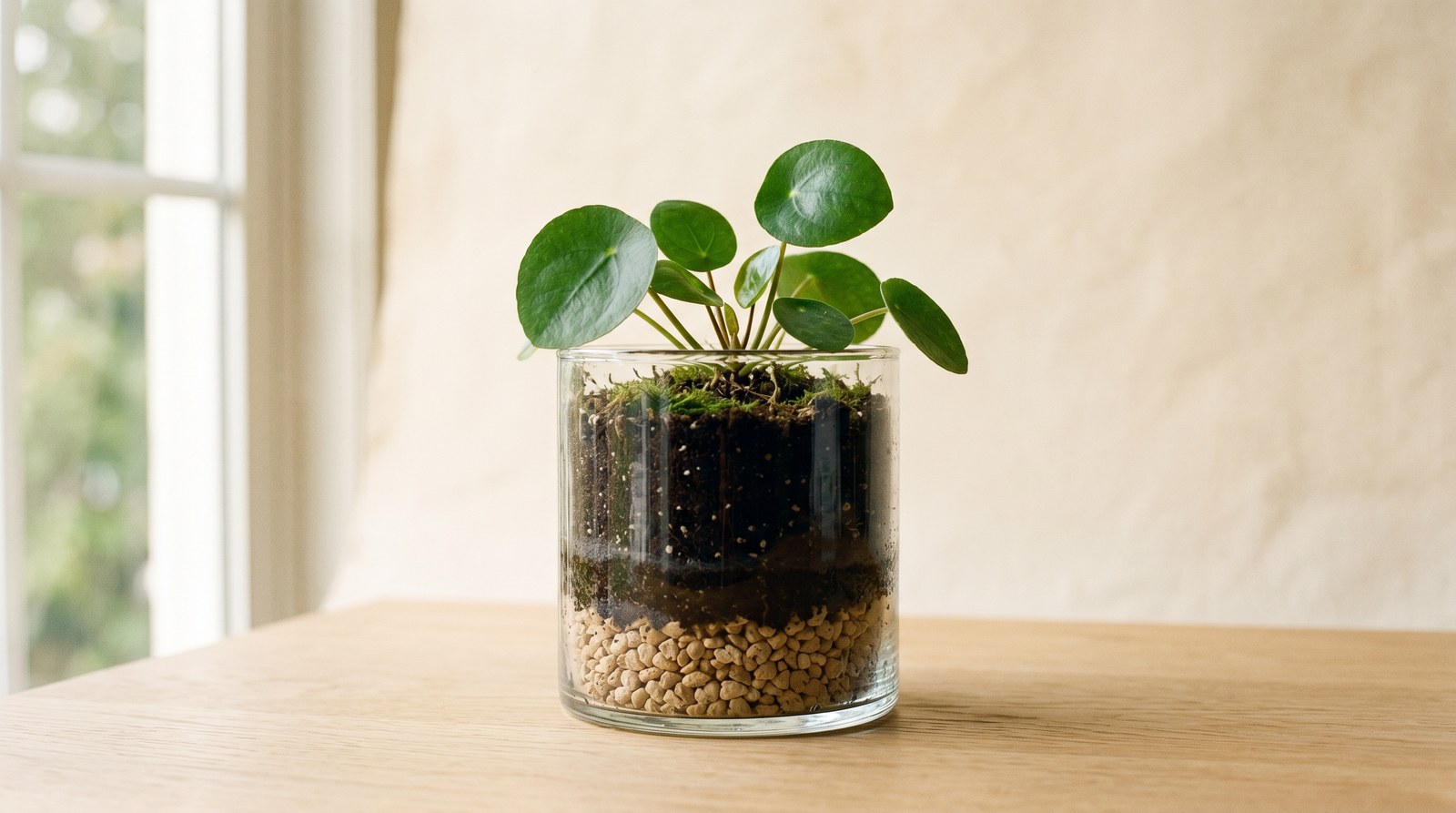
Because it feels right, and because it's borrowed from a setting where it is right. Potting a houseplant, you reach for a rich, open mix every time. But a container is a closed box, and a planting hole is a doorway into a whole yard of soil. The instinct that serves the pot works against the tree. The advice also outran the evidence: the backfill studies mostly arrived after "amend everything" was already set in print.
When amending is the right move
Here's the nuance the old rule flattens. Amendment works beautifully when you treat the bed instead of the hole. Sweet and colleagues (2025) mixed compost deep and wide across a boulevard planting and grew Kentucky coffeetrees (Gymnocladus dioicus) with lower soil density, better water-holding, and noticeably larger canopies and deeper roots. Scale is the whole story: an area of improved soil gives roots somewhere to travel, while one amended hole just builds a nicer trap.
So if your ground is really poor, spread 2 to 3 inches (5 to 7.5 cm) of compost across the entire bed and work it into the top several inches before you set a single plant. Filling a raised bed or a container? Amend freely; that's a box, and boxes want a built mix. Whatever you plant, finish with a few inches of mulch over the surface and keep it off the trunk. It feeds the soil from the top down, slowly, the way a forest floor does.
The verdict
It's complicated, but the fork is easy to see. Amend one planting hole for a tree or shrub and you're not helping; you may be setting up a slow lean. Improve the whole bed, or fill a container, and amendment is exactly right. Dig wider, not richer.
Gilman, E. F. (2004). Effects of amendments, soil additives, and irrigation on tree survival and growth. Arboriculture & Urban Forestry, 30(5), 301–310. auf.isa-arbor.com
Watson, G. W., Kupkowski, G., & von der Heide-Spravka, K. G. (1993). Influence of backfill soil amendments on establishment of container-grown shrubs. HortTechnology, 3(2), 188–189. journals.ashs.org
Schuch, U. K., Kelly, J. J., & Cox, K. (2004). Effect of planting hole size and amendments on growth and establishment of Acacia farnesiana. Turfgrass, Landscape and Urban IPM Research Report 2004, University of Arizona. repository.arizona.edu
Sweet, S., et al. (2025). Deep compost amendment reduces soil bulk density resulting in improved growth of urban Gymnocladus dioicus trees over time. Urban Forestry & Urban Greening. sciencedirect.com
Clemson Cooperative Extension, Home & Garden Information Center. (n.d.). Planting trees correctly. hgic.clemson.edu