The Planters' Guild · A Pillar of the Guild
The Leaf Library
Learning to read leaves, one shape at a time. A field guide to the twelve canonical leaf shapes that recur across the plant world, and the strategies they reveal.
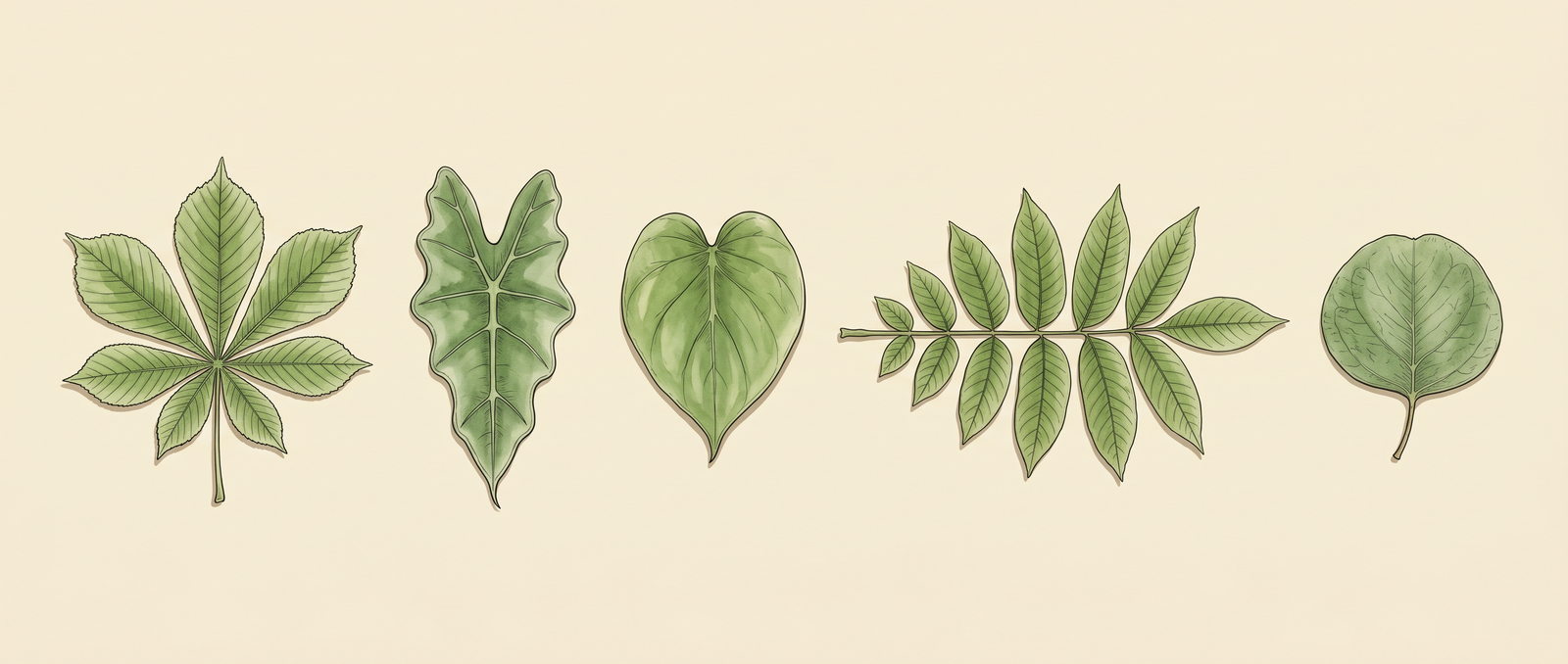
Most gardening writing starts with the plant. The genus, the species, the cultivar. We start with the leaf.
Leaf shape is the universal visual language plants use, and it carries real information. The same shape repeats across unrelated lineages because it solves a recurring problem (this is called convergent evolution). Read the shape, and you've already learned something useful about the strategy underneath: how the plant captures light, manages water, survives heat, and prepares for the next season.
The Leaf Library covers twelve canonical shapes, released one at a time. Each entry takes one shape, one anchor plant, and roughly six hundred words to teach you to recognize it. The first entries are anchored to California natives; the later ones pivot to houseplants and shapes that recur across genera most growers already know. The cards below run in publication order — start at № 01 and read down.
A note before you scan the grid: the eleven shapes featured here are the outliers, where the leaf outline itself carries diagnostic information. Most leaves you encounter — basil, citrus, peach, magnolia, most landscape shrubs, most houseplants — are ovate or elliptic, shapes where the outline doesn't tell you what the plant is. Those leaves get their own treatment in the year's closer (No. 12), where margins do the diagnostic work that shape can't.
Shapes 01–04 · anchored in California natives
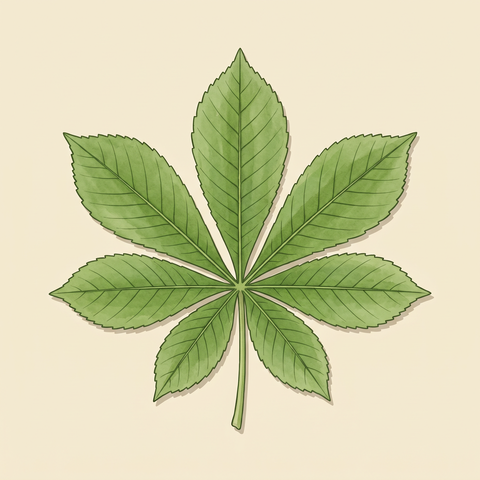
Palmately compound
Five to seven leaflets radiate from one point at the tip of the petiole — no central axis. The shape of Aesculus californica, Schefflera, lupine, and the money tree.
Read the entry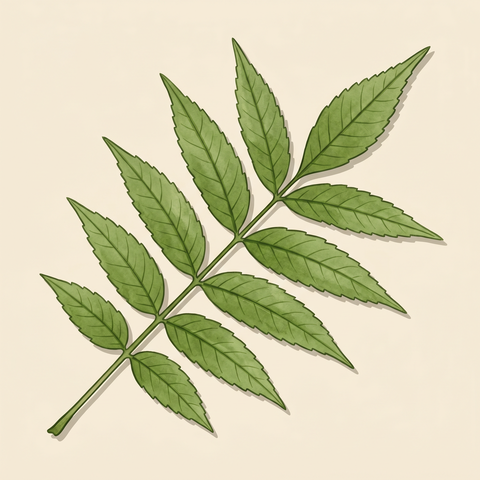
Pinnately compound
Leaflets pair off along a central rachis (the extended axis). Walnut, ash, rose, tomato, ZZ plant, and most ferns. Juglans hindsii anchors the entry.
Read the entry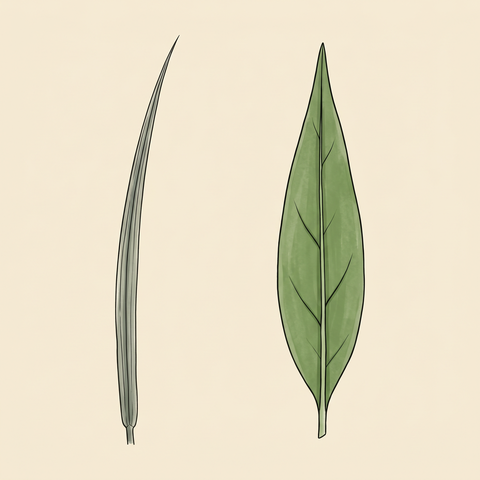
Linear & lanceolate
Long, narrow blades, often parallel-veined. The signature of grasses, conifers, snake plant (Dracaena trifasciata), willow, and oleander. Lanceolate is the spear-shaped variant, widest below the middle.
Read the entry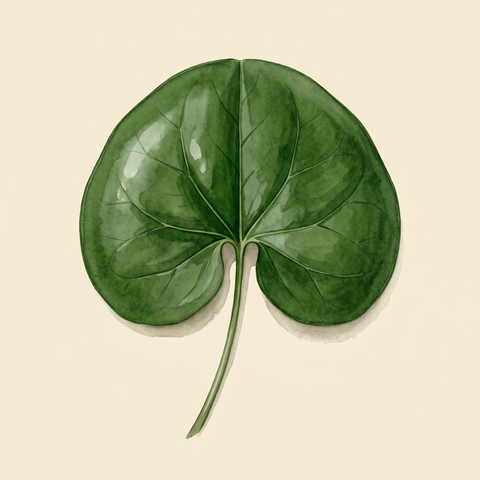
Reniform
Wider than long, with a notched base where the petiole meets the blade. The wild gingers sit right on the line between kidney and heart, and the floras disagree about which side ours falls on. Centella and mountain sorrel carry it too.
Read the entryShapes 05–11
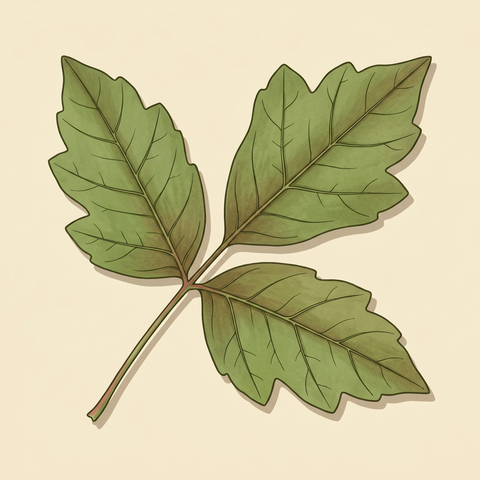
Trifoliate
Three leaflets from a single point. Clover, strawberry, and bean live here. So does poison oak (Toxicodendron diversilobum), which is reason enough for the shape to earn its own entry.
Queued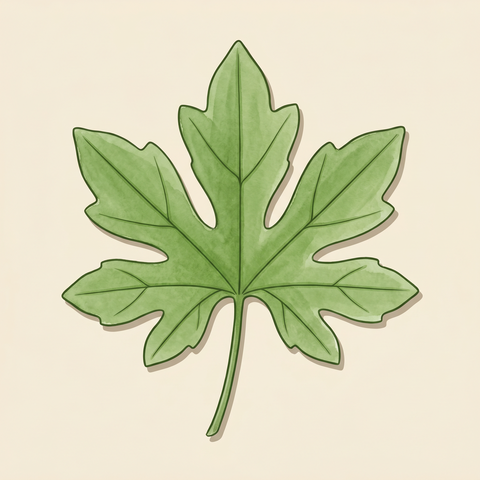
Palmate
One continuous blade with finger-like lobes radiating from the petiole. The lobes never separate fully into leaflets. The maple silhouette, and the marker of California sycamore (Platanus racemosa) and manroot (Marah fabaceus).
Queued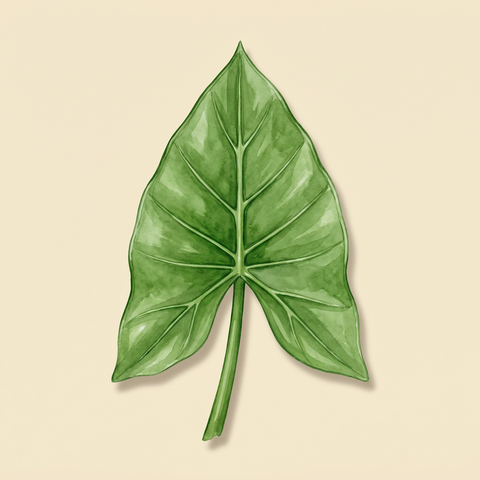
Sagittate
A central triangle with two basal lobes pointing rearward beside the petiole. The arrowhead of the wetland world, and the giveaway shape of Alocasia, Caladium, and Syngonium podophyllum.
Queued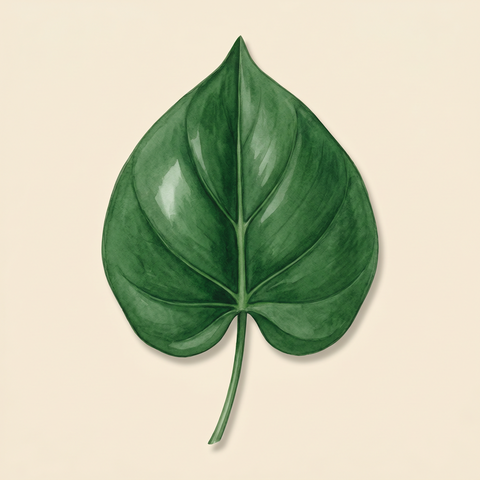
Cordate
Rounded basal lobes meet at a notched sinus where the petiole attaches. The classic heart outline. Common in Philodendron, Hoya kerrii, redbud (Cercis canadensis), and linden (Tilia).
Queued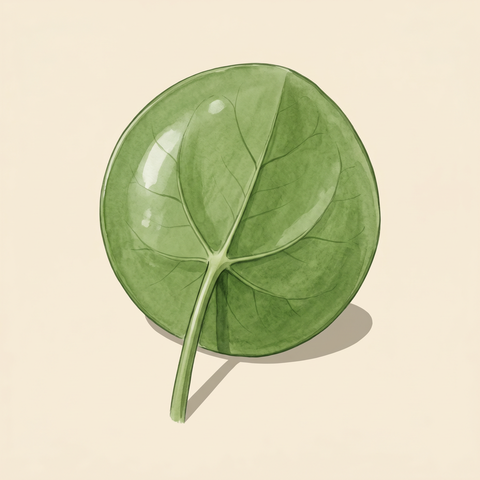
Peltate
The petiole attaches to the underside of the blade, not the margin. The leaf is held like an umbrella overhead. Best known in Pilea peperomioides, nasturtium (Tropaeolum), and lotus (Nelumbo).
Queued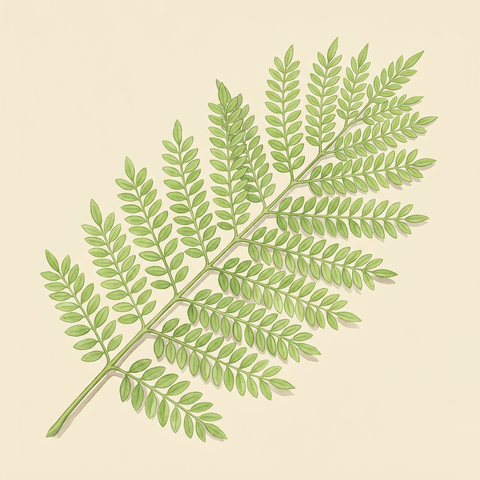
Bipinnate
Leaflets along an axis, each itself divided into smaller leaflets. A feather of feathers. Jacaranda, mimosa, silk tree, and many ferns wear this shape.
Queued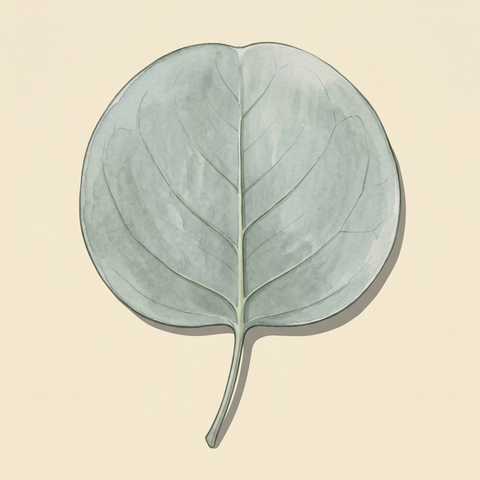
Orbicular
Length and width roughly equal, with a smooth or barely-toothed margin. Seen in Pilea cadierei, juvenile Eucalyptus, watercress, and many succulents (Cotyledon orbiculata).
QueuedThe Synthesis
Margins as morphology, and the shapes that don't have one
Most leaves are ovate or elliptic. Basil, citrus, magnolia, peach, beech, rose, camellia, most rhododendrons, the majority of houseplants. The outline doesn't teach you what they are. The margin does. Serrate, dentate, crenate, entire, lobed — these are the diagnostic features for leaves where shape carries no information.
The eleven shapes above are the outliers, where the leaf outline itself is the diagnostic. The closer ties the year together: read the shape when shape teaches; read the margin when shape can't.
By the end of the series, you should be able to read a leaf the way a birder reads a silhouette.
How to use this hub
If you're new to the pillar, start at № 01, Palmately compound. Trying to name a leaf you're holding? Scan the thumbnails until you see something close. Teachers: every shape is a self-contained mini-lesson with the science cited and the convergent-evolution story attached. Welcome in.
Sources
American Museum of Natural History. (n.d.). Plant morphology: Types of compound leaves. Retrieved May 23, 2026, from https://www.amnh.org/learn-teach/curriculum-collections/biodiversity-counts/plant-identification/plant-morphology/types-of-compound-leaves
Britannica. (n.d.). Palmately compound leaf. Retrieved May 23, 2026, from https://www.britannica.com/science/palmately-compound-leaf
Mauseth, J. D. (2017). Botany: An introduction to plant biology (6th ed.). Jones & Bartlett Learning.