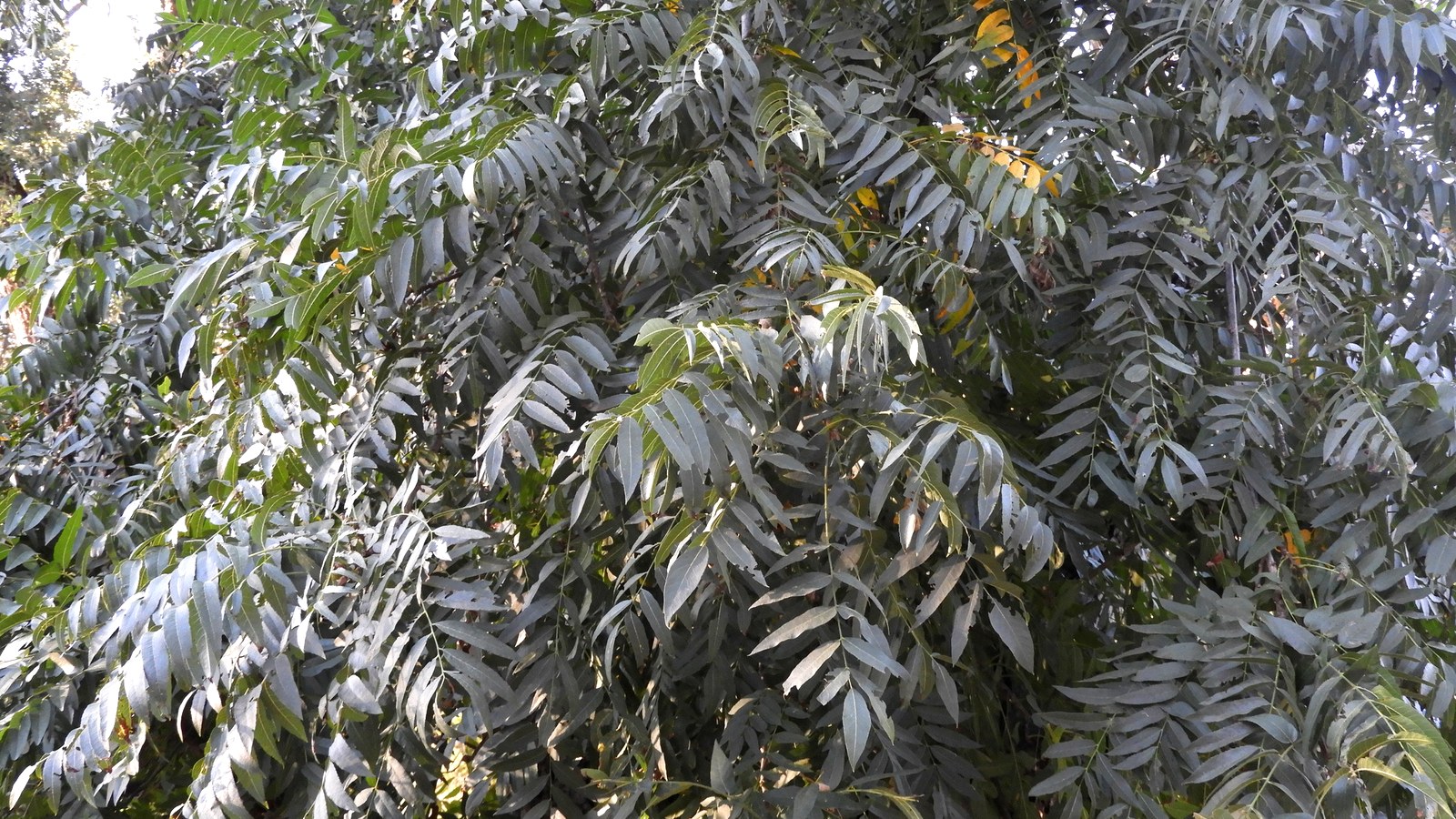
The shape where leaflets pair off along an extended central axis, and the California native that wears it best. What a walnut leaf is actually doing, and what it probably isn't doing to your tomatoes.
The California buckeye in No. 01 drops every leaf by August and calls the year finished. A California black walnut growing fifty feet (15 m) down the same creek holds its canopy into October, turns yellow, and goes bare on the schedule most of us were taught to expect.
Two native trees, both carrying compound leaves, on opposite schedules. The difference starts with how the leaflets are arranged along the stalk.
Reading the shape
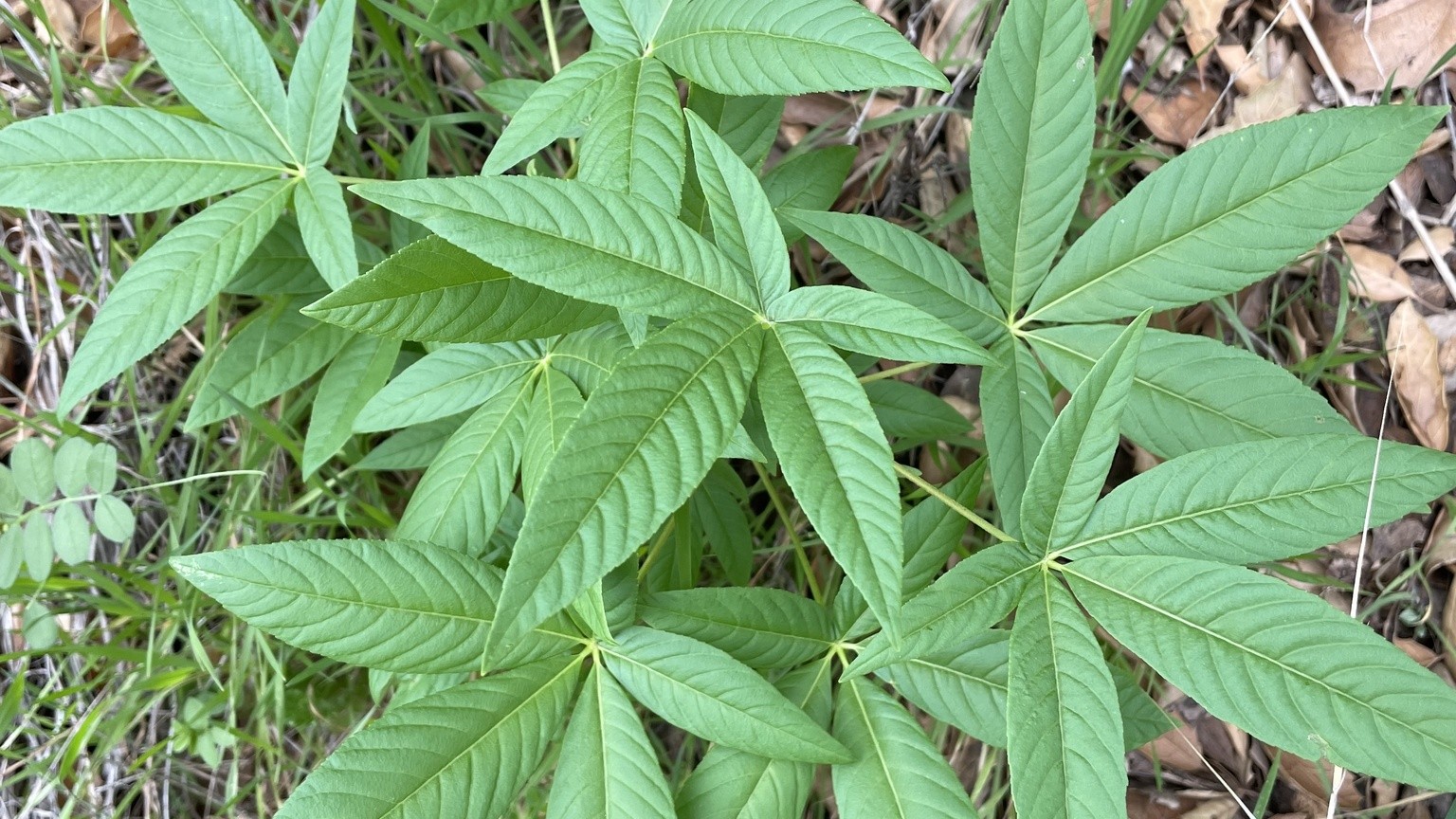
A pinnately compound leaf runs its leaflets in pairs along an extended central axis called the rachis. The result looks like a feather, which is where the name comes from: pinna is Latin for feather. If the rachis ends in a single unpaired leaflet, the leaf is odd-pinnate. If it ends in a matched pair, it's even-pinnate. Walnuts are odd-pinnate, with the terminal leaflet fully developed (Flora of North America Editorial Committee, 1997).
Set that against the buckeye. There, every leaflet meets at one point on the petiole (the stalk connecting a leaf to its stem), and there's no rachis at all. That's the whole diagnostic, and it takes two seconds. Trace the leaflets back to where they attach. One meeting point is palmately compound. A line of paired attachments running down an axis is pinnately compound (Britannica, n.d.; American Museum of Natural History, n.d.).
The harder call is telling a compound leaf from a twig carrying simple leaves, because a walnut rachis looks a lot like a small branch. Two tests settle it. First, look for a bud: buds form where a true leaf joins the stem, never at the base of a leaflet. Second, watch what happens in autumn. A compound leaf abscises as a single unit, rachis and all, leaving one scar behind instead of a row of them.
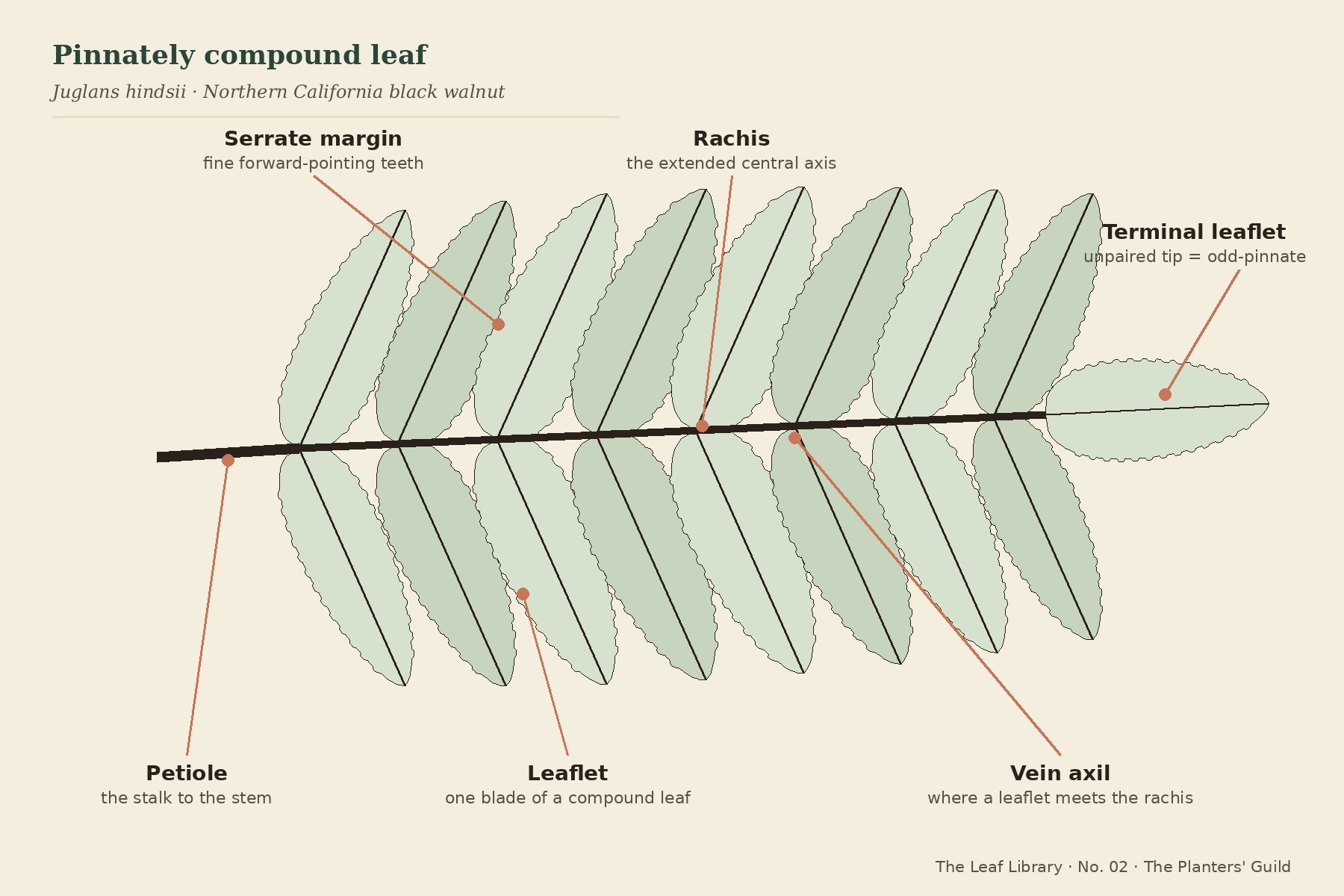
If you're in the Bay Area, the walnut in front of you is almost certainly Juglans hindsii, Northern California black walnut, native to the Central Valley, the inner north Coast Ranges, and Bay Area creek corridors. Its leaves run 9 to 18 in (22 to 45 cm), carry 13 to 21 serrate leaflets, and hide small tufts of hair in the vein axils, where the side veins meet the midrib on the underside. South of Ventura County you get Juglans californica, the Southern California black walnut: shorter leaves at 6 to 9.5 in (15 to 24 cm), usually 11 to 15 leaflets, and no hair tufts at all (Flora of North America Editorial Committee, 1997).
So the field sequence is: find the rachis, count the leaflets, then turn a leaflet over and run a thumb along those vein axils. The hair tufts, or their absence, tell you which of California's two native walnuts you're standing under.
The strategy
A pinnately compound leaf is, functionally, a branch the tree agrees to throw away. Rather than building a woody twig and hanging simple leaves off it, the plant builds a rachis, lines it with leaflets, runs it for one season, and sheds the entire assembly in autumn. Botanists call this the throwaway-branch strategy, and it isn't free. Rebuilding that much structural tissue every year is a real carbon cost (Yang et al., 2019).
What appears to buy it back is plumbing. In a comparison of compound-leaved and simple-leaved trees, whole-branch hydraulic conductance in the compound-leaved group ran roughly three times higher (Yang et al., 2019). More water moving per unit of pressure supports the high photosynthetic rates a throwaway strategy needs to pay for itself. How much of that you actually get depends on the wood, so it isn't a universal rule.
The ecological advantage of compound leaves isn't settled. When researchers tested 34 species for differences in construction cost, toughness, water content, and herbivore damage, the compound-leaved group didn't separate from the simple-leaved group in any way that held up once you account for shared ancestry, since related species inherit traits from each other whether or not the trait is earning its keep (Warman et al., 2011). The genetics of how a compound leaf gets built are mapped in fine detail, at least in the model legumes (He et al., 2020). We're still arguing about the payoff.
Walnut's timing, at least, is easy to explain. Juglans hindsii is a streamside tree with access to summer water. It has no reason to run buckeye's drought-escape program, so it does the textbook thing instead: leaf out in spring, flower in April and May, work through the whole summer, color yellow, and drop in autumn (Flora of North America Editorial Committee, 1997).
Where else you see it
The shape across six plants
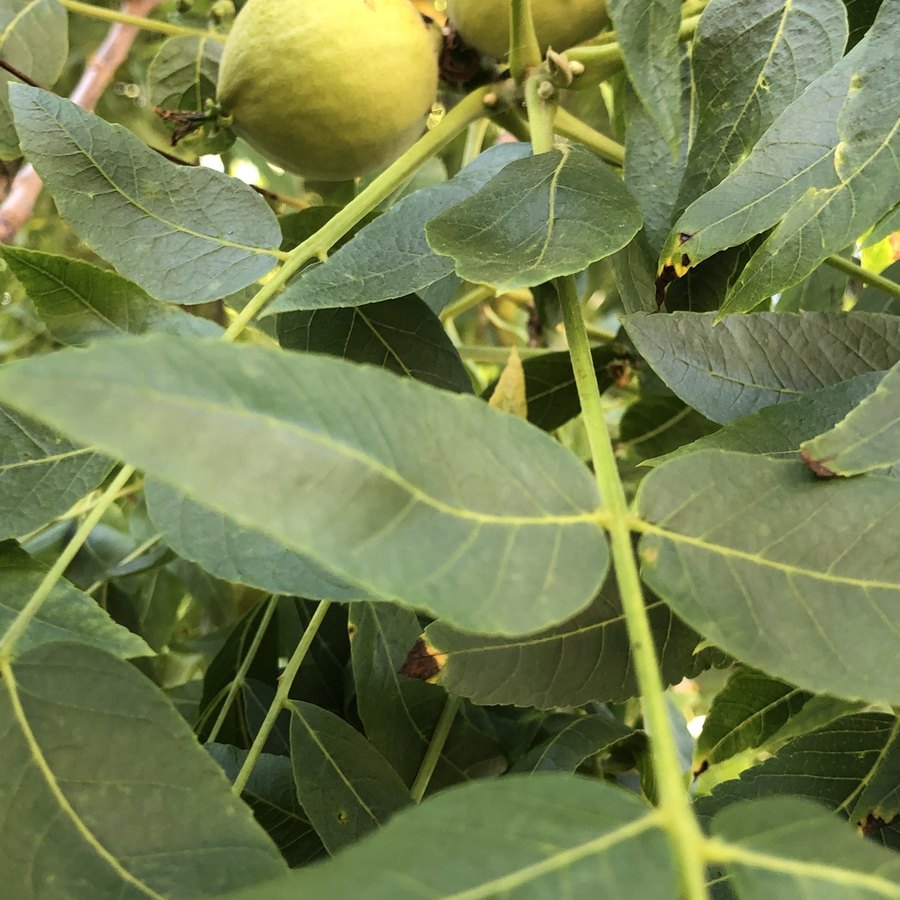
N. California black walnut
Juglans hindsii
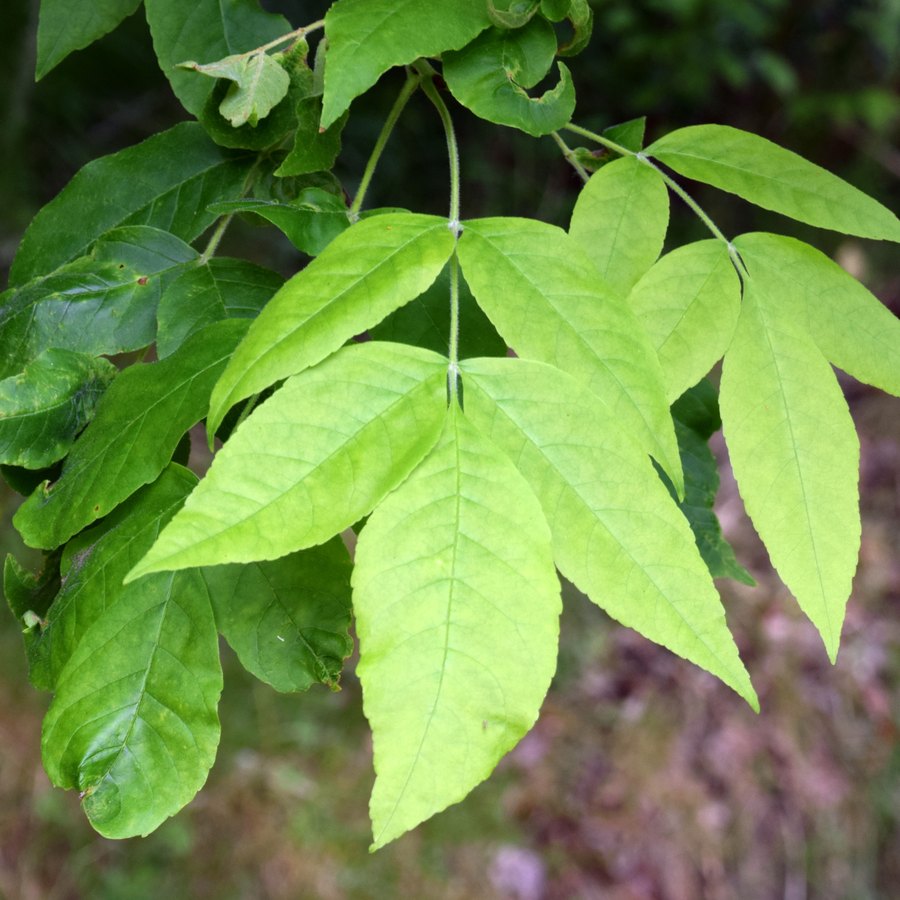
Oregon ash
Fraxinus latifolia
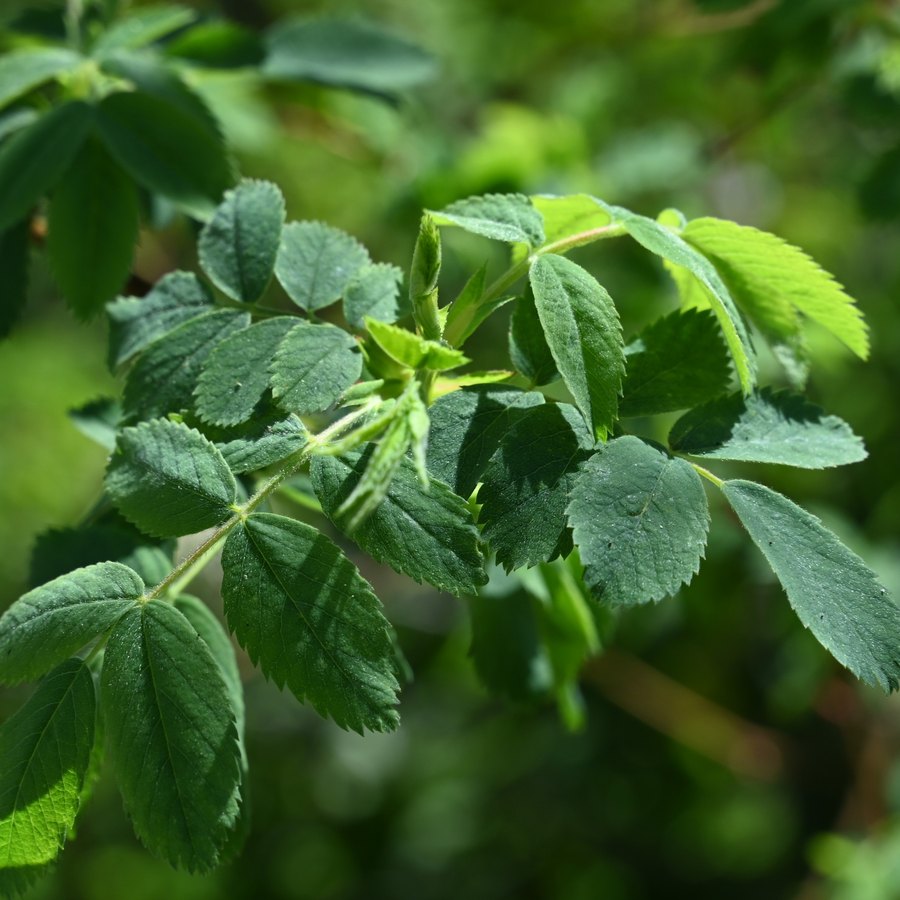
California wild rose
Rosa californica
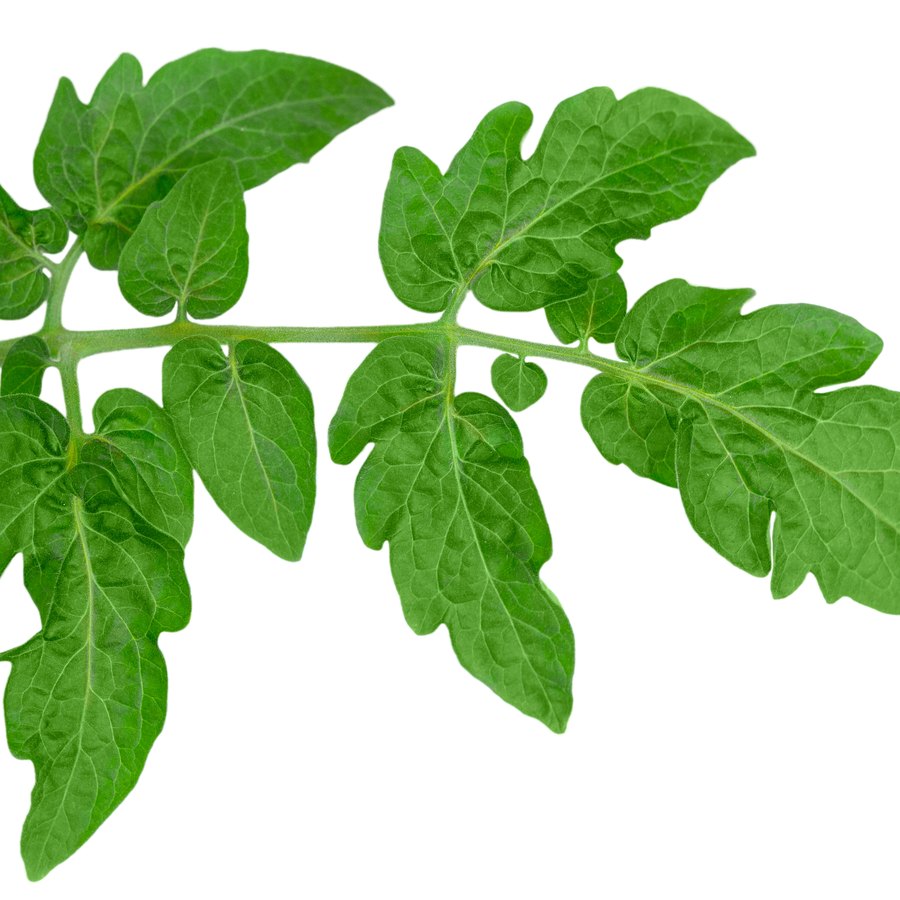
Tomato
Solanum lycopersicum
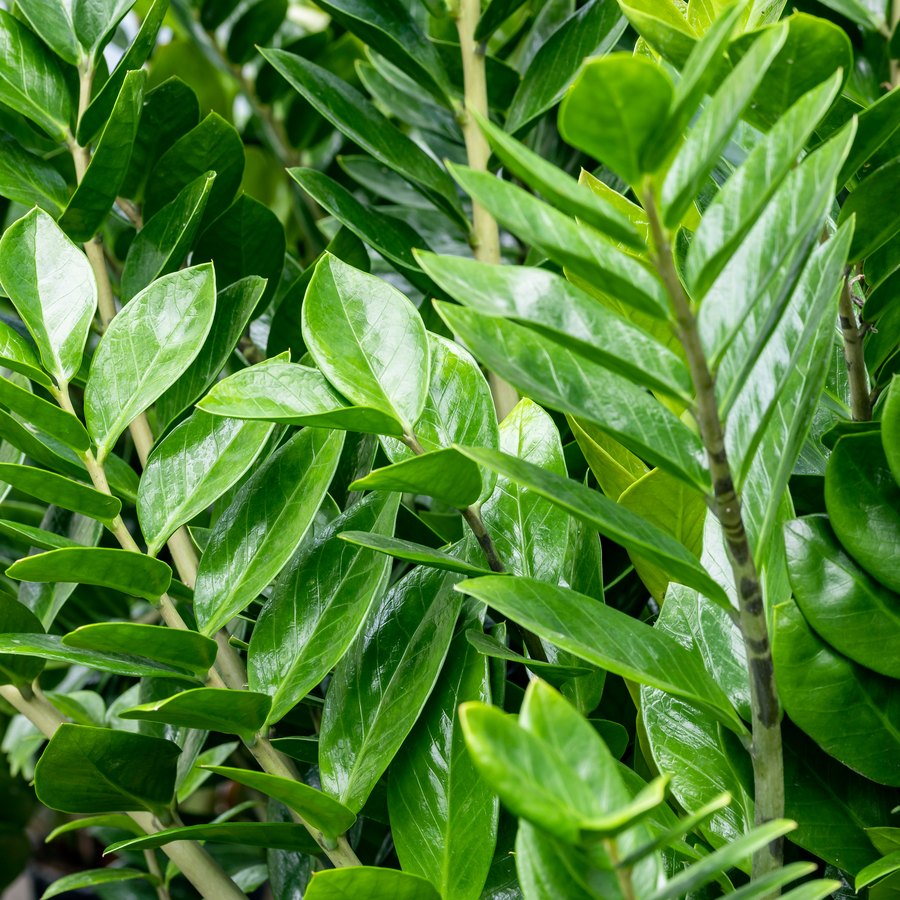
ZZ plant
Zamioculcas zamiifolia
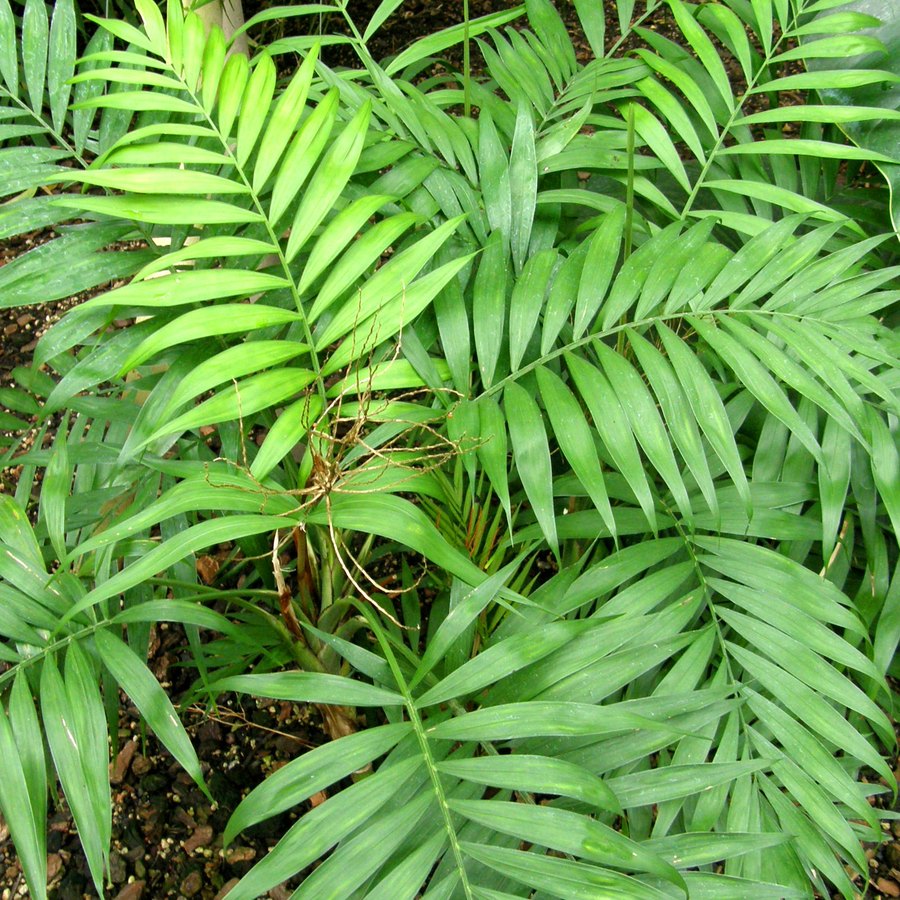
Parlor palm
Chamaedorea elegans
Six plants, six unrelated families: walnut, olive, rose, nightshade, aroid, palm. The shape keeps getting reinvented, the same way palmately compound did in No. 01.
The one to look at twice is the ZZ plant. What most people handle as a stem is the rachis of one enormous leaf, and the glossy ovals along it are leaflets, not leaves. Cut one off at the base and you haven't pruned a branch. You've removed a single leaf.
What growers should do with this
Now the part everyone has heard about. Every walnut produces juglone, a compound concentrated in the roots and present in leaves, hulls, and stems, and juglone inhibits root development in sensitive plants under laboratory conditions. That's allelopathy: one plant releasing a compound that interferes with another. Penn State Extension recommends siting the classic sensitive crops (tomatoes, peppers, potatoes, plus rhododendrons and azaleas) 50 to 60 ft (15 to 18 m) away from a mature black walnut (Penn State Extension, n.d.).
The peer-reviewed picture is more cautious. Willis's review of the Juglans allelopathy literature found no unambiguous demonstration of the effect under natural conditions, noted juglone's limited solubility in water, and cited work in which soil effects ceased after 22 days because soil bacteria (Pseudomonas putida) had broken the compound down (Willis, 2000). A Washington State University extension review landed in the same place: field trials show little to no effect, and a good deal of the popular guidance traces back to sources that don't hold up on inspection (Chalker-Scott, 2019).
So, two moves. Keep tomatoes out of the drip line (the ground under the canopy edge, where the feeder roots are) if you want to be careful, because that costs you nothing and the lab evidence is real. But when something under an established walnut looks unhappy, check shade, root competition, and summer water before you reach for the chemistry. Those three account for most of what gets blamed on juglone, and unlike juglone, you can actually do something about them.
The shape is the reliable part. Work that sequence and the tree will tell you what it is. What it's doing to your tomatoes is a longer argument.
Photo credits, all cropped from the originals: hero, Northern California black walnut © simpylmare55, and the walnut grid card © ocean_beach_goth, both CC BY 4.0. Oregon ash © Krzysztof Golik and California wild rose © Krzysztof Ziarnek, Kenraiz, both CC BY-SA 4.0; parlor palm © Bachelot Pierre J-P, CC BY-SA 3.0. All five via Wikimedia Commons. Where an original is ShareAlike-licensed, the cropped version used here is offered under that same license. Tomato and ZZ plant licensed from Adobe Stock. The anatomy figure was generated with Adobe Firefly to a Planters' Guild brief.
Go deeper in the free Apprenticeship: Module I, How a Plant Works →
American Museum of Natural History. (n.d.). Plant morphology: Types of compound leaves. https://www.amnh.org/learn-teach/curriculum-collections/biodiversity-counts/plant-identification/plant-morphology/types-of-compound-leaves
Britannica. (n.d.). Pinnately compound leaf. Encyclopaedia Britannica. https://www.britannica.com/science/pinnately-compound-leaf
Chalker-Scott, L. (2019). Do black walnut trees have allelopathic effects on other plants? (Home Garden Series, FS325E). Washington State University Extension. https://pubs.extension.wsu.edu/product/do-black-walnut-trees-have-allelopathic-effects-on-other-plants-home-garden-series/
Flora of North America Editorial Committee (Ed.). (1997). Juglans. In Flora of North America north of Mexico (Vol. 3). Oxford University Press. http://www.efloras.org/florataxon.aspx?flora_id=1&taxon_id=10460
He, L., Liu, Y., He, H., Liu, Y., Qi, J., Zhang, X., Li, Y., Mao, Y., Zhou, S., Zheng, X., Bai, Q., Zhao, F., Wang, D., Wang, S., Zhu, Q., Tadege, M., Zhao, B., & Chen, J. (2020). A molecular framework underlying the compound leaf pattern of Medicago truncatula. Nature Plants, 6, 511–521. https://doi.org/10.1038/s41477-020-0642-2
Penn State Extension. (n.d.). Allelopathy in the home garden. https://extension.psu.edu/allelopathy-in-the-home-garden
Warman, L., Moles, A. T., & Edwards, W. (2011). Not so simple after all: Searching for ecological advantages of compound leaves. Oikos, 120(6), 813–821. https://doi.org/10.1111/j.1600-0706.2010.19344.x
Willis, R. J. (2000). Juglans spp., juglone and allelopathy. Allelopathy Journal, 7(1), 1–55.
Yang, D., Zhang, Y.-J., Song, J., Niu, C.-Y., & Hao, G.-Y. (2019). Compound leaves are associated with high hydraulic conductance and photosynthetic capacity: Evidence from trees in Northeast China. Tree Physiology, 39(5), 729–739. https://doi.org/10.1093/treephys/tpy147


.jpg)

