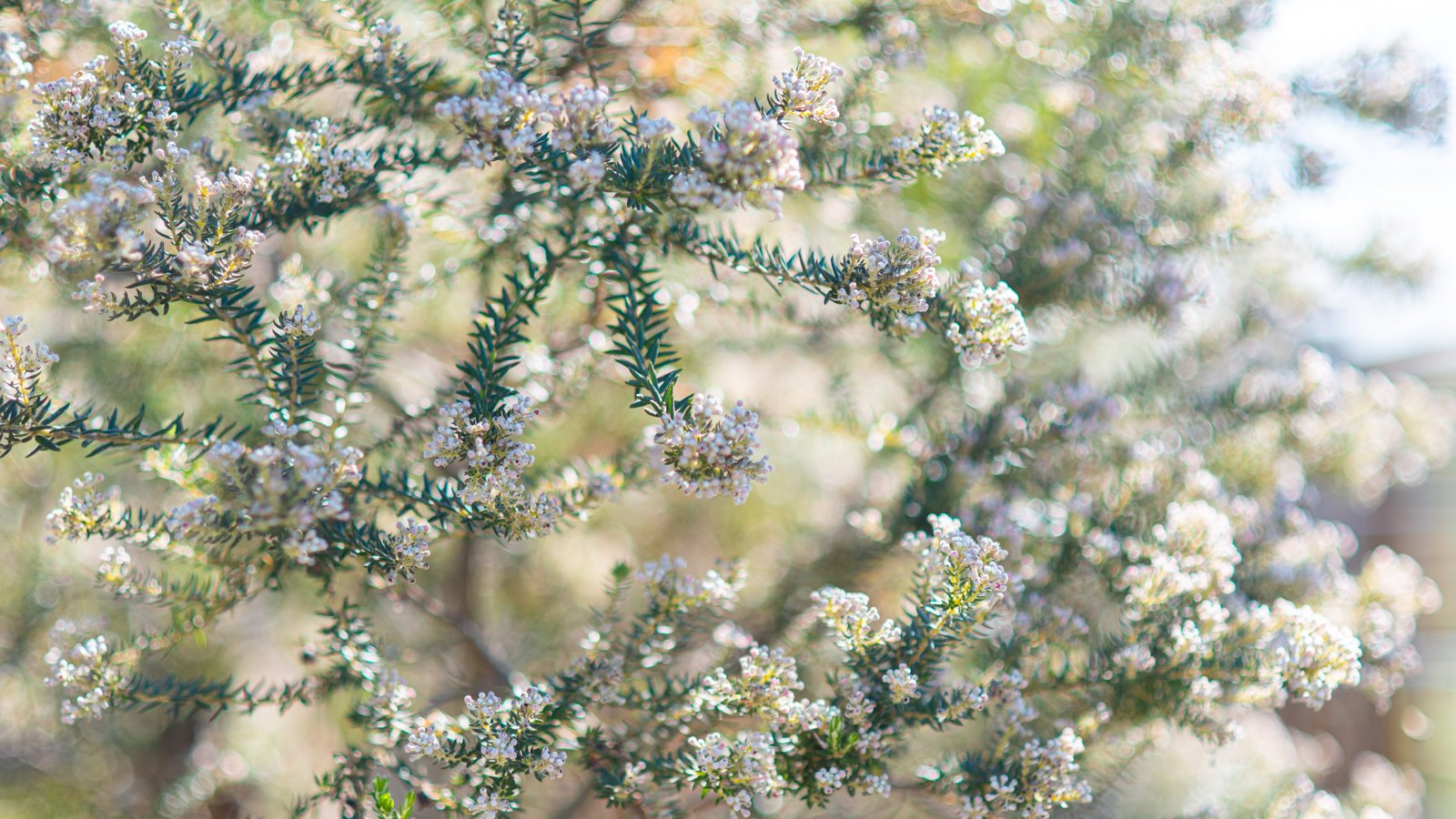
The narrow, parallel-veined blades that show up on grasses, conifers, willow, and snake plant. What a leaf gives up when it gives up width, and what it stops having to pay for.
By August the hills have sorted themselves out. The annual grasses have gone to straw, and most of what's still holding a green leaf is narrow. Needlegrass in the open ground, chamise on the slopes above it.
A grass and a rose, a long way apart on the flowering-plant tree, landing on the same silhouette. That's worth a look.
Reading the shape
Linear means the margins stay roughly parallel down the whole blade. There's no obvious widest point, because the width barely changes. Grass blades, conifer needles, chives.
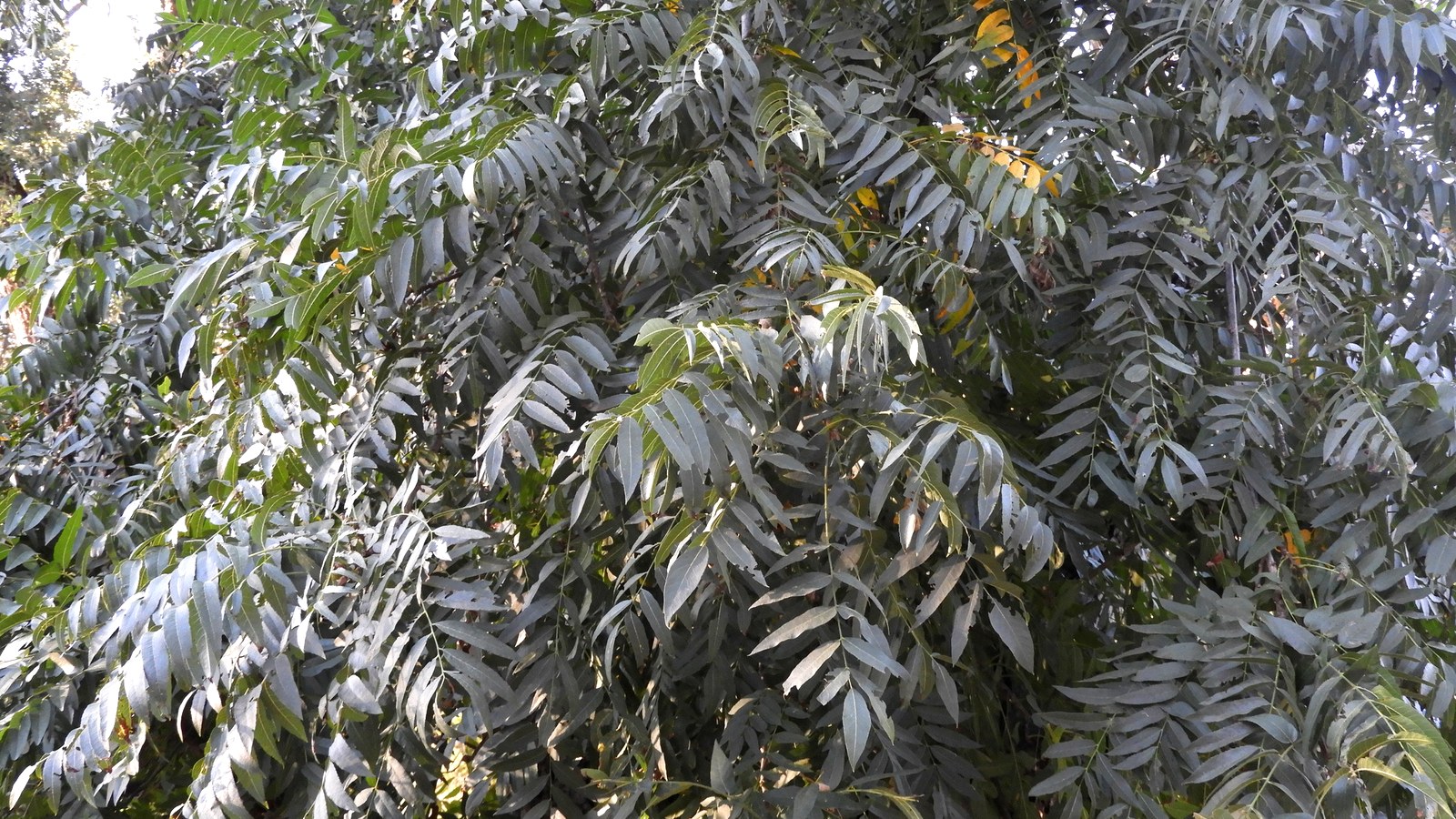
Lanceolate is the spear-shaped version: widest below the middle, tapering toward the tip. Willow is the one everybody knows.
Be careful with the textbook ratios. Missouri Botanical Garden's dictionary of botanical Latin calls lanceolate "a term of varied application" and sets out three traditions that disagree about the proportions and about where the blade is widest (Eckel, 2010–2023). So skip the arithmetic. Look at where the leaf is broadest, and whether the sides run parallel or taper.
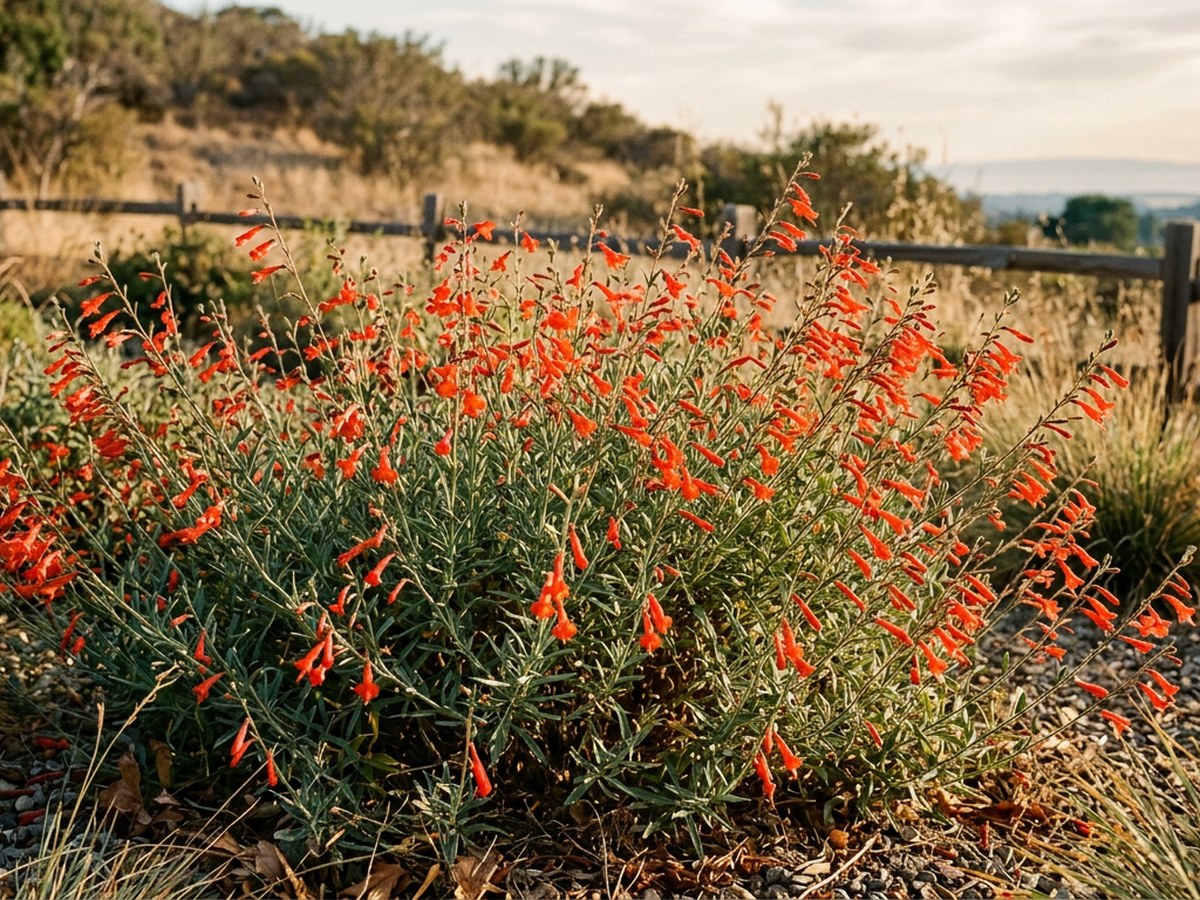
Purple needlegrass (Nassella pulchra, still tagged Stipa pulchra on nursery pots; Plants of the World Online, n.d.) carries blades 4 to 8 in (10–20 cm) long and 0.8 to 3.5 mm wide, just over an eighth of an inch at the widest (Flora of North America Editorial Committee, n.d.). Chamise (Adenostoma fasciculatum) works the same trick at a quarter of the scale, with leaves under half an inch (3–10 mm) long crowded onto short shoots so they read as bundles, the way a pine bundles needles. Flora of North America calls them linear-oblanceolate, meaning broadest above the middle instead of below. Lanceolate, run backwards.
The strategy
A narrow leaf isn't mainly a water-saving device. It's a plumbing decision.
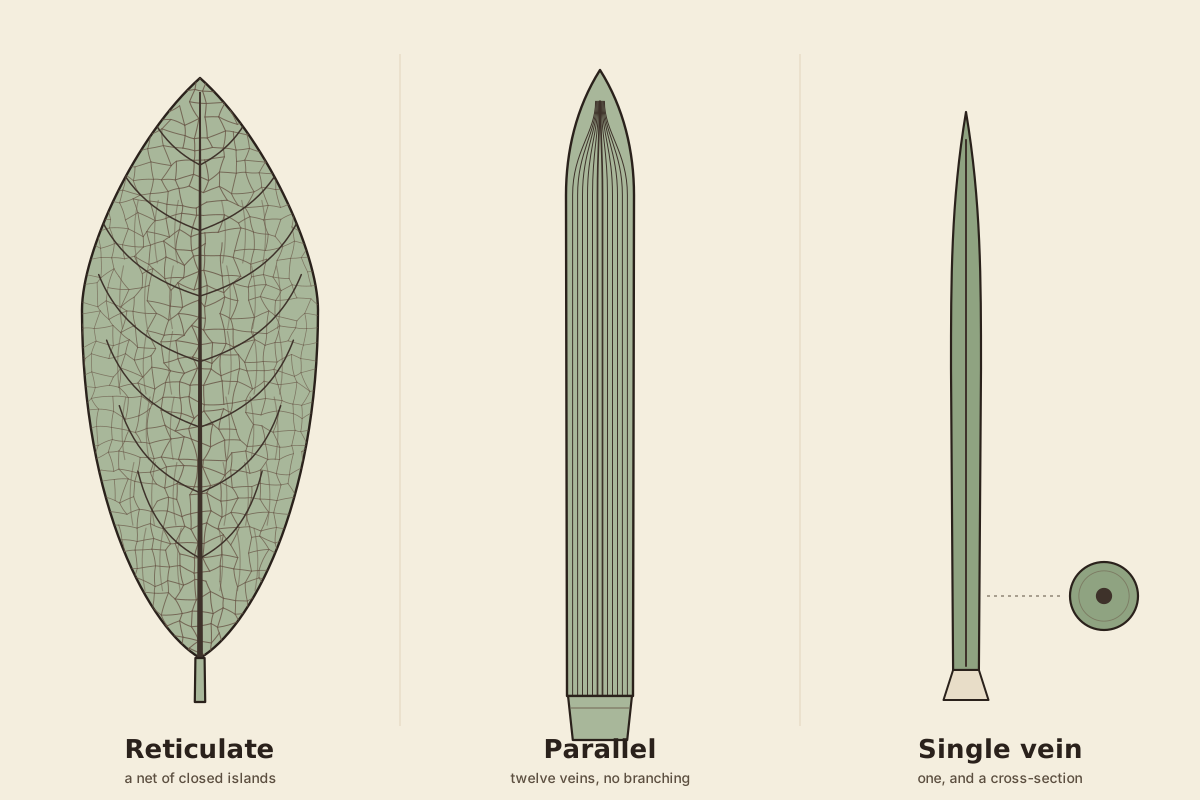
Broad leaves need expensive infrastructure. Water comes in at the petiole (the leaf stalk) and has to reach every cell out to the margin, which takes a midrib, secondary veins, and a fine net between them. Flowering plants went all in, packing 8 to 10 mm of vein into every square millimeter of leaf where other plant lineages average about 2 (Nicotra et al., 2011). What that buys is short distances, with no cell left far from water. Narrow the blade and geometry hands you the same thing for free. Grasses run their veins the length of the blade. Zwieniecki et al. (2006) push it further, calling the single-vein leaf the simplest hydraulic design possible, with pine needles as their model.
The thermal payoff comes second. A thin blade trades heat with the air quickly, so it tracks air temperature rather than climbing above it. That only wins when water is short, though. Give a big leaf enough water and it can run cooler than the surrounding air by transpiring (Nicotra et al., 2011). It's why the largest leaves turn up in wet, hot places, and small ones where it's hot and dry, or cold (Wright et al., 2017).
The usual California story runs like this: the state turned summer-dry, and its shrubs evolved narrow leaves in response. Ackerly (2004) tested it across twelve lineages of chaparral shrubs (the dense evergreen scrub that covers dry slopes) and found no overall trend. A small shift toward tougher leaves, but nothing in size. Most of the lineages with subtropical ancestry already had narrow leaves when they arrived. So reading a narrow leaf as a California adaptation gets the order backwards. The trait arrived first, and the climate caught up to it.
Where else you see it
This shape has been reinvented constantly, in lineages that parted ways a very long time ago. Grasses are monocots, the lineage that also gave us palms and orchids. Chamise is a rose, the same family as apples and strawberries. Pines sit outside the flowering plants entirely. Willow is a lanceolate broadleaf that does the whole thing standing in a creek.
The shape across six plants
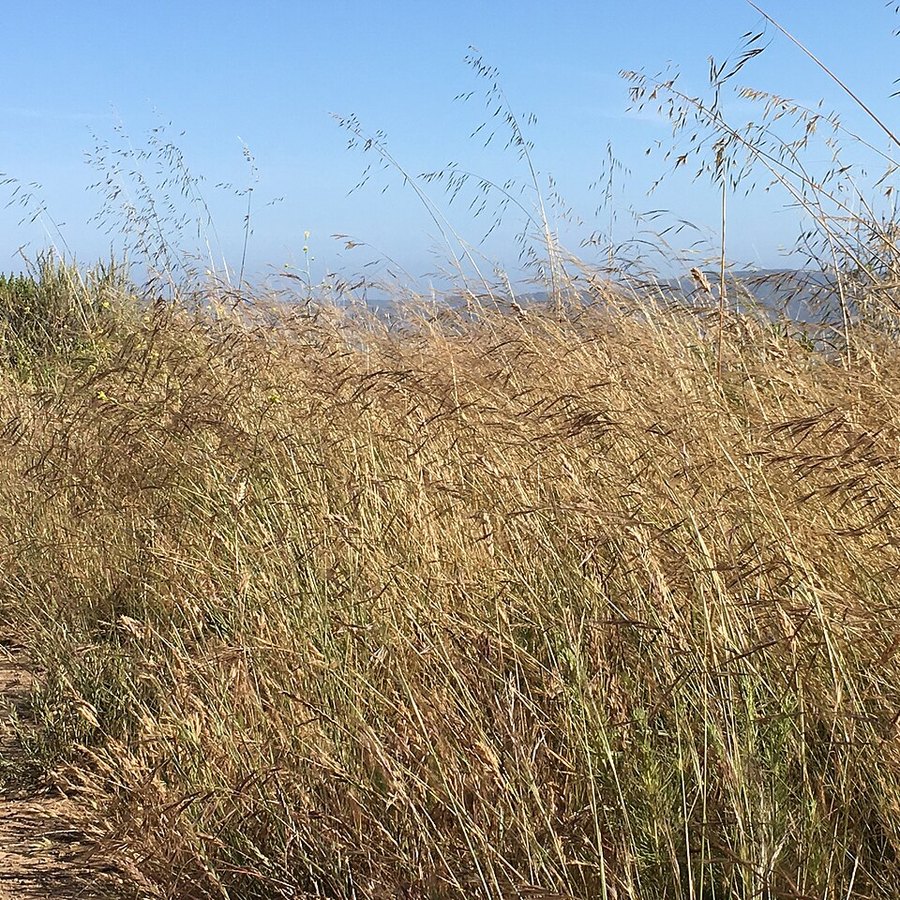
Purple needlegrass
Nassella pulchra
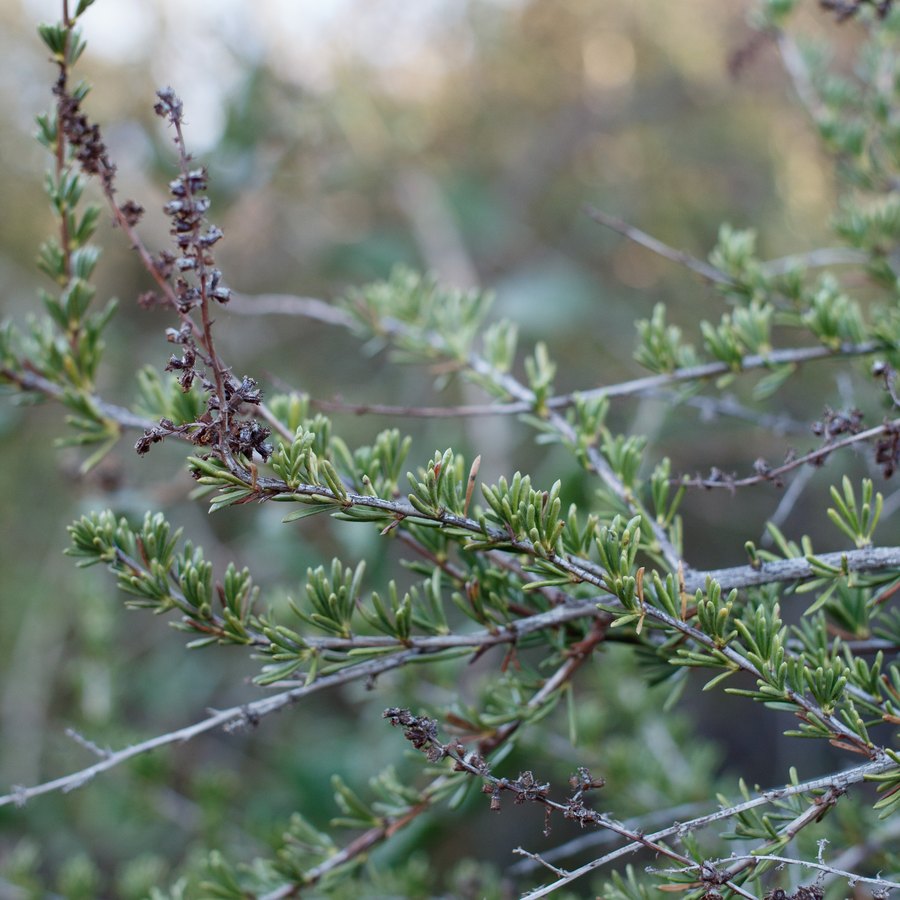
Chamise
Adenostoma fasciculatum
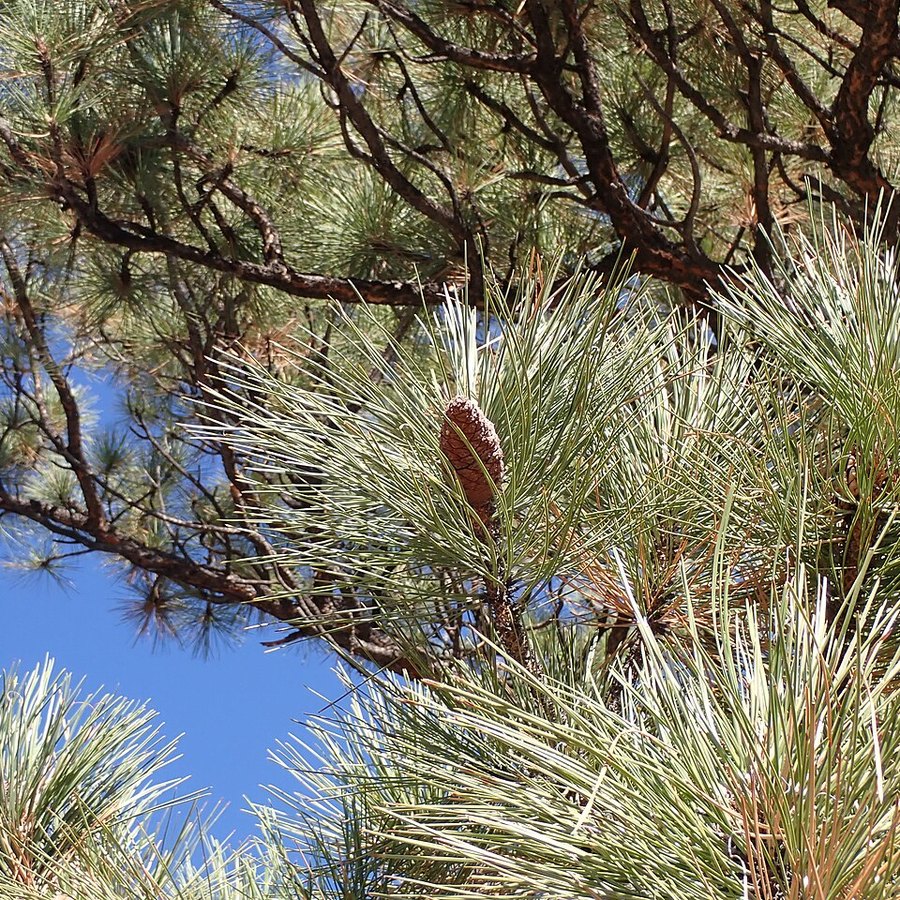
Ponderosa pine
Pinus ponderosa
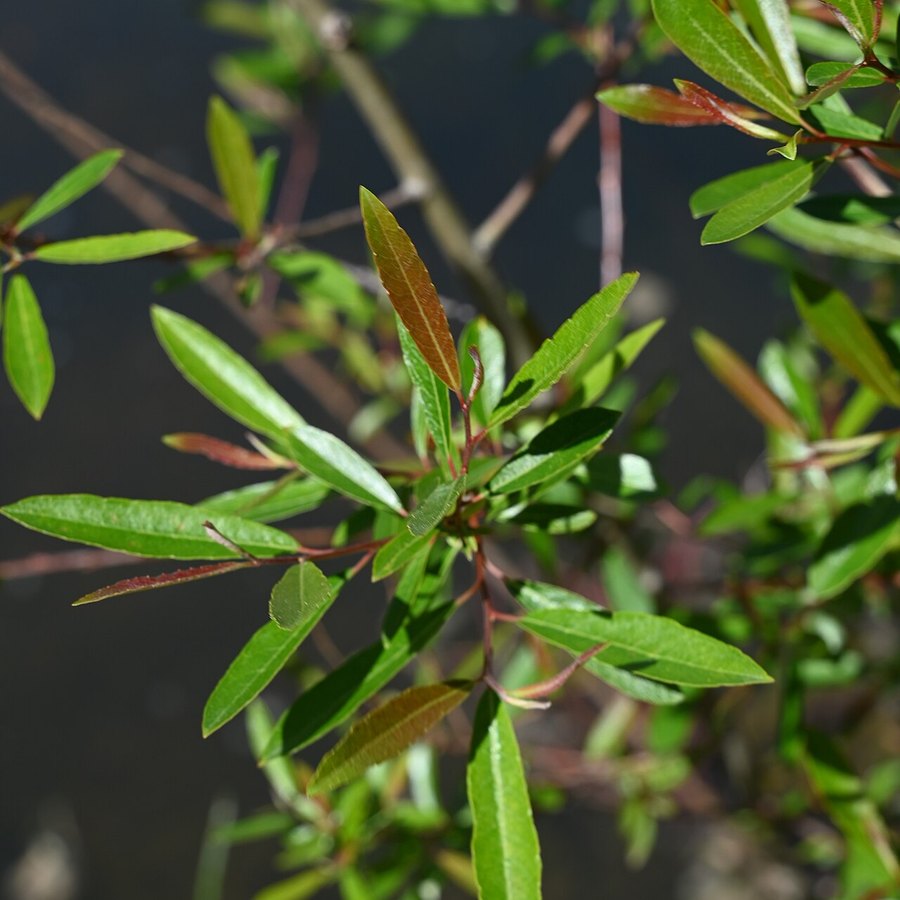
Arroyo willow
Salix lasiolepis
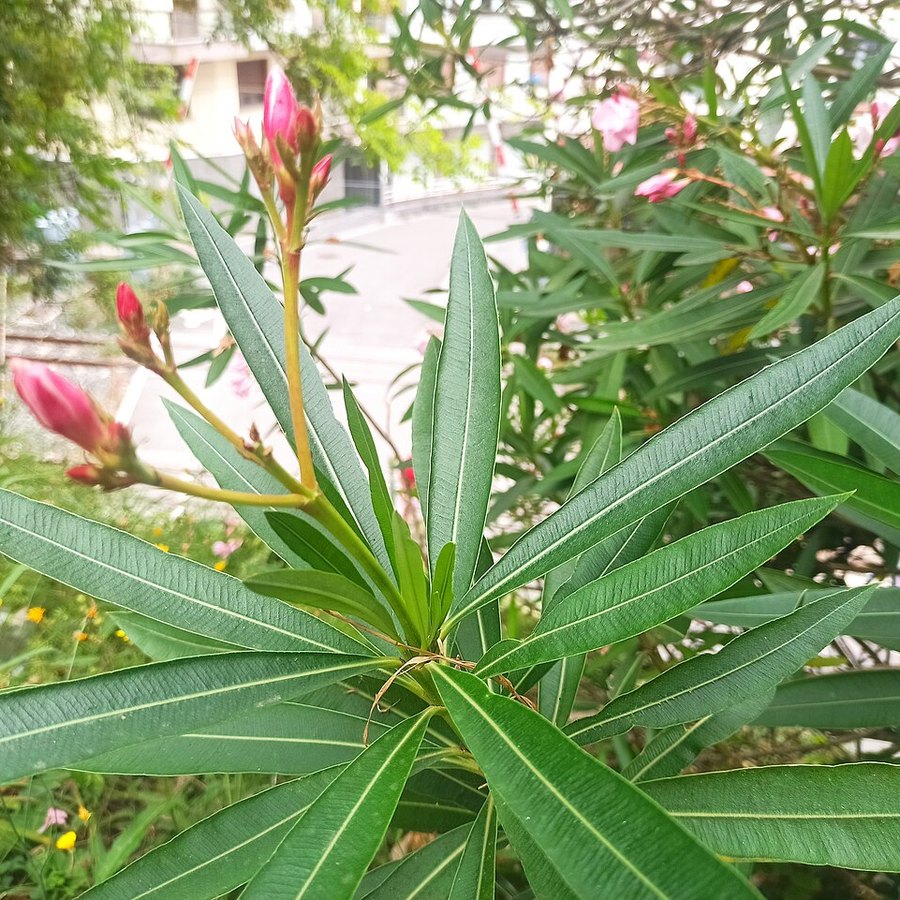
Oleander
Nerium oleander
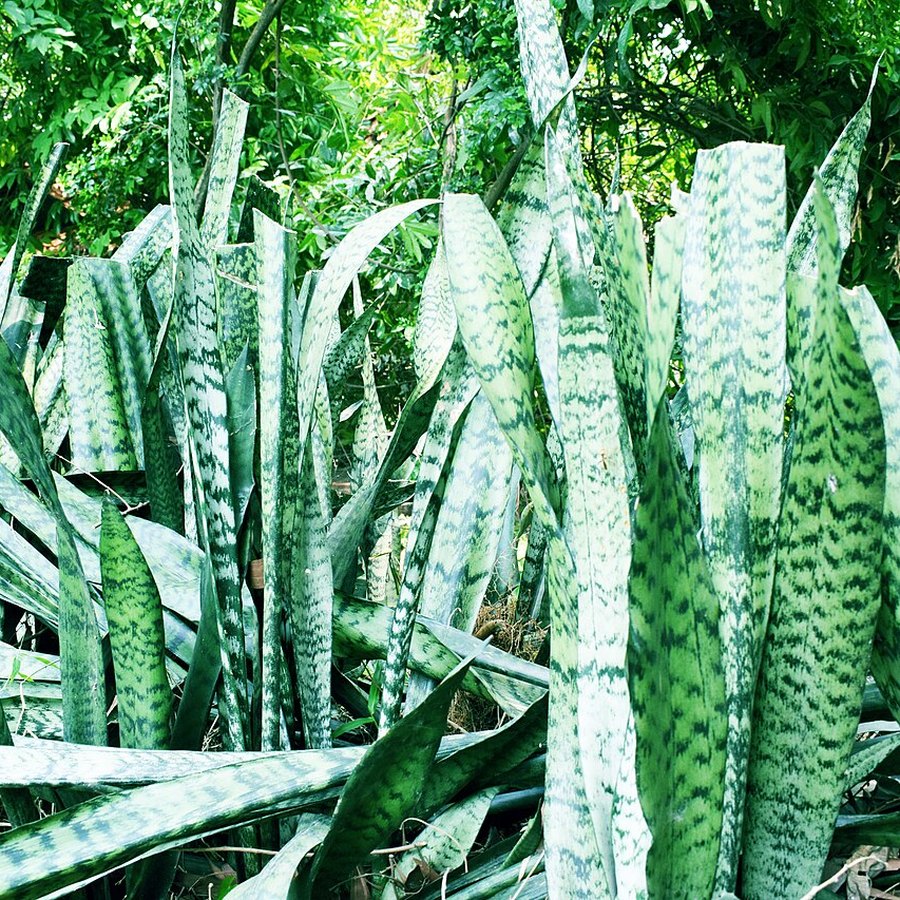
Snake plant
Dracaena trifasciata
Snake plant sits in that grid on a technicality. The outline is linear. Run a finger along the leaf, though, and you find it thick and stiff, with water stored inside. Almost none of the plumbing argument applies, because this blade isn't thin. Thickness holds a deep layer of still air against the surface, so the leaf swaps heat and water with the air slowly. It also runs CAM photosynthesis, short for crassulacean acid metabolism, opening its pores at night instead of during the day (Boraphech & Thiravetyan, 2015). That conserves water by a route blade width can't touch.
So the same silhouette is doing two unrelated jobs. On a grass or a pine, narrow means cheap plumbing and quick heat exchange. Narrow on a snake plant is just what a water-storage organ looks like when it grows upright. You can't separate those from the outline. Thickness is the tell, and it's the first thing to check on any narrow leaf you don't recognize.
What growers should do with this
Forget the shape for a moment. What matters about a grass leaf is where it grows from.
Working in ryegrass, Schnyder et al. (1990) found elongation confined to the bottom inch or so of the leaf, 20 to 30 mm, with the fastest growth near the middle of that zone. The growing tissue sits at the base, near the soil. Take the top off and you haven't touched the factory. That's why a lawn survives being mown every week, and why you can cut a bunchgrass hard in autumn and it comes back. Grazing animals and grasses have gotten along on that arrangement for millions of years.
Try the same cut on a broadleaf shrub and you're waiting on buds, because most broadleaves push growth from tips rather than from a zone at the base. So before you cut anything back hard, work out where it grows from. That question transfers to every plant you own.
When you meet a narrow-leaved plant you don't know, the shape has already told you something real about how it's built, and almost nothing about what it wants. Check the thickness. Check where the new growth comes from. A thin narrow blade and a thick narrow blade are different plants, and the outline won't tell you which one is standing in front of you.
Photo credits, all cropped from the originals: hero, chamise in flower, and the chamise grid card licensed from Adobe Stock. Purple needlegrass © Matt Lavin and ponderosa pine © Matt Lavin, both CC BY-SA 2.0. Arroyo willow © Krzysztof Ziarnek, Kenraiz, oleander © Birasuegi, and snake plant © Anup Sadi, all CC BY-SA 4.0. All five via Wikimedia Commons. Where an original is ShareAlike-licensed, the cropped version used here is offered under that same licence. The venation figure is an original illustration by The Planters' Guild.
Ackerly, D. D. (2004). Adaptation, niche conservatism, and convergence: Comparative studies of leaf evolution in the California chaparral. The American Naturalist, 163(5), 654–671. https://doi.org/10.1086/383062
Boraphech, P., & Thiravetyan, P. (2015). Removal of trimethylamine (fishy odor) by C3 and CAM plants. Environmental Science and Pollution Research, 22(15), 11543–11557. https://doi.org/10.1007/s11356-015-4364-3
Eckel, P. M. (2010–2023). A grammatical dictionary of botanical Latin: Lanceolate. Missouri Botanical Garden. https://www.mobot.org/mobot/latindict/keyDetail.aspx?keyWord=lanceolate
Flora of North America Editorial Committee. (Eds.). (n.d.). Adenostoma fasciculatum. In Flora of North America (Vol. 9). http://www.efloras.org/florataxon.aspx?flora_id=1&taxon_id=250100003
Flora of North America Editorial Committee. (Eds.). (n.d.). Nassella pulchra. In Flora of North America (Vol. 24, p. 174). https://floranorthamerica.org/Nassella_pulchra
Nicotra, A. B., Leigh, A., Boyce, C. K., Jones, C. S., Niklas, K. J., Royer, D. L., & Tsukaya, H. (2011). The evolution and functional significance of leaf shape in the angiosperms. Functional Plant Biology, 38(7), 535–552. https://doi.org/10.1071/FP11057
Plants of the World Online. (n.d.). Nassella pulchra (Hitchc.) Barkworth. Royal Botanic Gardens, Kew. https://powo.science.kew.org/taxon/urn:lsid:ipni.org:names:281176-2
Schnyder, H., Seo, S., Rademacher, I. F., & Kühbauch, W. (1990). Spatial distribution of growth rates and of epidermal cell lengths in the elongation zone during leaf development in Lolium perenne L. Planta, 181(3), 423–431. https://doi.org/10.1007/BF00195897
Wright, I. J., Dong, N., Maire, V., Prentice, I. C., Westoby, M., Díaz, S., Gallagher, R. V., Jacobs, B. F., Kooyman, R., Law, E. A., Leishman, M. R., Niinemets, Ü., Reich, P. B., Sack, L., Villar, R., Wang, H., & Wilf, P. (2017). Global climatic drivers of leaf size. Science, 357(6354), 917–921. https://doi.org/10.1126/science.aal4760
Zwieniecki, M. A., Stone, H. A., Leigh, A., Boyce, C. K., & Holbrook, N. M. (2006). Hydraulic design of pine needles: One-dimensional optimization for single-vein leaves. Plant, Cell & Environment, 29(5), 803–809. https://doi.org/10.1111/j.1365-3040.2005.01448.x
.jpg)


.jpg)