The Plant Library · Genus Deep Dive
Monstera.
Forty-nine accepted species across the American tropics. The plant on every windowsill from Portland to Singapore. Sold as a meme, grown as an heirloom, photographed more than any other houseplant in history, and confused with at least three plants in entirely different genera. We're going to take it apart, one specimen at a time.
What it is
A working compendium
A genus deep dive built the way the Guild builds everything. Science where the science is settled. Opinions where they have to be. Five essays on how the plant is built, where it comes from, how it was named, why its leaves have holes and how it flowers, plus a disambiguation entry for the imposters.
Who it's for
Apprentices and Growers
For first-plant Apprentices who want to understand what they bought. For Growers who want the biology behind the care advice. For anyone who's been told a Rhaphidophora is a Mini Monstera and wants the actual story.
How it's written
Editorial, not whimsical
Latin names and a year of description where they help, plain English where they don't. Every entry runs on what the plant actually wants, not what makes a good Instagram caption. Specimens from the Petruscio collection show up in callouts. The plant is the subject; the grower is the witness.
Section 01 · Understanding the genus
The framework.
Five essays that do the theoretical lifting before you meet a single plant. Read these first if you want every species profile to land in context.
 Essay · Anatomy
Field Manual · Genus essay
How a Monstera Is Built
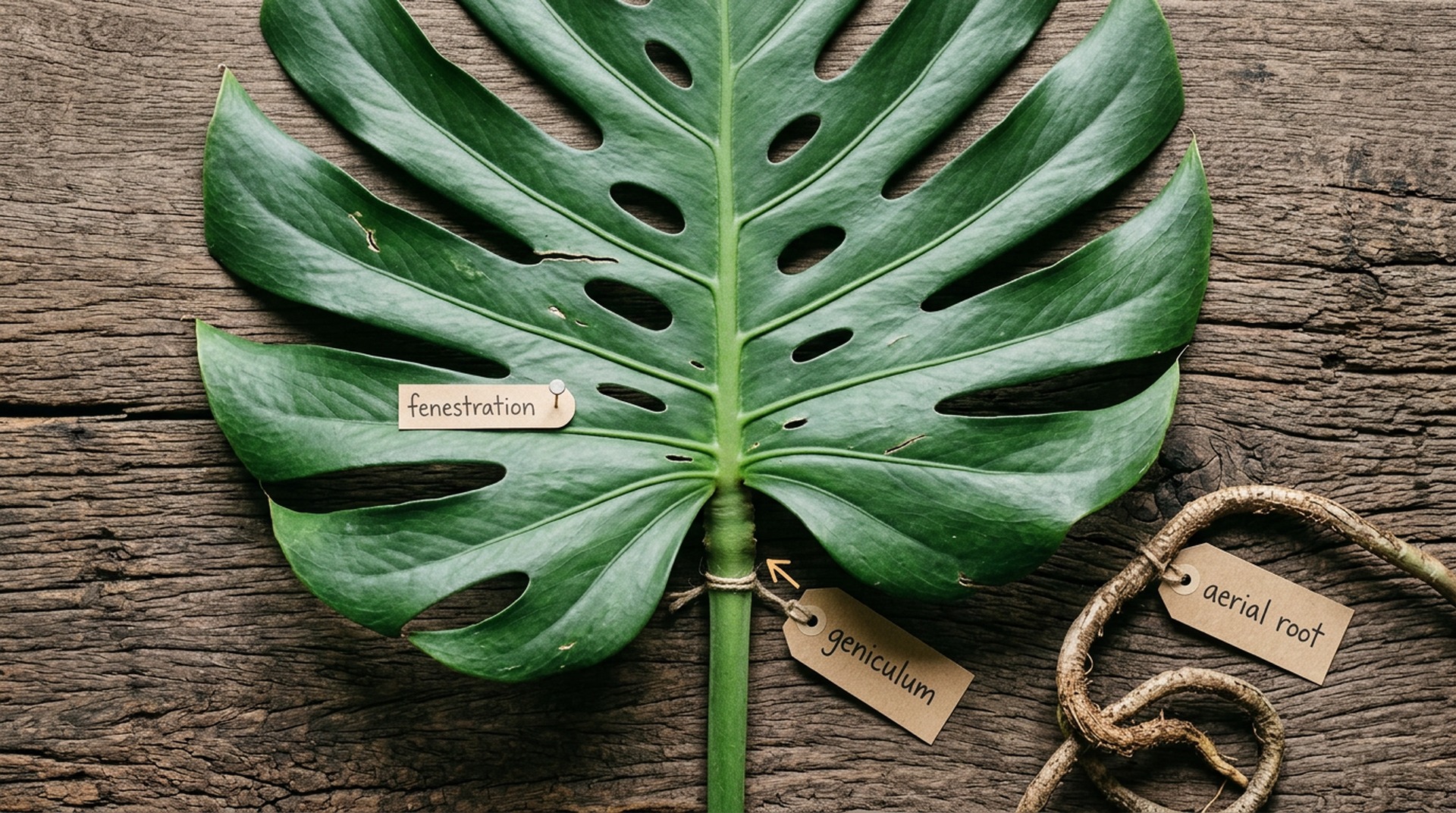
Young and old leaves that can look like different plants, two kinds of aerial root, a joint that bends as the leaf moves, and holes nobody has fully explained. What the research says about each part.
 Essay · Biogeography
Field Manual · Genus essay
From Southern Mexico to Bolivia
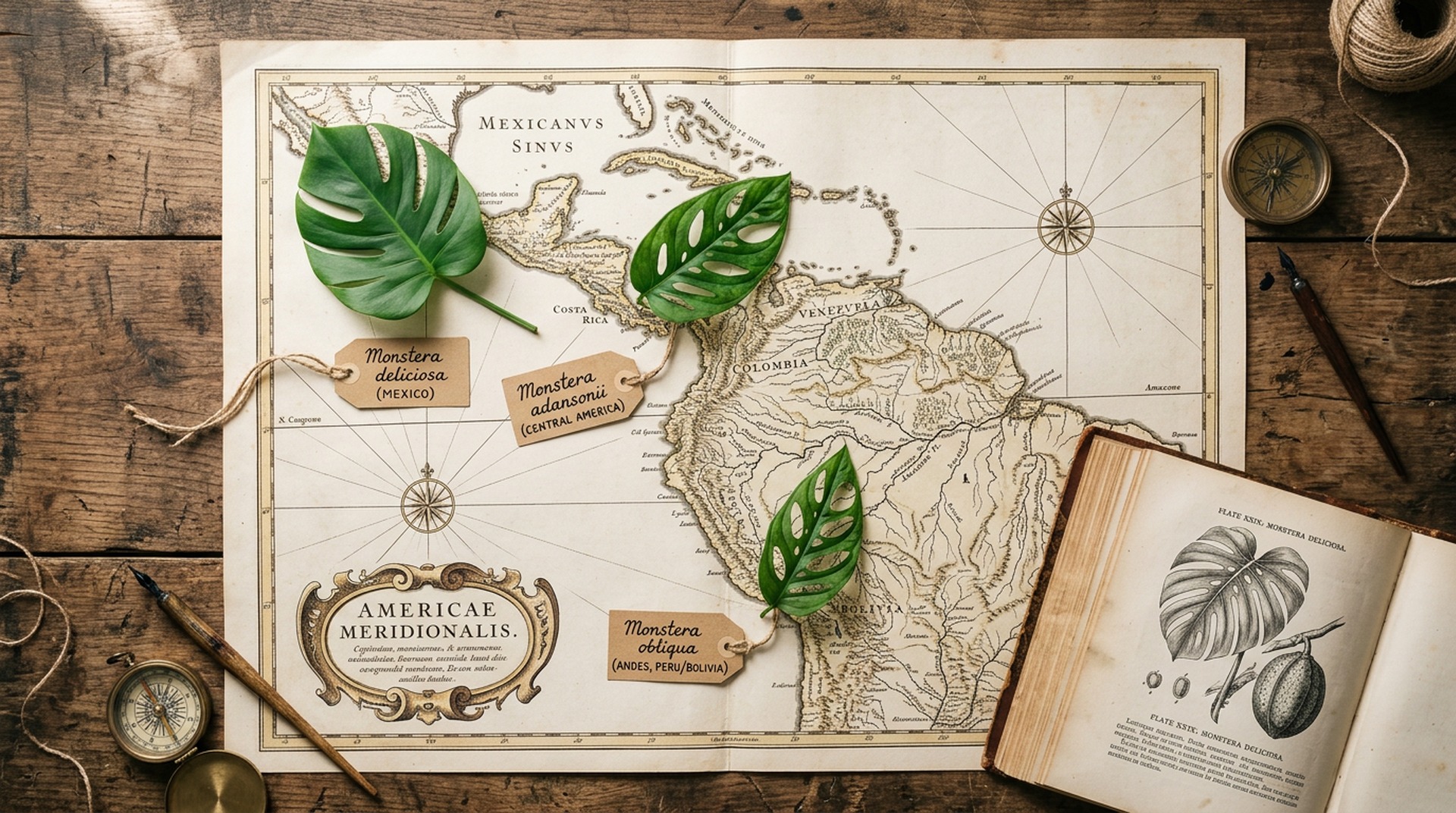
The genus is American. Strictly Neotropical, no exceptions. What Monstera did instead of crossing oceans was exploit one ecological strategy with relentless efficiency: the hemiepiphyte life. The plant on your shelf is a juvenile climber pretending to be a houseplant.
 Essay · Taxonomy
Field Manual · Genus essay
Madison's Map and What Came After
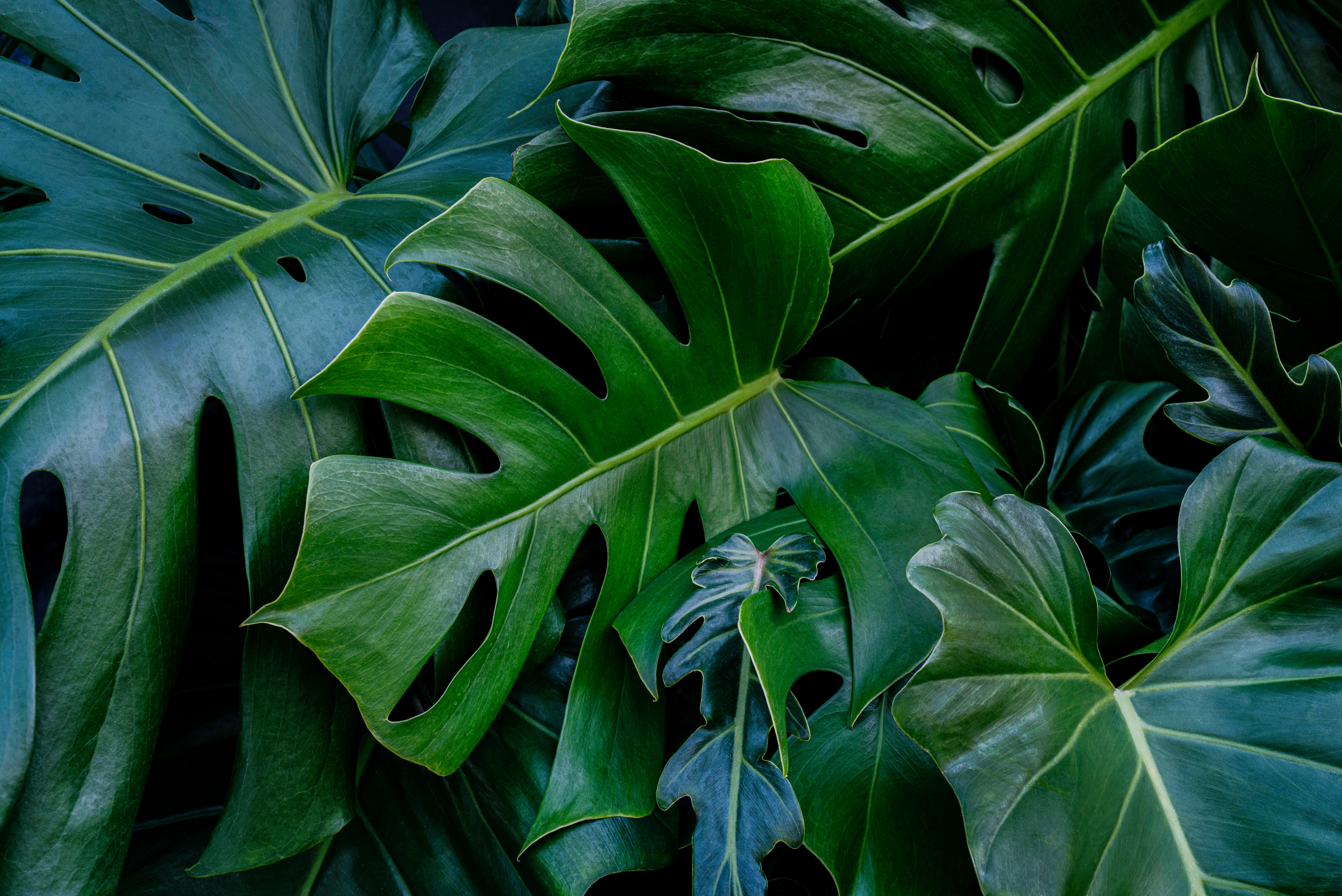
Michael Madison's 1977 revision is still the working framework most growers don't know they're using. POWO and Croat have refined it since, but the central groupings — and the M. obliqua confusion — trace back to Madison. Why the names a botanist uses differ from the names a seller uses, and how to keep both straight.
 Essay · Fenestration
Field Manual · Genus essay
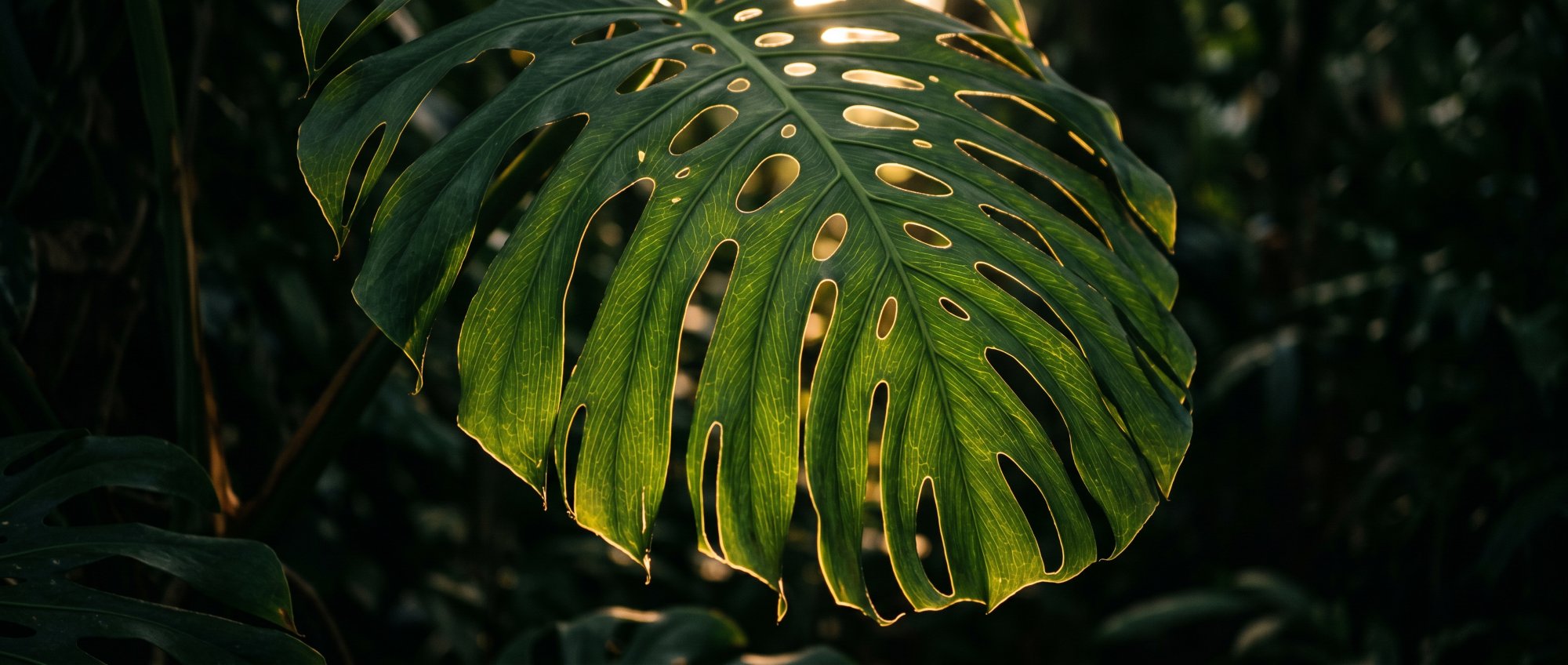
Why Monstera Leaves Have Holes
The holes aren't damage and they aren't decoration. They're drawn in by cells that are programmed to die, then enlarged as the leaf inflates, and the best science reads them as a bet on catching scarce, flickering light. Solid juvenile leaves are normal; light and height are what bring the fenestrations.
 Essay · Reproduction
Field Manual · Genus essay
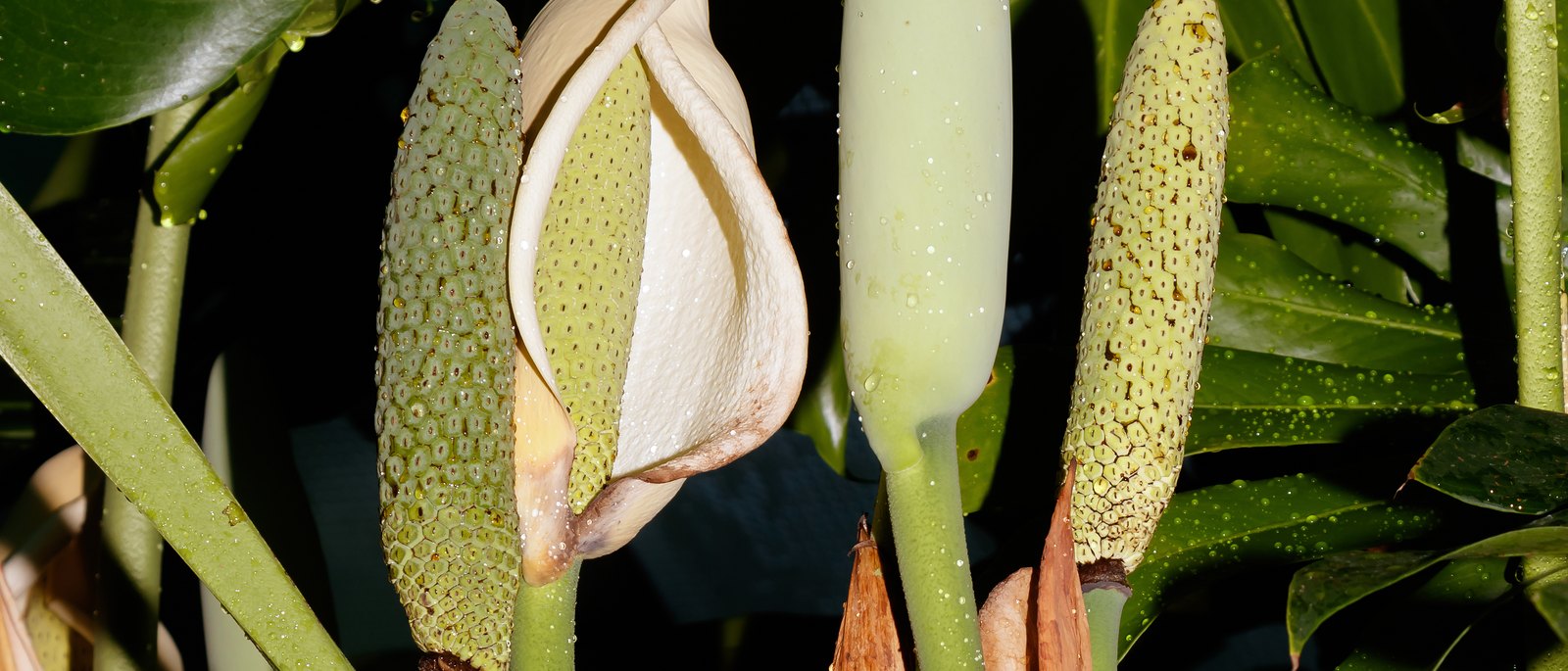
How Monstera Flowers
What the flower is, how much the spike warms in the species measured, the small beetles recorded as its pollinators, and why bees are disputed. Flowering takes an adult plant, and the fruit takes months to ripen.
Section 02 · Variegation
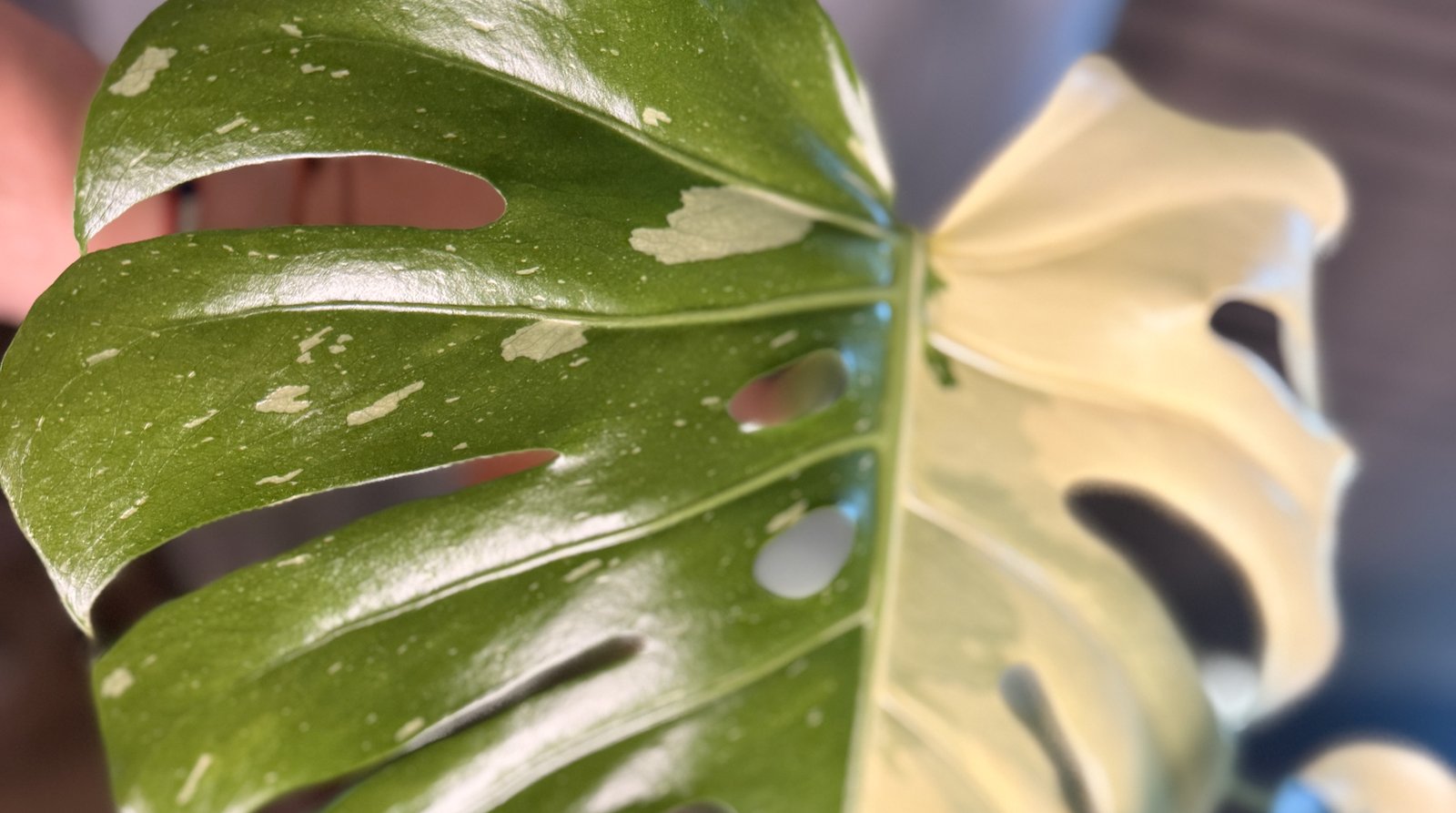
What variegation is, and what it isn't.
What the science of variegation supports, what our search couldn't find studied in Monstera, and what words like stable and lab-grown do and don't promise.
Section 03 · The Disambiguation Entry
The cousin imposters: what's not a Monstera.
Three plants get sold as Monstera that aren't. One isn't even close. The Guild's job is to name what's what — and explain why it matters when you go looking for substrate, light, or a humidity range.
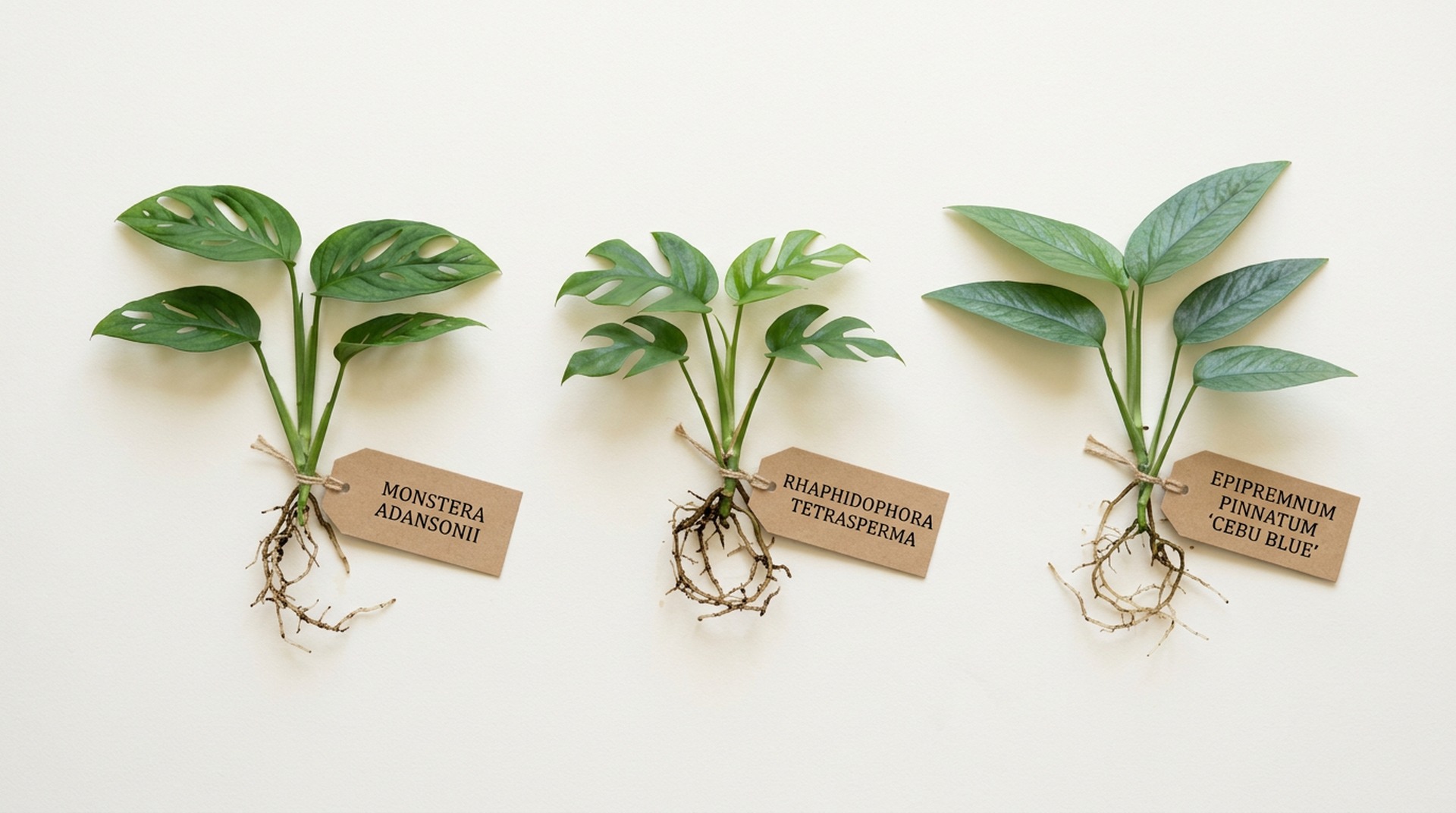
Rhaphidophora tetrasperma is sold as "Mini Monstera" or "Monstera Minima" in every plant shop in North America. It's not a Monstera. It's not even in the same tribe. The leaves fenestrate, which is why the marketing works, but the genus separated from Monstera tens of millions of years ago.
Epipremnum pinnatum "Cebu Blue" is sold as a Monstera relative or sometimes as a Monstera cultivar. It's a pothos. The juvenile is silver-blue; the adult fenestrates dramatically. Same hemiepiphyte strategy, different plant.
Philodendron giganteum and a handful of large-leaved Philodendrons get casually called Monsteras by people who've stopped reading labels. They're not. The geniculum tells you in five seconds.