The plant retracts to one leaf, or to none, and the grower reads the pot as finished. The corm underneath is usually still solvent. Here is how to tell the difference without guessing.
Dormancy Is a Program, Not an Accident
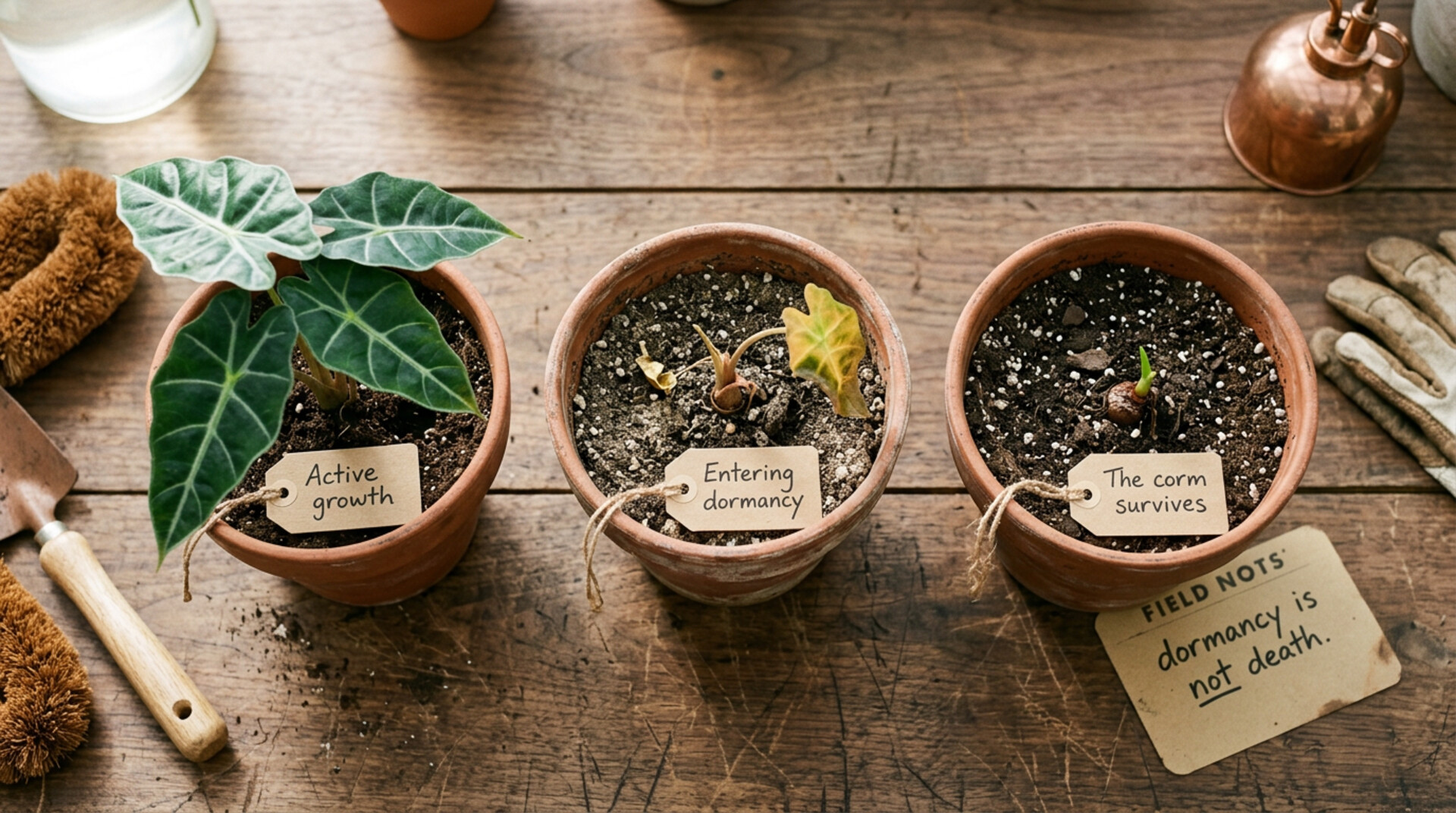
Here's the sequence behind almost every "my Alocasia died" report. The oldest leaf yellows. A week later the next goes. The plant that carried five leaves in July carries two by October, then one, then none. Somewhere in there the grower decides it has finished, and the pot goes out.
The corm was usually still working.
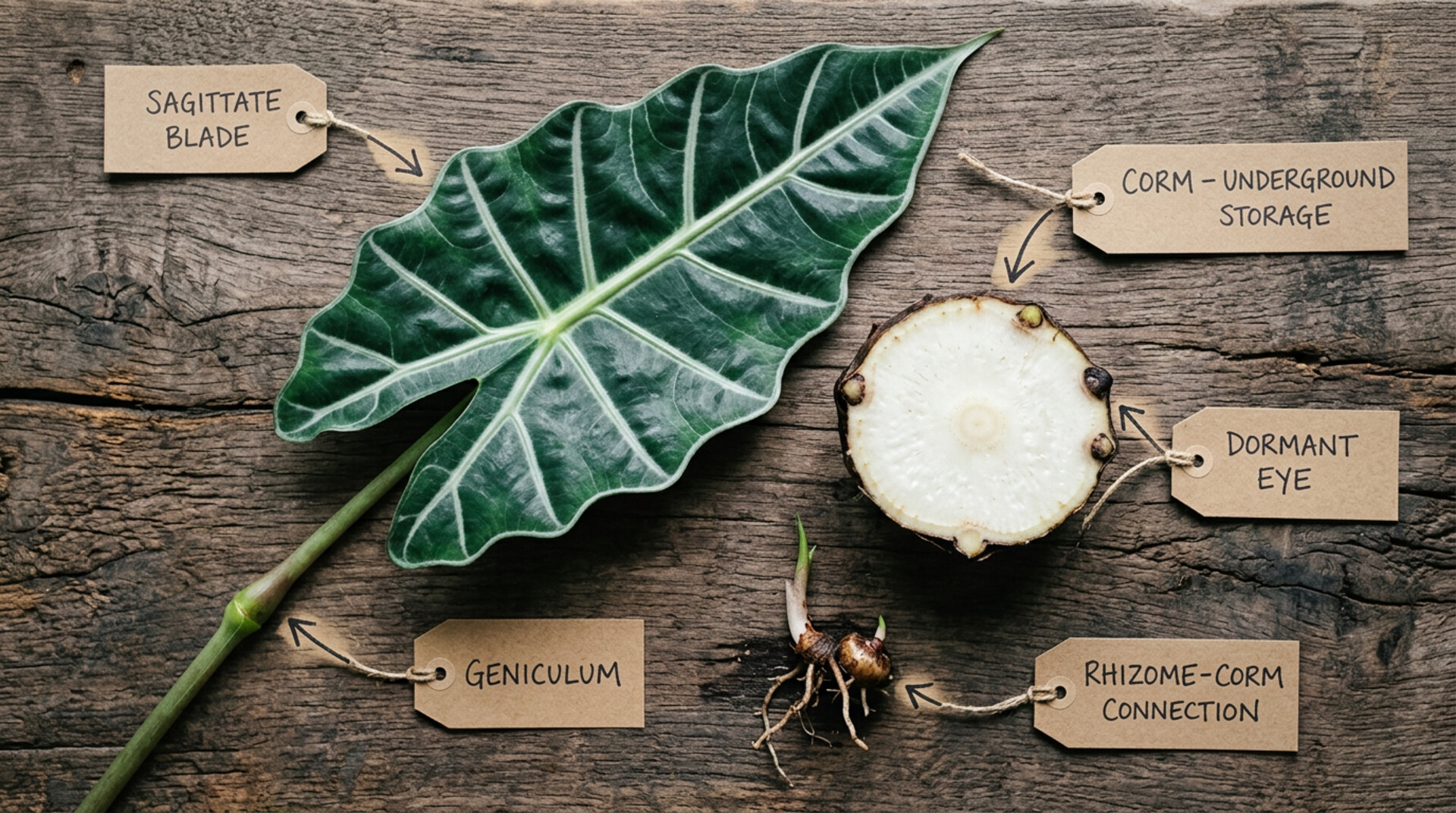
Alocasia (al-oh-KAY-zhuh) is a geophyte (JEE-oh-fyte: a plant that rides out unfavorable seasons as an underground storage organ, sending up leaves only when conditions pay for them). Its organ is a corm, the swollen underground stem holding its reserves. The anatomy essay covers the corm, the arrow-shaped leaf, and the geniculum. This one picks up where that ends: what the retreat looks like, what the corm shows when you lift it, and how to tell a plant that is resting from one that has been spent.
The word doing the damage is "dormant," because in ordinary use it means "doing nothing." In plant physiology it means something narrower and more useful. Researchers separate three states (Lang et al., 1987). Endodormancy is imposed from inside: the plant won't resume growth even if you hand it ideal conditions. Ecodormancy is imposed from outside: the plant is ready, the environment isn't, and growth restarts the moment conditions allow. Paradormancy is one organ suppressing another, the way an active bud holds down the ones below it.
A 2024 review in the Journal of Experimental Botany argues most geophytes are best described as endodormant, and notes that dormancy persists even under favorable conditions (Kumari et al., 2024). That isn't academic housekeeping. It sets expectations: an endodormant corm keeps a clock of its own, and warming the room in week two will not shorten it. A grower who escalates because nothing is happening escalates straight into the one failure mode that matters.
Not Every Alocasia Rests the Same Way
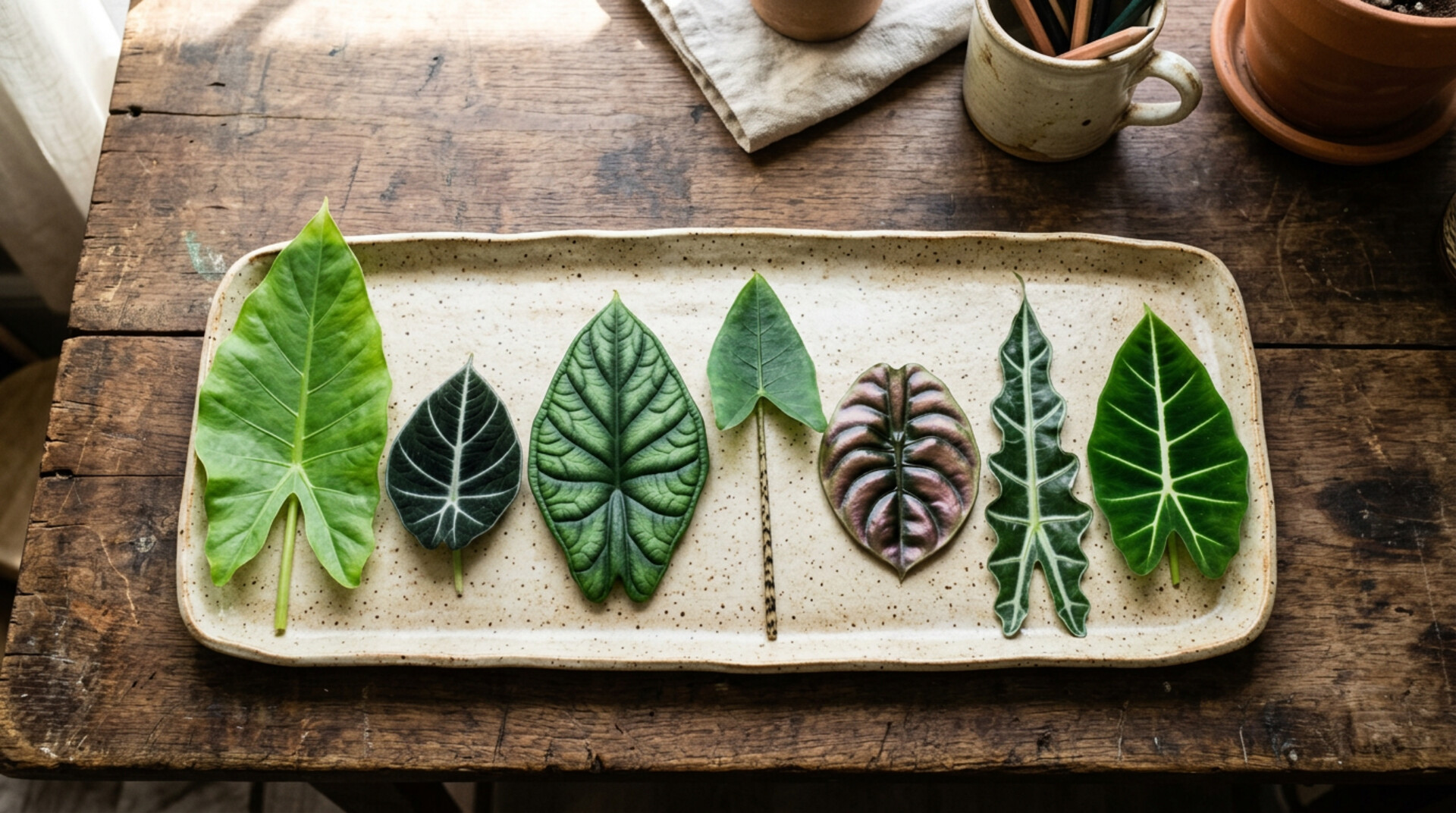
Kew's Plants of the World Online describes the genus as "seasonally dormant to evergreen herbs" (Plants of the World Online, n.d.). Dormancy here is a spectrum, not a switch, and your plant sits somewhere along it.
The genus is strictly Indomalayan and Western Pacific, roughly 113 accepted species concentrated in Borneo and the Philippines (Nauheimer et al., 2012). These are understory plants on a wet-season schedule. In Vanuatu, giant taro (A. macrorrhizos, mak-roh-RY-zos) flowers November through February, the wettest part of the year (Müller & Guzzon, 2024). A plant whose ancestors budgeted around a dry season keeps the machinery whether or not your apartment provides one.
Practical consequence: a Frydek or a reginula in a cool, dim room will often retract hard. A macrorrhizos in a warm, bright one may never fully stop. Neither is misbehaving. Establish what your plant did last autumn, because a plant that rested last year is telling you what it'll do this year.
Read the Order, Not the Count
Most advice tells you to count leaves. Count the order instead.
Leaf senescence (sih-NESS-ence: the programmed dismantling of a leaf, as distinct from injury) isn't decay. It's recovery. Before a leaf is released, the plant takes it apart and ships the contents back into storage. Nitrogen, phosphorus and other mobile nutrients are exported ahead of abscission (ab-SIH-zhun: the leaf's release from the stem) (Himelblau & Amasino, 2001), in a strict order, proteins degraded and transporters moving the material to sink tissue in sequence (Havé et al., 2017). The yellow you're looking at is chlorophyll being disassembled so its nitrogen can be banked in the corm.
That hands you a diagnostic almost nobody publishes, and it costs nothing to use.
A programmed retraction looks like this. It starts with the oldest leaf, lowest and furthest out, and works inward in sequence. The yellowing is even across the blade, spreading from margin and tip over one to three weeks. The petiole yellows with its leaf, softens at the base, and releases cleanly when you tug it. The substrate dries more slowly each week as fewer leaves draw on it. New growth stops before the leaves go, not after.
Trouble looks different. It takes a young leaf first, or several at once out of sequence. The yellowing is patchy, with dark spots inside it, or a leaf goes limp while still green. The petiole collapses wet at the base and pulls away stringy. The substrate stays wet for a week or more and smells sour. And leaves go while the plant is still pushing a new one, which no resting plant does.
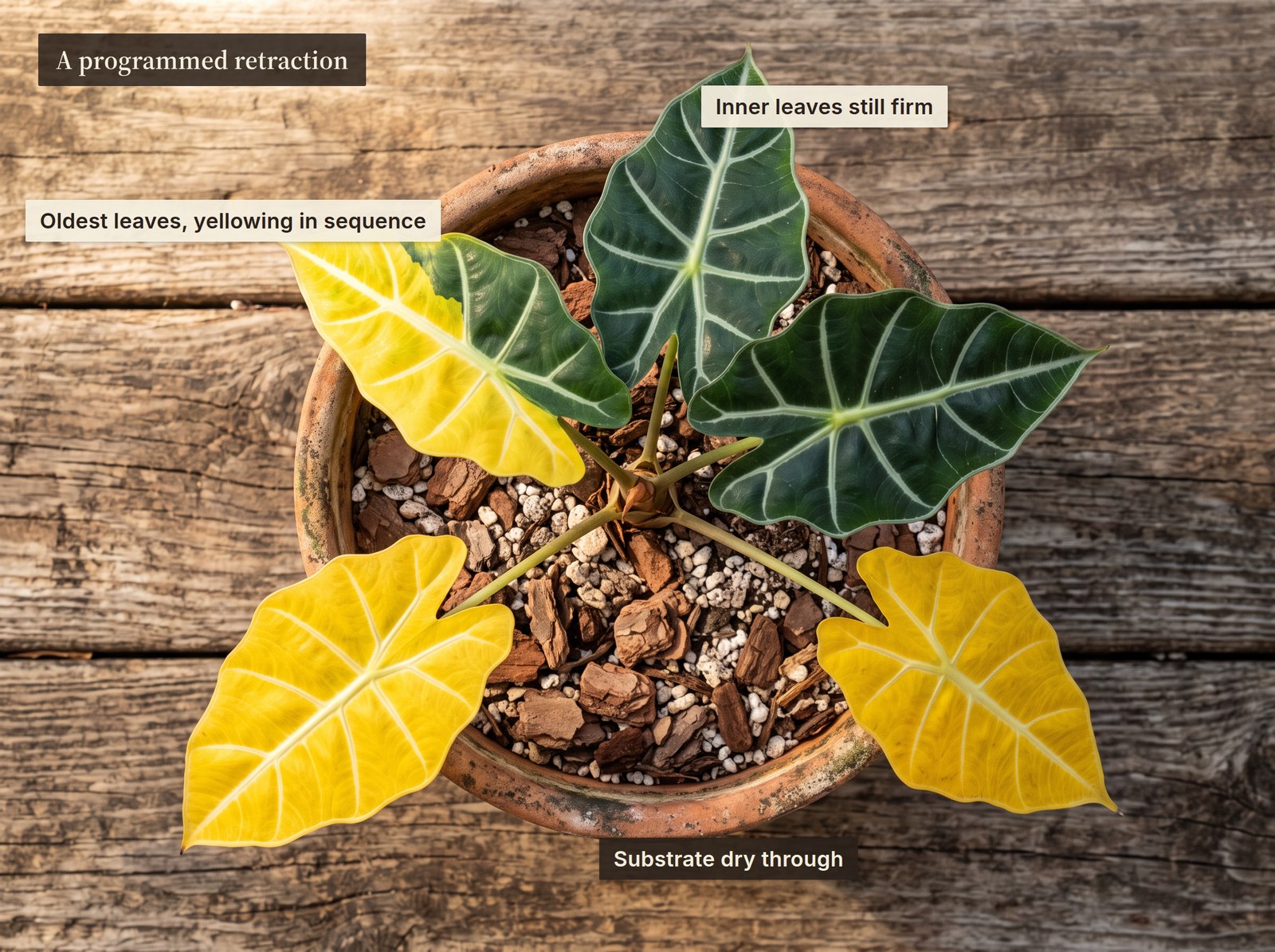
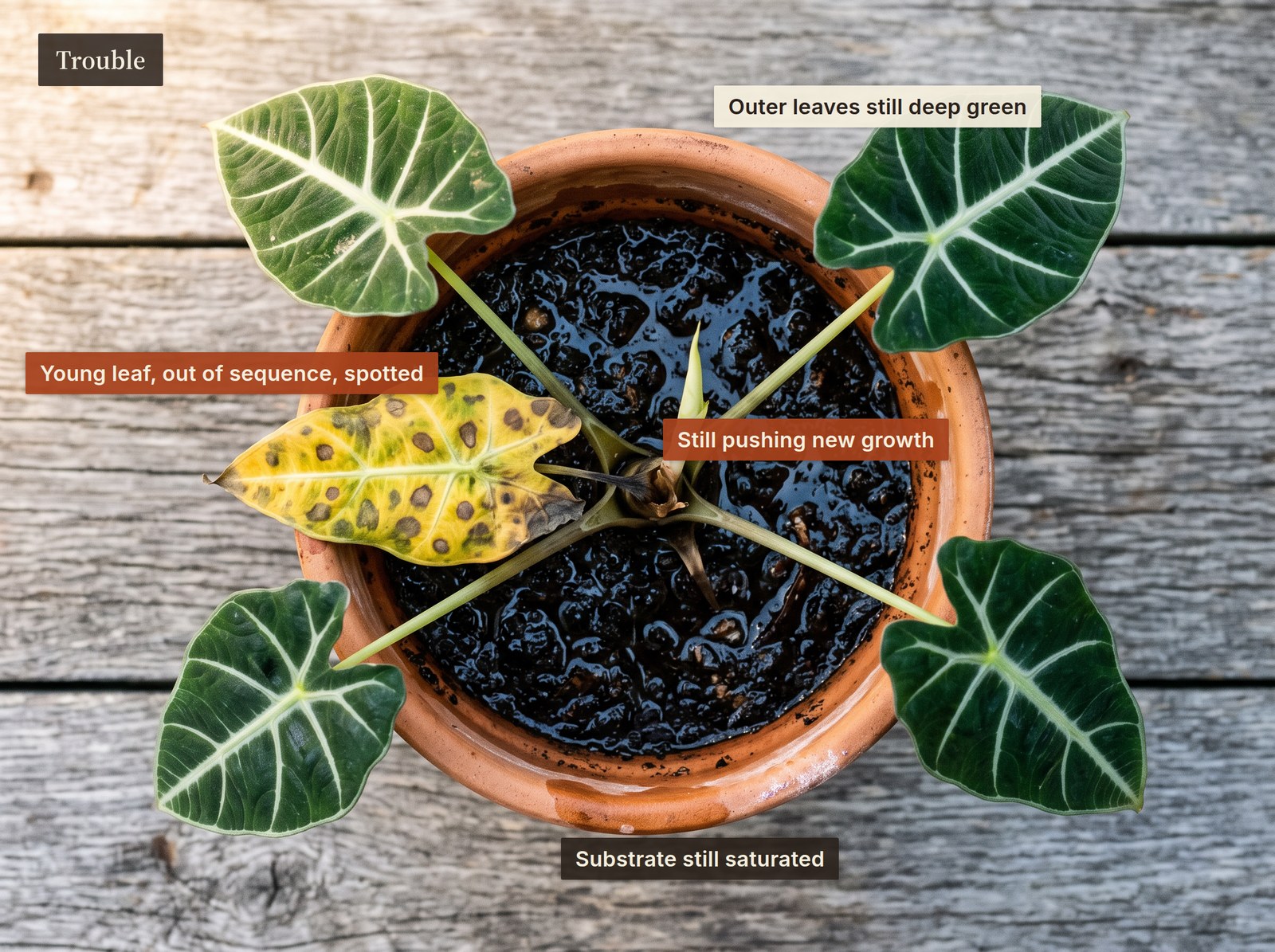
One is an orderly withdrawal. The other is a supply problem at the root zone, and it wants attention this week, not in four.
Reading the Corm
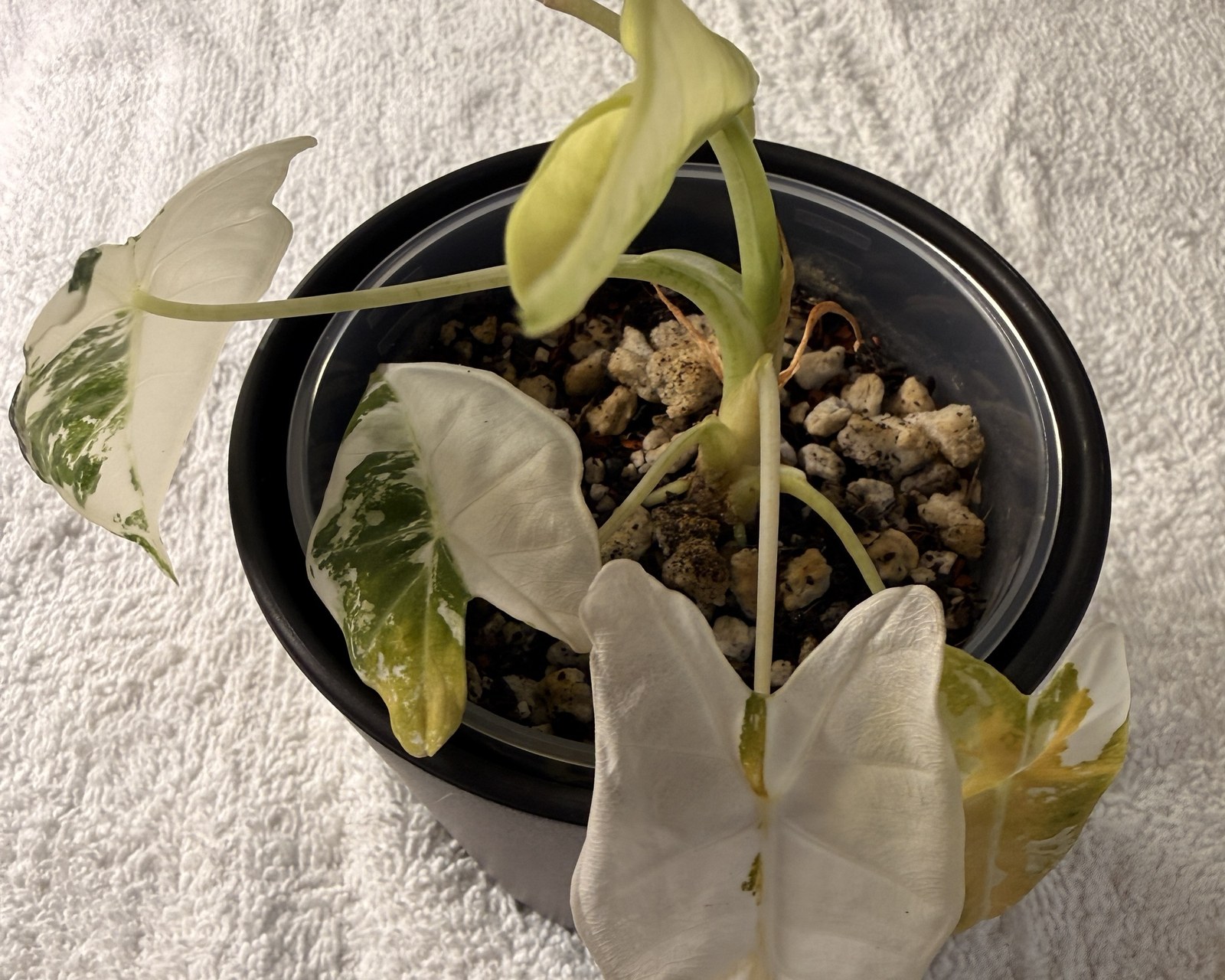
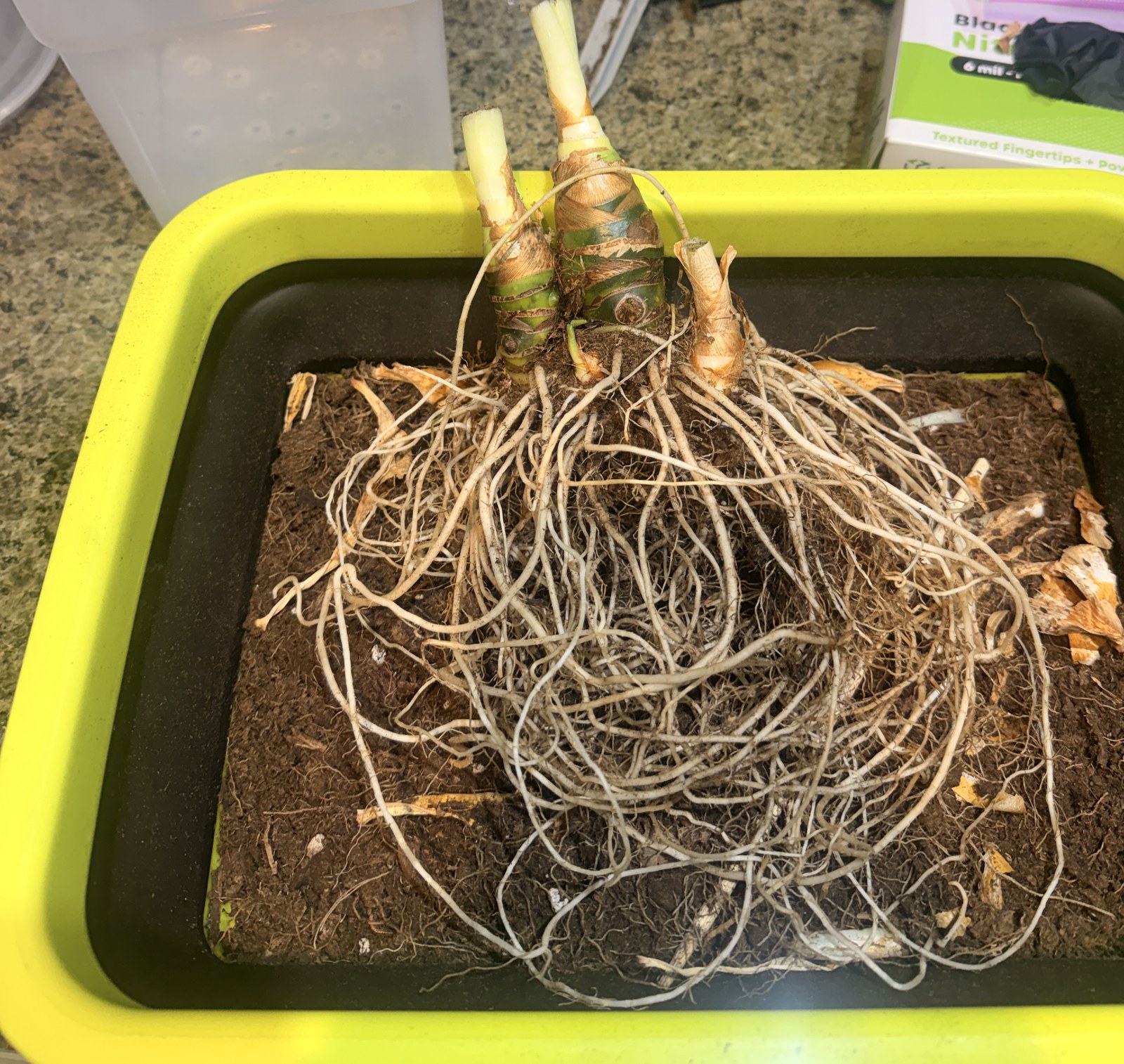
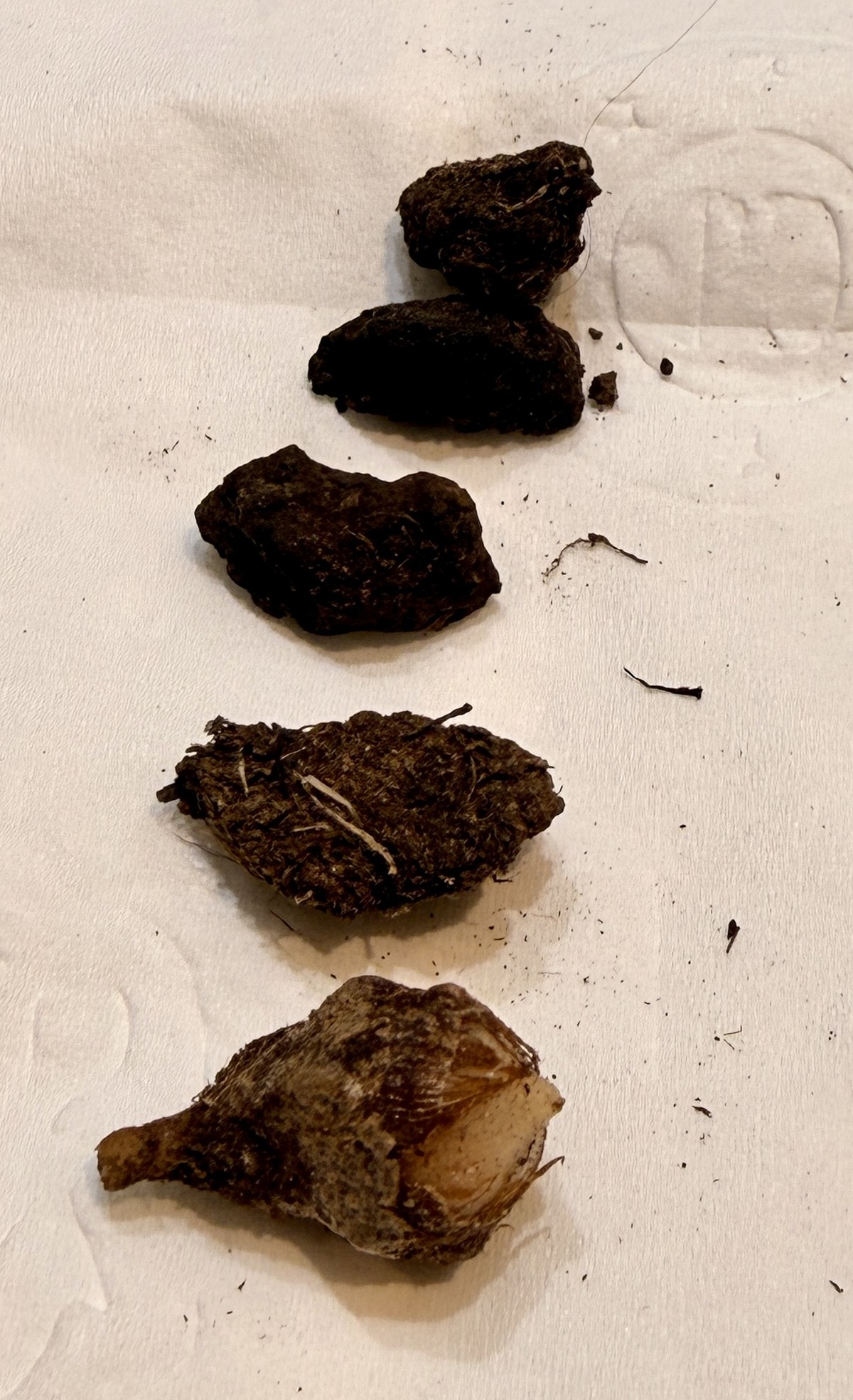
If the order looks programmed, wait. If it looks like trouble, lift the plant and read the corm directly. It's the only test that settles it, and gentler than growers fear: slide the root ball out, brush the substrate back with your fingers, look, and put it back. Once, not weekly.
Firmness. Press gently with a thumb. A corm that's holding feels firm and springy, like a new potato. Firmness isn't cosmetic. The reserve carbohydrates that fund the rest also work as osmoprotectants (compounds that hold water inside a cell and keep it from collapsing), so turgor (internal water pressure) and reserves rise and fall together (Roitman & Eshel, 2024). A corm that dents and stays dented has lost both.
Weight for its size. Across thirty ornamental geophytes, stored carbohydrates account for 50 to 80 percent of storage-organ dry weight (Ranwala & Miller, 2008). A loaded corm is dense in the hand.
Shrinkage isn't softness. This is where working plants get thrown out. In konjac (Amorphophallus, a-mor-foh-FAL-us, another cormous aroid), the mother corm shrinks to roughly a third of its starting weight while funding a daughter corm (Qi et al., 2023). Shrunken and firm is a corm that has spent down its account and is still solvent. Soft is the signal. Small isn't.
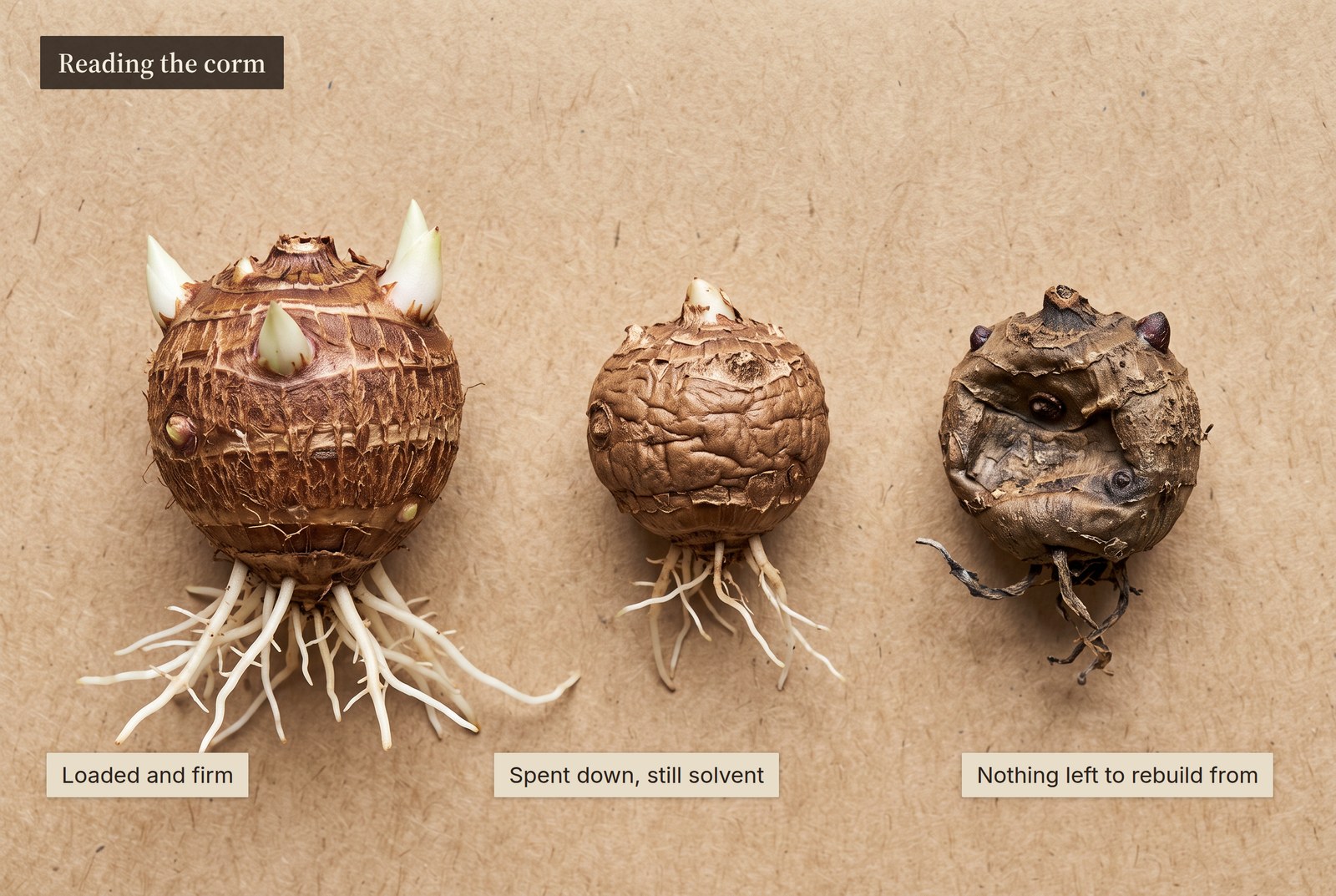
Eyes. Look along the corm's shoulder for growth points: small pale buds, offset from where the old cluster sat, for reasons the anatomy essay covers. A corm with visible eyes is a corm with a plan.
What you're hoping not to find: tissue darkened through its interior, a soft patch that weeps when pressed, or a sour smell at the corm itself. Those are the fingerprints of the organisms that take a waterlogged corm. In taro, the closest well-studied relative, corm rot from an oomycete (a water mold, not a true fungus) called Phytopythium is confirmed in water-saturated soil (Galo et al., 2022), and bacterial soft rot from Pectobacterium and Dickeya is among the crop's most destructive diseases, the Dickeya group preferring Araceae (Zhou et al., 2022; Zhang et al., 2024). A corm gone soft through its center has nothing left to rebuild from.
The Timeline, Honestly
Onset runs roughly mid-September into November for most indoor growers, tracking the light rather than the calendar. Return runs February into April. In between, expect four to twelve weeks with nothing above the substrate, and be ready for longer.
"Nothing visible" is the hard part, so it helps to know what's happening underneath. In konjac the corm cycle has been tracked through six distinct stages, with dormancy an explicit stage of its own before the leaf bud emerges (Chua et al., 2013). Coming out of it is a sharp metabolic switch rather than a gradual fade: expression of the enzymes that break starch down climbs by orders of magnitude while the machinery for storing it shuts off (Qi et al., 2023). In saffron corms the same transition shows up as starch converting through sucrose into glucose and fructose exactly as the leaf primordia form (Bagri et al., 2017), and across geophytes generally, sugar availability is the signal governing both the rest and the wake-up (Sheikh et al., 2022). The corm isn't idling. It's running an accounting cycle you can't see.
A rest isn't free, and that's the honest limit on patience. A dormant storage organ respires the whole time, at a rate tracking temperature and duration; potato tubers held long enough at low temperature eventually lose the capacity to sprout (Schippers, 1977). A corm can wait, but not indefinitely, and every week in conditions it dislikes comes off the balance.
If You Grow Under Lights
A fair objection: if your Alocasia lives under a fixed-timer LED at steady room temperature, you have no autumn. Does any of this apply?
It does, for two reasons. The first is that endodormancy doesn't need a season. That's what the word means, and it has been watched directly. Narcissus bulbs held under conditions favorable for growth ceased growing and senesced their leaves anyway, which the authors identify as endodormancy (Li et al., 2012). Fritillaria bulbs went the same way from the other direction: regenerated in vitro and held warm, they "became dormant and ceased growing, sprouting and regenerating leaves" until they had been given a cold period (Marković et al., 2021). Warmth and light were never the missing ingredient. The nearest aroid evidence is a cousin genus. Titan arum (Amorphophallus titanum) has been grown for decades in botanic-garden glasshouses held between 77 and 90°F (25 and 32°C) year-round, and the tubers of older plants still rest between leaf cycles for two to fifteen months (Lobin et al., 2007). Nobody has run that observation on Alocasia, and within Araceae the picture is mixed, which is what Kew means by "seasonally dormant to evergreen."
The second is that your conditions are less constant than the timer suggests. A fixed photoperiod fixes only half of daily light integral (the total photon count a surface receives in a day). The other half is intensity, and it drifts quietly: LED fixtures are rated on how long they take to fall to 70 percent of original output (Kusuma et al., 2020), a plant moves nearer the lamp as it grows, and dust on a diffuser costs light no timer reports.
Practical consequence: lights make dormancy less likely and less predictable, not impossible. What you lose is the cue telling you when to expect it, so the sequence above matters more rather than less.
What to Change While It Rests
Water first, because water is the ballgame. A leafless plant isn't using water, and the effect is larger than it sounds. In containers, transpiration rather than evaporation is the primary route water leaves a pot, and the rate scales with canopy size (Criscione, n.d.). The Food and Agriculture Organization puts the crop coefficient for bare ground at 0.3 to 0.4, against greater than 1.0 for a full transpiring canopy (Allen et al., 1998). Take the leaves off an Alocasia and you've removed most of the mechanism that empties the pot.
Now the part that decides outcomes. Container substrates need roughly 10 to 30 percent air space to keep oxygen at the root zone, and that air space shrinks as organic components break down over a season (Bilderback et al., 2005). Fill it with water that nothing is drawing out and the corm's oxygen supply goes with it. Even in well-aerated soil, oxygen at the center of a bulky storage organ falls below 5 percent, and below about 4 percent respiration is already inhibited (Geigenberger et al., 2000). Aerobic respiration yields around 36 units of ATP, the cell's energy currency, per glucose; fermentation under low oxygen yields about 2 (Loreti & Perata, 2020). A corm in saturated substrate isn't merely wet. It's trying to fund a whole dormancy on an eighteenth of the energy it was built to use, in precisely the conditions the rot organisms prefer.
So: water when the substrate has dried nearly through, and expect that to take two to three times as long as in July. Judge it by lifting the pot, not a schedule. The chunky mix the Guild recommends for this genus does more work in dormancy than at any other point in the year.
Temperature. The Royal Horticultural Society (RHS) recommends holding dormant Alocasia above 50°F (10°C), against a 60°F (16°C) minimum for active growth (RHS, n.d.). The harder numbers come from the relatives. Taro shows chilling injury below 45 to 50°F (7 to 10°C) after several weeks, with internal browning after about ten days at 39°F (4°C) (Paull & Chen, 2015). In Caladium, another aroid, tuber growth is restricted below 54°F (12°C), and storage below 68°F (20°C) measurably slows sprouting (Borochov et al., 1986).
For an indoor grower in Santa Clara County this is mostly reassuring: a heated interior here rarely approaches the chilling threshold, so cold isn't usually the local problem. Two local things are. The first is the window, and the gap is wider than it feels: under standard winter design conditions, the room-side surface of single glazing sits at 16.9°F (-8.4°C) while the room air is at 70°F (21°C), and double glazing only lifts that surface to 45.3°F (7.4°C) (Lyons et al., 1999). Those are design-condition figures for a far colder night than San Jose delivers, but the principle scales: a corm on a sill is not in the room the thermostat is measuring. The second is that the same heating drops the humidity sharply, which the anatomy essay covers. If your plant retracted abruptly rather than resting evenly, check the sill before anything else.
Light. Don't move a resting Alocasia into a closet. The corm is still respiring, and a plant holding one or two leaves is still funding itself partly through them. Leave it where it was.
For a window-grown plant the seasonal drop is steeper than it looks. Outdoor daily light integral swings from roughly 5 to 10 mol per square meter per day in a northern winter to 60 or more at a sunny midsummer site (Faust & Logan, 2018), and glazing takes a further share before any of it reaches your plant. Measured indoors, a standard 500-lux interior, roughly 46 foot-candles, works out to about 0.22 mol per square meter per day (Sugano et al., 2024). An Alocasia at a window in autumn isn't experiencing a gentle dimming. It's already running on a fraction of what it evolved under, and autumn takes a fraction of that.
Feeding and repotting. Stop feeding: there's no active leaf surface to use it, and salts accumulate in a substrate that isn't flushing. Don't repot on principle either. The exception is the reason you lifted it: a corm sitting in compacted, waterlogged mix goes into fresh chunky substrate now.
When the Corm Has Nothing Left
The Guild isn't going to send you into a four-month wait on a corm that won't return. The honest signals, in the order they settle it:
- The corm gives under gentle thumb pressure and stays dented. Firmness is the whole test: small and firm keeps waiting, soft doesn't.
- Cut tissue is darkened through the interior rather than cream to pale ivory.
- There's a weeping soft patch, or a sour smell at the corm rather than the clean earth smell of the substrate.
- No eye has appeared after a full season in conditions the plant should have accepted: above 60°F (16°C), substrate drying through between waterings, light where it always was.
The first three settle it on the day. The fourth takes a season, and it's the one to be slow about: the answer to "no eye yet" is far more often more time than a different plant.
When it settles that way, the corm has one last thing to give: the diagnosis. Soft through the middle with wet substrate around it points at water and air space. Darkened tissue after a cold snap points at the windowsill. A corm that shrank away over two seasons without ever going soft points at a rest that began from reserves already too low, which usually means the season before was short on light. This genus is unforgiving of roughly one thing at a time, and the corm records which one. Compost it with the substrate, and wash the pot.
Coming Back
The return is abrupt. One week the substrate is bare, the next there's a pale spear an inch clear of it.
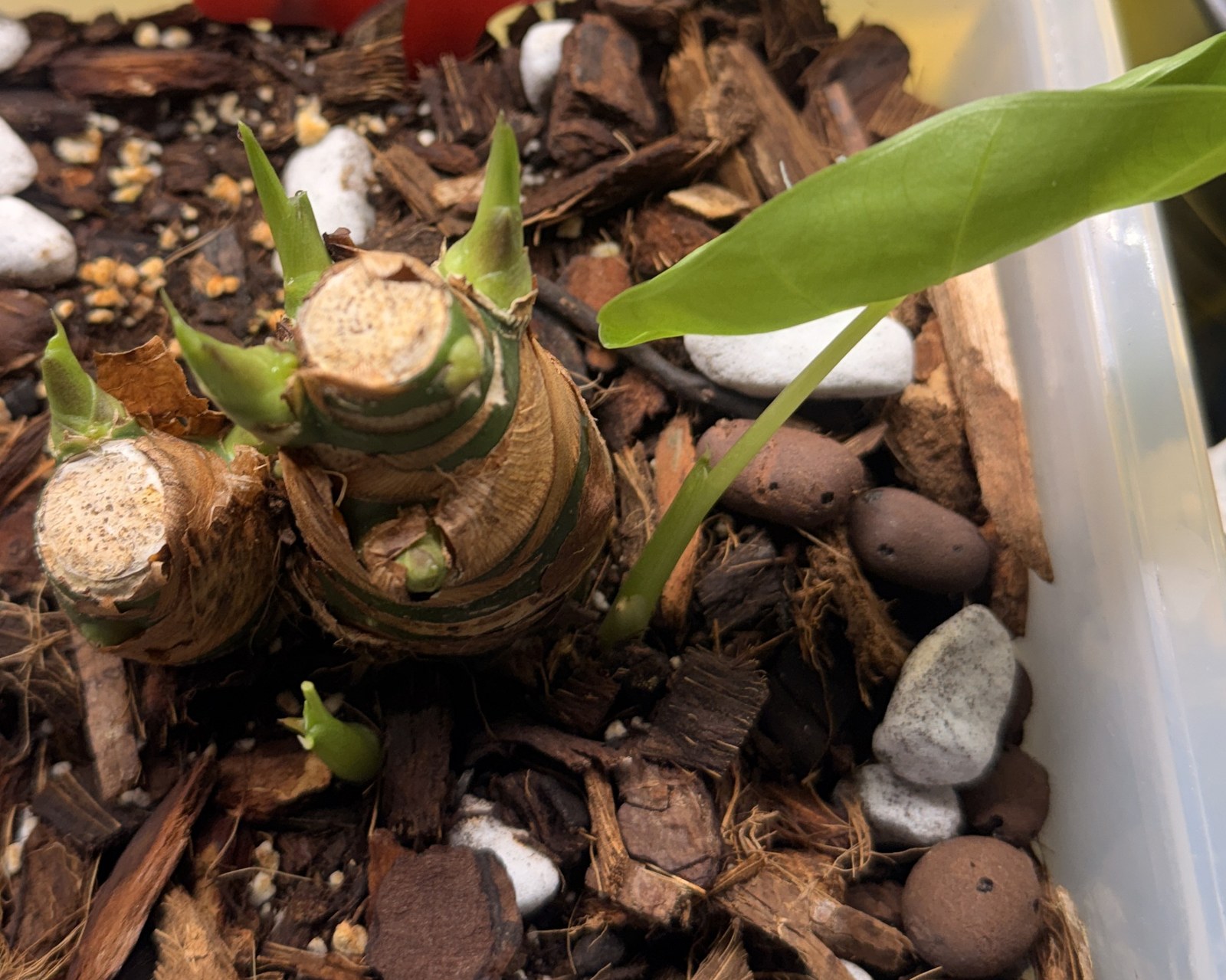
Resume watering when you see the spear, not before, and step it up as leaf area returns. Feed at the second leaf. Expect the first leaf to come in smaller than the last of the old cycle, because the corm is funding it from reserves before the new leaves pay in. By the third, the plant should be back where it was.
We searched for a peer-reviewed answer to a simple question: do an Alocasia's fine absorptive roots persist through dormancy, or break down and regenerate at sprouting? We found nothing that answers it for Alocasia, and nothing that answers it for the closest studied relatives either. The nearest evidence is contractile-root physiology in Sauromatum (sor-oh-MAY-tum), another aroid, where root activity tracks the corm's developmental state (Pütz et al., 1997).
The same caveat applies to every temperature figure above, and to the glasshouse evidence: all of it is borrowed from taro, Caladium and Amorphophallus, because no controlled dormancy study exists for Alocasia itself. In practice, handle a lifted corm's roots gently, leave them on it, and let the plant decide. We would rather tell you the literature is thin than hand you a mechanism that isn't there.
The Takeaway
The reputation this genus carries is mostly a reading error. Alocasia does something that looks alarming and is entirely ordinary, and the standard response, more water and more worry, is the one that turns an ordinary rest into a lost plant.
Three things carry the essay. Read the order of the yellowing: a programmed retraction goes oldest leaf first and in sequence, and trouble doesn't. Read firmness rather than size, because a corm spent down to a third of its weight is still solvent and a soft one isn't. And cut the water hard, because a leafless plant has stopped emptying its own pot and the corm needs the air space more than the moisture.
Do those three and the fourth month stops being frightening. The plant isn't asking you for anything. It's waiting for you to leave it alone until the light returns.
Allen, R. G., Pereira, L. S., Raes, D., & Smith, M. (1998). Crop evapotranspiration: Guidelines for computing crop water requirements (FAO Irrigation and Drainage Paper No. 56). Food and Agriculture Organization of the United Nations. https://www.fao.org/4/x0490e/x0490e00.htm
Bagri, J., Yadav, A., Anwar, K., Dkhar, J., Singla-Pareek, S. L., & Pareek, A. (2017). Metabolic shift in sugars and amino acids regulates sprouting in saffron corm. Scientific Reports, 7, 11904. https://doi.org/10.1038/s41598-017-10528-2
Bilderback, T. E., Warren, S. L., Owen, J. S., Jr., & Albano, J. P. (2005). Healthy substrates need physicals too! HortTechnology, 15(4), 747–751. https://doi.org/10.21273/HORTTECH.15.4.0747
Borochov, A., Lavee, A., & Halevy, A. H. (1986). Low temperature effects on caladium tubers. Acta Horticulturae, 177, 347–352.
Chua, M., Hocking, T. J., Chan, K., & Baldwin, T. C. (2013). Temporal and spatial regulation of glucomannan deposition and mobilization in corms of Amorphophallus konjac (Araceae). American Journal of Botany, 100(2), 337–345. https://doi.org/10.3732/ajb.1200547
Criscione, K. (n.d.). Measuring nursery plant water use in containers (Publication SPES-750P). Virginia Cooperative Extension, Virginia Tech. https://ext.vt.edu/content/dam/pubs_ext_vt_edu/spes/spes-750/SPES-750.pdf
Faust, J. E., & Logan, J. (2018). Daily light integral: A research review and high-resolution maps of the United States. HortScience, 53(9), 1250–1257. https://doi.org/10.21273/HORTSCI13144-18
Galo, D., Escalante, C., Diaz, R., Hartgerink, J. E., & Valverde, R. A. (2022). Phytopythium chamaehyphon causing corm and root rot of uncultivated taro (Colocasia esculenta). European Journal of Plant Pathology, 163(4), 991–995. https://doi.org/10.1007/s10658-022-02512-y
Geigenberger, P., Fernie, A. R., Gibon, Y., Christ, M., & Stitt, M. (2000). Metabolic activity decreases as an adaptive response to low internal oxygen in growing potato tubers. Biological Chemistry, 381(8), 723–740. https://doi.org/10.1515/BC.2000.093
Havé, M., Marmagne, A., Chardon, F., & Masclaux-Daubresse, C. (2017). Nitrogen remobilization during leaf senescence: Lessons from Arabidopsis to crops. Journal of Experimental Botany, 68(10), 2513–2529. https://doi.org/10.1093/jxb/erw365
Himelblau, E., & Amasino, R. M. (2001). Nutrients mobilized from leaves of Arabidopsis thaliana during leaf senescence. Journal of Plant Physiology, 158(10), 1317–1323. https://doi.org/10.1078/0176-1617-00608
Kumari, N., Manhas, S. K., Jose-Santhi, J., Kalia, D., Sheikh, F. R., & Singh, R. K. (2024). Emerging into the world: Regulation and control of dormancy and sprouting in geophytes. Journal of Experimental Botany, 75(19), 6125–6141. https://doi.org/10.1093/jxb/erae216
Kusuma, P., Pattison, P. M., & Bugbee, B. (2020). From physics to fixtures to food: Current and potential LED efficacy. Horticulture Research, 7, 56. https://doi.org/10.1038/s41438-020-0283-7
Lang, G. A., Early, J. D., Martin, G. C., & Darnell, R. L. (1987). Endo-, para-, and ecodormancy: Physiological terminology and classification for dormancy research. HortScience, 22(3), 371–377. https://doi.org/10.21273/HORTSCI.22.3.371
Li, X.-F., Shao, X.-H., Deng, X.-J., Wang, Y., Zhang, X.-P., Jia, L.-Y., Xu, J., Zhang, D.-M., Sun, Y., & Xu, L. (2012). Necessity of high temperature for the dormancy release of Narcissus tazetta var. chinensis. Journal of Plant Physiology, 169(14), 1340–1347. https://doi.org/10.1016/j.jplph.2012.05.017
Lobin, W., Neumann, M., Radscheit, M., & Barthlott, W. (2007). The cultivation of Titan Arum (Amorphophallus titanum): A flagship species for botanic gardens. Sibbaldia: The International Journal of Botanic Garden Horticulture, 5, 69–86. https://doi.org/10.24823/Sibbaldia.2007.8
Loreti, E., & Perata, P. (2020). The many facets of hypoxia in plants. Plants, 9(6), 745. https://doi.org/10.3390/plants9060745
Lyons, P., Arasteh, D., & Huizenga, C. (1999). Window performance for human thermal comfort (Report No. LBNL-44032). Lawrence Berkeley National Laboratory.
Marković, M., Trifunović Momčilov, M., Uzelac, B., Jevremović, S., & Subotić, A. (2021). Bulb dormancy in vitro—Fritillaria meleagris: Initiation, release and physiological parameters. Plants, 10(5), 902. https://doi.org/10.3390/plants10050902
Müller, J. V., & Guzzon, F. (2024). The forgotten giant of the Pacific: A review on giant taro (Alocasia macrorrhizos (L.) G.Don). Genetic Resources and Crop Evolution, 71, 519–527. https://doi.org/10.1007/s10722-023-01664-y
Nauheimer, L., Boyce, P. C., & Renner, S. S. (2012). Giant taro and its relatives: A phylogeny of the large genus Alocasia (Araceae) sheds light on Miocene floristic exchange in the Malesian region. Molecular Phylogenetics and Evolution, 63(1), 43–51. https://doi.org/10.1016/j.ympev.2011.12.011
Paull, R. E., & Chen, C. C. (2015). Taro: Postharvest quality-maintenance guidelines (Vegetable and Root Crops VC-5). College of Tropical Agriculture and Human Resources, University of Hawai‘i at Mānoa.
Plants of the World Online. Alocasia (Schott) G.Don. Royal Botanic Gardens, Kew. https://powo.science.kew.org/
Pütz, N., Pieper, J., & Froebe, H. A. (1997). The induction of contractile root activity in Sauromatum guttatum (Araceae). Botanica Acta, 110(1), 49–54. https://doi.org/10.1111/j.1438-8677.1997.tb00610.x
Qi, Y., Gao, P., Yang, S., Li, L., Ke, Y., Wei, H., Huang, F., & Yu, L. (2023). Comparative metabolomics analysis reveals dynamic changes in carbohydrate profiles of corms during the “relay growth” of konjac (Amorphophallus muelleri). Frontiers in Plant Science, 14, 1259561. https://doi.org/10.3389/fpls.2023.1259561
Ranwala, A. P., & Miller, W. B. (2008). Analysis of nonstructural carbohydrates in storage organs of 30 ornamental geophytes by high-performance anion-exchange chromatography with pulsed amperometric detection. New Phytologist, 180(2), 421–433. https://doi.org/10.1111/j.1469-8137.2008.02585.x
Roitman, M., & Eshel, D. (2024). Similar chilling response of dormant buds in potato tuber and woody perennials. Journal of Experimental Botany, 75(19), 6076–6092. https://doi.org/10.1093/jxb/erae224
Royal Horticultural Society. How to grow alocasias: Growing guide. https://www.rhs.org.uk/plants/alocasia/growing-guide
Schippers, P. A. (1977). The rate of respiration of potato tubers during storage. 3. Relationships between rate of respiration, weight loss and other variables. Potato Research, 20(4), 321–329. https://doi.org/10.1007/BF02362243
Sheikh, F. R., Jose-Santhi, J., Kalia, D., Singh, K., & Singh, R. K. (2022). Sugars as the regulators of dormancy and sprouting in geophytes. Industrial Crops and Products, 189, 115817. https://doi.org/10.1016/j.indcrop.2022.115817
Sugano, S., Ishii, M., & Tanabe, S. (2024). Adaptation of indoor ornamental plants to various lighting levels in growth chambers simulating workplace environments. Scientific Reports, 14, 17424. https://doi.org/10.1038/s41598-024-67877-y
Zhang, J., Sun, D., Shen, H., Pu, X., Liu, P., Lin, B., & Yang, Q. (2024). Dickeya fangzhongdai was prevalent and caused taro soft rot when coexisting with the Pectobacterium complex, with a preference for Araceae plants. Frontiers in Microbiology, 15, 1431047. https://doi.org/10.3389/fmicb.2024.1431047
Zhou, J., Hu, M., Hu, A., Li, C., Ren, X., Tao, M., Xue, Y., Chen, S., Tang, C., Xu, Y., Zhang, L., & Zhou, X. (2022). Isolation and genome analysis of Pectobacterium colocasium sp. nov. and Pectobacterium aroidearum, two new pathogens of taro. Frontiers in Plant Science, 13, 852750. https://doi.org/10.3389/fpls.2022.852750