The Plant Library · Genus Deep Dive
Alocasia.
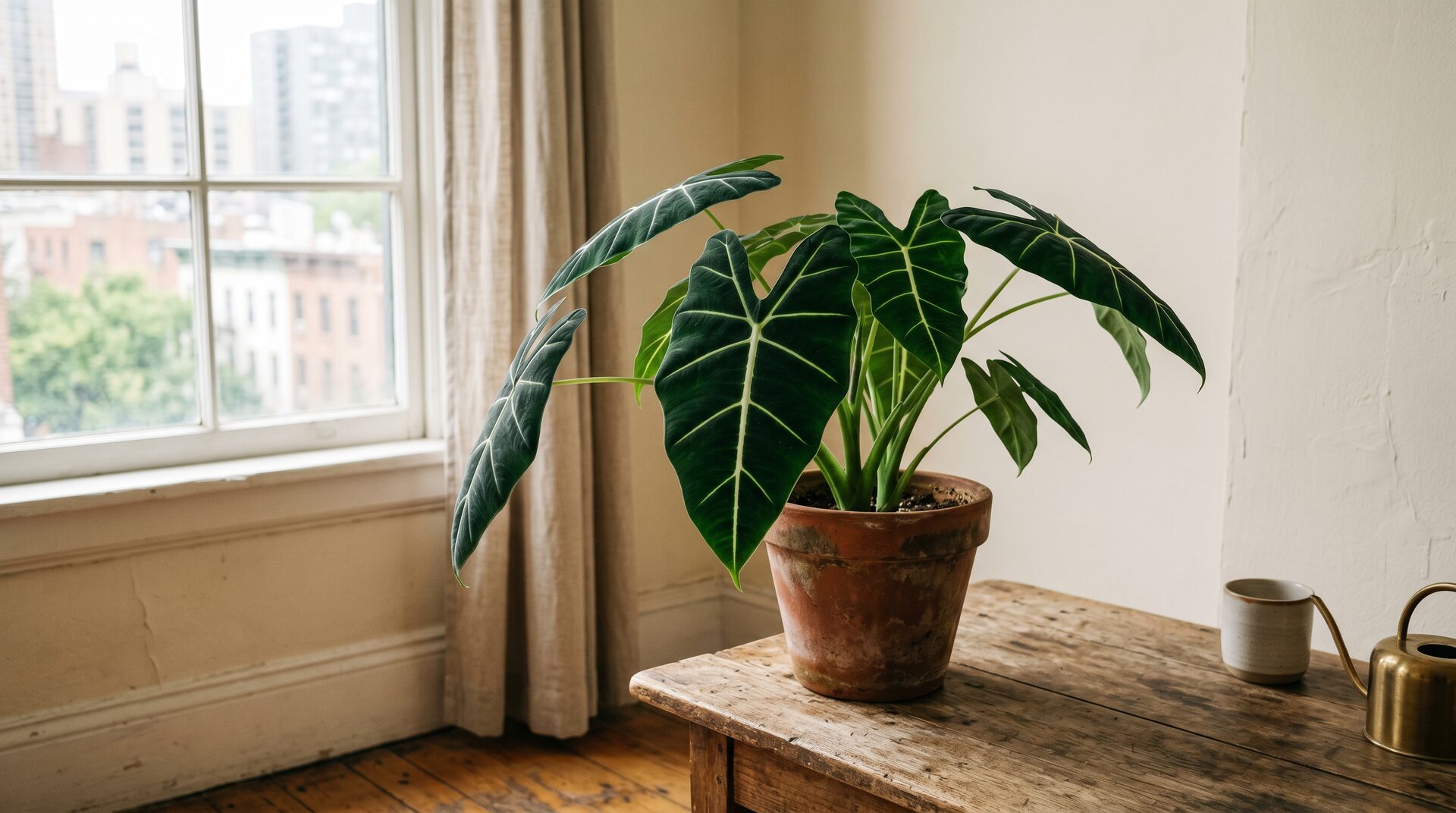
Eighty species across Southeast Asia, the Western Pacific, and tropical Australia. The most photographed houseplant of the past five years and the one that kills the most newcomers. The reputation for difficulty traces to one misunderstood thing: these plants go dormant, and most growers read dormancy as death. We're going to take it apart, one specimen at a time.
What it is
A working compendium
A genus deep dive built the way the Guild builds everything. Science where the science is settled, opinions where they have to be, the substrate ratio at the end. Anatomy and leaf color for context. Species profiles for the plants you'll actually grow. The elephant ear disambiguation that no one else publishes correctly.
Who it's for
Apprentices and Growers
For first-plant Apprentices about to buy a Polly and assume it's easy. For Growers who've lost a Frydek and want to know what actually happened. For anyone who's been told their plant died when the corm was still alive underground.
How it's written
Editorial, not whimsical
Latin names and a year of description where they help, plain English where they don't. Every entry runs on what the plant actually wants, not what makes a good Instagram caption. Specimens from the Petruscio collection show up in callouts. The plant is the subject; the grower is the witness.
Section 01 · Understanding the genus
The framework.
The essays that do the theoretical lifting before you meet a single plant.
 Essay · Live
Field Manual · Genus essay
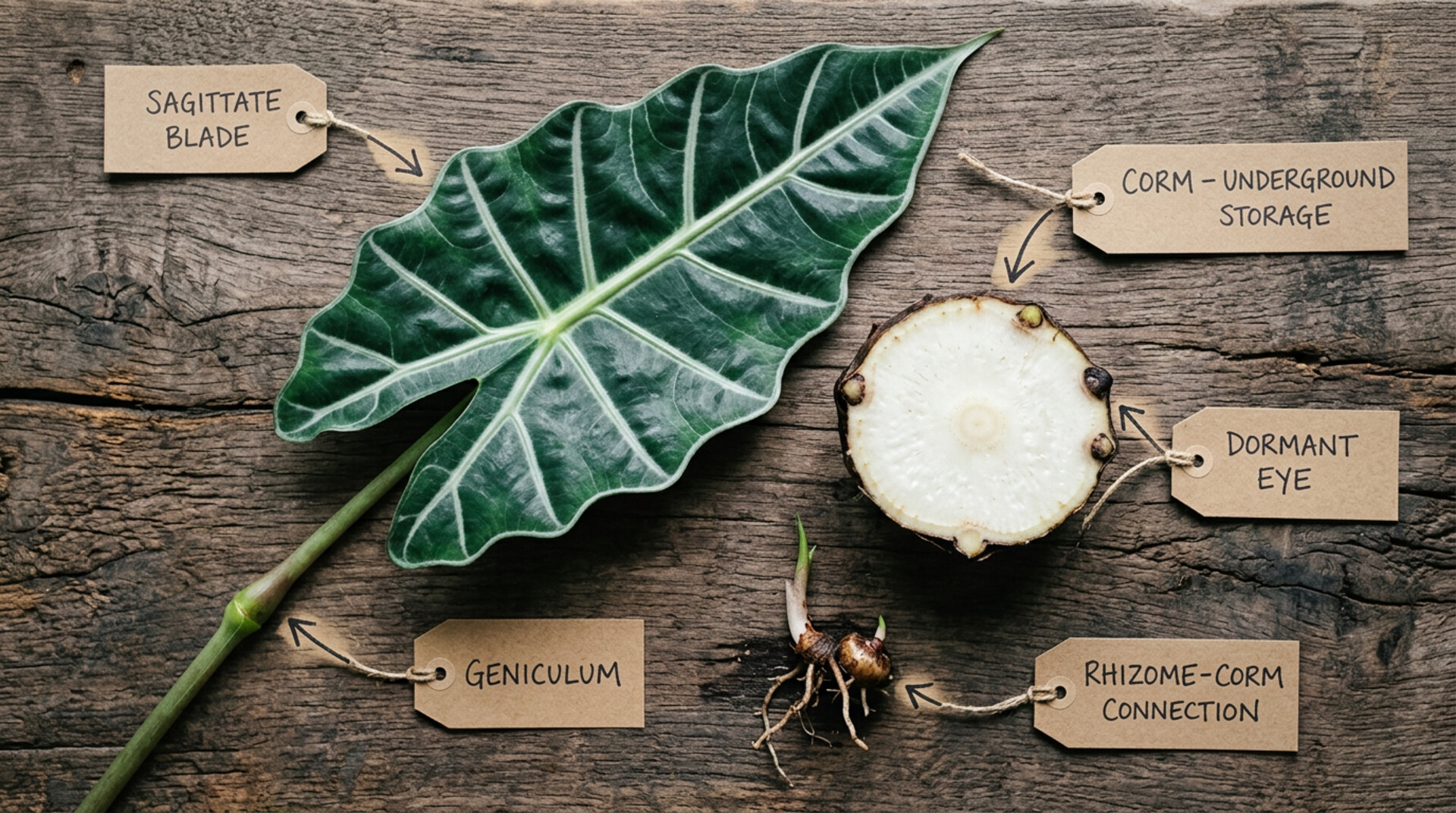
What Makes an Alocasia, an Alocasia
The corm underground is not decoration. The sagittate leaf shape is not arbitrary. The geniculum is a working joint. Anatomy is where every Alocasia care decision actually comes from, and where the dormancy reflex starts.
 Essay · Live
Field Manual · Genus essay
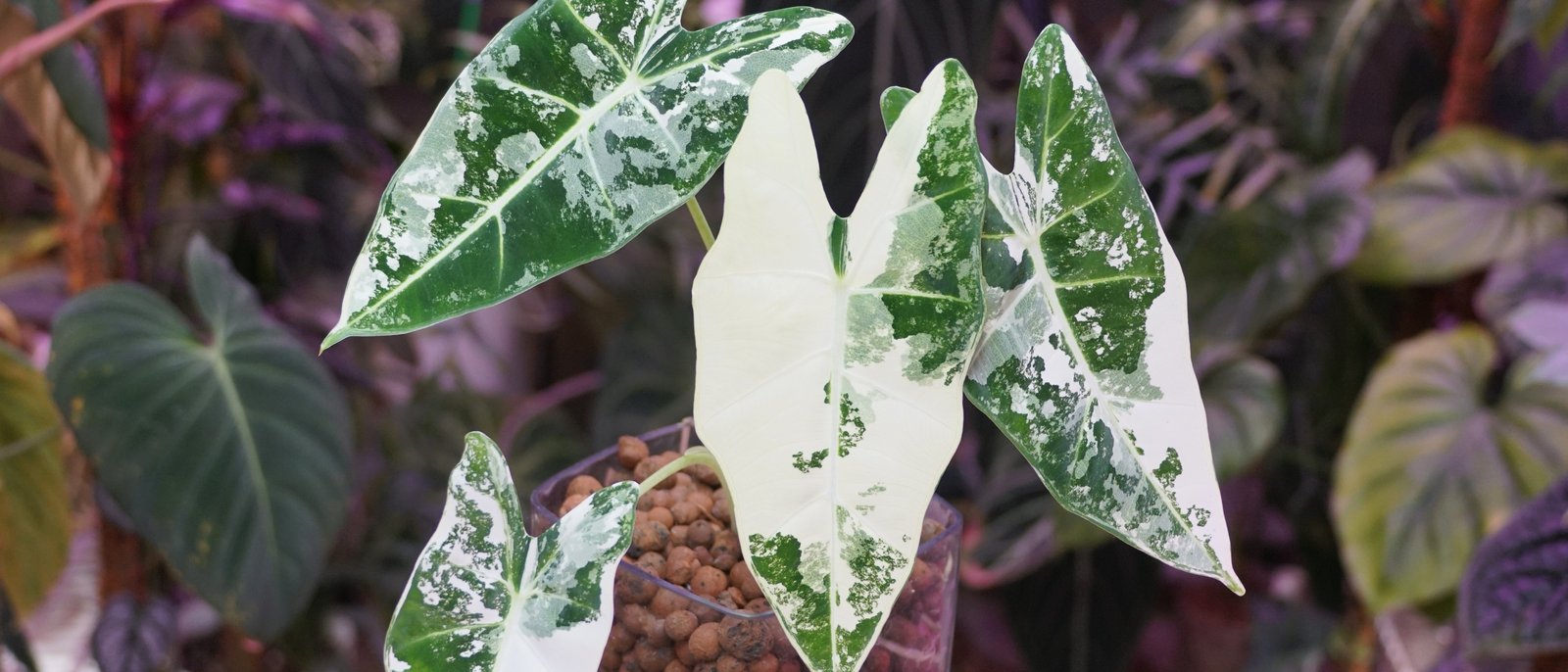
Why Your Pink Alocasia Turned Green
One word, four causes. Anthocyanin is a pigment the plant manufactures, so it answers to light. Chimeral variegation is cell-layer architecture, and light won't hold it or bring it back. Then the jewel sheen nobody has explained, and the pale pattern that's sometimes a virus.
Section 02 · Species profiles
Plants worth knowing.
Per-species deep dives. Wild origin, physical description, what the plant actually wants in cultivation, the moods that mean dormancy versus the moods that mean trouble. Editorial-pure — no commercial CTAs.
Section 03 · The Disambiguation Entry
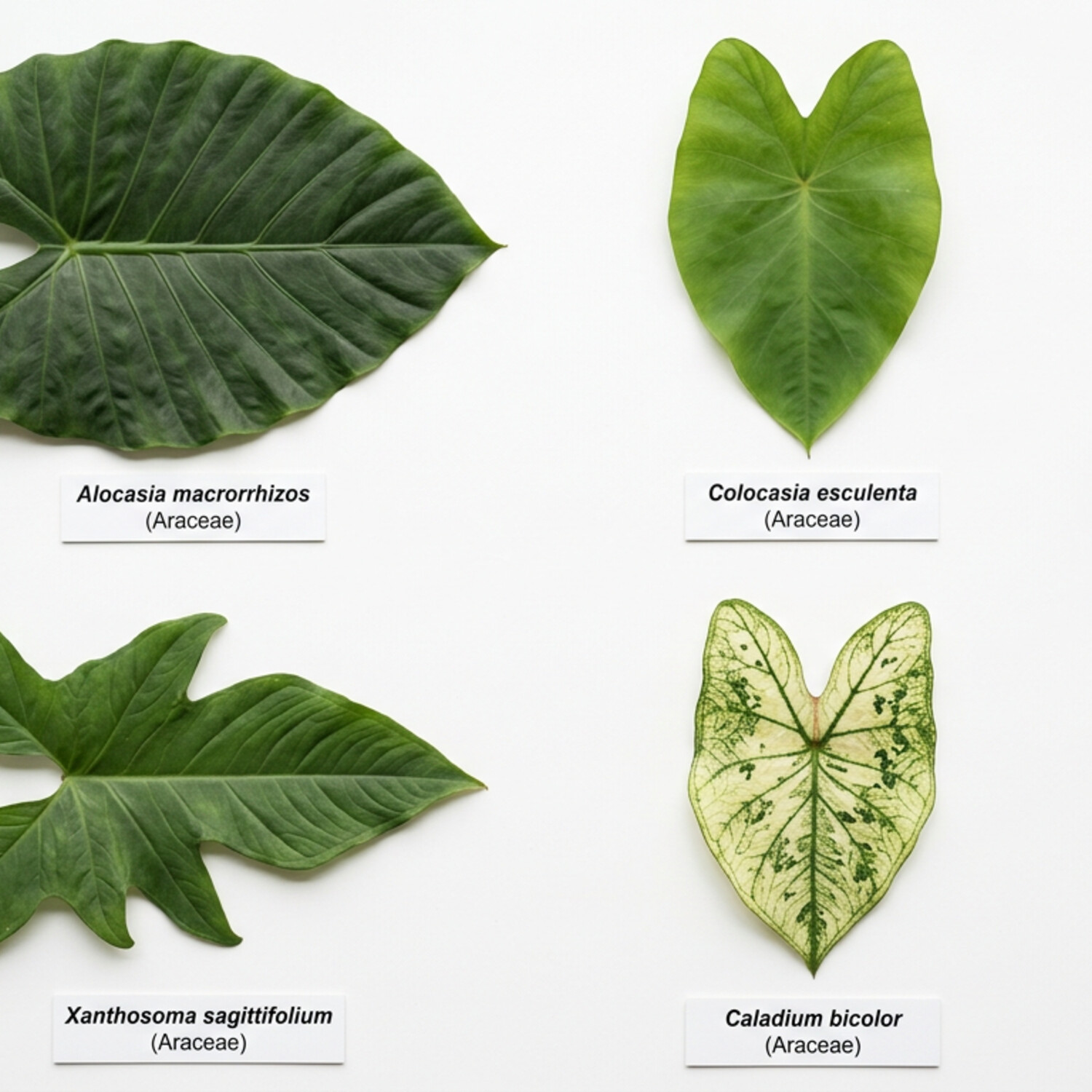
Four genera all called "Elephant Ear."
Walk into any garden center and you'll find tubers labeled simply "Elephant Ear." That label is wrong four ways at once. Alocasia is one of four unrelated genera sold under the same common name, and each one wants a different thing.
Colocasia (Taro) is the plant most often confused with Alocasia. Same family, different genus. Water-loving — some species are bog plants. Full sun tolerant. Goes fully dormant in temperate winters by design. The edible corm is the original taro of Pacific cuisine.
Xanthosoma (Yautia) is the New World cousin. Native to the Americas, not Asia. Edible, similar growth habit to Colocasia, less commonly cultivated indoors. The third "elephant ear" you'll see at the garden center.
Caladium is a completely different aroid genus. Paper-thin leaves, summer-bulb herbaceous, fully dormant in winter (tuber storage), bright indirect light. Most often confused with Alocasia by people who see the leaf shape and stop looking.
Selling someone an "elephant ear" without telling them which genus they bought is the consumer-experience failure the Guild names and fixes. The full disambiguation entry walks through identification, care divergence, and what to do if you bought the wrong one.