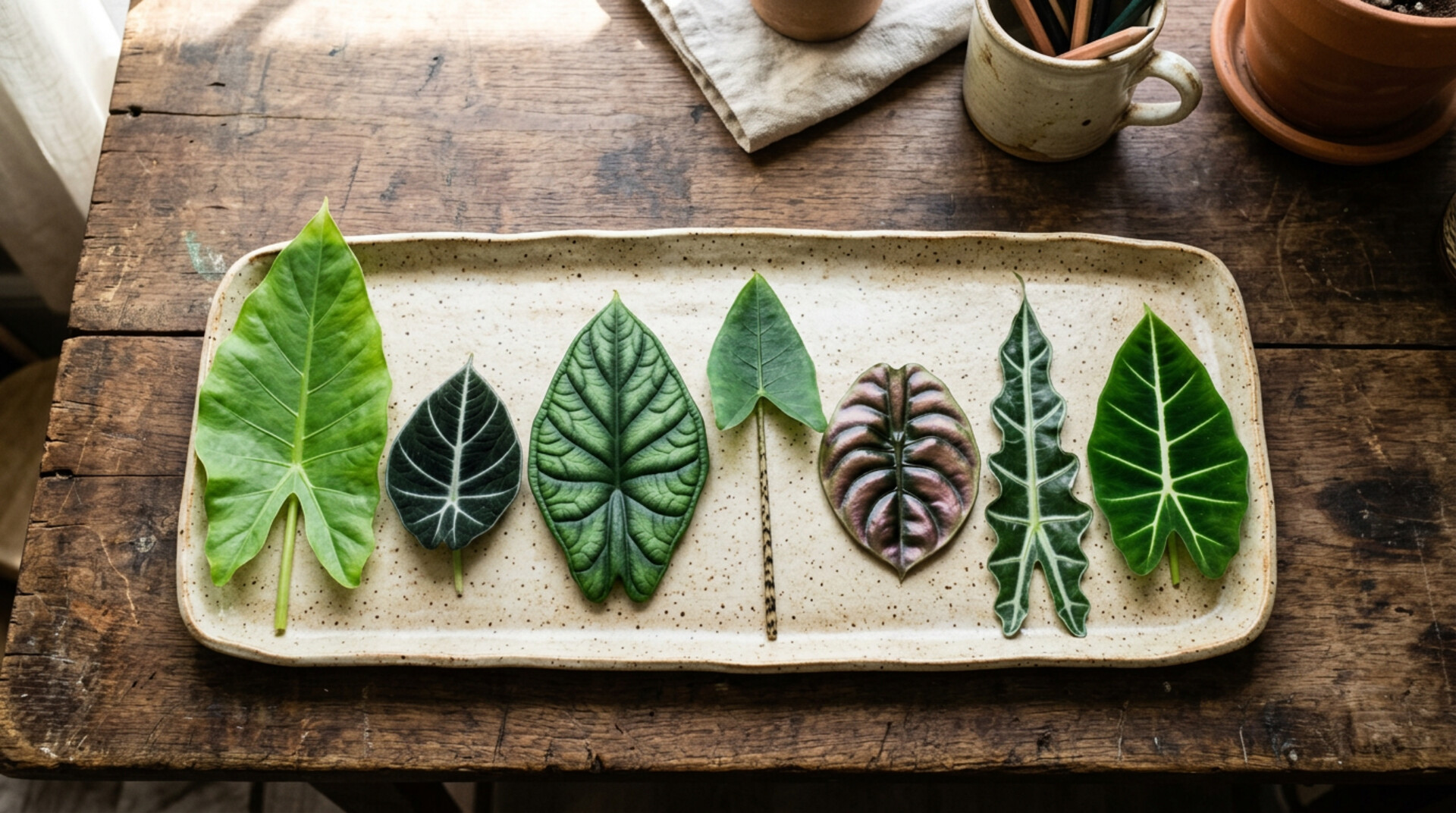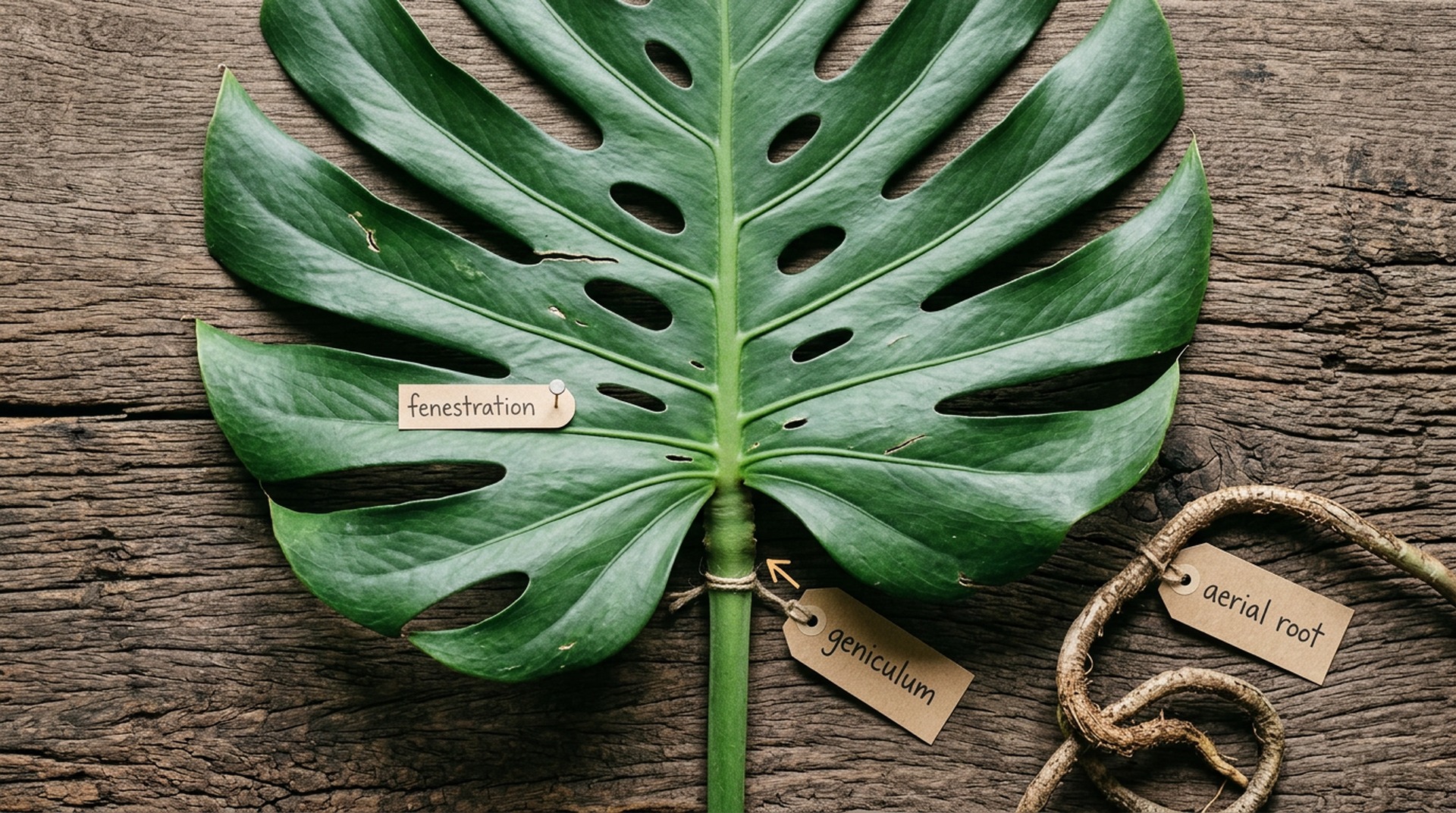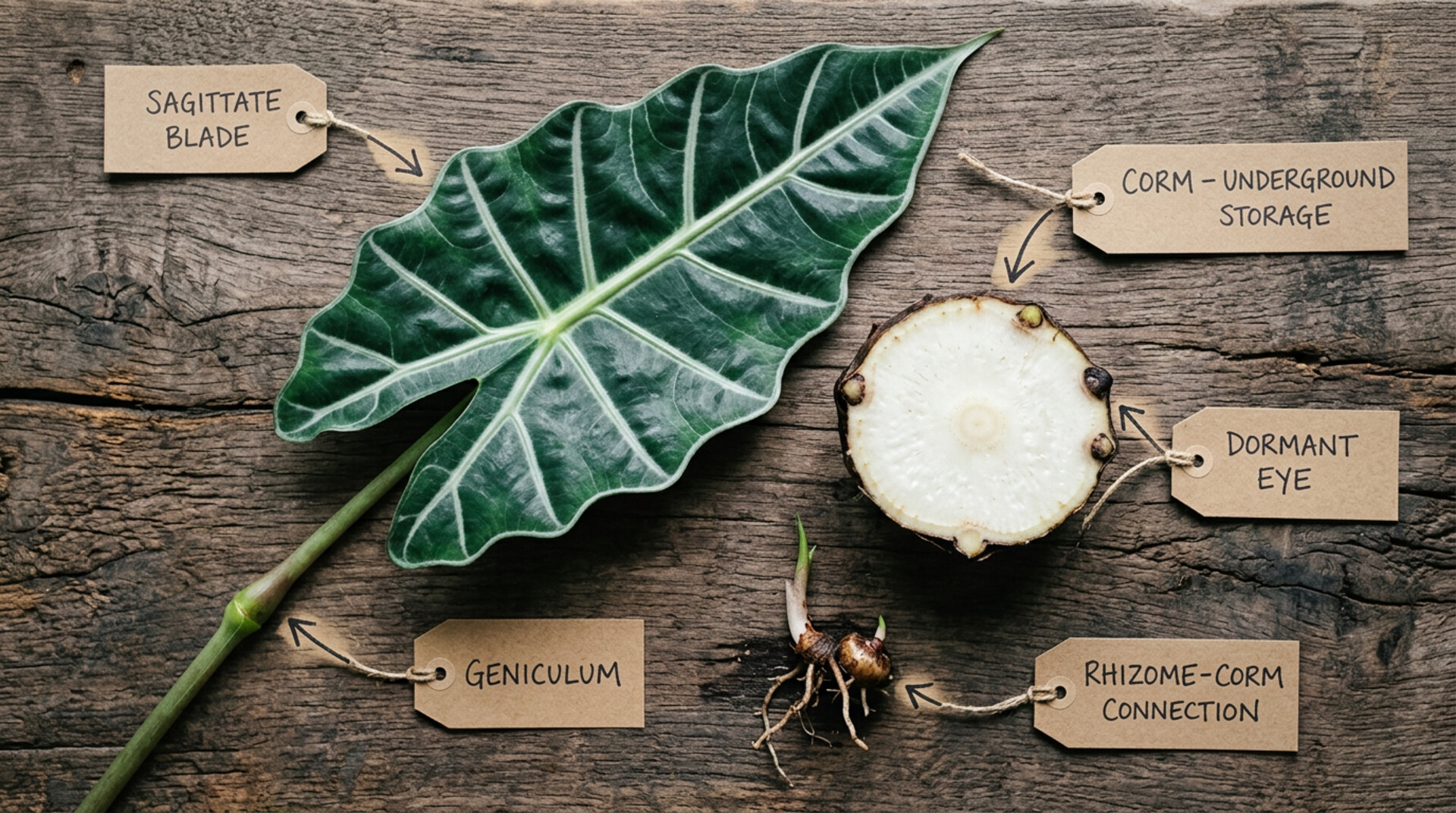
The corm underground is not decoration. The arrow-shaped leaf is not arbitrary. The geniculum is a working joint. Alocasia anatomy is where every dormancy mistake, every rot, every "my plant died" report actually comes from.
Why Anatomy Is the Compass
Most Alocasia advice tells you what to do. Water sparingly. Bright indirect light. Don't let the leaves stay wet. The advice isn't wrong, but it gives you no way to predict what the plant will do next. It also doesn't help when the plant violates the rules and survives anyway, or follows the rules and dies anyway.
Anatomy gives you that prediction engine. An Alocasia is not a houseplant in any pure sense. It's an understory geophyte (a plant of the forest-floor layer, growing from a swollen underground storage organ) native to the Southeast Asian rainforest, sitting on a corm that powers its own boom-and-retreat cycle. Most of the strange things it does in your living room are holdovers from that life. The corm that survives a missed season. The leaves that re-orient overnight after you turn the pot. The dramatic collapse that looks fatal and isn't. Each one is a structure built for a job the plant evolved to do.
This essay walks the Alocasia body at the resolution that's useful for cultivation. The corm, the sagittate leaf, the geniculum, the velvet surface, the iridescence, the dormancy reflex, the defensive chemistry. For each, the practical thing that changes about how you grow it. No pure academia, no skipped fundamentals.
The Corm Underground
Start under the substrate, because most of what defines Alocasia happens there.
The corm is a swollen modified stem that sits at or just below the substrate surface. Above ground you see a cluster of leaves on a fleshy stalk. Below ground there's a dense fibrous mass, often as much biomass as the leaves above it, full of starch and soluble sugars (Sheikh et al., 2022). The corm is the plant's energy bank. Most Alocasia behavior worth predicting comes back to its state.
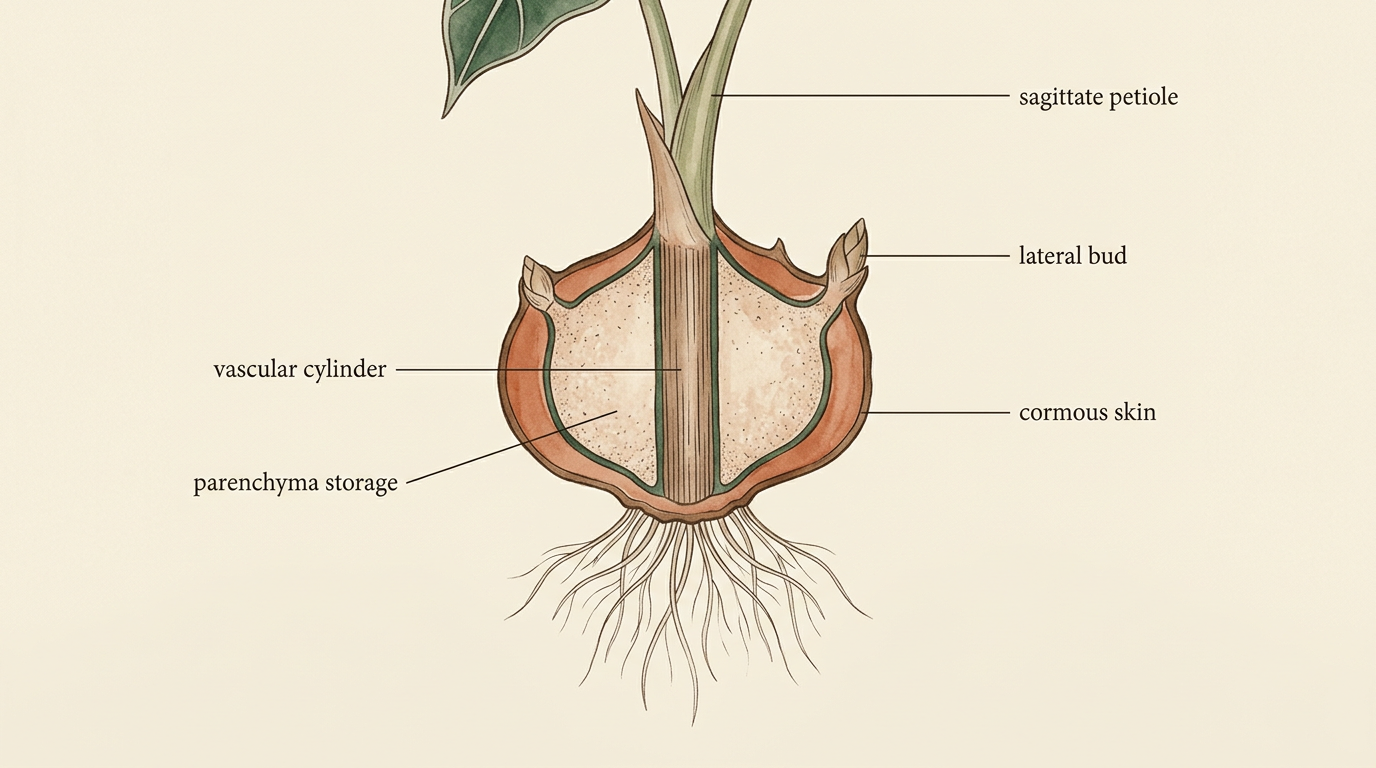
Three things matter about the corm.
First, it's a storage organ on the scale of a small onion or a piece of ginger. Nonstructural carbohydrates (the soluble sugars and starches a plant stores as energy reserves) in geophyte storage organs commonly run from 24 to 760 mg per gram of dry weight across species, with the bulk held as starch and short-chain fructans (Ranwala et al., 2008). That reservoir is what lets an Alocasia drop every leaf, sit through a dry season in its native habitat, and push a new shoot when the rains return. In cultivation, it's also what lets a plant that "looks dead" come back two months later if the corm is intact.
Second, the corm is aerobic. The starch in those storage cells is only useful if the cells themselves are alive, and the cells are alive only if oxygen can reach them. Compacted potting mix, waterlogged substrate, or a pot with no air movement around the corm cuts that oxygen and starts the rot cascade. This is the single biggest killer of cultivated Alocasia, and it's almost always misdiagnosed as overwatering. Overwatering is part of it. The deeper problem is substrate.
Third, the corm produces side shoots. New growth doesn't come from the apex of an existing leaf cluster the way it does on a Monstera. It comes from buds along the corm, often slightly offset from the original growing point. Watch any healthy Alocasia long enough and you'll see new clusters emerge a few inches from the parent. Those side shoots are how the plant naturally propagates, and they're why a single corm in a stable environment becomes a tight cluster of clones over a couple of seasons.
The first Frydek I ever brought home from a big-box store started to die off in the first two weeks. I'd lost most of the leaves and the remaining ones were yellowing fast. I decided to do a chop-and-drop, lifted the plant out of its nursery pot, and repotted the bare corm into a chunky mineral-leaning mix. Within two weeks there were new shoots. Within two months it had more vigorous growth than when I first bought it. That's when I knew I'd be a lifelong Alocasia fan.
The chop didn't save the plant. The substrate did. The original soil was compacted and held water against the corm. The new mix kept the corm aerobic, and the corm did the rest from its own reserves.
Sagittate by Design
Now the leaf.
Almost every Alocasia produces leaves that are sagittate (arrow-shaped) or peltate (shield-shaped), with a pronounced acuminate apex (a tip that tapers gradually to a long, sharp point, sometimes called a "drip tip" because of what it does in heavy rain). The shape is consistent enough across the genus that botanists treat it as a diagnostic feature. It's also one of the cleanest examples of a leaf shape solving a hydrological problem.
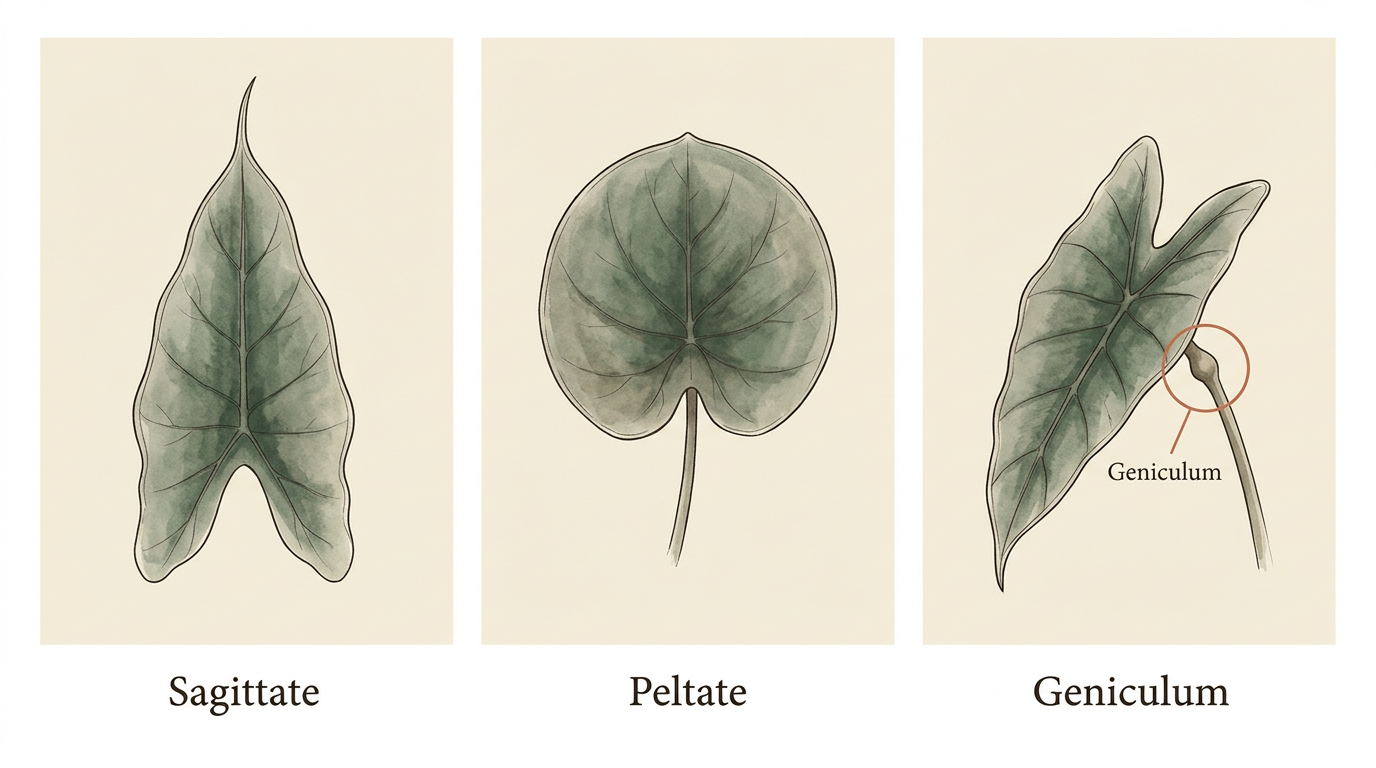
The apex matters. A 2020 study in the Proceedings of the National Academy of Sciences showed that as leaf apex shape transitions from round to triangular to acuminate, the rate of water drainage off the leaf rises, the dripping frequency climbs, and the volume of retained water drops (Wang et al., 2020). For wet tropical plants, the curvature at the drip tip flips the local capillarity (the surface forces that make water either cling to a surface or run off it) from resistance to actuation, actively pushing water off the leaf rather than holding it. The drip tip is a small structural feature with measurable consequences for how a leaf handles a downpour.
The Southeast Asian rainforest understory is where this shape pays off. Native Alocasia habitats receive heavy seasonal rainfall, and the same large, soft leaves that catch low-angle filtered light also catch sheets of water during a storm. Water sitting on a leaf in a humid forest is a fungal infection waiting to happen. The drip tip pushes the water off fast enough that the leaf surface dries between storms.
The shape also reduces self-shading. A sagittate leaf on a long petiole, with a single point of attachment and two backward-curving lobes, intercepts oblique light from multiple directions without leaves above casting heavy shadows on leaves below. Combined with the species' overall architecture (a few large leaves rather than many small ones), this lets the plant capture more usable light in the gappy, sunfleck-heavy environment of a forest floor.
Practical consequence: water that pools on an Alocasia leaf indoors is a problem the plant isn't designed for. The drip tip works in vertical orientation with gravity helping. In a static indoor environment with horizontal leaves catching mist or splash from watering, water can sit against the leaf surface long enough for bacterial spotting or fungal infection to set in. The fix isn't humidity reduction. The fix is keeping water off the upper leaf surface and letting the plant transpire through its underside.
Guttation and the Morning Droplet
If you've kept an Alocasia for any length of time, you've seen this. Some mornings the leaf carries a single clear bead of liquid at its tip. Sometimes several. The droplets look like dew, but they appear in places dew can't easily form, including underneath the leaf and on the upper surface of a plant that has not been exposed to cold air overnight.
That's guttation. It's the plant pushing internal sap out through specialized pores called hydathodes (overflow valves found at the leaf tip and along the margins, anatomically distinct from stomata) (Cerutti et al., 2019). The droplet isn't condensation. It's xylem fluid the plant has actively transported up from the roots and released through pores that stay open even when stomata close.
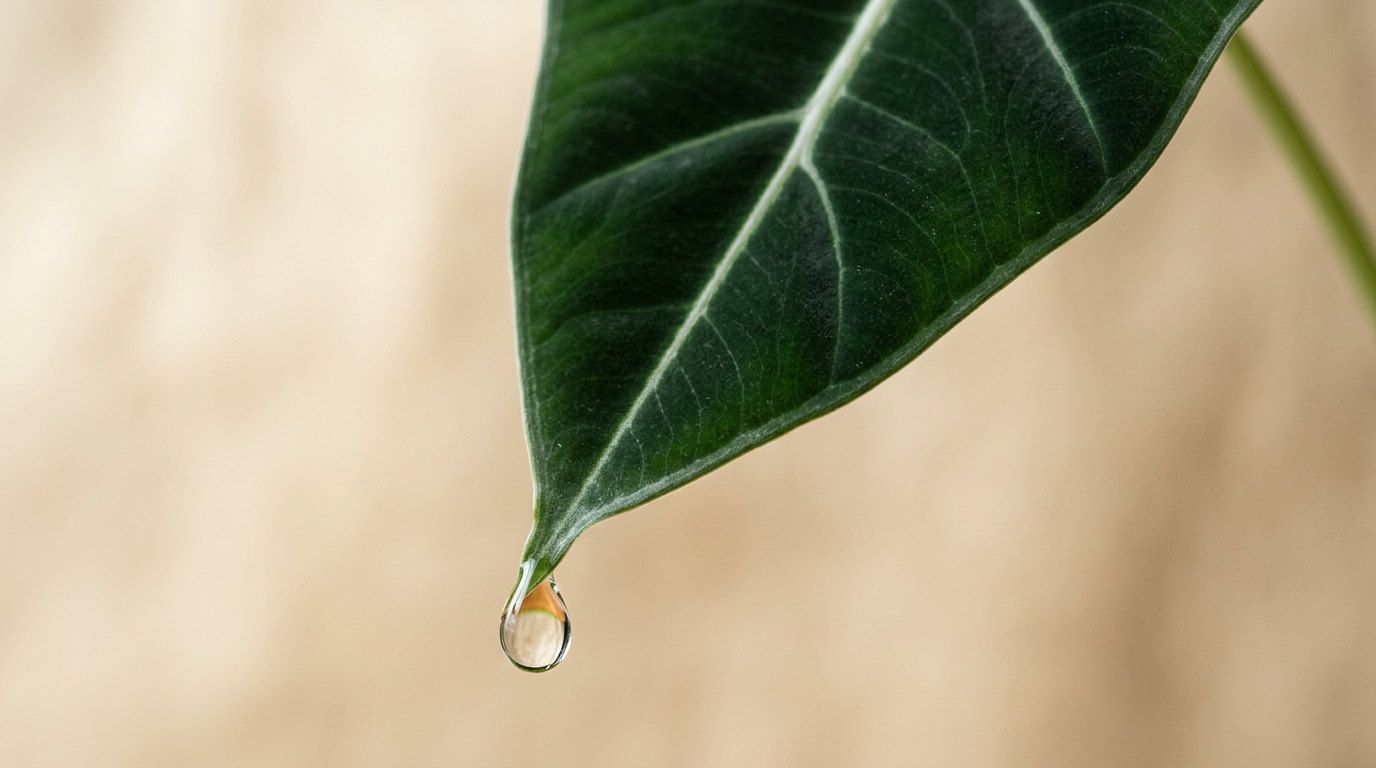
The mechanism is root pressure (Singh, 2016). At night, when transpiration largely stops because the stomata close, the roots can keep actively pumping water into the xylem if the substrate is wet and the temperature is warm. The water has nowhere to evaporate from. Pressure builds inside the vascular system. The hydathodes release the excess fluid as visible droplets at the leaf tip and margins.
Alocasia is one of the more dramatic guttators in the houseplant world, and the anatomy explains why. The acuminate apex collects the exudate into a single visible bead at one point. The arrow-shaped leaf channels fluid efficiently along the venation toward that tip. And the plant's evolutionary background in a rainforest understory means root pressure is something it experiences regularly, both in the wild and in cultivation.
A few things are worth knowing.
First, it's not a disease. Guttation is normal physiology, not a fungal infection or a watering injury. A plant that guttates is hydrating itself in the way its anatomy is built for.
Second, the droplets contain dissolved solutes. Among them are sugars, mineral salts, and trace calcium oxalate (the same chemistry covered in the Raphides section below). The fluid is mostly water, but the dissolved fraction is enough that pets licking the droplets can pick up mild oral irritation from the same defense compounds that protect the leaves. This is one of the routes a curious cat encounters the plant's defense system without ever chewing a leaf.
Third, it's diagnostic. Heavy or persistent guttation often signals one of three conditions: saturated substrate (the roots have more water than the leaves can release), unusually warm root-zone temperatures with cooler air above (which amplifies the root pressure differential), or a recent shift in watering frequency. If you see consistent morning guttation on a plant that didn't guttate before, check substrate moisture first. The plant is reporting on its hydrostatic state.
Practical consequence: don't wipe the droplets off in panic. Let them dry naturally or blot them with a soft cloth. Don't change your watering routine in response to a single morning of guttation. Do change it if you see daily guttation combined with substrate that stays wet for more than three to four days after a thorough watering. The plant is telling you the corm is sitting wetter than it should.
The Geniculum at Work
Look at the petiole (the stalk that connects the leaf blade to the rest of the plant) of any mature Alocasia and you'll see a slight swelling near the junction with the blade. That's the geniculum, the same anatomical structure that defines the Monstera petiole and shows up across the broader Araceae (aroid) family. It's not a hinge or a weak point. It's a motor organ.
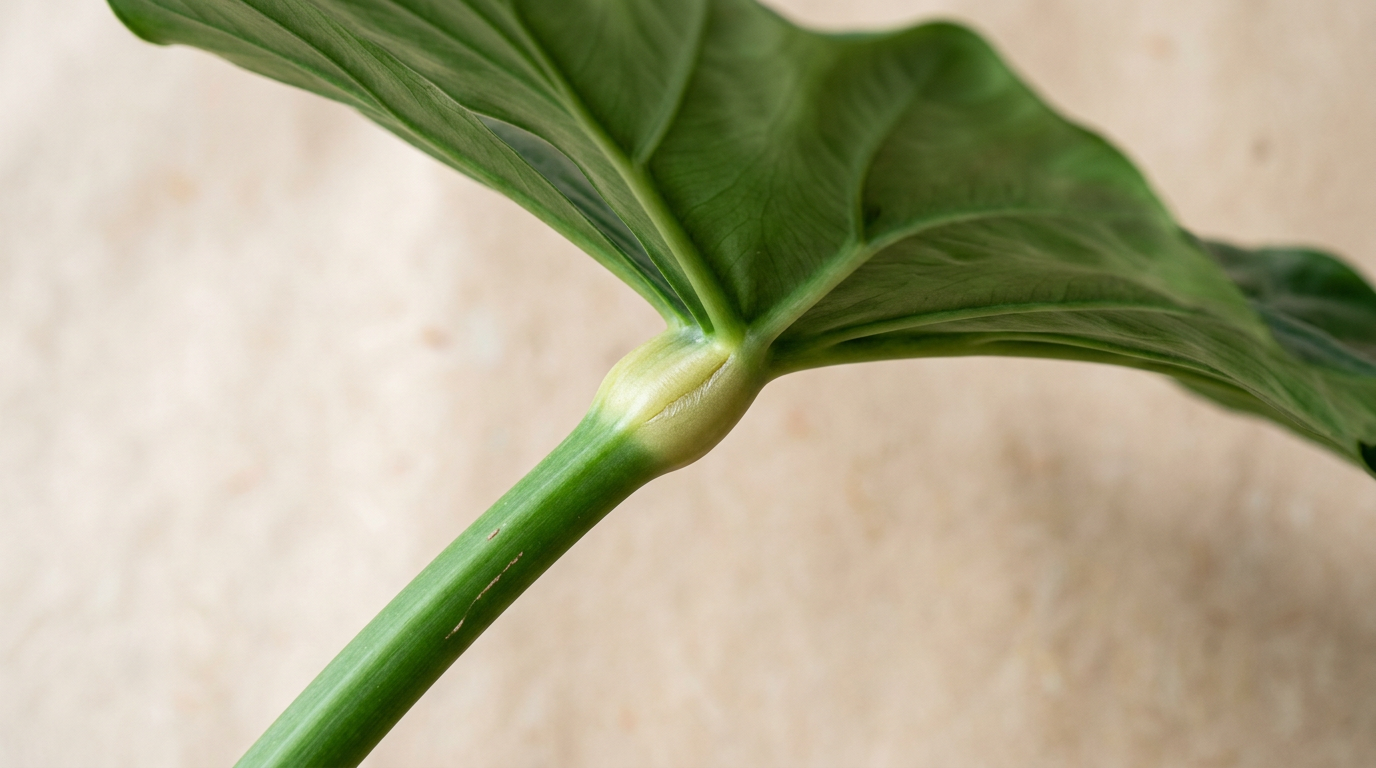
The geniculum is a pulvinus-analog: a cluster of specialized soft-tissue cells (parenchyma) that change their internal water pressure (turgor) to re-orient the leaf blade in response to light, temperature, and physical disturbance (Mayo, Bogner, & Boyce, 1997). The blade above the geniculum tilts to track light through the day, shifts after rain to shed water more efficiently, and re-orients when the plant is repositioned in a room. The movement is slow on a houseplant timescale, hours rather than seconds, but it's continuous, and it happens whether you notice it or not.
In Alocasia the geniculum is often more visually pronounced than in Monstera. The petioles are longer, the leaves are larger relative to the petiole's diameter, and the structural job is harder. A 24-inch (60 cm) sagittate leaf on a 35-inch (90 cm) petiole demands a working joint to keep the blade oriented to the light. The geniculum is that joint.
Practical consequence: when you rotate an Alocasia, give the plant a few days before judging its new orientation. Leaves that look droopy the morning after a repositioning are often just the geniculum adjusting to the new light angle. The plant is doing slow physics on every leaf, all the time. If a leaf was healthy yesterday and looks slightly off today, look at the geniculum before you reach for the watering can.
Stomata, Velvet, and the Humidity Cliff
Alocasia leaves are large, thin, and lightly cuticularized (carrying a thin waxy outer layer, the cuticle, that slows water loss) compared to most houseplants. The thin construction works in the high-humidity, low-evaporation environment of a rainforest understory, where the air consistently sits above 80% relative humidity through most of the year (Meijide et al., 2018). It works less well in a 35% relative humidity apartment in February.
Most of the gas exchange happens through stomata on the leaf underside, and the rate of water loss through those stomata depends on the gradient between the wet leaf interior and the dry air outside. The lower the humidity, the steeper the gradient, the faster water moves from leaf to room. A thin Alocasia leaf in dry air loses water faster than the plant's vascular system can replace it. The visible result is browning leaf margins, crisping tips, and the slow collapse of leaves that look fine in the morning and limp by evening.
The velvet species are a partial answer to this problem. Frydek (A. micholitziana), Black Velvet (A. reginula), and the dragons (A. baginda 'Silver Dragon' and 'Dragon Scale') all carry dense layers of fine trichomes on the upper leaf surface. Those hairs are decoration to the human eye and function to the plant: they reflect incoming light, modulate how water droplets sit on the leaf surface, and offer some UV protection (Bickford, 2016). The popular notion that trichomes slow transpiration through a humid boundary layer has weaker peer-reviewed support than its prevalence in care advice suggests; the better-established functions are light reflection and leaf-wettability modulation.
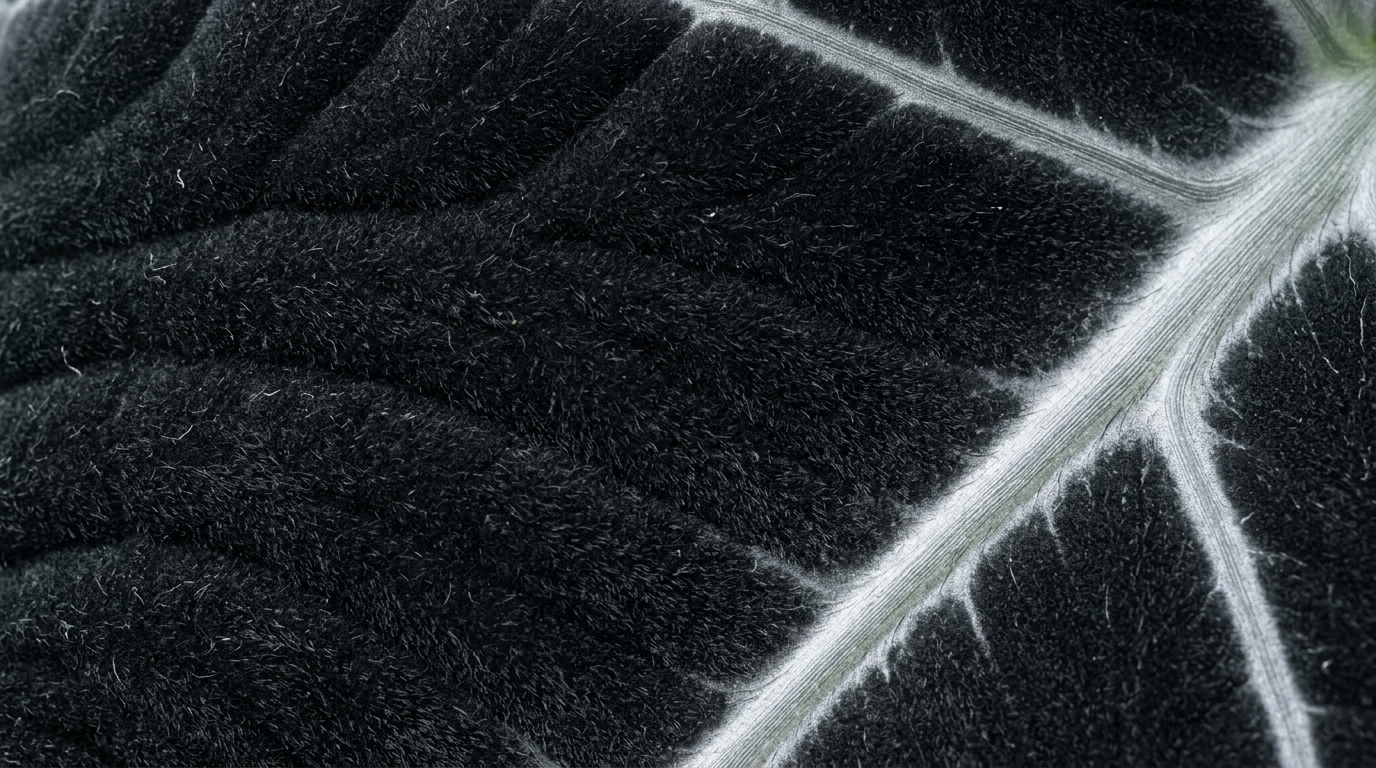
Whatever the mechanism mix, velvet alone isn't enough protection in dry air. A velvet Alocasia in 30% relative humidity still loses water faster than it can recover, and the velvet trichomes themselves are sensitive to environmental stress. Plants grown outside their humidity comfort range produce smaller, less developed trichomes, and the velvet texture flattens. The fitness signal is visible. If your Frydek's velvet is coming in fully formed, your humidity is right.
Practical consequence: humidity isn't a recommendation for velvet Alocasia. It's an anatomical requirement. Below roughly 50% to 55% relative humidity, the plant runs on borrowed time. Humidifiers, pebble trays, terrarium enclosures, or simply grouping plants together to create local humidity all work. Misting doesn't, for the same reason it doesn't work on Monstera aerial roots: the contribution to leaf-surface hydration from an occasional spray is negligible compared to the continuous loss through transpiration (the steady evaporation of water out through the leaf's stomata as the plant breathes).
Iridescence in the Understory
Some Alocasia leaves shimmer. The most striking examples are Alocasia cuprea, with its copper-iridescent corrugated upper surface, and Alocasia baginda (sold as 'Silver Dragon' and 'Dragon Scale'), with a silver-blue sheen across the veined leaf surface. Alocasia reginula 'Black Velvet' and some velvet hybrids show a subtler metallic depth in the right light.
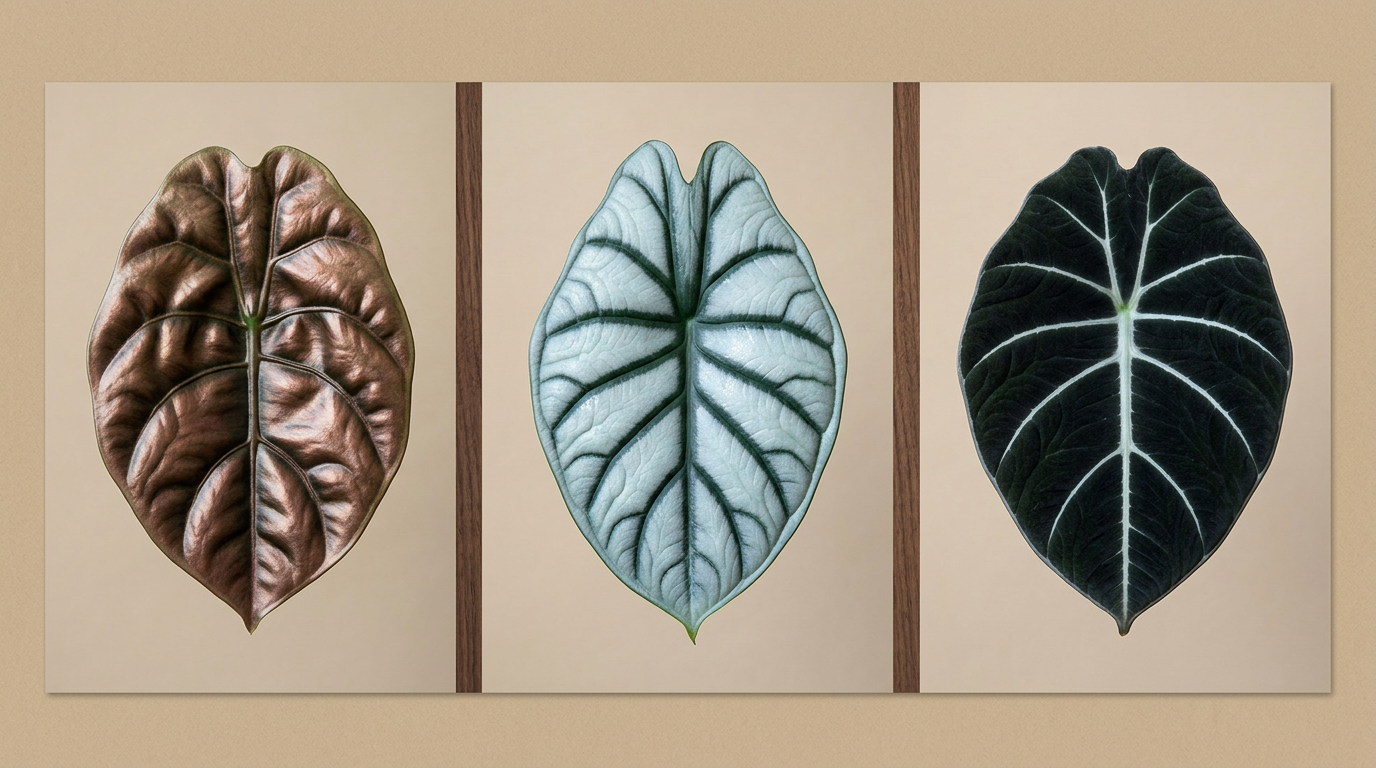
What's producing it.
This is where I have to be honest about the gap between what's visible and what's been studied. The mechanism behind Alocasia leaf iridescence has not, as far as the published literature goes, been directly tested. There's no peer-reviewed paper that has put an Alocasia leaf under a transmission electron microscope, identified the optical layer, and measured the reflectance. What we have is a strong inferential case built on parallel evidence in other shade-dwelling tropical understory plants.
A 2016 paper in Nature Plants studied Begonia iridoplasts: modified chloroplasts in the upper epidermis with thylakoid membranes stacked at uniform spacing, producing a one-dimensional photonic crystal (a microscale optical structure that reflects specific wavelengths of light, the same general physics behind a soap bubble or an oil slick) that gives Rex begonias their metallic shimmer and boosts quantum yield (the efficiency with which absorbed light becomes usable energy for photosynthesis) by 5 to 10% under low light (Jacobs et al., 2016). A 2010 paper in the Journal of the Royal Society Interface studied the blue iridescent leaves of Selaginella willdenowii, finding a multilayer cuticular structure in the upper leaf surface that produces the iridescence through thin-film interference (the same optical effect that produces the colors on a soap bubble: light bouncing off stacked transparent layers and interfering with itself) (Thomas et al., 2010). Two different mechanisms, two different tissue layers, both producing structural color in shade-dwelling plants from environments very similar to Alocasia habitat.
The Alocasia shimmer probably comes from a similar mechanism, most likely cuticular rather than chloroplast-based, but the work hasn't been done. The shape of the iridescence (broad, surface-located, more pronounced on glossy species than on velvet species) is consistent with a multilayer cuticle. The function is almost certainly the same general one: enhanced light capture in the green wavelengths that dominate deep shade, or possibly a defense against herbivory through visual disruption of the leaf outline.
Practical consequence: too much light flattens the iridescence. The optical structure is adapted to the low-light conditions of the rainforest understory. A cuprea in a bright south window loses its copper sheen and reads matte. A baginda in the same conditions loses its silver. The fix is exactly what you'd guess: dimmer, more diffuse light. If your Alocasia's iridescence is dulling, the problem is almost always too bright before it's anything else.
The Dormancy Reflex
The most distinctive trait in the genus.
Alocasia is built to retreat. In its native habitat, the plant times its growth cycle to the wet season and rides out the dry months on the corm's stored reserves. In cultivation indoors, the same reflex can fire in response to any combination of dropping temperature, drying substrate, reduced light, or general stress. The leaves yellow, starting with the oldest. The plant pulls energy back into the corm. Leaves drop until only one or two remain, sometimes none. To a grower who doesn't recognize the pattern, this looks fatal.
It usually isn't.
The corm holds the plant through the retreat. Stored carbohydrates fund the basal metabolism while the leafless plant waits for conditions to improve (Sheikh et al., 2022). When light, temperature, and moisture return to the right ranges, a new shoot pushes up from a bud on the corm, and the cycle restarts.
Three failures account for most plants lost to dormancy. Overwatering is the first and biggest. A dormant corm has no active leaf surface pulling water out of the substrate. Water that goes in stays in, and the substrate stays saturated longer than the corm can tolerate. Wet corm plus low temperature plus no transpiration equals rot, every time. The second killer is cold. Below about 60°F (16°C), the conventional threshold for tropical aroid chilling stress (Lara et al., 2024), Alocasia metabolism stalls hard enough that the corm starts to die back. The third is excavating a corm that's "just sitting there" and discarding it, which is what happens when growers assume the plant is dead.
The fix in cultivation: recognize the signs (yellowing from the oldest leaves, retraction, slowed new growth), reduce watering to bare-survival levels, maintain ambient warmth above 60°F (16°C), and wait. In common cultivation experience, most plants recover within four to twelve weeks if the corm hasn't rotted. The dormancy reflex isn't a problem to solve. It's anatomy doing its job.
Raphides and the Aroid Defense Chemistry
One more anatomical feature, shared with every aroid in the family.
Alocasia tissues contain microscopic needles of calcium oxalate called raphides, packaged in specialized cells called idioblasts. The chemistry is the same family-wide defense system found in Monstera, Philodendron, Anthurium, Spathiphyllum, and the entire Araceae lineage (Lawrie et al., 2023). The needles eject from the cell when the tissue is bitten or chewed, embedding in the soft tissues of the mouth and throat and causing severe irritation, swelling, and pain.
A 2017 study on Colocasia esculenta, the closely related taro species in the same tribe as Alocasia, showed that defensive raphides actively increase in concentration under herbivore pressure, while non-defensive crystal forms decrease (Eco & Belonias, 2017). The plant isn't passively armed. It up-regulates the defense in response to attack. This is consistent with what's known about raphide systems across the Araceae: the crystals are active, biologically expensive, and tuned to the level of threat the plant is experiencing.
In cultivation, the implications are practical. Casual handling is fine. Raphides have to be ejected from cells to do damage, which means the tissue has to be physically broken. Routine touch, repotting, even cleaning leaves with a damp cloth doesn't release them. What does release them: pets chewing the foliage, small children biting a leaf, sap from a cut stem on bare skin or in eyes.
The species most cultivated as food, Alocasia macrorrhizos (giant taro), is also the most studied (Müller & Guzzon, 2024). Its corm has been a staple crop across Pacific island cultures for centuries, but only after preparation that breaks down or leaches out the calcium oxalate. Boiling, fermentation, and prolonged cooking are all part of traditional preparation precisely because the plant defends its starch supply with the same chemistry that defends its leaves. The genus is edible only on its own terms.
Practical consequence: keep Alocasia away from pets and small children. Don't eat any part of the plant raw. Treat sap from cuts the way you'd treat any irritant. Beyond that, don't worry about routine handling.
The Takeaway
Alocasia is a cormous understory geophyte from the Southeast Asian rainforest floor. Its body is built for a two-phase life: an active phase pushing large, sagittate, drip-tipped leaves into the gappy light of the forest understory, and a retreat phase where the corm holds the plant through unfavorable conditions. Every anatomical structure on the plant has a job in one phase or the other. The corm stores the energy. The leaf sheds the water and chases the light. The geniculum re-orients the blade. The velvet, where present, slows water loss. The iridescence, where present, probably squeezes more usable photons out of deep shade. The raphides defend the whole system. The dormancy reflex closes the active phase down when conditions don't support it.
Almost every care decision worth making comes back to one of those facts. The collector who reads the corm as an aerobic storage organ will pick a substrate that keeps it breathing. The collector who knows the dormancy reflex is a feature, not a failure, will stop discarding plants that aren't dead. The collector who recognizes the geniculum as a working joint will not panic when a leaf re-orients overnight. The science isn't separate from the practice. It's the practice, just one layer down.
Bickford, C. P. (2016). Ecophysiology of leaf trichomes. Functional Plant Biology, 43(9), 807–814. https://doi.org/10.1071/FP16095
Cerutti, A., Jauneau, A., Laufs, P., Leonhardt, N., Schattat, M. H., Berthomé, R., Routaboul, J.-M., & Noël, L. D. (2019). Mangroves in the leaves: Anatomy, physiology, and immunity of epithemal hydathodes. Annual Review of Phytopathology, 57, 463–485. https://doi.org/10.1146/annurev-phyto-082718-100228
Eco, K. C., & Belonias, B. S. (2017). Biomineralization of calcium oxalate crystals in leaves of Colocasia esculenta (L.) Schott (Araceae) in response to herbivory and water regime. Annals of Tropical Research, 39(1), 54–69.
Jacobs, M., Lopez-Garcia, M., Phrathep, O.-P., Lawson, T., Oulton, R., & Whitney, H. M. (2016). Photonic multilayer structure of Begonia chloroplasts enhances photosynthetic efficiency. Nature Plants, 2(11), 16162. https://doi.org/10.1038/nplants.2016.162
Lara, I., Beckles, D. M., Drincovich, M. F., Cao, S., Verdonk, J. C., & Campos-Vargas, R. (2024). Editorial: Chilling tolerance and regulation of horticultural crops: physiological, molecular, and genetic perspectives. Frontiers in Plant Science, 15, 1549259. https://doi.org/10.3389/fpls.2024.1549259
Lawrie, N. S., Medrano Cuetos, N., Sini, F., Salam, G. A., Ding, H., Vancolen, A., Nelson, J. M., Erkens, R. H. J., & Perversi, G. (2023). Systematic review on raphide morphotype calcium oxalate crystals in angiosperms. AoB Plants, 15(4), plad031. https://doi.org/10.1093/aobpla/plad031
Mayo, S. J., Bogner, J., & Boyce, P. C. (1997). The Genera of Araceae. Royal Botanic Gardens, Kew.
Meijide, A., Badu, C. S., Moyano, F., Tiralla, N., Gunawan, D., & Knohl, A. (2018). Impact of forest conversion to oil palm and rubber plantations on microclimate and the role of the 2015 ENSO event. Agricultural and Forest Meteorology, 252, 208–219. https://doi.org/10.1016/j.agrformet.2018.01.013
Müller, J. V., & Guzzon, F. (2024). The forgotten giant of the Pacific: a review on giant taro (Alocasia macrorrhizos (L.) G.Don). Genetic Resources and Crop Evolution, 71, 519–527. https://doi.org/10.1007/s10722-023-01664-y
Nauheimer, L., Boyce, P. C., & Renner, S. S. (2012). Giant taro and its relatives: A phylogeny of the large genus Alocasia (Araceae) sheds light on Miocene floristic exchange in the Malesian region. Molecular Phylogenetics and Evolution, 63(1), 43–51. https://doi.org/10.1016/j.ympev.2011.12.011
Ranwala, A. P., & Miller, W. B. (2008). Analysis of nonstructural carbohydrates in storage organs of 30 ornamental geophytes by high-performance anion-exchange chromatography with pulsed amperometric detection. New Phytologist, 180(2), 421–433. https://doi.org/10.1111/j.1469-8137.2008.02585.x
Sheikh, F. R., Jose-Santhi, J., Ballakanna, S., & Singh, R. K. (2022). Sugars as the regulators of dormancy and sprouting in geophytes. Industrial Crops and Products, 189, 115817. https://doi.org/10.1016/j.indcrop.2022.115817
Singh, S. (2016). Guttation: Mechanism, momentum and modulation. The Botanical Review, 82(2), 149–182. https://doi.org/10.1007/s12229-016-9165-y
Thomas, K. R., Kolle, M., Whitney, H. M., Glover, B. J., & Steiner, U. (2010). Function of blue iridescence in tropical understorey plants. Journal of the Royal Society Interface, 7(53), 1699–1707. https://doi.org/10.1098/rsif.2010.0201
Wang, T., Si, Y., Dai, H., Li, C., Gao, C., Dong, Z., & Jiang, L. (2020). Apex structures enhance water drainage on leaves. Proceedings of the National Academy of Sciences, 117(4), 1890–1894. https://doi.org/10.1073/pnas.1909924117
Plants of the World Online. Alocasia (Schott) G.Don. Royal Botanic Gardens, Kew. https://powo.science.kew.org/