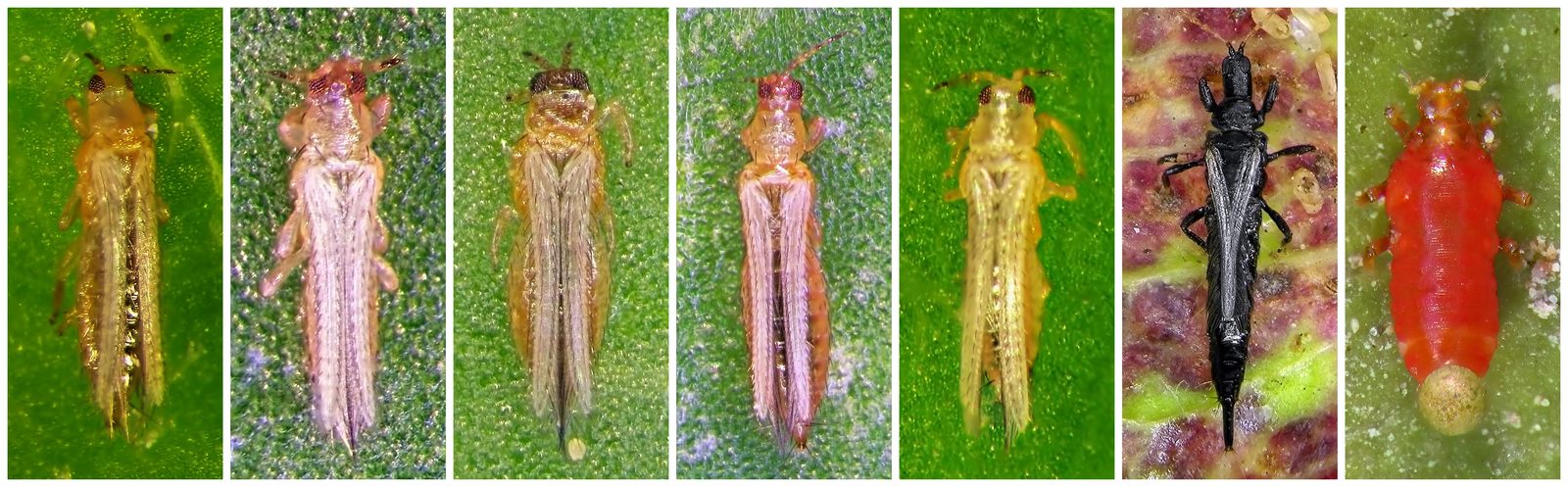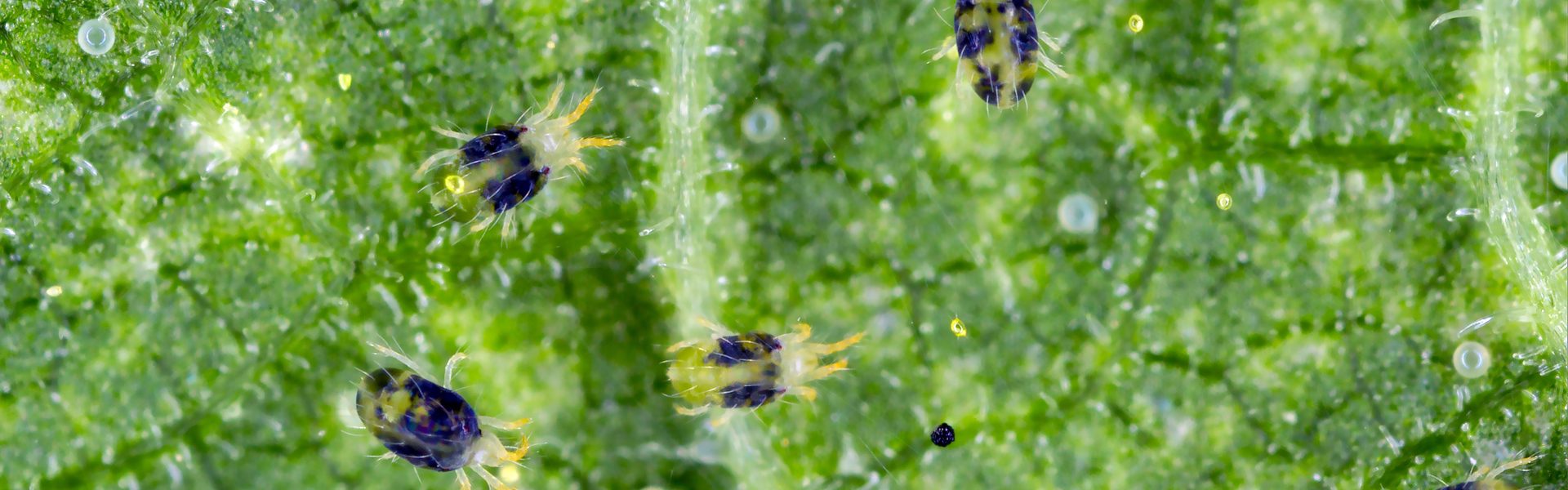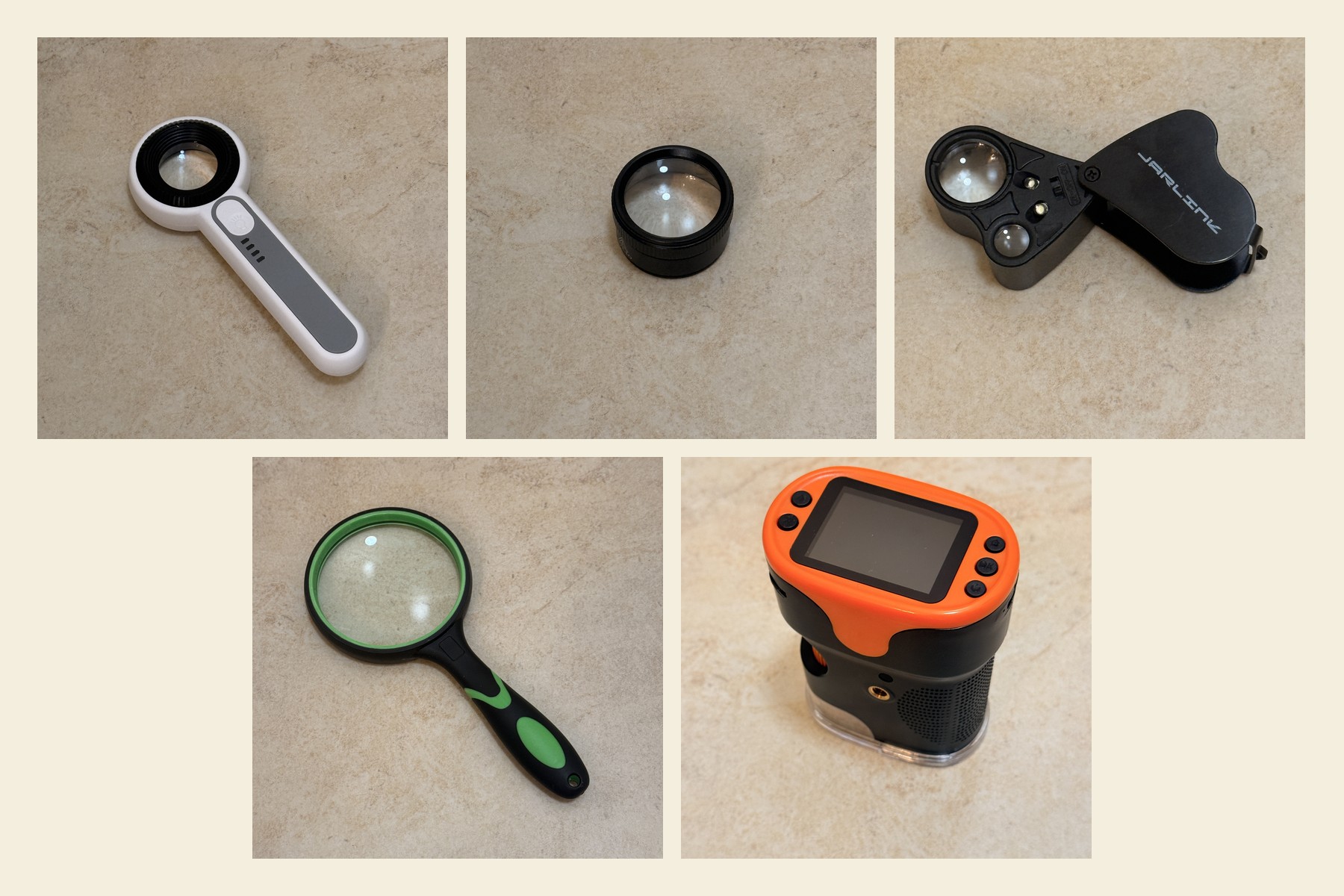
A hand lens earns its place by one thing. Can you actually see the pest clearly enough to name it. Five loupes came to my bench for eighteen scoring sessions across two months, all against a fixed rubric, all on the two insects a houseplant grower keeps meeting: the thrips and the fungus gnat. The winner isn't the cheapest. It isn't the highest magnification. It's the one you'll actually pick up at 9 p.m. under a lamp when you notice something wrong.
§ 01What to buy
Four verdicts, plus a fifth unit that never earned a score. The full reasoning is below; the picks are here so you don't have to read the whole essay to get to the useful part.
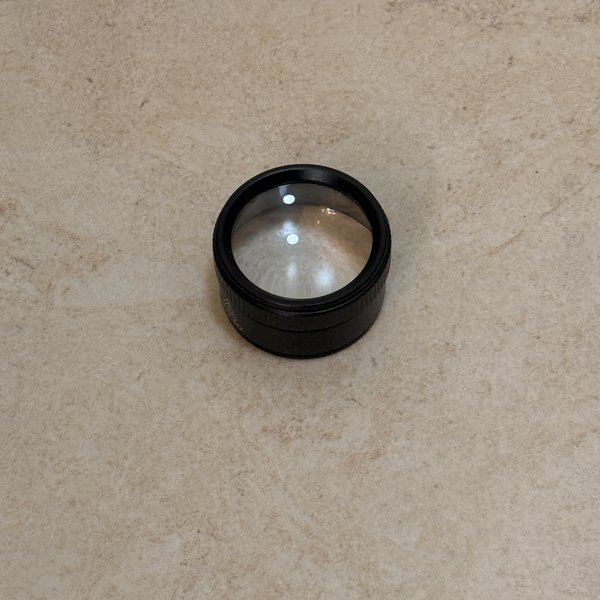
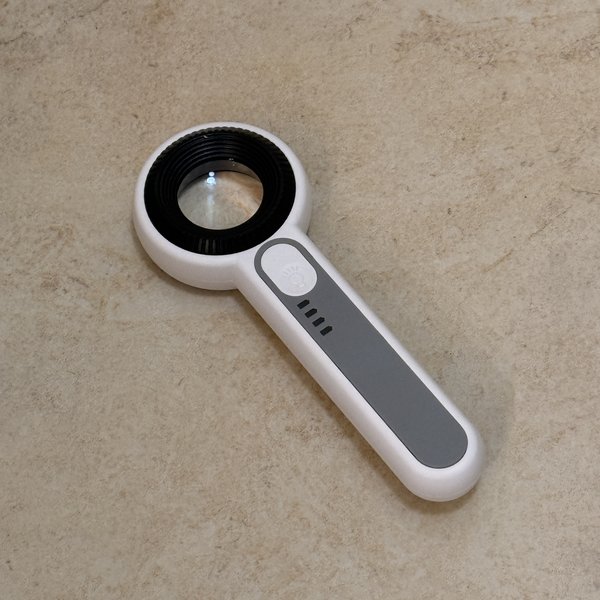 Winner
Handheld 60× with UV+LED, rechargeable
The premium of the bench. Serious magnification, a switchable built-in light that turns any dim shelf into a diagnostic surface, and clean resolution on both target insects. Not pocketable and not cheap. It's the one that ends up in my hand most nights.
$18.29 · 89.7 / 100
 Best Buy
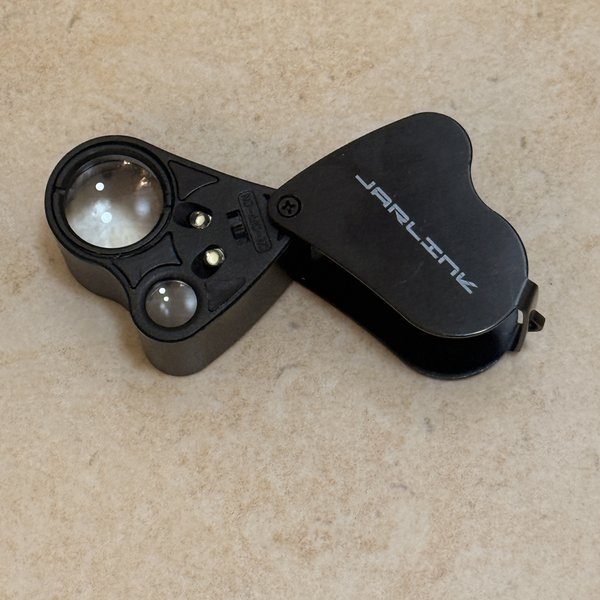
Rongon 30× pocket loupe
A point and a half behind the Winner on the rubric, at just over half the price. Compact, pocketable, wider field of view than any of the illuminated units. The trade is no light. In a well-lit room during the day it's every bit as capable as the Winner. In the evening you'll want a headlamp.
$9.75 · 88.3 / 100
 Also Rec.with reservations
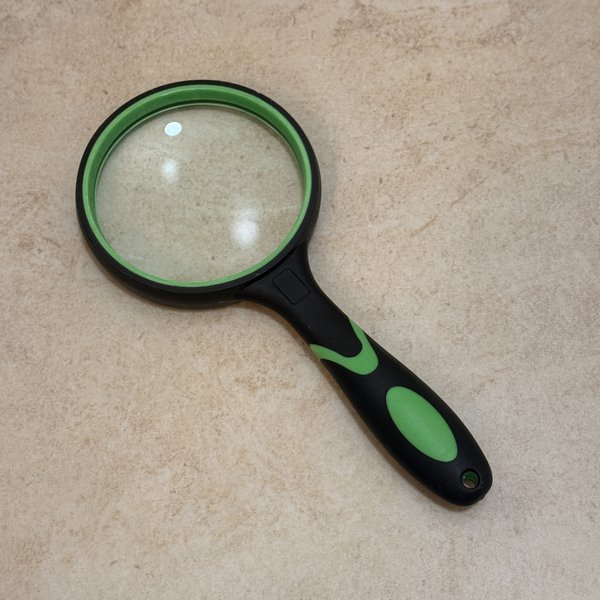
JARLINK 30×/60× illuminated folding loupe
The Amazon best-seller a lot of casual pest-ID posts recommend. It does resolve the insects cleanly. The reservation is the lens diameter. The 60× barrel narrows to a keyhole, and you give the field back the moment you switch magnifications. Works as a keychain pocket unit; wouldn't be my desk-side pick.
$8.54 · 79.5 / 100
 Skip
Skip
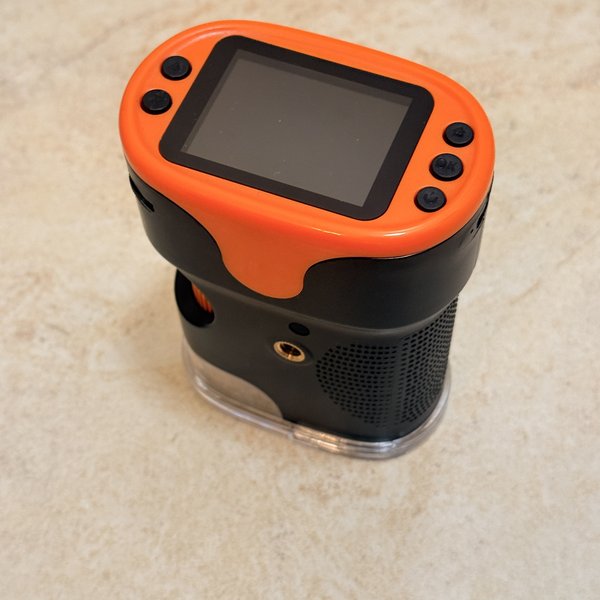
10× shatterproof handheld magnifier (75 mm lens)
Useful as a scanning tool, not as a diagnostic one. At 10× you'll spot the damage patterns; you won't get past "small pale insect." Cheapest thing in the test and still gets Skip. Cheap doesn't count if it can't do the job. Keep one on the shelf if you already own it; don't buy it as your primary.
$4.98 · 77.7 / 100
 Did not finish
1000× digital microscope with 2-inch screen
Marketed at 1000×, sold for kids, and it fails the working task. Focus latency, tiny low-refresh screen, tethered rechargeable form factor, no free hand for the leaf. Pulled from the test between session one and session two. Not fit for purpose.
$49.99 · unscored
§ 02What we tested, and why these five
The category is loupes and hand-held magnifiers a working grower would actually buy for pest diagnosis on houseplants. The lineup was chosen to test five arguments, not five brands. Each unit is a stand-in for a purchase logic somebody defends online.
- Unit 1
- Handheld 60× with UV+LED, rechargeable. $18.29. The premium illuminated. Argument: does a built-in switchable light plus serious magnification actually deliver the diagnosis, or does the field of view (FOV) narrow so hard that you can't find the insect in the first place?
- Unit 2
- Rongon 30× pocket loupe. $9.75. The mid-tier passive pocket unit. Half the magnification of the premium at roughly half the price. Argument: does the FOV penalty of high magnification get eased, or is this just splitting the difference between two compromises?
- Unit 3
- JARLINK 30×/60× illuminated folding loupe. $8.54. The Amazon default. Dominant best-seller in casual pest-ID guides, bright LED, two magnifications, folds up into itself, under ten dollars. Argument: is the reviewer-anointed pick actually right, or does it ride on convenience?
- Unit 4
- 10× shatterproof handheld magnifier, 75 mm lens on a rubber handle. $4.98. The low-magnification reading glass. No LED, no fold, no fuss, just a wide field at modest magnification. Argument: does sweeping coverage beat tiny high-mag windows when you're working through a tray of plants?
- Unit 5
- 1000× digital microscope with a 2-inch screen, marketed at kids. $49.99. The digital wildcard. Argument: does the screen-based form factor escape hand-lens limitations entirely, or does the focus, latency, and portability problem cancel the gains?
The lineup deliberately spans a factor of ten on price ($4.98 to $49.99) and a factor of a hundred on nominal magnification (10× to 1000×). If the "best hand lens" was going to be a straight function of either variable, five units this spread apart would show it.
§ 03How we scored
Every unit was rated on seven weighted criteria, one to five, against written anchors so the numbers meant the same thing on session three that they meant on session one. Each criterion's score is the mean of three independent sessions on different days (7/26, 8/9, 8/23), converted to its weight and summed to a weighted total out of 100. Eighteen sessions total across the four units that stayed in the test.
- Resolving thrips
- 20 points. Flat-mounted specimen, reflected light. Anchor for 4: six legs counted cleanly. Anchor for 5: legs plus wing fringe or setae. This is the whole job of the tool.
- Resolving fungus gnat
- 20 points. Same setup. Anchor for 4: wing vein (the diagnostic Y-fork) clean. Anchor for 5: venation plus antennal segments.
- Field of view
- 12 points. Usable sharp field. Anchor for 3: about a half-inch, workable. Anchor for 5: an inch or more, whole leaflet.
- Edge sharpness
- 13 points. Across the field. Anchor for 3: outer quarter softens. Anchor for 5: edge to edge sharp.
- Color fidelity
- 12 points. On a stippled variegated leaf. Anchor for 5: true color across field, no chromatic fringing at edges.
- Build & handling
- 12 points. Pocket, one-handed, glasses, durability.
- Light gathering
- 11 points. Read the thrips under a single dim room light. Anchor for 3: possible but noticeably slower. Anchor for 5: bright and fast, no daytime penalty.
Forty of the hundred points sit on the two pest-resolution criteria. That's on purpose. Naming the insect is the actual job; the rest is what makes naming it possible. Field, edge, and color are the optical qualities that let you use that resolution across a leaf and not just at one spot in the middle. Light gathering is scored separately so the lit-versus-unlit finding can land on its own: half the lineup has LEDs, half doesn't, and the effect had to be legible. Build and handling are the "will you actually reach for it" tax.
Two validation passes ran alongside, unscored. First: a USAF 1951 resolution test target, which is a printable chart of shrinking line-pair patterns first specified in a 1951 U.S. Department of Defense standard (DOD, 1951) and still the reference for optical resolution work. Second: a live pest read on an actual leaf. If a unit's bench score didn't survive contact with a real bug on a real leaf, that got noted. It didn't happen. The ranking held.
§ 04The results
| Rank | Unit | Total / 100 | Band | Price |
|---|---|---|---|---|
| 1 | 60× UV+LED handheld | 89.7 | Winner | $18.29 |
| 2 | Rongon 30× pocket | 88.3 | Best Buy | $9.75 |
| 3 | JARLINK 30×/60× folding | 79.5 | Also Recommended | $8.54 |
| 4 | 10× shatterproof, 75 mm | 77.7 | Skip | $4.98 |
| — | 1000× digital microscope | DNF | Not fit for purpose | $49.99 |
The 10× shatterproof is the cheapest of the four scored units and still gets Skip. The Best Buy call isn't "cheapest." It's "cheapest among the units that actually do the job." The 10× doesn't do that job. More on why below.
§ 05Winner: the 60× UV+LED handheld
The premium won by a hair on paper and by a wide margin in the hand. Thrips resolved cleanly, with wing fringe and setae both visible on the first session, matching the top anchor on the rubric. The fungus gnat maxed at 20 out of 20 on session one and again on session three. Color fidelity held across the field. Edge sharpness slipped a bit in the outer ring, which is what any high-magnification single-barrel loupe does at this price (see § 10).
The surprise was field of view. On paper 60× ought to be a pinhole and useless for scouting. In practice, at that magnification you're working an inch off the leaf. The "field" stops being about how much of the leaf you see at once. It's about how much of the leaf you cover per second of moving the lens. And by the time you're at that working distance you already found the damage site with your eyes; the lens is confirming, not searching. FOV stopped being the story.
The light is what earned it the Winner slot. This is the only unit in the lineup with a serious built-in LED (light-emitting diode) and a switchable UV mode. Diagnosis in front of a south-facing window at noon is easy on almost any loupe. Diagnosis on a lower shelf at 9 p.m. under a single warm bulb is where four of the five candidates fall apart. This one doesn't.
Such a useful tool. The light makes it useful in many locations.
The build is honest: about six inches long, two inches wide at the lens housing, a rubberized grip, USB-C charging. It's not pocketable in a way you'd want next to your keys. It's pocketable the way a small flashlight is pocketable: jacket pocket, not jeans pocket. Which is fine. The tool a diagnostician actually reaches for is the one on the shelf next to the plants, not the one in the drawer with the label maker.
§ 06Best Buy: the Rongon 30× pocket loupe
The Rongon finished a point and a half behind the Winner on total (88.3 versus 89.7) at just over half the price ($9.75 versus $18.29). Among the units that clear the diagnostic bar, it's the value pick and it isn't close.
What it does well: it's compact. Genuinely pocketable, unlike the Winner. Its 30× magnification is the sweet spot for pest work. Thrips resolve fully. Gnat features resolve fully. Field of view is the widest of any lit or passive loupe in the lineup, close to a full inch of usable sharp field. Color fidelity is good, with a faint edge tint on the highest-contrast subjects.
What it doesn't do: it has no light. On the low-light criterion the Rongon scored the same as the JARLINK: usable but noticeably slower, and it needs decent ambient light or a headlamp to work well in the evening. If your plants live in a bright room and you diagnose during the day, this is functionally as good as the Winner at half the money. If your plants live on a shelf you walk past at night, the Winner earns its extra ten dollars.
Compact, nice field of view.
The bench observation captures the essential character. This is a tool that gets out of your way. It weighs nothing, folds nothing, needs no charging, and does 90 percent of the job. For a first hand lens, it's the low-risk choice.
§ 07Also Recommended, with reservations: the JARLINK 30×/60×
The JARLINK is the loupe most casual pest-ID articles recommend by name. It sits at the top of the Amazon best-seller list. It's illuminated, it folds up, it has two magnifications on one barrel, and it costs under nine dollars. On the resolution criteria that count for 40 of the 100 points on this rubric, it matched or beat the Winner (18.67 on thrips, a perfect 20 on gnats).
And it finished ten points behind the Best Buy anyway. That's the finding worth explaining.
The reason is lens diameter. The two objective lenses on the JARLINK are small. Small enough that the usable field on the 30× is noticeably tighter than the Rongon's, and the 60× narrows to a keyhole. On the field-of-view criterion it scored 2 out of 5 across three sessions ("small area at 30 and impossibly small at 60"). It also scored light gathering at 3 out of 5. The onboard LEDs are two small pinpoints inside the barrel, and they don't spread; they light the center and let the edges fall dark.
Good views but small diameter lenses.
The reservation is real. If a folding pocket unit is a hard requirement (the tool needs to live on a keychain or clip to a bag), this is the pick. If you can carry something the size of a Rongon in a pocket or a tool bag, the Rongon does the job better for the same money.
§ 08Skip: the 10× shatterproof, and why cheap isn't enough
This is the honest section. The 10× shatterproof is the cheapest thing in the test at $4.98, it earned a 77.7 on the rubric, and that puts it above the diagnostic floor on the raw numbers. It still gets Skip. Here's why.
The scorecard puts 40 of 100 points on the two pest-resolution criteria because they are the diagnostic job. The 10× scored 12 on thrips (body and legs visible, no wing fringe, no setae) and 16 on gnats (wings visible, venation blurred). Twenty-eight out of a possible forty on the two questions that decide whether you can name the insect. The 60× and the Rongon both did 38 or more.
The rest of its score came from the criteria it's actually good at. A big, edge-to-edge sharp field (12 of 12). Clean color. Comfortable brightness across colors. If you were scoring a scouting tool for finding damage patterns at leaf scale, this would be the winner. Silver streaks, black frass specks, curled new growth all read cleanly at 10× with a wide sharp field. You'd find the affected plant faster with this than you would with the Winner.
Great for beginning the search for pests.
That bench observation is the fair read. The 10× is a scouting instrument, not a diagnostic one. It gets Skip in this test because the test is about diagnosis. A grower who already knows the pest and needs the wide field for a first-sweep inspection could reasonably own both.
§ 09Did not finish: the 1000× digital microscope
The digital wildcard fell out of the test between sessions one and two. The scoring sheet for this unit has a diagonal line through it and one handwritten note: "Not fit for purpose."
The gap between the marketing and the reality is severe. It nominally does 1000×; in practice, the working focus range at anywhere near that magnification is a fraction of a millimeter, and the plastic focus wheel doesn't have the precision to find it. The 2-inch screen renders a coarse, low-refresh view with visible latency between moving the sensor and seeing the image update. It needs two hands, one to hold the sensor over the leaf and one for the screen, so there's no free hand for the leaf itself. It's tethered to a rechargeable battery. It doesn't come with a stand at this price. It ships in a plastic box that reads more like a science-fair toy than a working instrument, and the review pattern on Amazon confirms it: bought for kids, worked once, put in a drawer.
Not fit for purpose.
A digital scope has legitimate uses at the working end of horticulture. A good one, tethered to a laptop or tablet at maybe 200×, is a serious tool for propagation work, tissue-culture inspection, or teaching. This isn't one of those. If a digital option interests you, save for it; don't buy this one.
§ 10The optics behind the numbers
Two things in the test make more sense once you know a little about how a hand lens is actually built. Neither is complicated.
The first: every loupe here softens toward the edge of the field. That's chromatic aberration. A single-element lens focuses different wavelengths at slightly different points, so red ends up in one plane and blue in another (Paschotta, n.d.). Near the center of the glass the light path is short and the effect is tiny. Push toward the edge, the rays cross at steeper angles, wavelengths spread out, and what you see is a faint purple or green fringe in the last quarter-inch and a general loss of contrast past about 80% of the field.
The fix is old and well understood. Cement two lens elements together, one of high-dispersion crown glass and one of low-dispersion flint glass, arrange them so the second lens's dispersion cancels the first's, and you get an achromatic doublet: one "lens" that focuses two wavelengths at the same plane (Paschotta, n.d.). A triplet ("apochromatic") does it for three wavelengths and does it better. It also costs roughly ten times as much per element, which is why nothing at bench-loupe prices is apochromatic.
All five units in this test use single-element or cemented-doublet designs. The two that scored highest on edge sharpness (the 10× shatterproof and the Winner) are also the ones with the physically largest lens elements. Big glass lets the manufacturer keep the light rays closer to the optical axis and cut the edge fringing. The two that scored lowest (the JARLINK 60× barrel and the Rongon at its outer half) are the smallest, tightest lens elements in the lineup. Small glass isn't a specification failure. It's a physical constraint. Pocketable and edge-to-edge sharp at high magnification are, in this price range, mutually exclusive.
The second finding is the FOV-versus-magnification tradeoff, and it's not about defects. It's geometry. Doubling the magnification on a fixed-diameter lens roughly halves the diameter of the field. That's why the JARLINK 60× barrel feels like a keyhole and the 10× shatterproof feels like an open window: the higher-magnification unit is doing more work with the same amount of glass. Extension guides put 10× as the general-purpose loupe and hold 15–20× for smaller arthropods like spider and eriophyid mites (Schnelle & Rebek, 2017; Skvarla, 2017). The 30× Rongon and the 60× premium sit above even that upper band, and both did the job here.
§ 11The takeaway
Buy the 60× UV+LED handheld if you diagnose pests in the actual conditions where you notice them, which are usually not the best-lit conditions. Buy the Rongon 30× if you want to spend half as much, you don't mind reaching for a headlamp on evening rounds, and you value the pocketable size. Consider the JARLINK if a folding keychain-size unit is a hard requirement for you. Buy the 10× shatterproof as a scouting glass, not a primary tool. Skip the 1000× digital.
The bigger point: "10× hand lens" as blanket advice needs a qualifier the source articles don't give. Extension guides do put 10× as the general-purpose loupe, and a well-made 10× can do the work (Schnelle & Rebek, 2017; Skvarla, 2017). The cheap 10× shatterproof I tested (the kind most first-time growers reach for on Amazon) didn't resolve the fringed wing on a thrips or the Y-fork in a fungus gnat's venation. Those are the features that let you name what you're looking at: the fringe defines the order Thysanoptera (Mound & Kibby, 1998), and the Y-fork puts a fungus gnat in Bradysia (Gorham, 1991). The 30× Rongon and 60× UV+LED in this test resolved both cleanly. Buy for the diagnostic detail your target insect actually needs, not for a magnification number.
The Field Manual dossiers on thrips and spider mites currently say "grab a 10× hand lens" and they're getting updated to point here. If you already own the 10× shatterproof, keep it. It's the right tool for spotting the damage patterns. Then buy a 30× or 60× for the diagnosis itself. The two together cost less than a bag of premium substrate and will pay for themselves the first time you correctly identify a pest instead of running a broad-spectrum spray at the wrong one.
Gorham, J. R. (Ed.). (1991). Insect and mite pests in food: An illustrated key (Agricultural Handbook No. 655, Vols. 1–2). U.S. Department of Agriculture, Agricultural Research Service. Volume 1 PDF · Volume 2 PDF
Mound, L. A., & Kibby, G. (1998). Thysanoptera: An identification guide (2nd ed.). CAB International.
Paschotta, R. (n.d.). Achromatic optics. RP Photonics Encyclopedia, RP Photonics AG. https://www.rp-photonics.com/achromatic_optics.html
Schnelle, M., & Rebek, E. (2017, February). IPM: Scouting and monitoring for pests in commercial greenhouses (Fact Sheet HLA-6711). Oklahoma State University Extension. https://extension.okstate.edu/fact-sheets/ipm-scouting-and-monitoring-for-pests-in-commercial-greenhouses.html
Skinner, M. (2022). Dark-winged fungus gnats, Bradysia spp. University of Vermont Entomology Research Laboratory. https://www.uvm.edu/~entlab/Factsheets/Fungusgnatinthehomeandyard2022.pdf
Skvarla, M. J. (2017, September 5). A brief guide to hand lenses. Frost Curators' Blog, Frost Entomological Museum, Pennsylvania State University Department of Entomology. https://sites.psu.edu/frost/2017/09/05/a-brief-guide-to-hand-lenses/
U.S. Department of Defense. (1951). Photographic lenses (Military Standard MIL-STD-150A, Section 5.1: Resolving power). Superseded 2006; the 1951 USAF resolution test chart specified in this standard remains the widely used reference for optical resolution measurement.