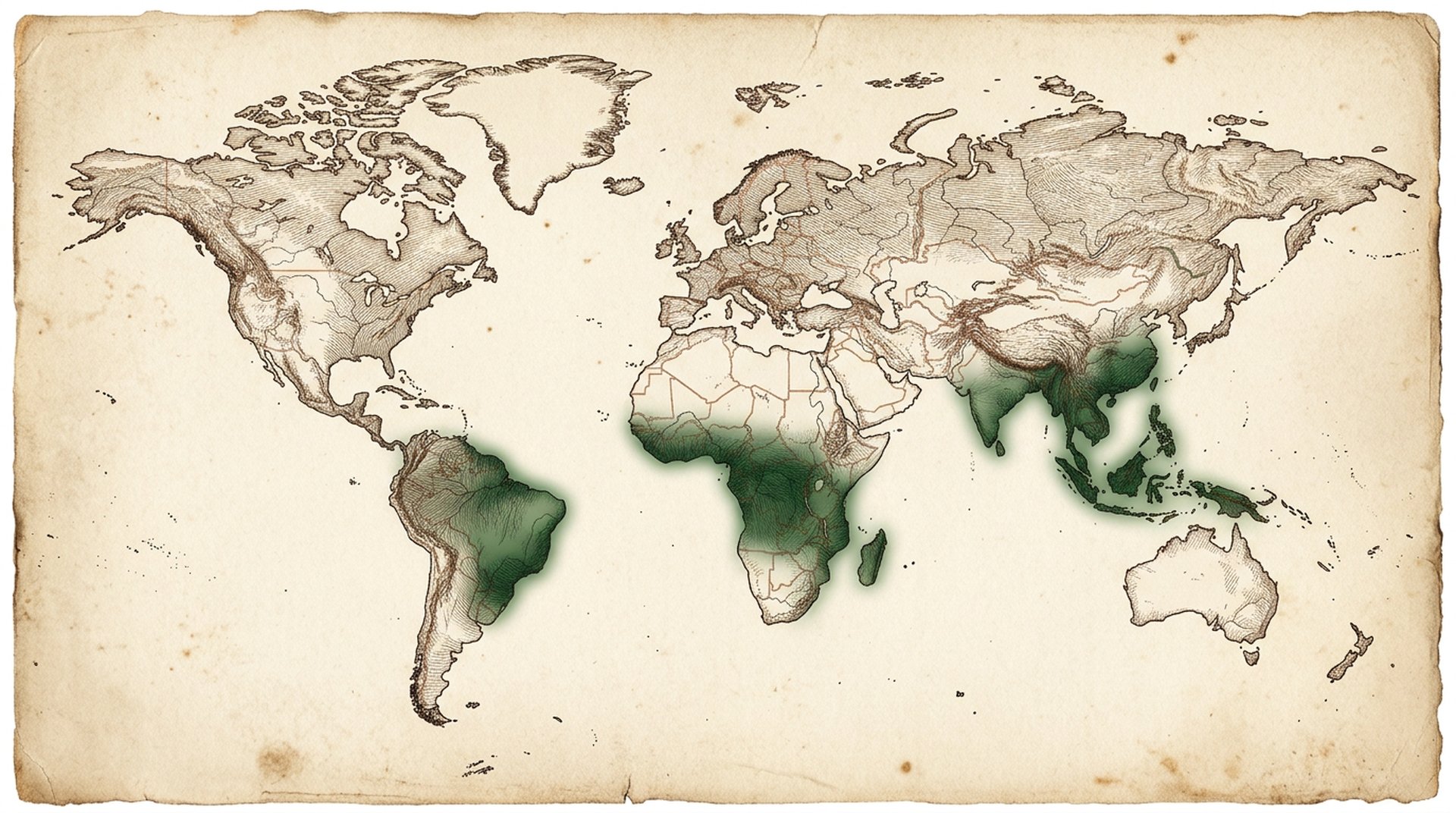
Begonia spans three continents and 2,171 accepted species. It also produces seeds that barely travel, and species confined to a single hillside. Both things are true, and the tension between them is the whole story.
The Shape of the Range
Kew's Plants of the World Online describes the native range of Begonia in six words: "Tropics & Subtropics to Central China." One line covers 2,171 accepted species across three continents, which makes Begonia the eighth-largest genus of flowering plants and one of the most widely distributed plant groups anybody grows on a windowsill.
The edges of that range are where it gets interesting.
Begonias are all over the American tropics, from Mexico down through the Andes and across Brazil. They're across tropical Africa. They're thick through southern China, northern Vietnam, and the islands of Southeast Asia, and they run east through New Guinea and the Solomon Islands as far as Fiji. Past Fiji there is nothing native all the way to the Galápagos. And there are no native begonias anywhere in Australia, which has perfectly good tropical rainforest immediately south of New Guinea, where begonias are abundant.
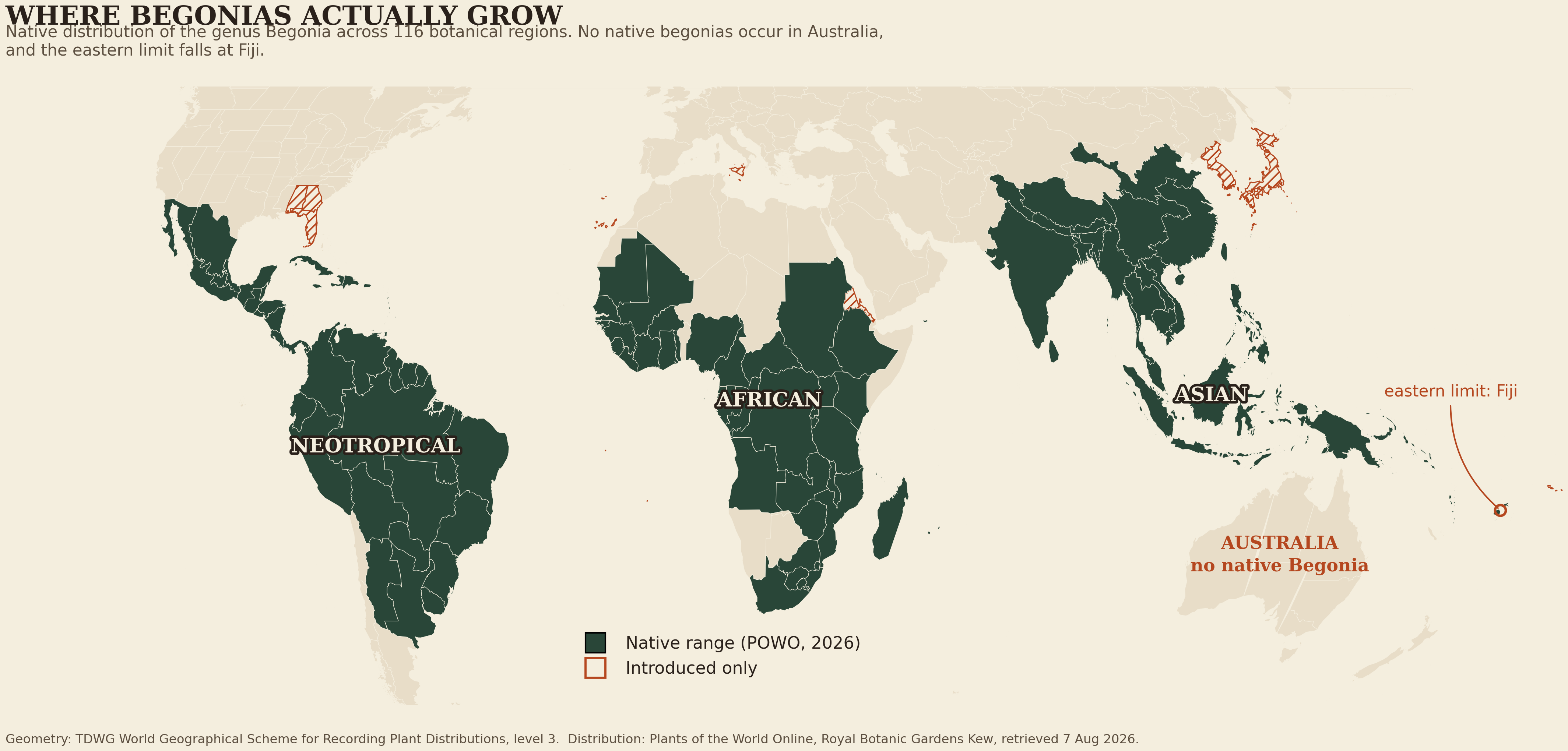
A genus that reaches Fiji but never reaches Queensland is telling you something.
It Started in Africa
The African origin surprises most growers, because Africa is now the least begonia-rich of the three tropical regions. The Neotropics and Asia both carry far more species. The figure usually quoted for Africa is about 160 species, which comes from monographs published in the 1990s and early 2000s; nobody has recounted since.
The phylogenetic evidence still points there. Goodall-Copestake and colleagues built family trees from organelle DNA, meaning the small separate genomes carried inside chloroplasts and mitochondria rather than in the cell nucleus, and found that living Begonia lineages diversified first in Africa and afterward in America and Asia. A genome-scale study in 2022 reached the same conclusion from nuclear and plastid data: its plastid phylogeny supports an African origin for Begonia.
One detail from that 2010 work is worth holding onto, because it comes back later. The closest African relatives of the American and Asian begonias are seasonally adapted species. The lineages that made the intercontinental jumps weren't the perpetually damp forest-floor specialists; they were the ones already equipped for a dry season, which is roughly what an unpromising arrival demands.
Africa also holds good evidence for how slowly begonias move. On the island of São Tomé, off West Africa, three endemic species (Begonia baccata, B. molleri, and B. subalpestris) appear to be paleoendemics, ancient lineages that have persisted in one place since long before the ice ages. The island functioned as a refuge. Those begonias sat out several million years of climatic upheaval on a single volcanic rock in the Gulf of Guinea.
The Crossing to Asia
Getting from Africa to Asia meant crossing open water, and the dating puts it in the Miocene. The Asian-Socotran lineage splits from its African relatives at roughly 18 million years ago for the stem group (the point where the lineage first branched off from its nearest living relatives) and somewhere between 15 and 16 million for the crown group (the point where the surviving members of that lineage began splitting from each other), depending on which calibration the analysis runs on. Both figures carry credible intervals twelve to fourteen million years wide. Molecular dating on a genus this large and this fast-radiating carries real uncertainty, and the papers say so rather than pretending otherwise.
This kind of crossing has happened almost never. In 2011, a team describing a new species from Laos and Thailand named it Begonia afromigrata for exactly that reason: it was the first recorded case of any of the genus's sections transgressing continental borders. Sections are the formal botanical subdivisions of Begonia, and there are around seventy of them. One had ever been documented straddling continents, and the cause was probably a single long-distance dispersal event.
Once. In seventy sections. That's the frequency we're dealing with.
West to East Across Malesia
After begonias arrived on the Asian mainland, they diversified there through the Miocene and then began moving east into Malesia, the biogeographic region running from the Malay Peninsula through Indonesia, Borneo, the Philippines, and New Guinea. The direction of travel was overwhelmingly one-way.
Thomas and colleagues documented at least six independent dispersal events from continental Asia and western Malesia into Wallacea, the belt of islands (Sulawesi, the Moluccas, and the Lesser Sundas) sitting between the Asian and Australian continental shelves, never connected by land to either. Those six crossings spread from the late Miocene to the Pleistocene, so the rate works out to roughly one success every million years or two.
The authors' phrasing for what those seas did is exact and worth quoting: the water bodies separating the Sunda Shelf from Wallacea have been porous barriers to dispersal in Begonia. Not walls. Filters. Begonias got across repeatedly, at a rate slow enough that each arrival founded something new.
Section Petermannia, which now holds more than 270 species, originated in western Malesia and spread from there into Wallacea, New Guinea, and the Philippines. Its lineages diversified rapidly from the Pliocene onward, coinciding with fast mountain-building on Sulawesi and New Guinea. New mountains meant new elevational habitats and, above all, new barriers between populations that were already poor at crossing barriers.
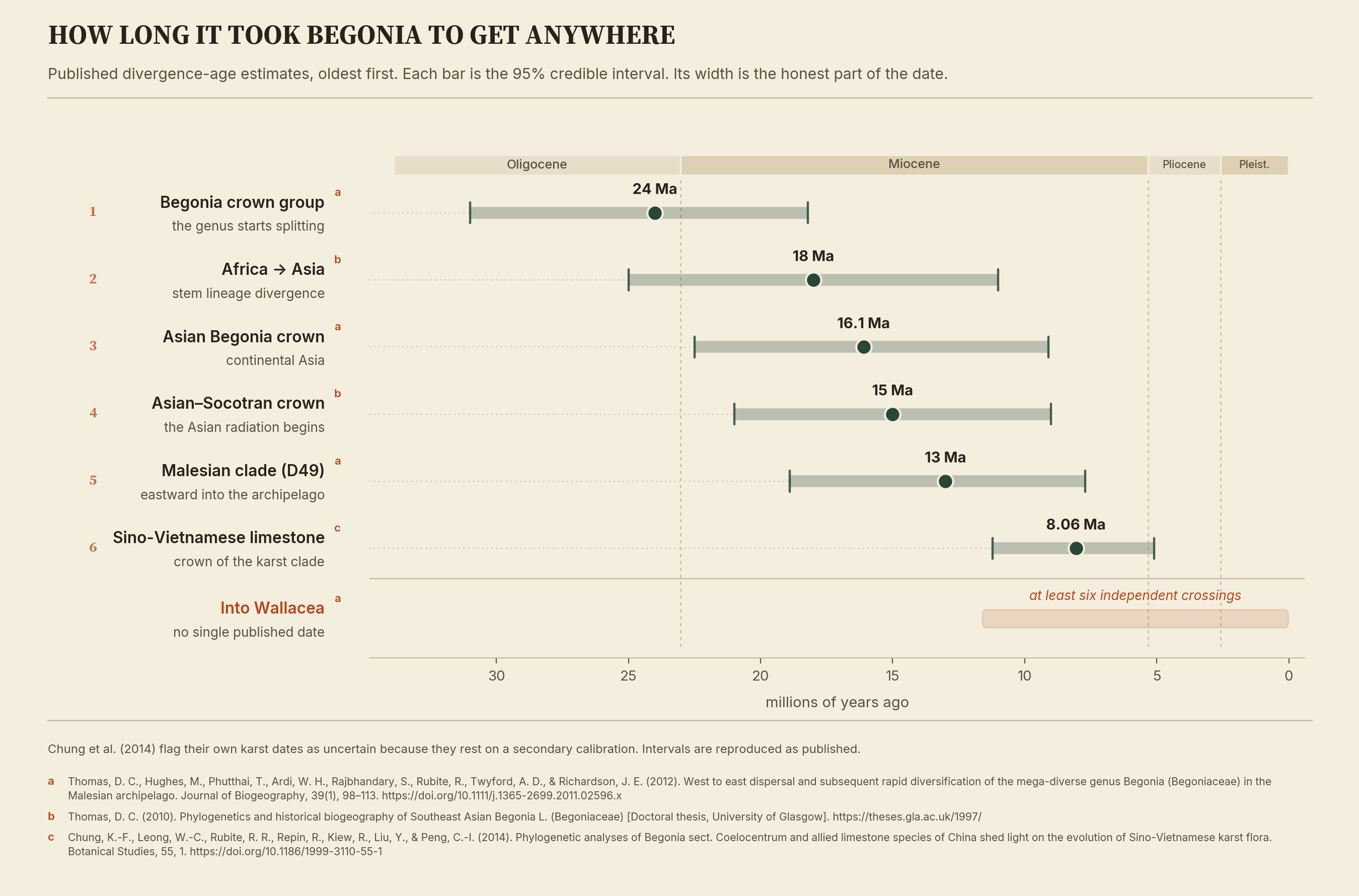
Which brings the Australia question partway to a resolution. Begonias did cross Wallace's Line, the classic faunal boundary through the Indonesian archipelago, and they crossed it more than once. They reached New Guinea, the Solomons, and Fiji. They never established in Australia. No published paper I could find explains why, and I'm not going to invent a reason. The genus reaches the Australian doorstep and has not gone through it.
The Seed Problem
Begonia seeds are dust-fine, among the smallest produced by any flowering plant, and a single dry winged capsule can hold hundreds or thousands of them. Everything about them looks built for travel.
They aren't.
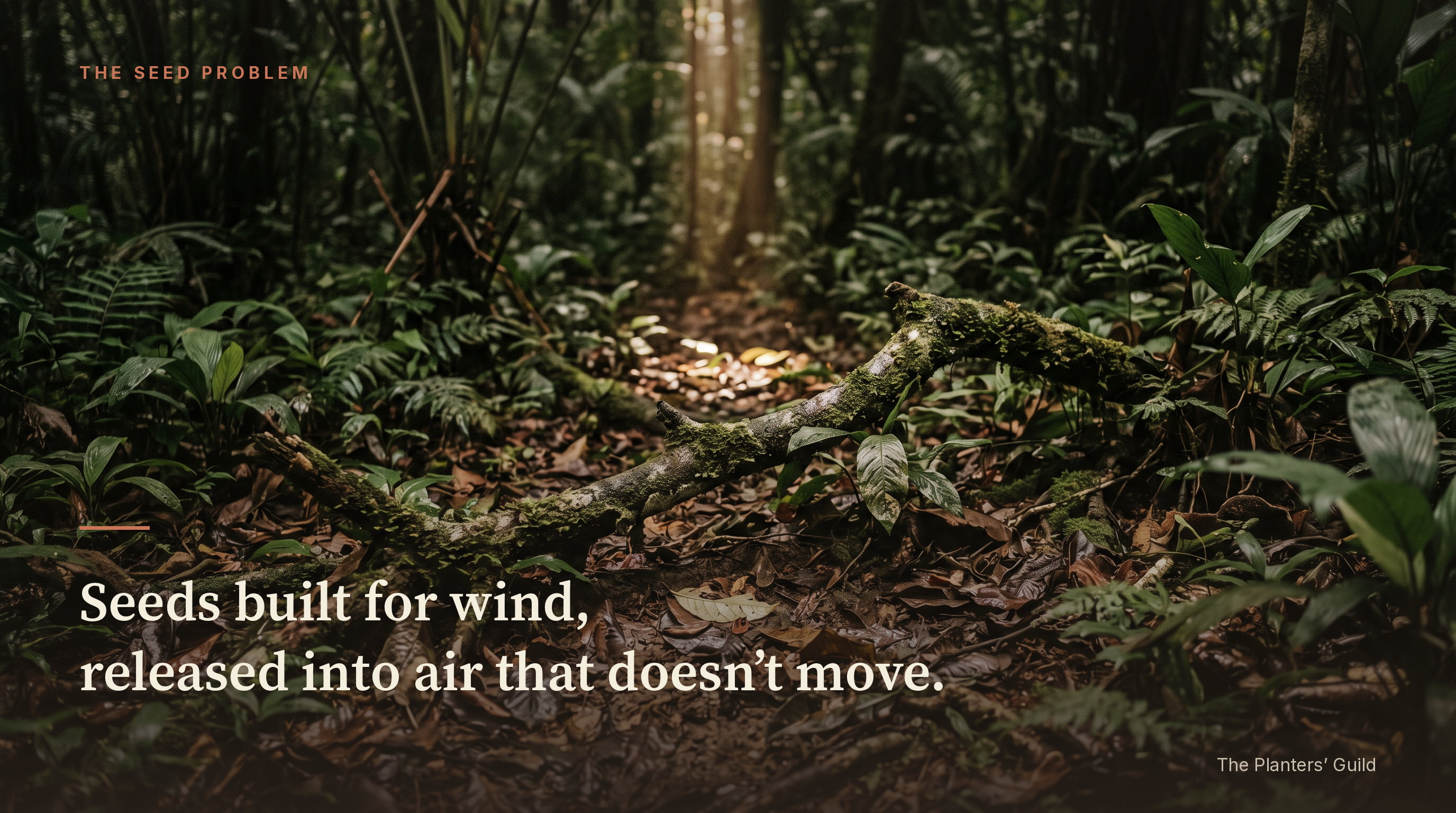
The dominant dispersal syndrome across the genus is anemochory, wind dispersal. In the anemochorous species the capsule dries to a papery shell with well-developed wings, and once it splits, seeds release gradually through slits along the wing attachments whenever wind shakes the capsule. It's an elegant mechanism, and it barely works, because the habitat begonias occupy is the sheltered ground layer of a moist forest, where there is very little wind to shake anything. The population genetics, which we'll come to, point the same way: in sheltered forest, wind does not appear to move begonia seed far.
Some Asian begonias solved this differently. Species in section Platycentrum and a few relatives use a rain-ballist mechanism. The capsule wall is tougher, with one large wing and two smaller ones, and the fruit stalk curves at maturity so the smaller wings and part of the capsule form an upward-facing splash cup. A raindrop lands in the cup, the capsule bounces on its stiff stalk, and seed flings out through the seams where the capsule splits. It's a clever piece of engineering, and its range is measured in feet, not miles.
Animal dispersal is the third possibility, and here the literature is careful in a way that popular sources usually aren't. Some Asian begonias have fleshy fruits, which is the morphology you'd expect from a plant dispersed by animals eating them. Nobody has watched it happen. Transport on the outside of an animal or through its gut does appear to be more common in African species, but for the Asian flora, fleshy-fruit-means-animals remains an inference.
Hughes and Hollingsworth measured what all of this predicts. Working on a southern African species, Begonia sutherlandii, they found a standardized differentiation value of 0.896, on a scale where 1.0 would mean neighboring populations exchange no genes at all. Their conclusion was that differentiation occurs over very local scales. Not across mountain ranges. Local.
A Hill Is an Island
Now put a poor disperser into terrain made of disconnected fragments.
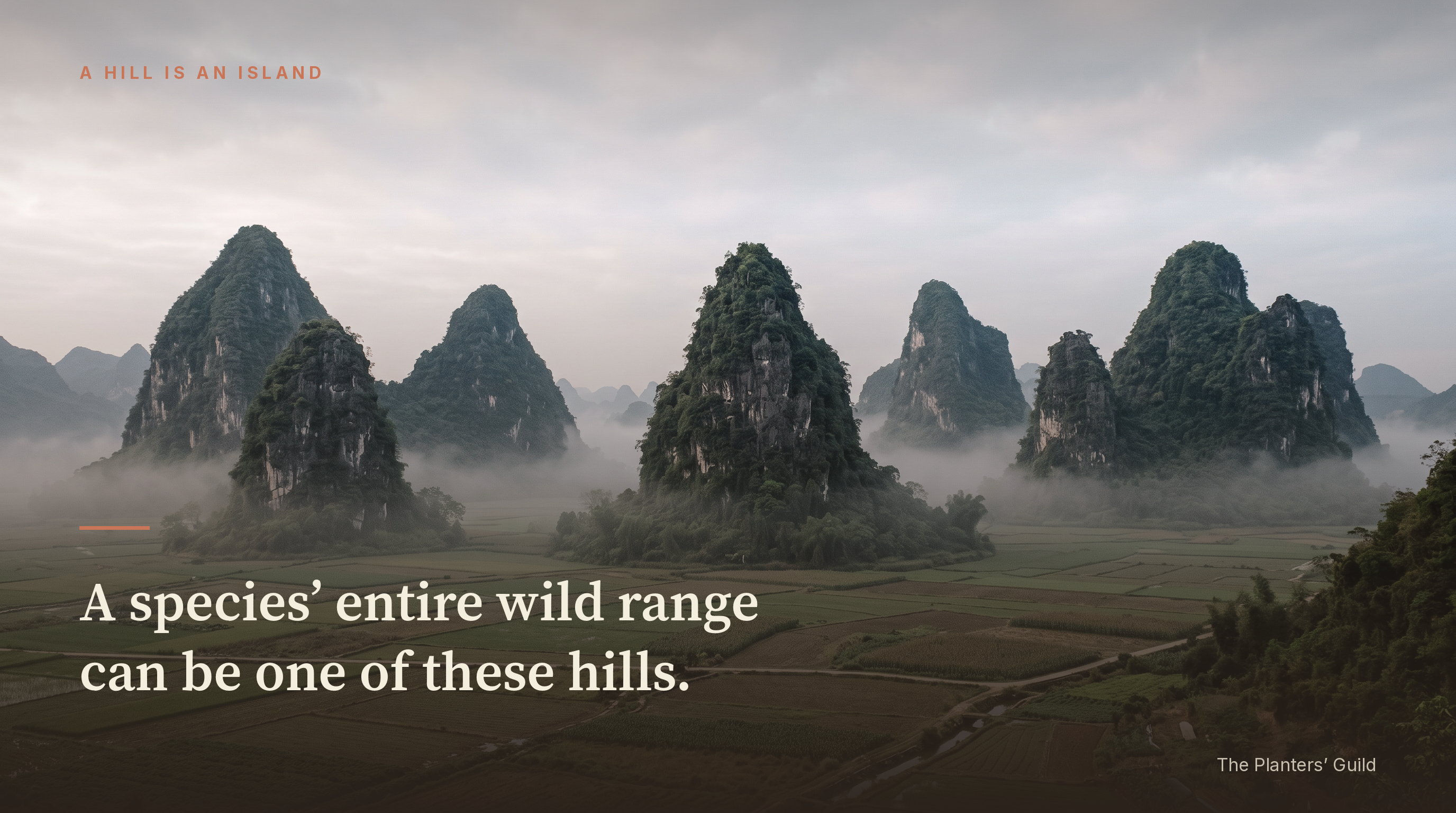
Across southern China and northern Vietnam runs a belt of karst, the landform produced when limestone dissolves in slightly acidic rainwater over geological time. It yields the vertical towers, sinkholes, cave mouths, and isolated hills familiar from Guilin travel photography. Ecologically, each limestone outcrop is its own world: alkaline substrate, water draining fast off bare rock, and a surrounding matrix of ordinary acidic soil that a limestone specialist can't easily cross. The hills are islands and the farmland between them is the sea.
Chung and colleagues sequenced the limestone begonias of this belt. The Sino-Vietnamese limestone species turn out to form a single strongly supported clade, a group containing one ancestor and all of its descendants, which means the move onto limestone happened once and everything since has descended from that one event. They dated the crown of that group to roughly 8 million years ago, with a credible range of about 5 to 11 million.
The date matters less than the mechanism. The authors describe these species as differing mainly in vegetative traits without apparent adaptive value, and conclude that the limestone begonia radiation is better characterized as non-adaptive. That term inverts the usual story about why a group becomes species-rich, so it's worth being precise about.
In an adaptive radiation, one lineage produces many species by spreading into many different ways of life. Darwin's finches, taking on different beak shapes for different foods. In a non-adaptive radiation, one lineage produces many species that all do the same thing in the same kind of place, distinct only because geography kept them apart long enough to diverge. The species pile up because they can't reach each other.
That's begonias on karst. They disperse badly, they don't wander, they keep wanting the same narrow set of conditions, and the country they live in was already cut into pieces before they got there. The authors argue this mode is underappreciated as an engine of rapid species accumulation, and Begonia may be its best plant example.
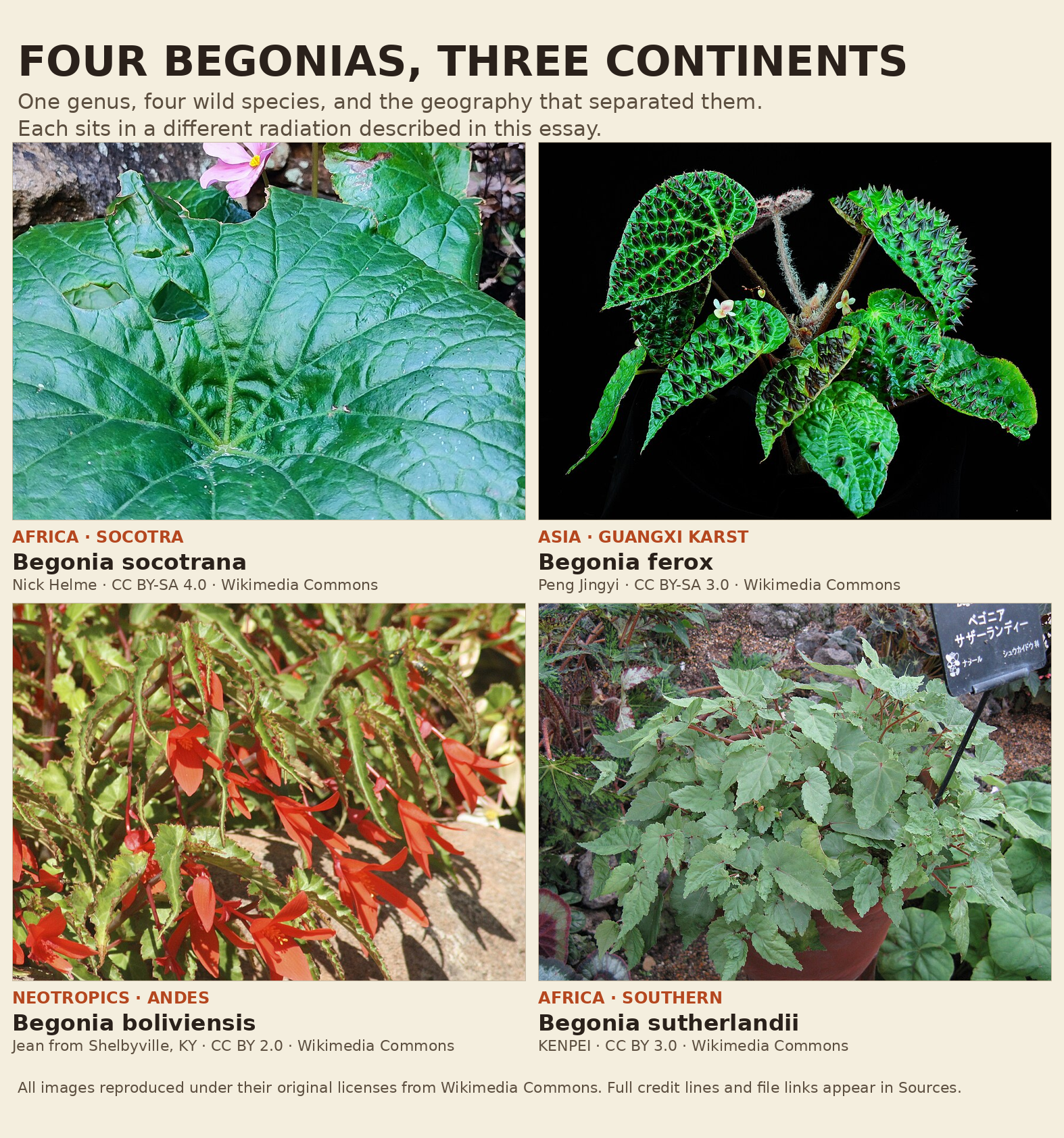
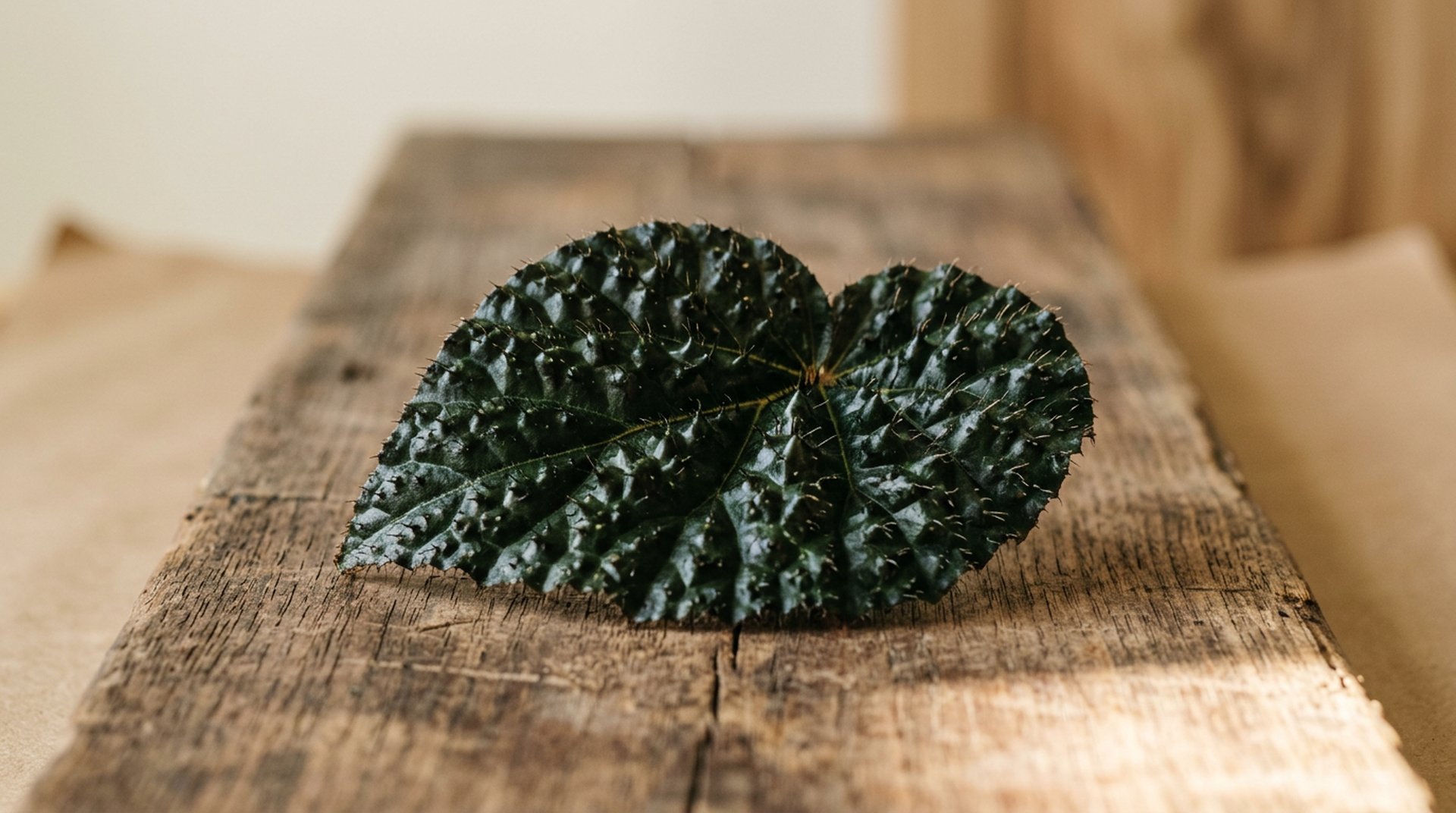
When a description says a species is "known from a single limestone hill in Guangxi," that's not a quirk of undercollection. It's the expected outcome for this genus in this terrain, and it means the plant on your shelf may represent a wild population you could walk across in an afternoon. Begonia ferox is exactly this case.
Socotra, and Why Your Florist Has Winter Begonias
The best single illustration of begonia biogeography sits on an island in the Arabian Sea.
Socotra, off the Horn of Africa, holds two endemic begonias. The better known is Begonia socotrana, restricted to the granite Haggier mountains and the adjacent high limestone plateaus of eastern Socotra. The second, B. samhaensis, was described in 2002 from the neighboring island of Samha and is known from a total population under a thousand individuals. Their nearest relatives grow more than 1,240 miles (2,000 km) away, in southern India and Sri Lanka.
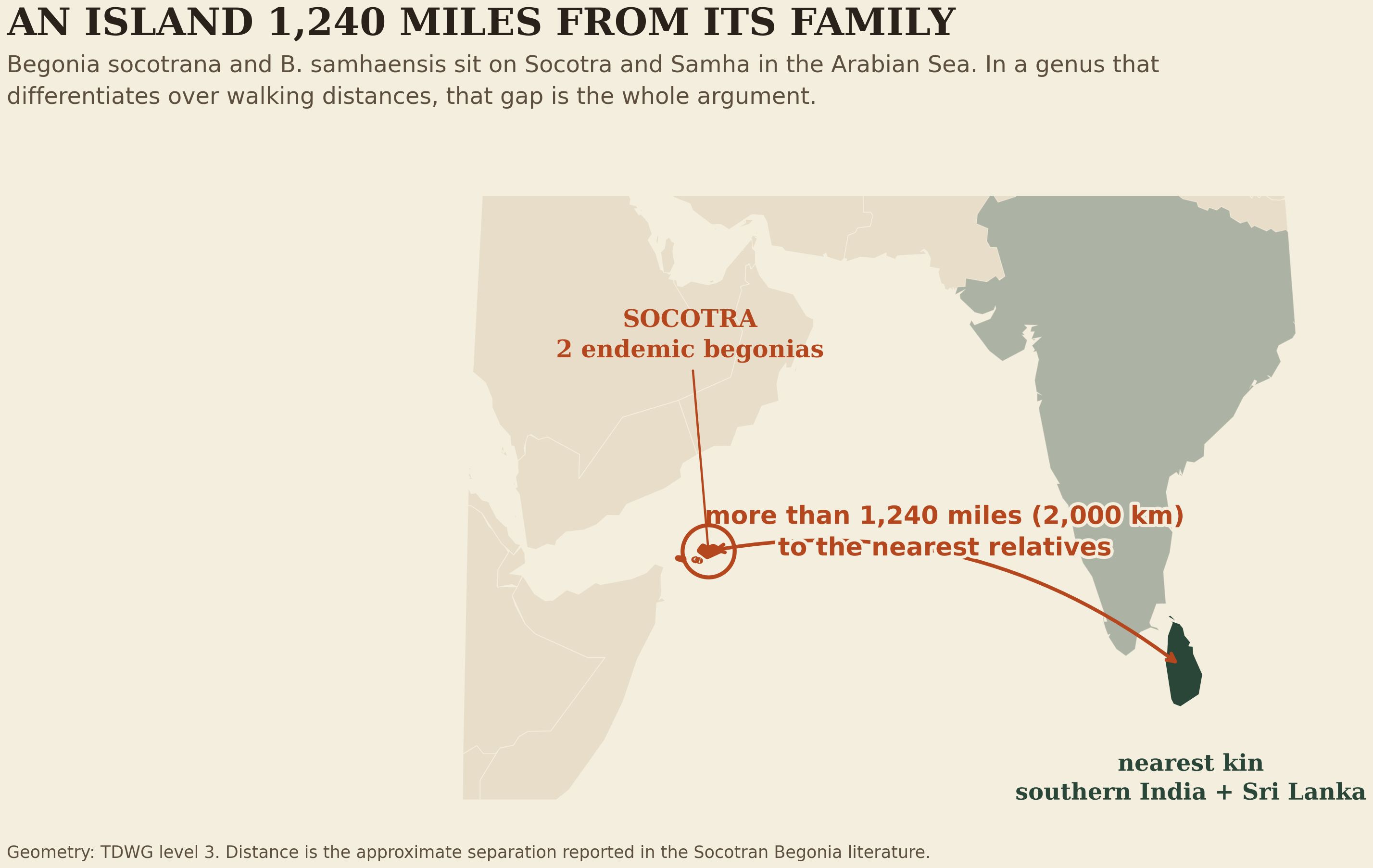
A genus that differentiates over local scales, sitting on an island that far from its closest kin, is a genus whose range was assembled by rare accidents.
And then horticulture got involved. Begonia socotrana is a strict short-day plant, meaning it initiates flowering once nights pass a threshold length rather than at any particular temperature. That one physiological trait, evolved on a dry Arabian island for reasons that had nothing to do with horticulture, made the first winter-flowering begonias possible. Crossed with tuberous begonias, it produced the Hiemalis and Elatior hybrids that fill garden centers in December. The florist begonia on a kitchen table at Christmas carries a gene for seasonal timing that came off a mountain on Socotra.
What This Means for a Collection
Three practical things fall out of all this, and the first one is worth applying before you buy.
Difficulty is a range map in disguise. The begonias that shrug off ordinary household conditions tend to have broad natural distributions, because a wide range is itself evidence of tolerance. Narrow endemics are the ones that want a terrarium and a hygrometer. A species that has only ever known one cave mouth was never selected for anything else. So when a begonia name is unfamiliar, look up how much country it occupies in the wild before you look up anything else. That one number predicts the care burden better than the tag on the pot will.
Check substrate chemistry against origin. A begonia from a limestone outcrop grew up on alkaline rock. That doesn't mean it demands lime in a pot, and plenty of karst species do fine in a standard chunky aroid mix. It does mean that if a limestone species is sulking in a peat-heavy acidic substrate, pH is worth testing before you adjust light and water for the fourth time. Check drainage first, chemistry second.
The conservation stakes here are unusually concentrated. A genus of narrow endemics on quarryable limestone is one where a single industrial decision can remove a species' entire wild range. With begonias that isn't an abstract worry; it's the ordinary condition of a large share of the Asian species. Growing them well, and propagating them freely rather than hoarding them, is a small piece of holding the line.
The Takeaway
The title of this essay is a little bit of a lie, deliberately. Begonia looks borderless from far away: three continents, over two thousand species, tropics all the way around. Up close it's one of the most parochial genera in cultivation. Its seeds fall near the parent, its populations differentiate across distances you could cover on foot, and its intercontinental crossings can nearly be counted on one hand. The genus is enormous because of that, not despite it. Every barrier it failed to cross became a place where a new species could form, and two thousand species is what you get when a plant that stays put is handed a broken country and ten million years.
Royal Botanic Gardens, Kew. (2026). Begonia L. Plants of the World Online. Retrieved August 7, 2026, from https://powo.science.kew.org/taxon/urn:lsid:ipni.org:names:327437-2
Goodall-Copestake, W. P., Pérez-Espona, S., Harris, D. J., & Hollingsworth, P. M. (2010). The early evolution of the mega-diverse genus Begonia (Begoniaceae) inferred from organelle DNA phylogenies. Biological Journal of the Linnean Society, 101(2), 243–250. https://doi.org/10.1111/j.1095-8312.2010.01489.x
Thomas, D. C., Hughes, M., Phutthai, T., Ardi, W. H., Rajbhandary, S., Rubite, R., Twyford, A. D., & Richardson, J. E. (2012). West to east dispersal and subsequent rapid diversification of the mega-diverse genus Begonia (Begoniaceae) in the Malesian archipelago. Journal of Biogeography, 39(1), 98–113. https://doi.org/10.1111/j.1365-2699.2011.02596.x
Chung, K.-F., Leong, W.-C., Rubite, R. R., Repin, R., Kiew, R., Liu, Y., & Peng, C.-I. (2014). Phylogenetic analyses of Begonia sect. Coelocentrum and allied limestone species of China shed light on the evolution of Sino-Vietnamese karst flora. Botanical Studies, 55, 1. https://doi.org/10.1186/1999-3110-55-1
Hughes, M., & Hollingsworth, P. M. (2008). Population genetic divergence corresponds with species-level biodiversity patterns in the large genus Begonia. Molecular Ecology, 17(11), 2643–2651. https://doi.org/10.1111/j.1365-294X.2008.03788.x
Tebbitt, M. C., Lowe-Forrest, L., Santoriello, A., Clement, W. L., & Swensen, S. M. (2006). Phylogenetic relationships of Asian Begonia, with an emphasis on the evolution of rain-ballist and animal dispersal mechanisms in sections Platycentrum, Sphenanthera and Leprosae. Systematic Botany, 31(2), 327–336. https://doi.org/10.1600/036364406777585784
de Wilde, J. J. F. E., Hughes, M., Rodda, M., & Thomas, D. C. (2011). Pliocene intercontinental dispersal from Africa to Southeast Asia highlighted by the new species Begonia afromigrata (Begoniaceae). Taxon, 60(6), 1685–1692. https://doi.org/10.1002/tax.606013
Plana, V., Gascoigne, A., Forrest, L. L., Harris, D., & Pennington, R. T. (2004). Pleistocene and pre-Pleistocene Begonia speciation in Africa. Molecular Phylogenetics and Evolution, 31(2), 449–461. https://doi.org/10.1016/j.ympev.2003.08.023
Hughes, M., & Miller, A. G. (2002). A new endemic species of Begonia (Begoniaceae) from the Socotra archipelago. Edinburgh Journal of Botany, 59(2), 273–281. https://www.rbge.org.uk/media/8084/hughes-miller-2002-a-new-endemic-species-of-begonia-begoniaceae-from-the-socotra-archipelago.pdf
Li, L., Chen, X., Fang, D., Dong, S., Guo, X., Li, N., Campos-Domínguez, L., Wang, W., Liu, Y., Lang, X., Peng, Y., Tian, D., Thomas, D. C., Mu, W., Liu, M., Wu, C., Yang, T., Zhang, S., Yang, L., … Liu, H. (2022). Genomes shed light on the evolution of Begonia, a mega-diverse genus. New Phytologist, 234(1), 295–310. https://doi.org/10.1111/nph.17949
Moonlight, P. W., Baldaszti, L., Cardoso, D., Elliott, A., Särkinen, T., & Knapp, S. (2024). Twenty years of big plant genera. Proceedings of the Royal Society B, 291(2023), 20240702. https://doi.org/10.1098/rspb.2024.0702
Thomas, D. C. (2010). Phylogenetics and historical biogeography of Southeast Asian Begonia L. (Begoniaceae) [Doctoral thesis, University of Glasgow]. https://theses.gla.ac.uk/1997/
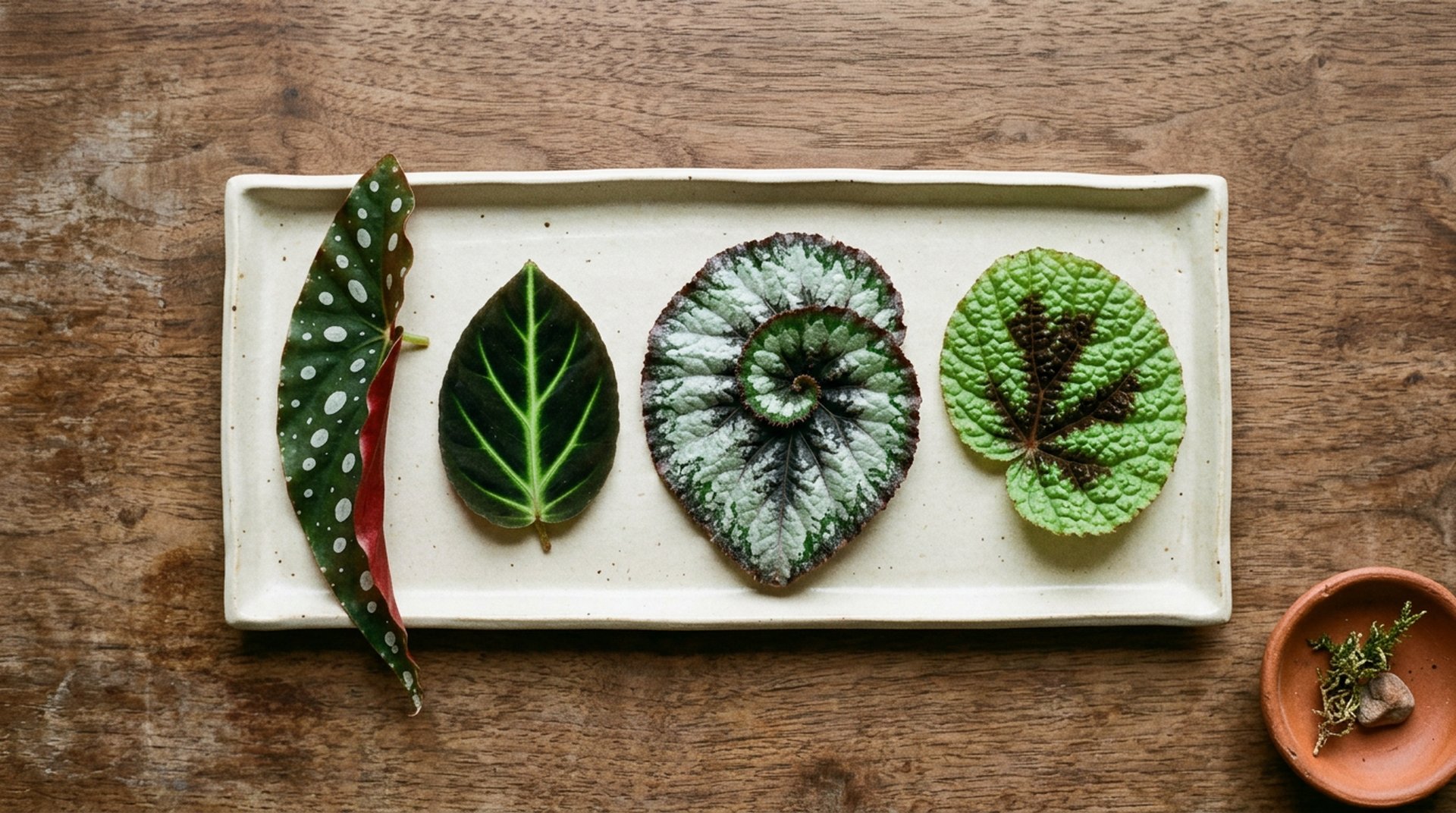
Begonia socotrana: photograph by Nick Helme, CC BY-SA 4.0, via Wikimedia Commons. Cropped from the original.
Begonia ferox: photograph by 彭鏡毅 (Peng Jingyi), CC BY-SA 3.0, via Wikimedia Commons. Cropped from the original.
Begonia boliviensis: photograph by Jean (Shelbyville, KY), CC BY 2.0, via Wikimedia Commons. Cropped from the original.
Begonia sutherlandii: photograph by KENPEI, CC BY 3.0, via Wikimedia Commons. Cropped from the original.



.jpg)
