The Plant Library · Genus Deep Dive
Begonia.
Two thousand species across three continents. Limestone cliffs in southern China, montane cloud forest in Papua New Guinea, the Atlantic rainforest of Brazil, the understory of any tropical place you can name. Sold next to petunias, written off as a porch plant. We're going to take it apart, one specimen at a time.
What it is
A working compendium
A genus deep dive built the way the Guild builds everything. Science where the science is settled, opinions where they have to be, the substrate ratio at the end. Anatomy and biogeography for context. Species profiles for the plants you'll actually grow. Cultivar entries for the Rex world that doesn't fit anywhere else.
Who it's for
Growers and Educators
For collectors deciding what to track down next. For Educators who teach the difference between a cane begonia and a Rex without losing the room. For anyone who's killed a begonia and wants to know why before trying again.
How it's written
Editorial, not whimsical
Plants get personality where the relationship earns it. Latin names and a year of description where they help, plain English where they don't. Specimens from the Petruscio collection show up in callouts, not in the main copy. The plant is the subject; the grower is the witness.
Section 01 · Understanding the genus
The framework.
Three essays that do the heavy theoretical lifting before you meet a single plant. Read these first if you want every species profile to make sense in context.
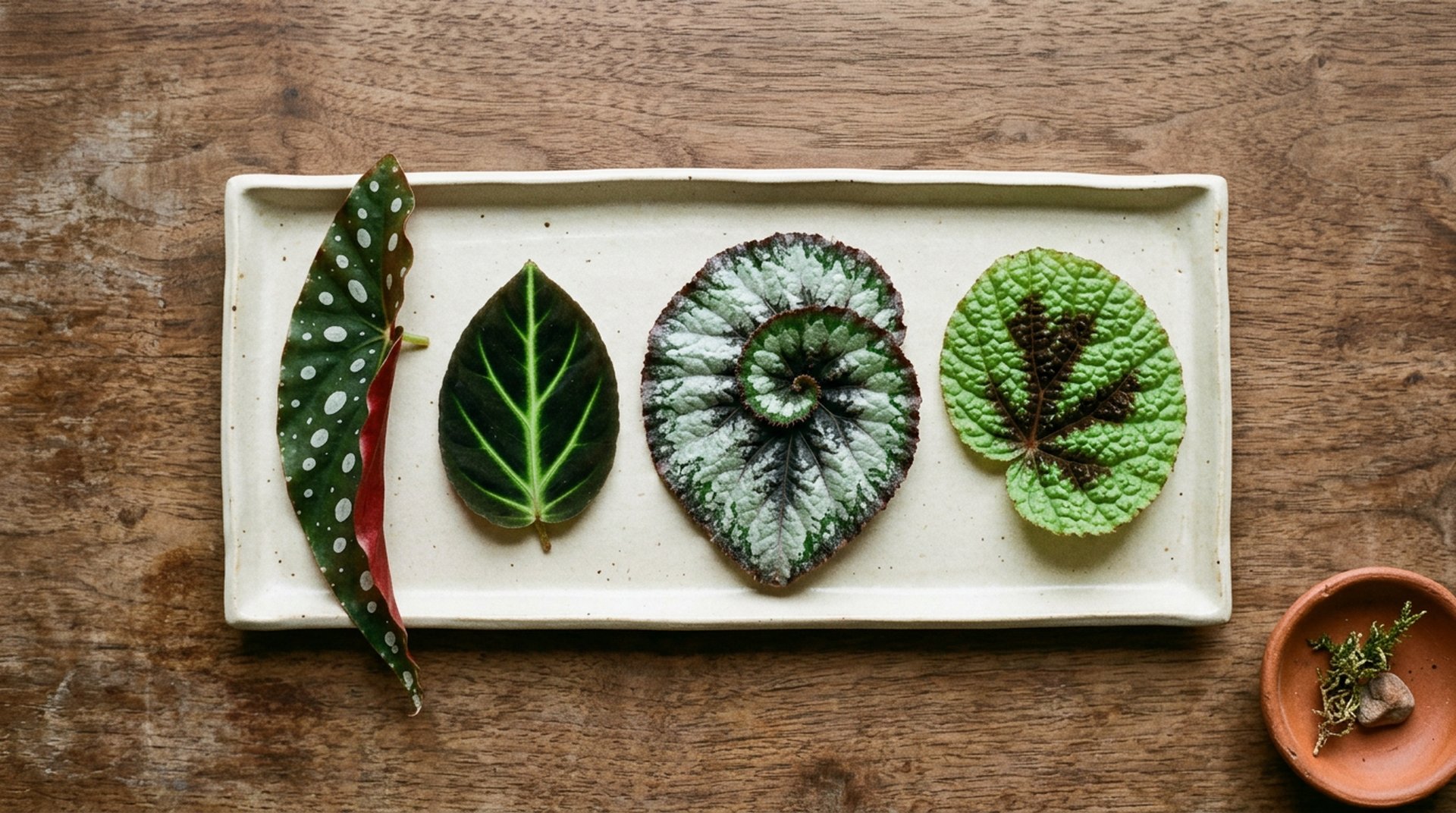 Essay · Anatomy
Field Manual · Genus essay
What a Begonia Is Made Of
The leaf, the rhizome, the iridoplast, the bullae. Why every begonia care rule comes back to anatomy, and what the photonic crystal in a Rex leaf is actually doing.
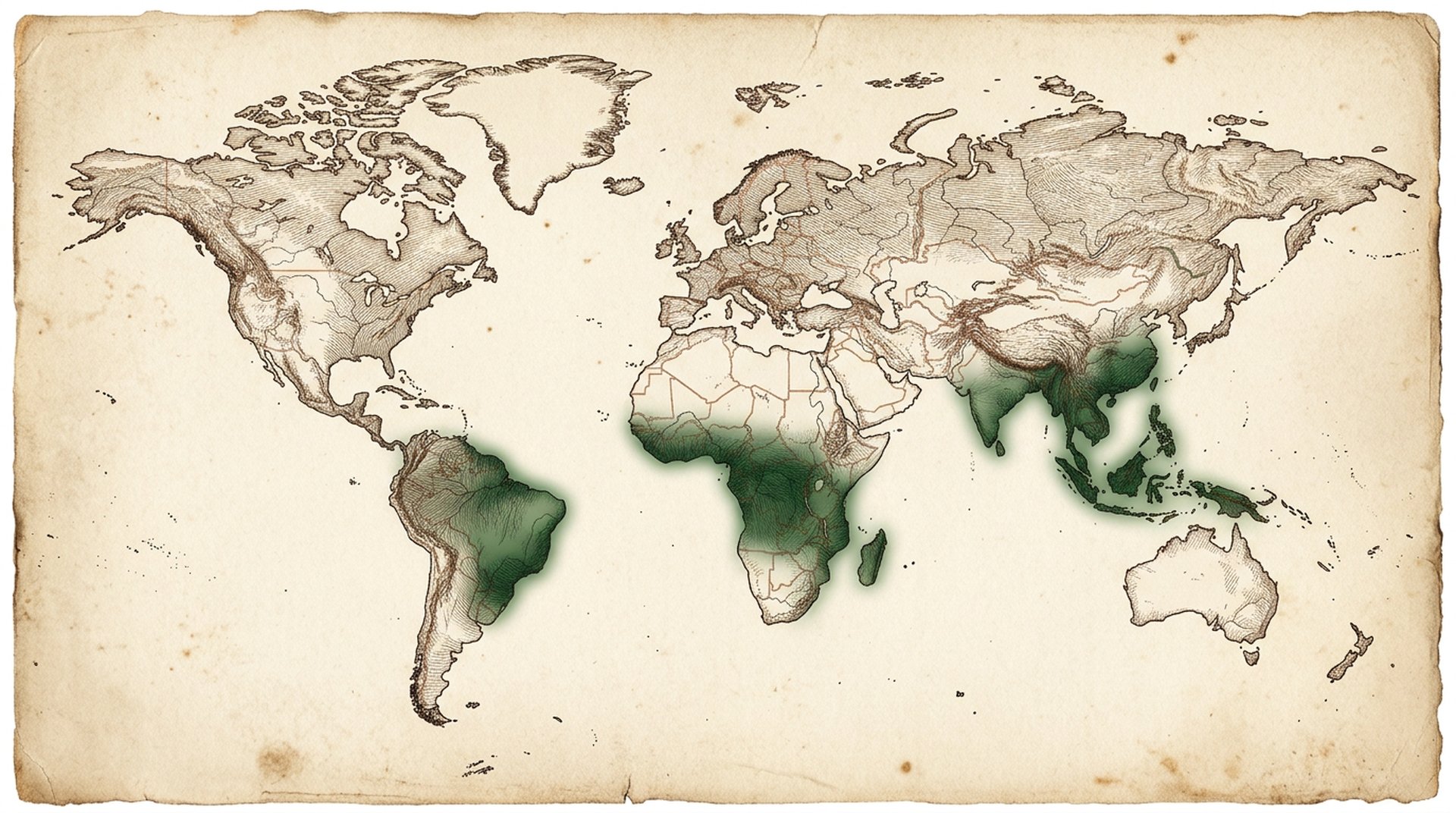 Essay · Biogeography
Field Manual · Genus essay
A Genus Without Borders
How one genus reached three continents on seeds that barely travel. Out of Africa, west to east across Malesia, and the limestone hills where a single species can hold one hillside and nothing else.
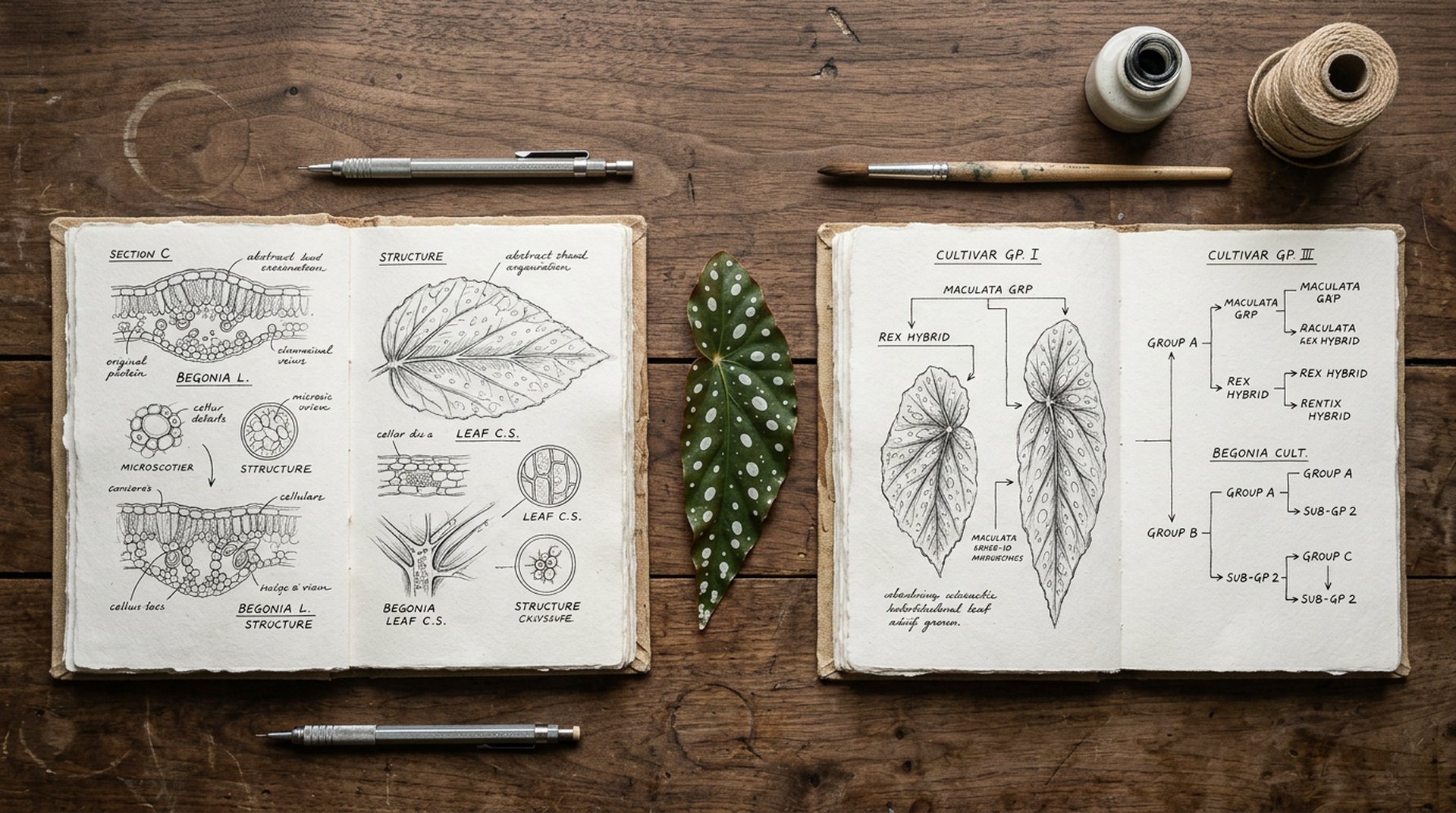 In the queue
Field Manual · Coming
Two Maps of the Same Territory
Botanical sections versus horticultural groups. Why the names a botanist uses and the names a gardener uses are pointed at different questions, and how to keep both straight.
Section 02 · Species profiles
Plants worth knowing.
Per-species deep dives. Wild origin, physical description, what the plant actually wants in cultivation, the moods that mean trouble. Editorial-pure — no commercial CTAs.
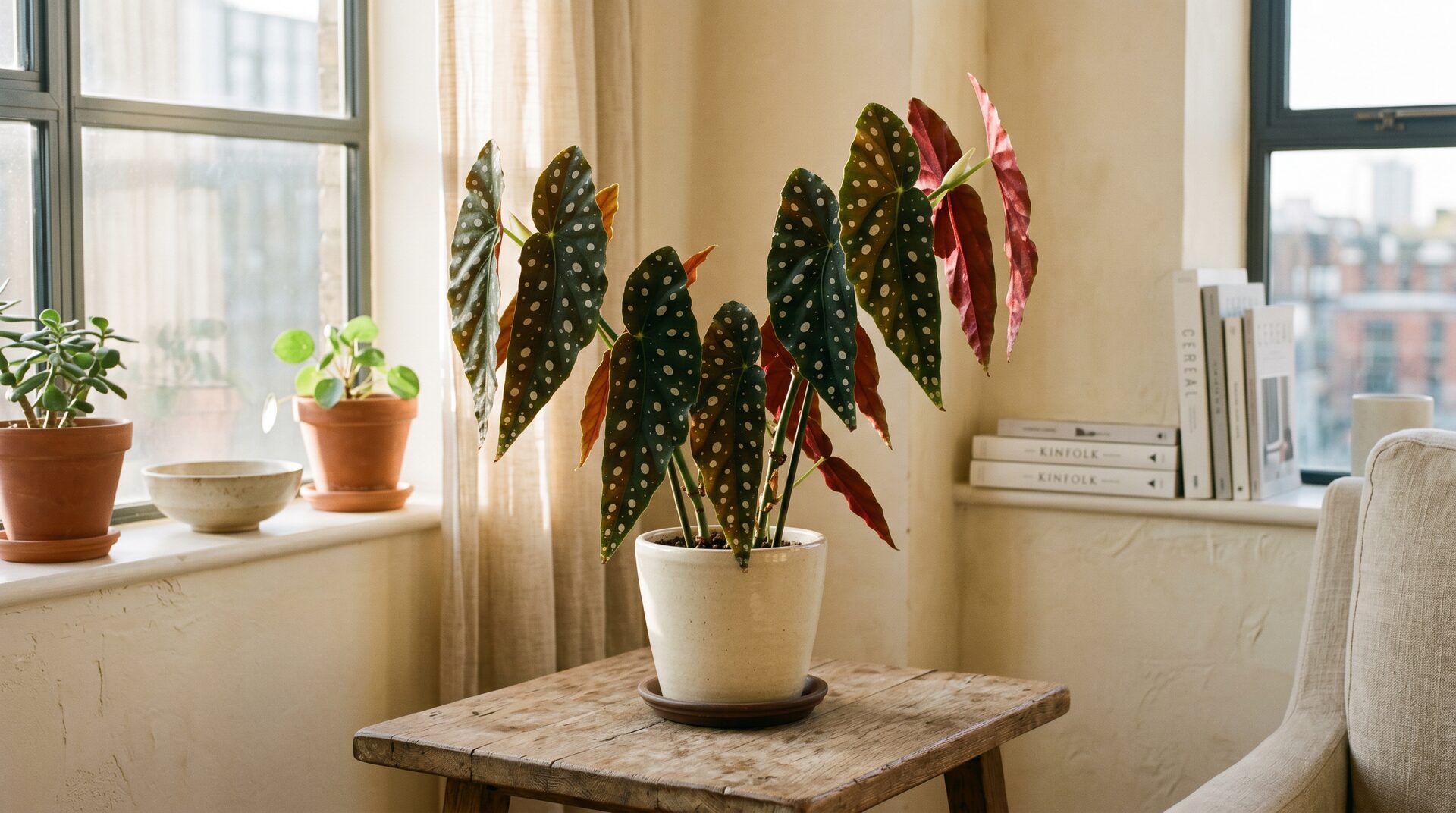 Profile · Cane
Profile · Cane Begonia
Begonia Maculata: The Polka-Dot Cane
The Brazilian cane begonia that looks better than it should be this easy. Light, water, humidity, substrate, and what those polka dots are actually for.
 Profile · Rhizomatous
Profile · Rhizomatous · sect. Coelocentrum
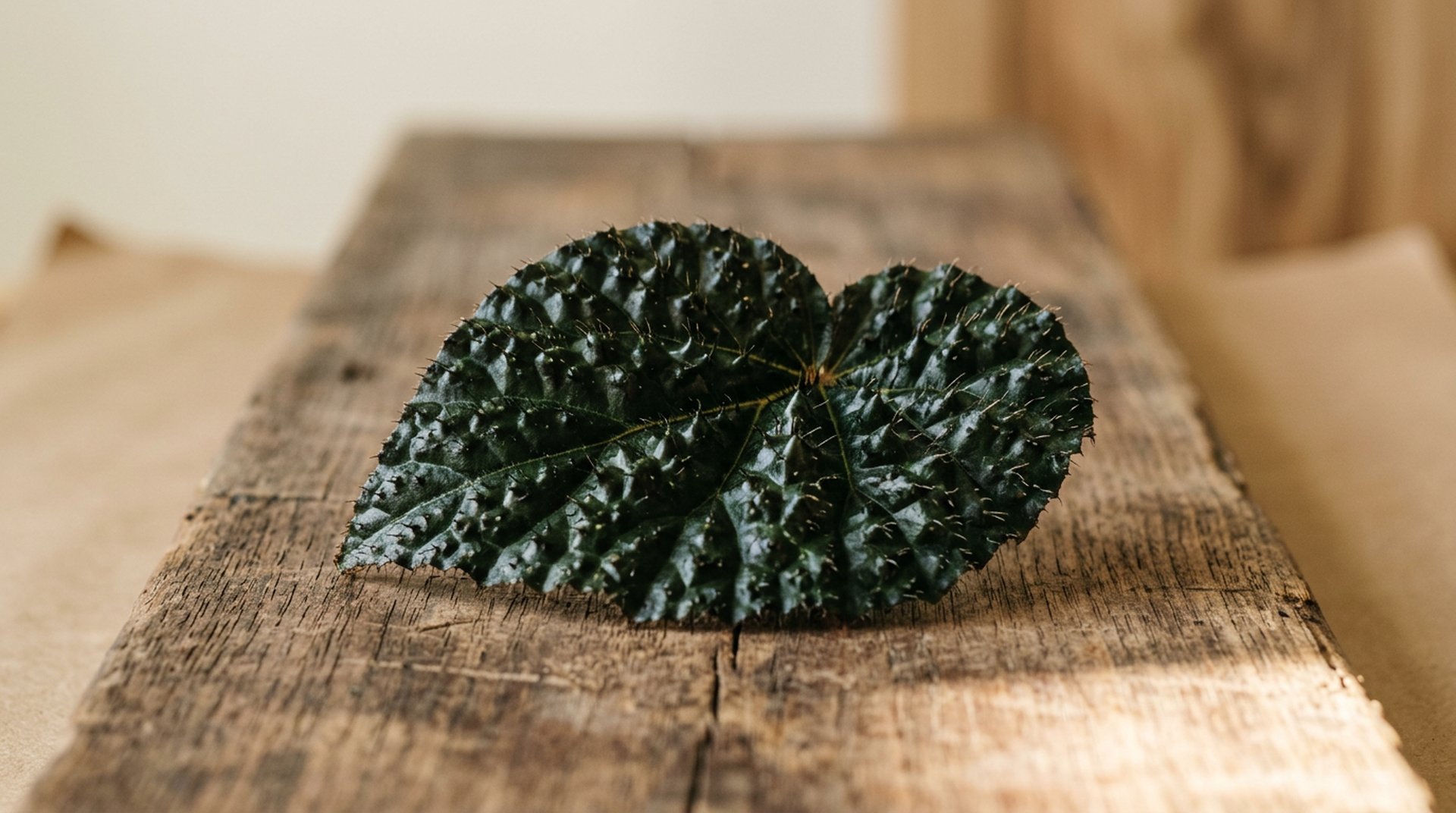
Begonia Ferox: The Armored Begonia from a Single Hill in Guangxi
Described in 2013 from one limestone outcrop in southwestern China. The most prominently bullate leaves of any begonia in the genus, and a juvenile-to-adult transformation that's hard to look away from.
 In the queue
Profile · Coming
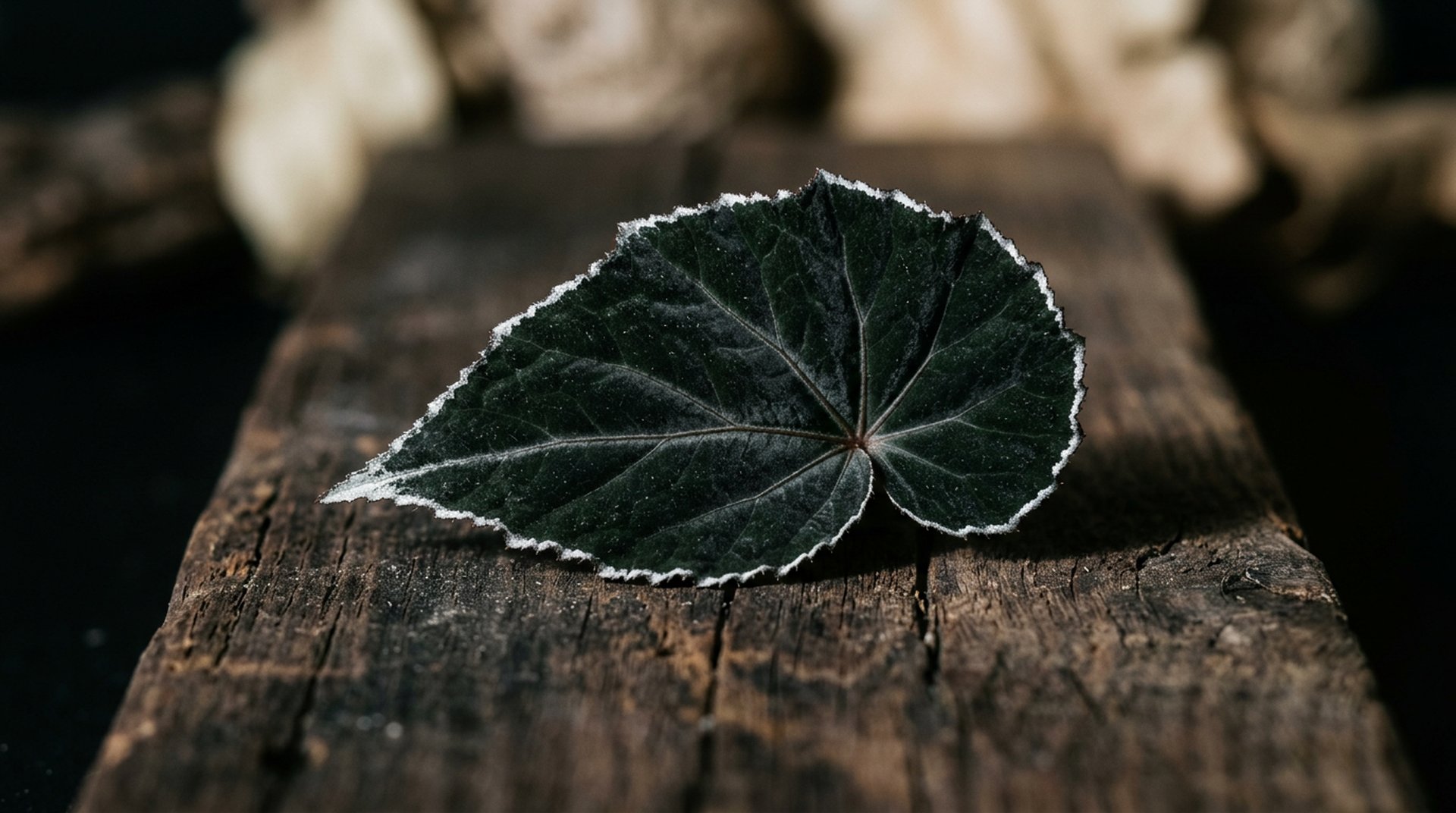
Begonia Darthvaderiana: The Black Leaf With the Silver Edge
Sarawak, 2014. Near-black foliage with a precise silver margin. One of the most demanding plants in the collection, and one of the most rewarding when you nail it.
 In the queue
Profile · Coming
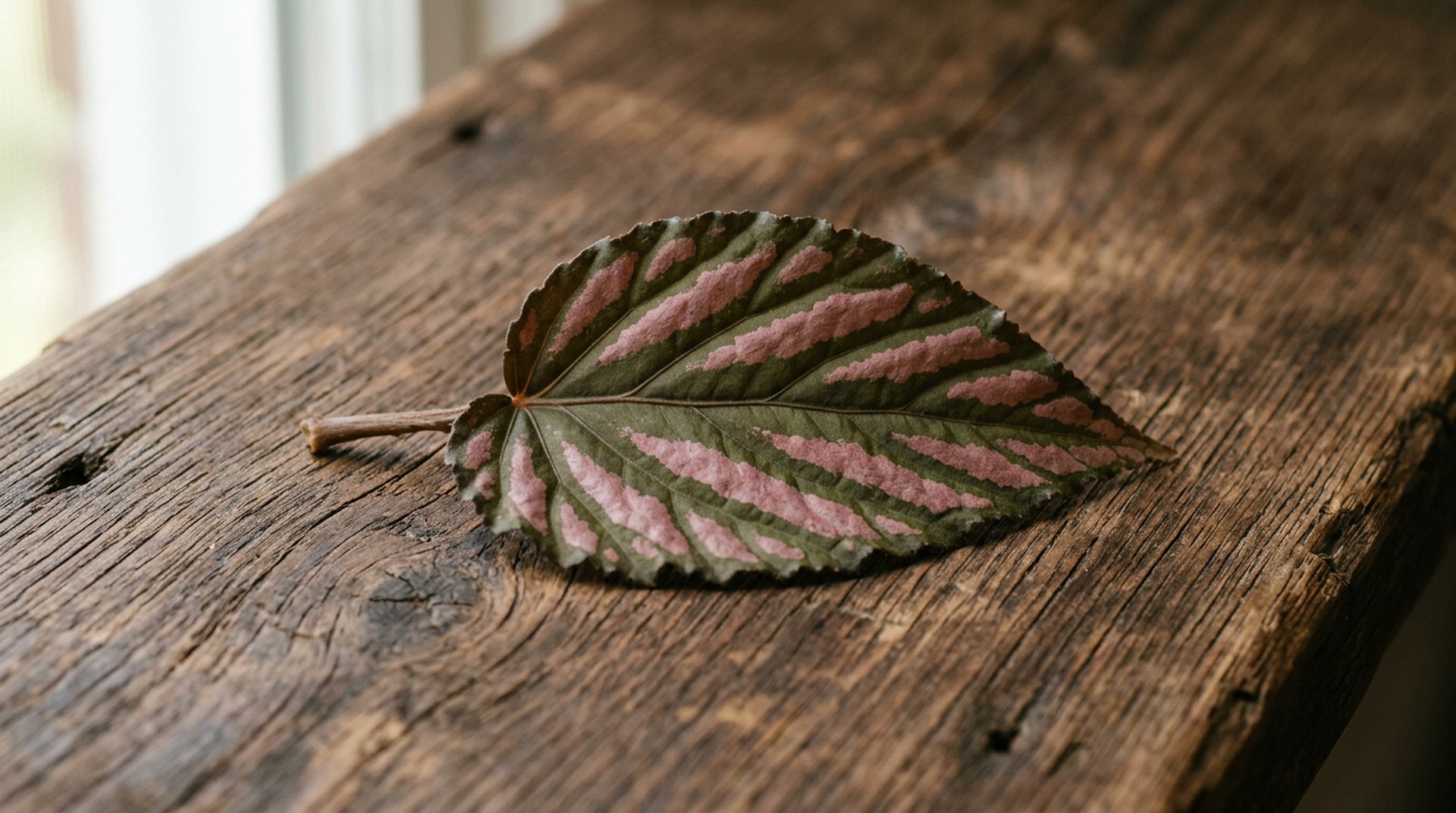
Begonia Brevirimosa subsp. exotica
The pink-banded cane from the central highlands of Papua New Guinea. Dramatic at scale, fussier than maculata, and worth every degree of humidity.
 In the queue
Profile · Coming
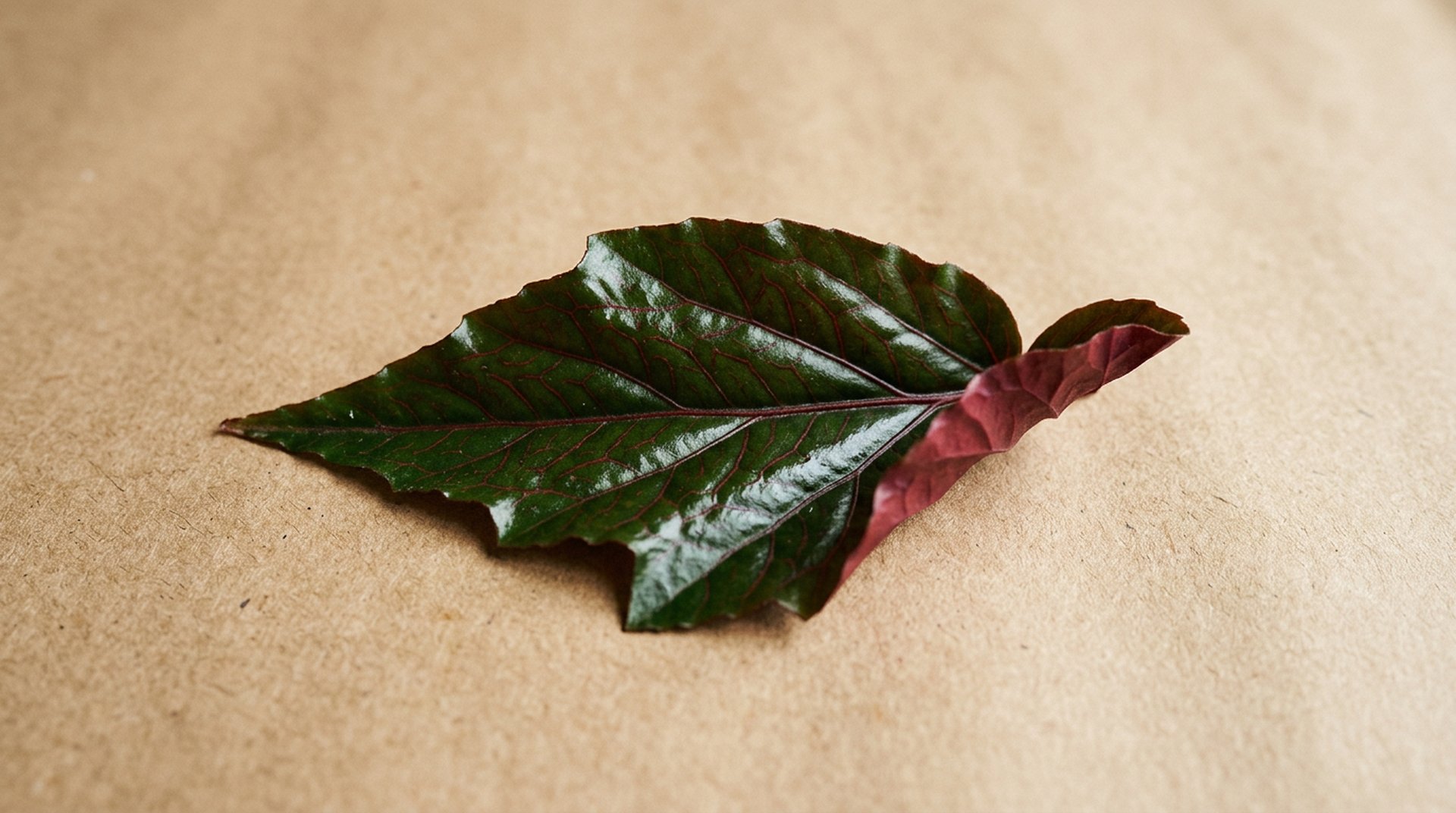
Begonia Coccinea: The Original Atlantic Forest Cane
Collected by William Lobb on the Organ Mountains in the 1840s. The plant that anchored the cane group in cultivation, and still one of the easiest to grow well.
 In the queue
Profile · Coming
Begonia Listada: The Stripe That Named Itself
A horticultural name that preceded its scientific description by twenty years. The Brazilian shrub begonia whose felted texture is doing more work than it looks.
 In the queue
Profile · Coming
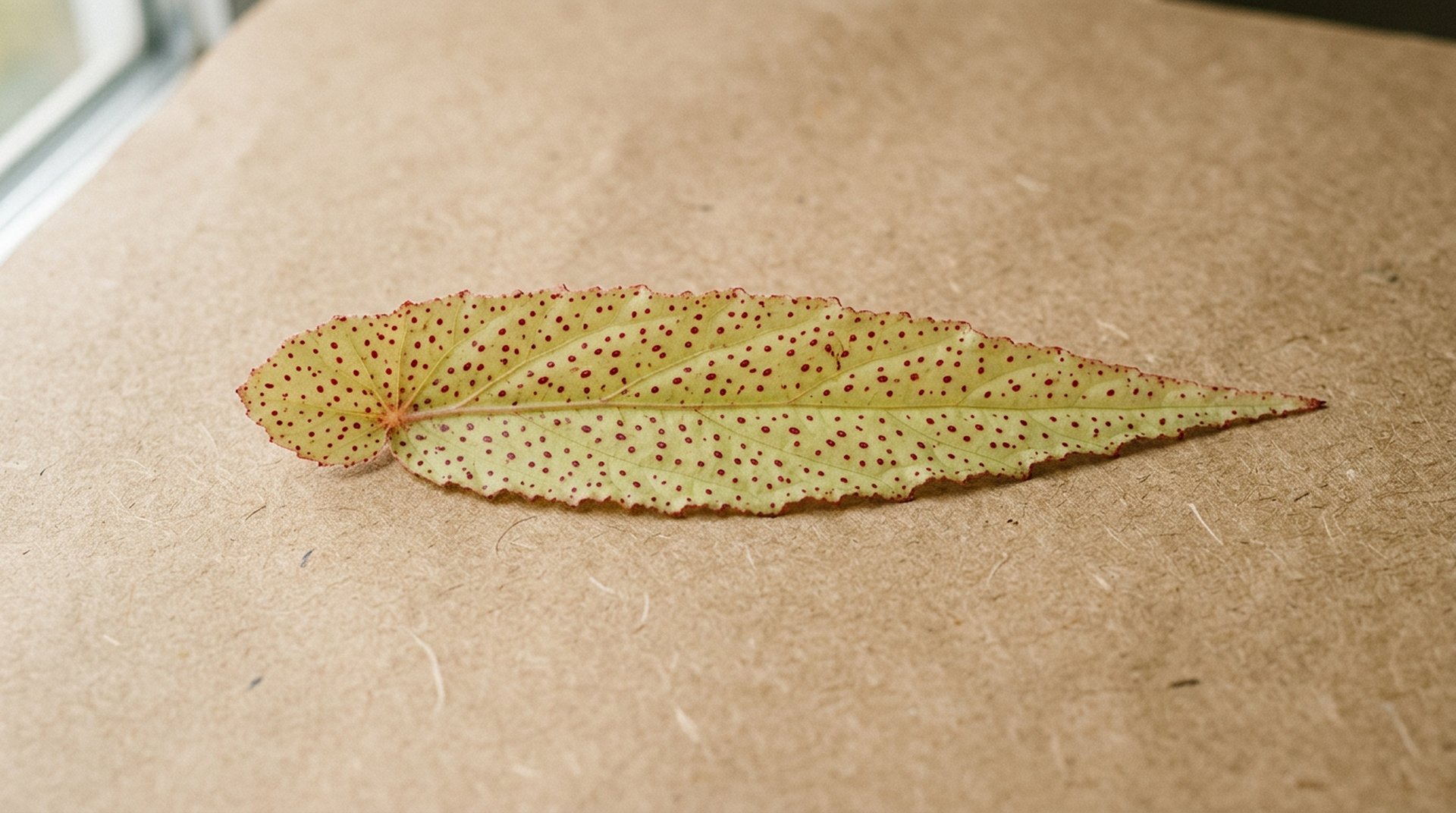
Begonia Amphioxus: The Two-Pointed Spear
Borneo. Lance-shaped leaves with red dots that sharpen with maturity. A compact rhizomatous species that proves the genus has more architecture than the Rex world lets on.
 In the queue
Profile · Coming
Begonia Luxurians: The Palm-Leaf Begonia
The Brazilian shrub begonia whose digitate leaves look more like a tree fern than a begonia. The closest the genus gets to a tropical statement piece.
Section 03 · Rex Cultivar Library
The seven lineages of the Rex world.
Modern Rex cultivars run into the thousands. They sort, mostly, into seven lineage groups by morphology and care behavior. Treat each entry as a guide to a way of growing, not a single plant.
 Cultivar Library
Rex Cultivars · Lineage 01
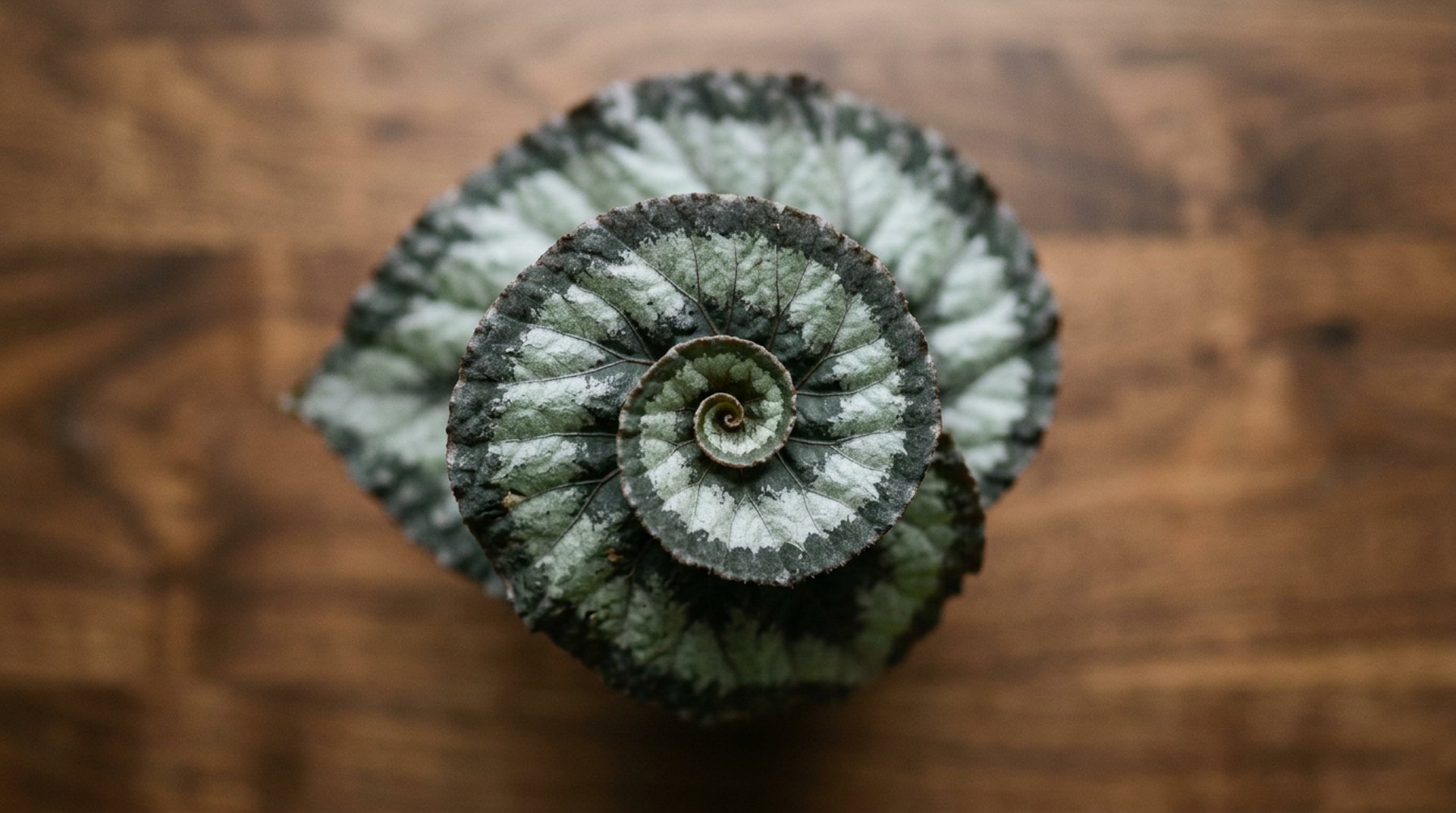
The Escargot Group: Spiral Types
The lineage everyone learns Rex begonias through. Tight petiole spirals, charcoal-and-silver banding, and a humidity threshold that's stricter than the cane begonias make you expect.
 In the queue
Rex Cultivars · Coming
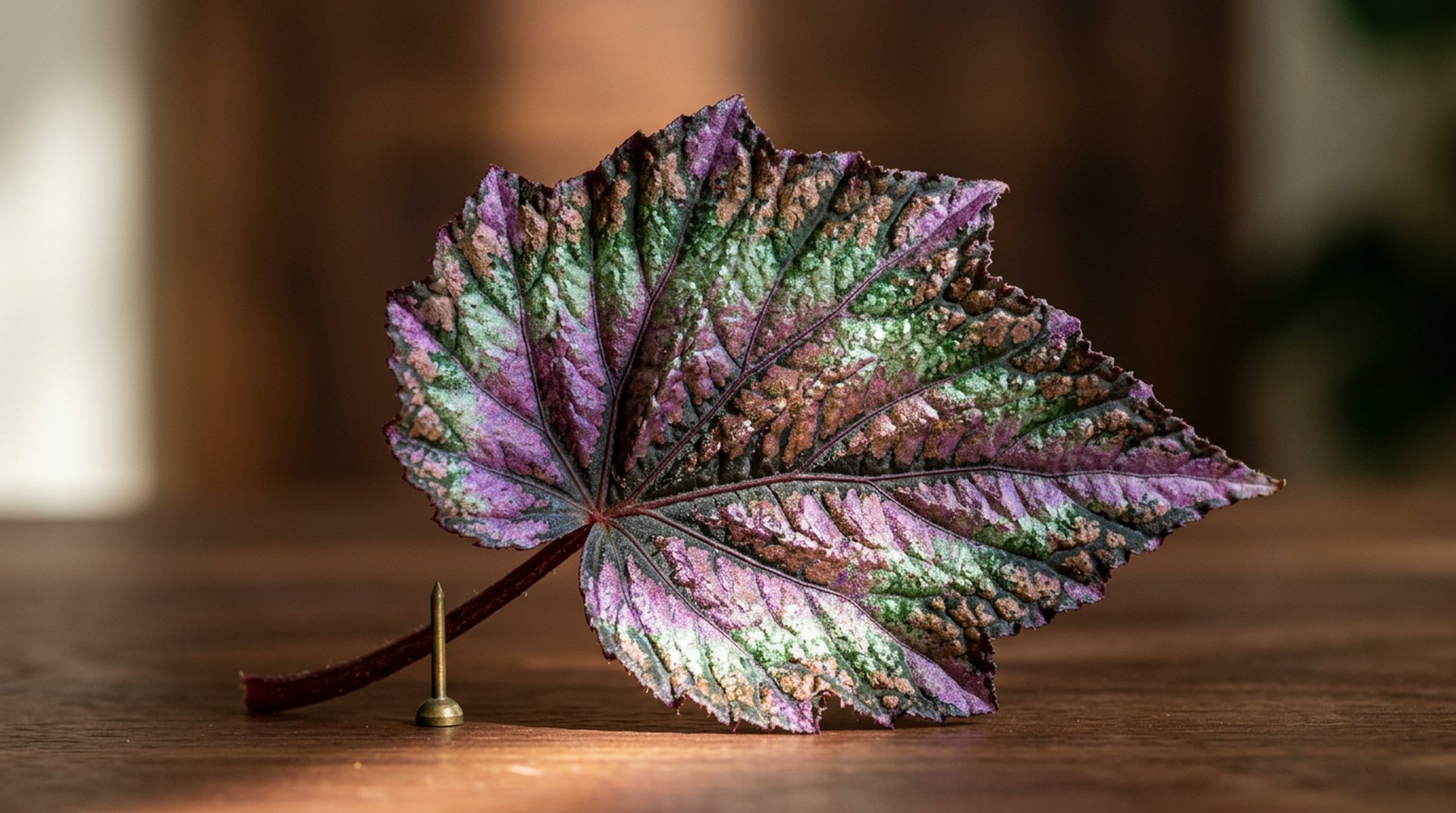
The Metallic Group: Iridescent Types
The shimmer is a photonic crystal. The light spectrum changes the color. The whole lineage rewards a calibrated grow space and punishes everything else.
 In the queue
Rex Cultivars · Coming
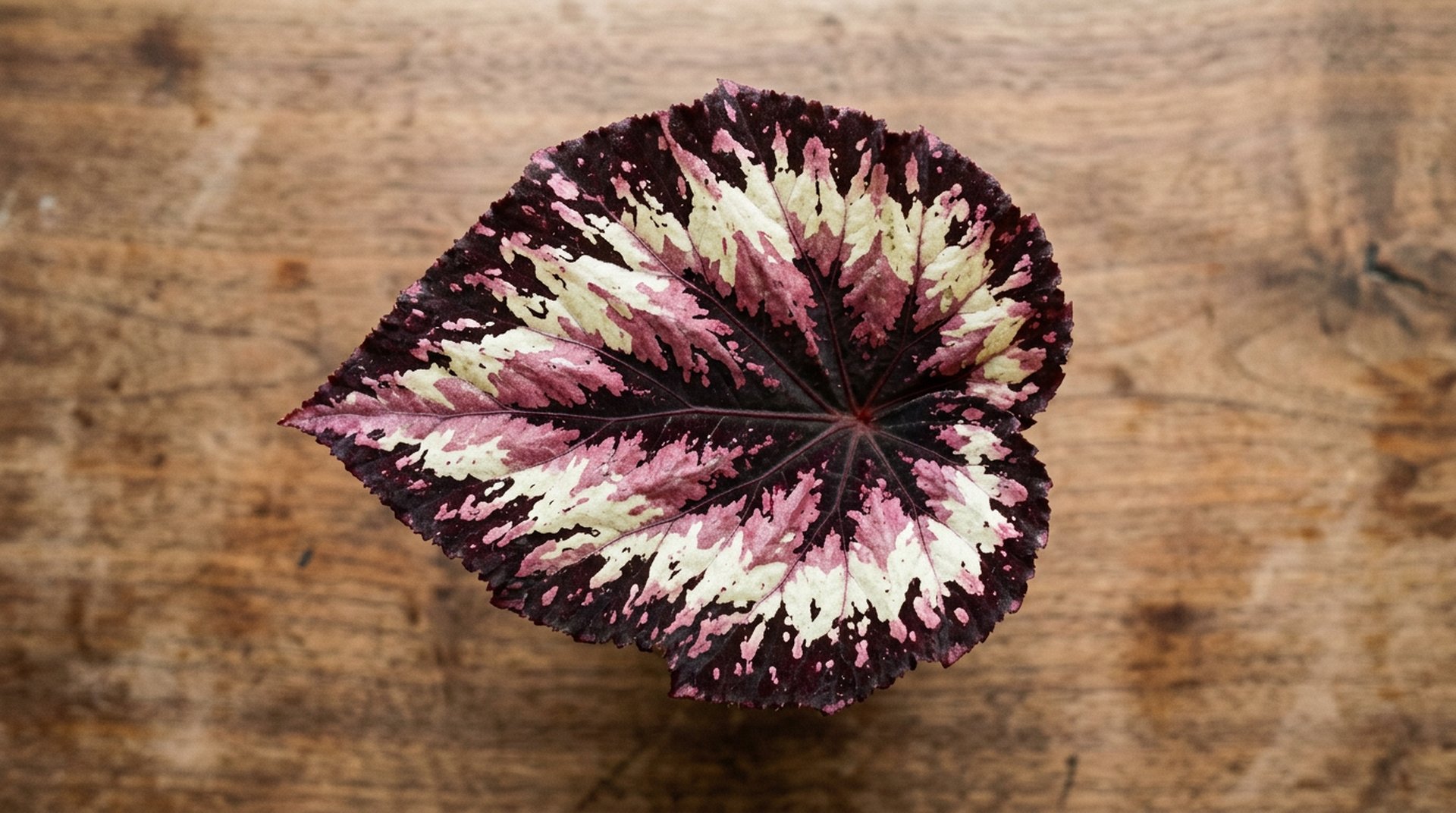
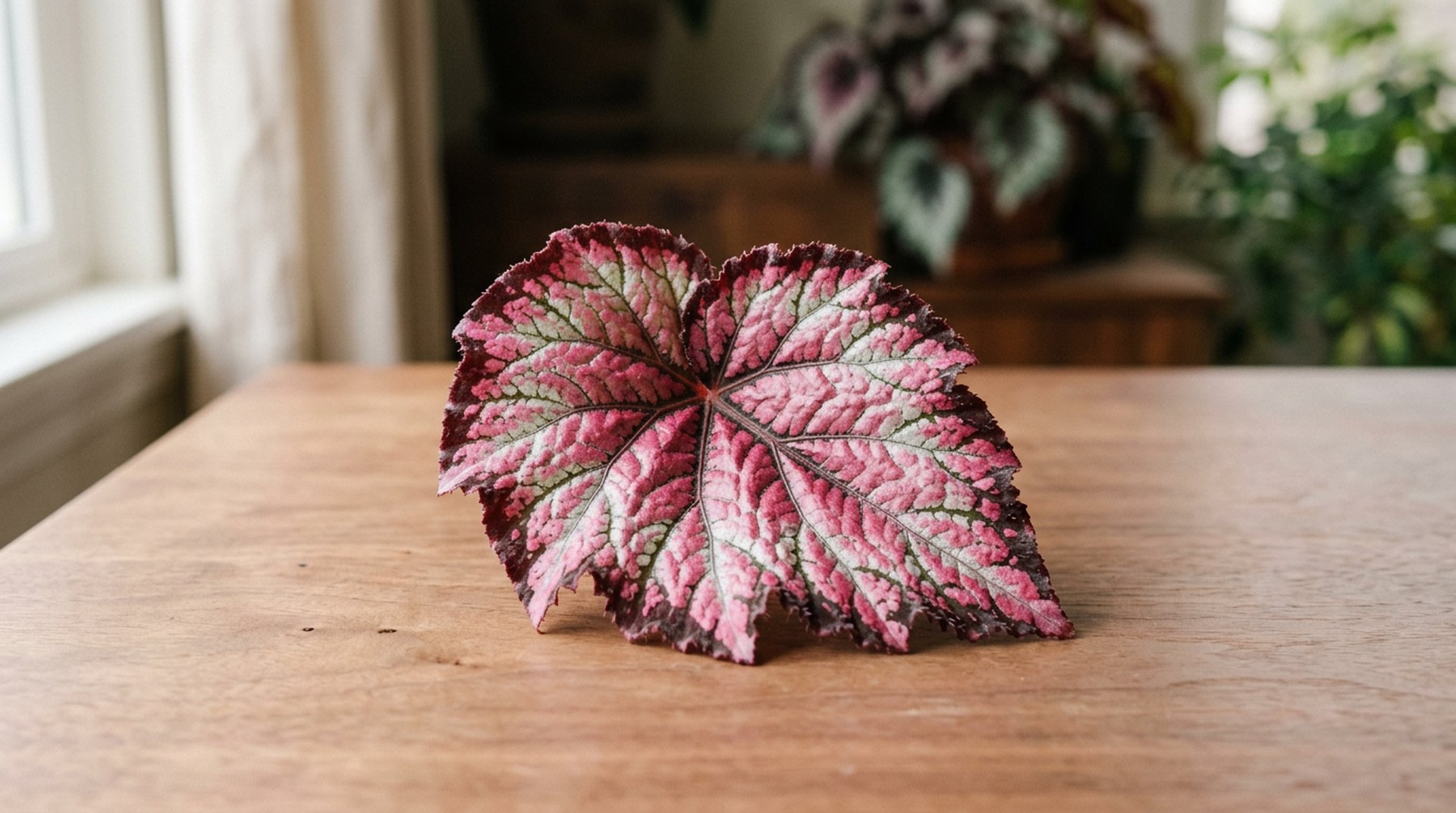
The Painted Group: Pattern-Forward Types
Splashes, streaks, and high-contrast marbling. The most beginner-forgiving Rex group, and the one that most rewards slightly higher light than the rest.
 In the queue
Rex Cultivars · Coming
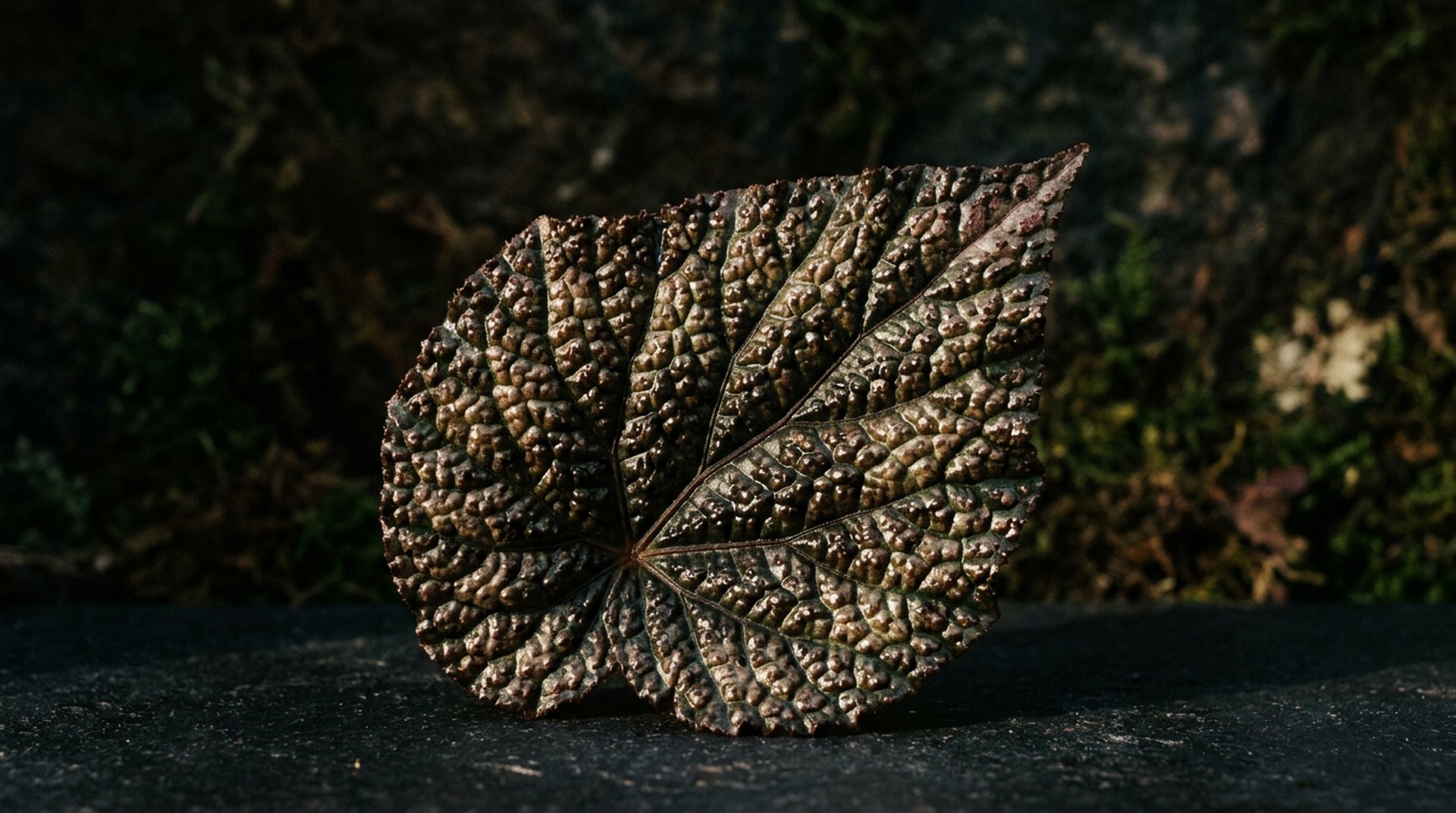
The Textured Group: Pebbled and Sculptural Types
Quilted surfaces, deep coloration, slow growth, sturdy rhizomes. The Rex group that handles drier intervals between waterings better than any other.
 In the queue
Rex Cultivars · Coming
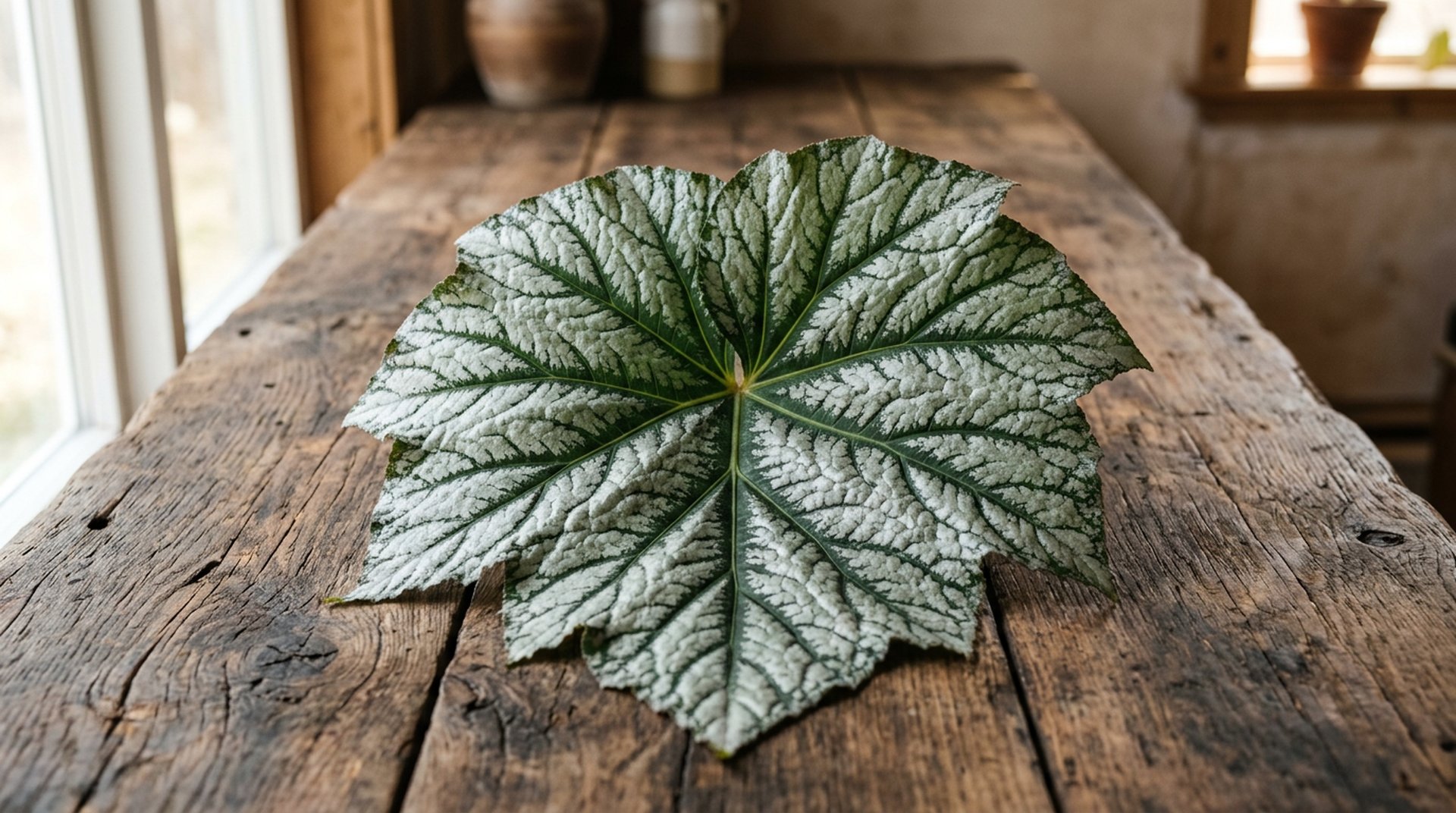
The Broadleaf Group: Large-Form Types
Oversized leaves, sweeping forms, vigorous rhizomes. Statement plants that need real space, real airflow, and water that doesn't waver.
 In the queue
Rex Cultivars · Coming
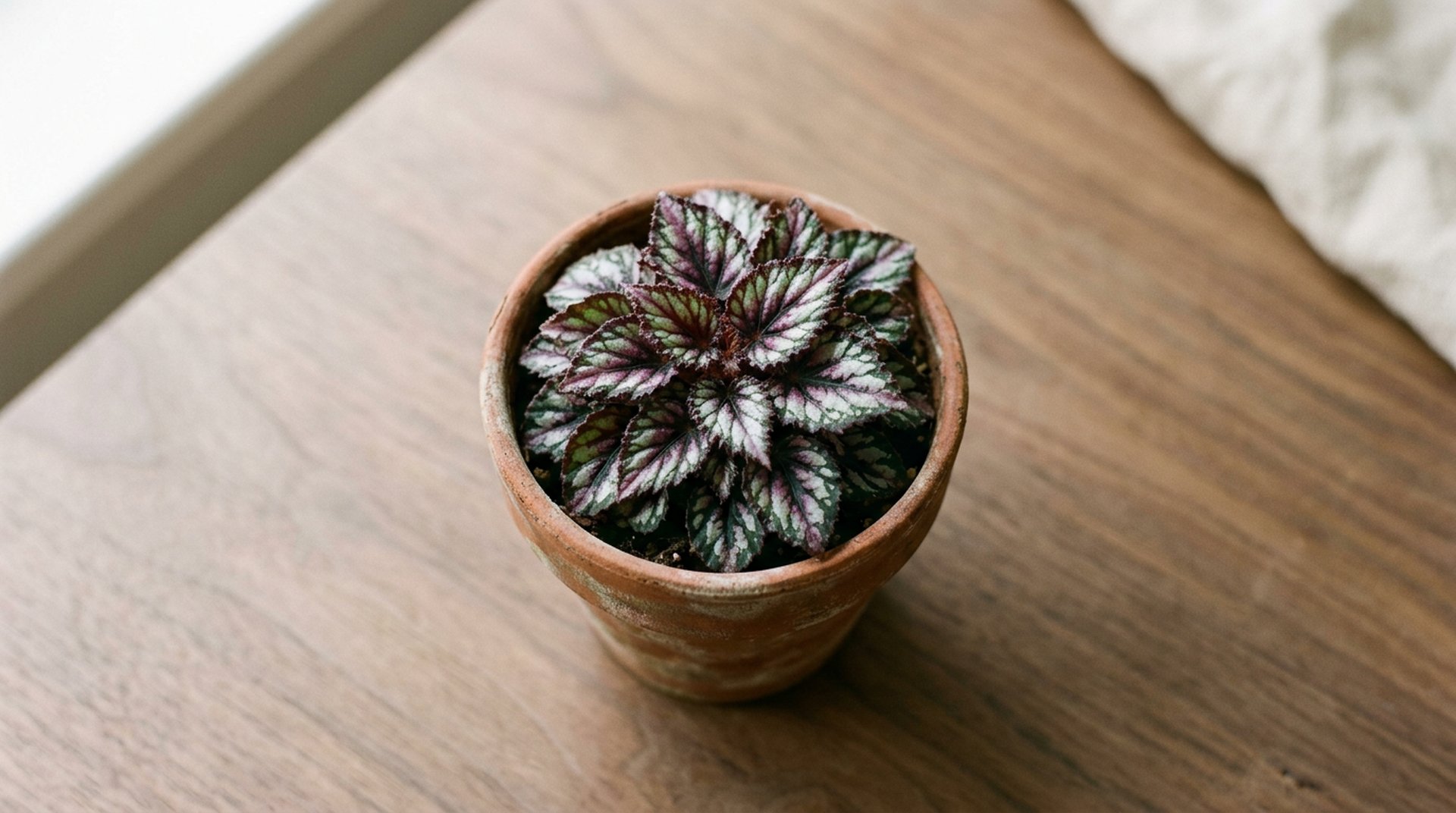
The Compact Miniature Group: Small-Form Types
Tight rosettes, slow steady growth, terrarium-ready. The one Rex group that genuinely thrives inside an enclosure rather than next to one.
 In the queue
Rex Cultivars · Coming
The Modern Hybrid Group: Mixed Backgrounds
Jurassic, T-Rex, Shadow King — the series bred for indoor resilience. The Rex group most likely to keep showing off in a normal living room.