Two insects answer to the name "harlequin," and they pull growers into opposite mistakes. One is a true lady beetle you shouldn't fear. The other is a stink bug you shouldn't trust. Here's how to tell which file you're looking at.
Two bugs, one name.
A beetle taps at the inside of a windowpane in October, and somebody decides it's an invader and flicks it dead. Across town, a glossy orange-and-black bug is sitting on a kale leaf, somebody thinks "ladybug, good, leave it alone," and walks off. Both just blew it, and for the same reason: a nickname. "Harlequin" rides on two insects that share nothing but a costume, and each one talks people into the wrong move. One you kill for no reason. The other you wait on hand and foot while it drains the garden.
The word gets pinned on two animals that aren't related past "they're both insects." One is the harlequin ladybird, Harmonia axyridis, the multicolored Asian lady beetle. Real lady beetle. We shipped it over decades back to eat aphids, and eat aphids it does (Koch, 2003). The other is the harlequin bug, Murgantia histrionica. That one's a stink bug, no relation to a beetle at all. It feeds through a built-in straw, and it has exactly one ambition: wrecking the cabbage family (Wallingford et al., 2011).
Same nickname. One's mostly an ally. The other treats your kale like a juice box.
The case files.
Two suspects, one folder. Pull the tab for the one you're looking at.
Beneficial · Family Coccinellidae
Asian Lady Beetle
Harmonia axyridis · the "harlequin ladybird"
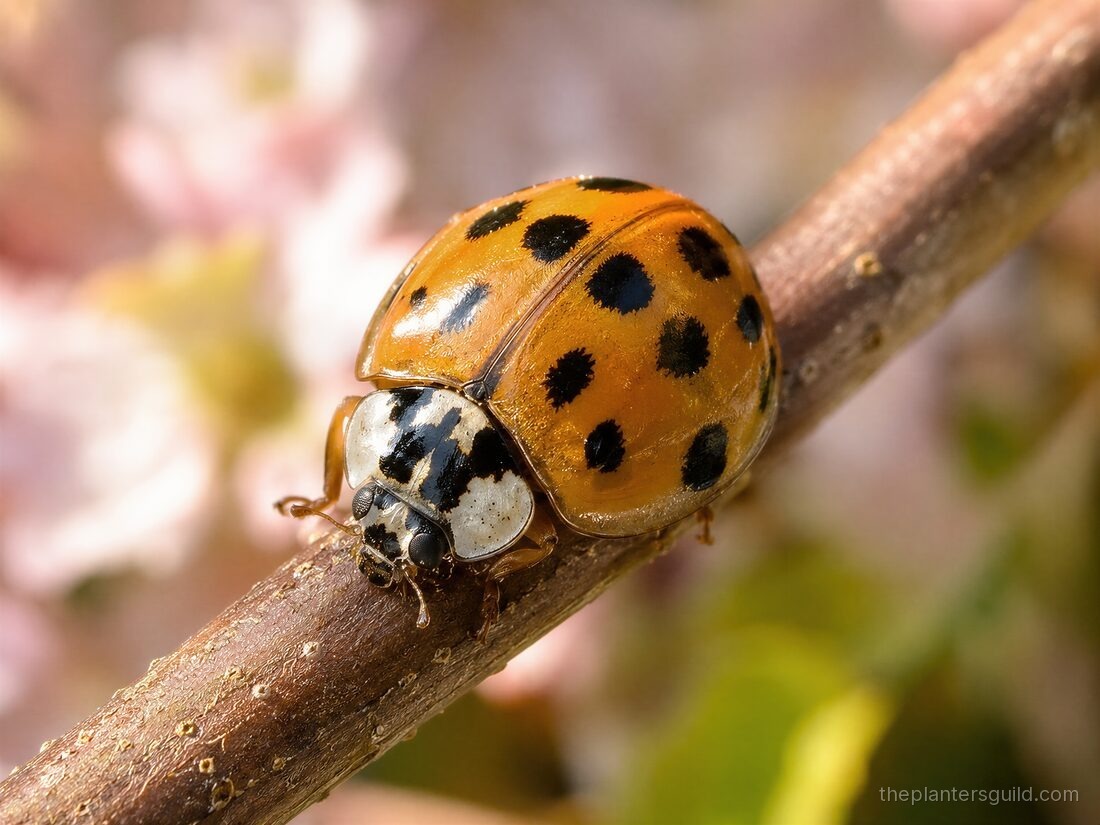 Mug Shot adult, 5.5–8.5 mm
Vital Statistics
- Family
- Coccinellidae
- Adult size
- 1/4–1/3 in
- Body
- round, domed
- Spots
- 0 to 20+
- Role
- aphid predator
- Damaging stage
- none
The Tell
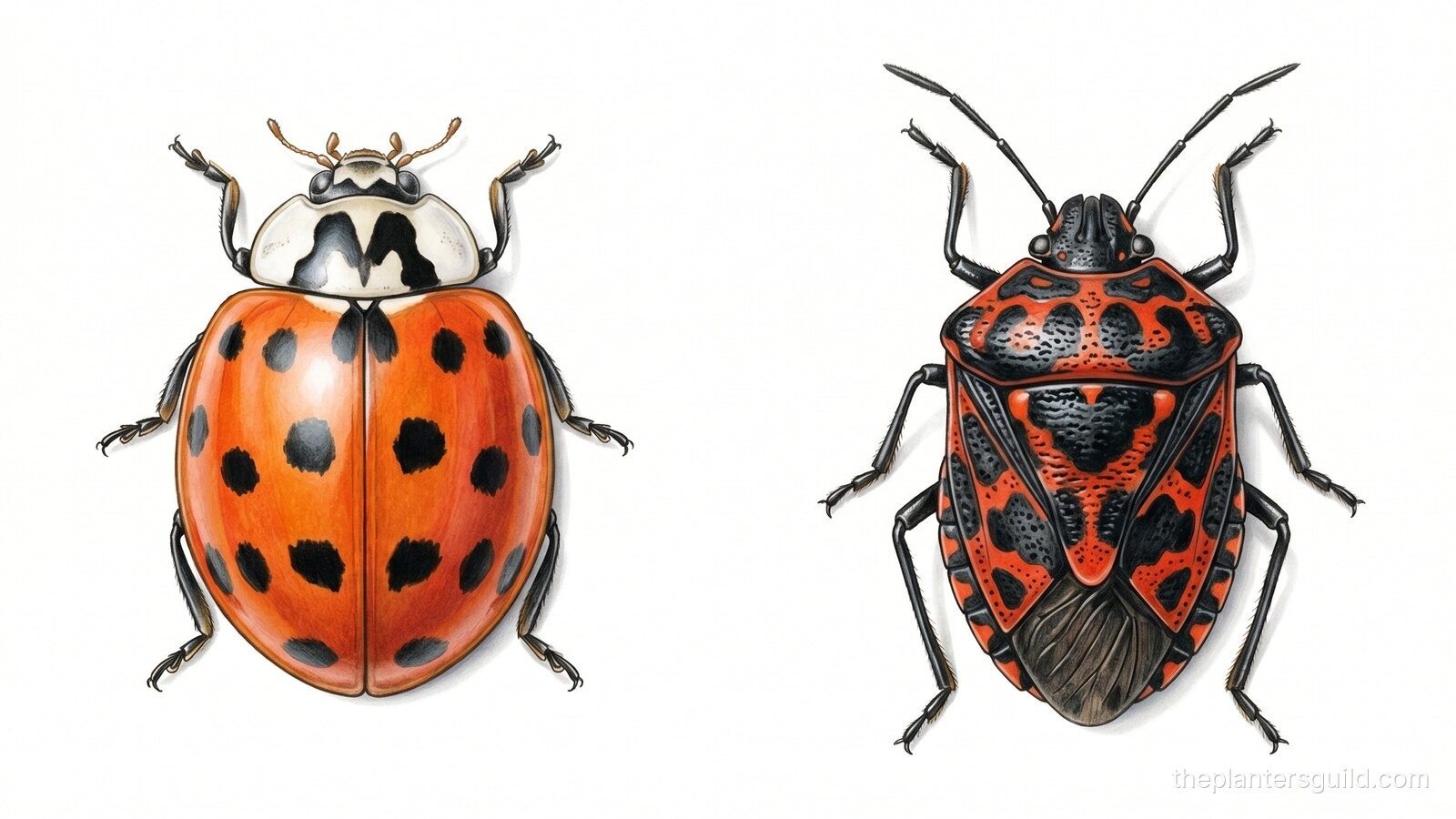
A white plate behind the head stamped with a black "M" (a "W" if it's facing you). Spots vary and mean nothing; the M is the signal. Native lady beetles go without it.
Verdict
Friend, mostly. Outside, let it hunt. Indoors in fall, vacuum them up and seal their entry points. Don't crush them, or you'll be scrubbing yellow stains and smelling them for a week.
Also Look For
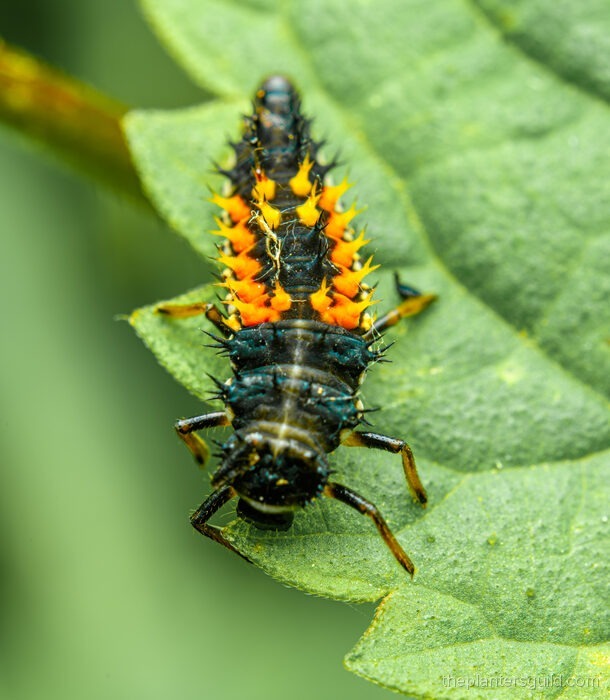
The spiny black "alligator" larva with orange smudges. Looks like trouble, eats hundreds of aphids before it grows wings. Don't squash it.
Pest · Family Pentatomidae
Harlequin Bug
Murgantia histrionica · a stink bug
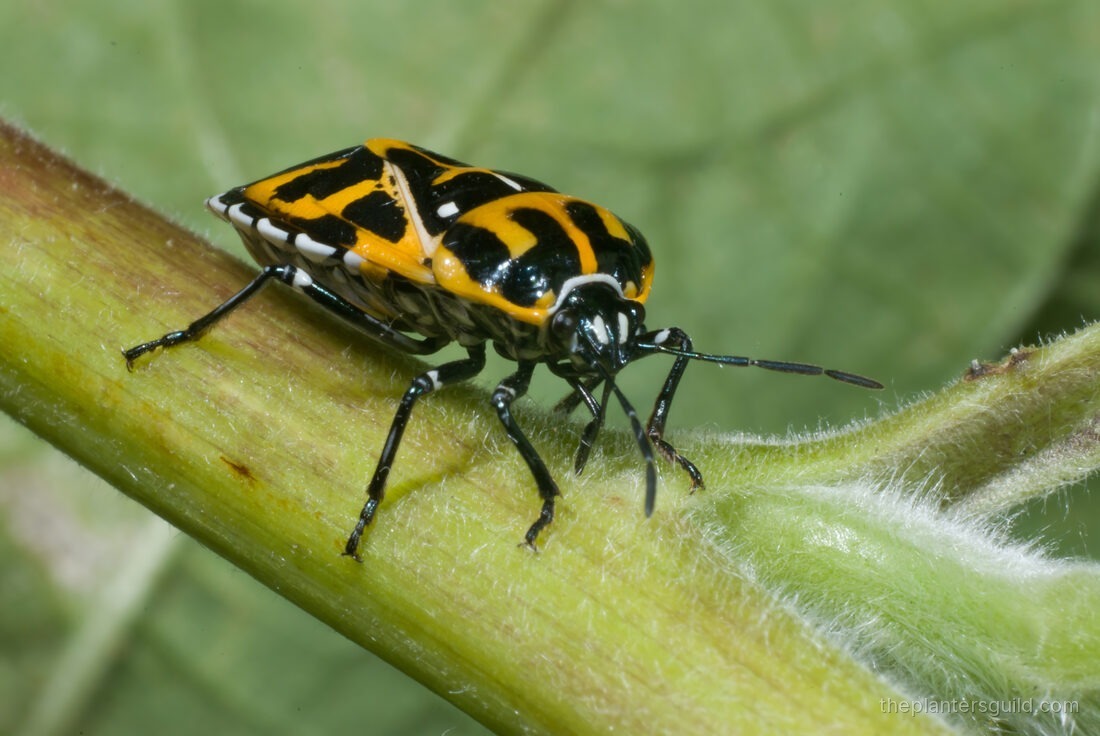 Mug Shot adult, 7.5–11 mm
Vital Statistics
- Family
- Pentatomidae
- Adult size
- about 3/8 in
- Body
- flat shield
- Mouth
- piercing-sucking
- Role
- brassica pest
- Damaging stage
- adults & nymphs
The Tell
A flat shield shape, the little back triangle of a stink bug, and a beak it stabs into the plant and drinks through, no chewing jaws.
Verdict
Pest. Hand-pick adults and nymphs into soapy water and scrape off every egg row you find. A fall cleanup, plus pulling the weedy mustard-family plants nearby, knocks the legs out from under next year's wave.
Also Look For
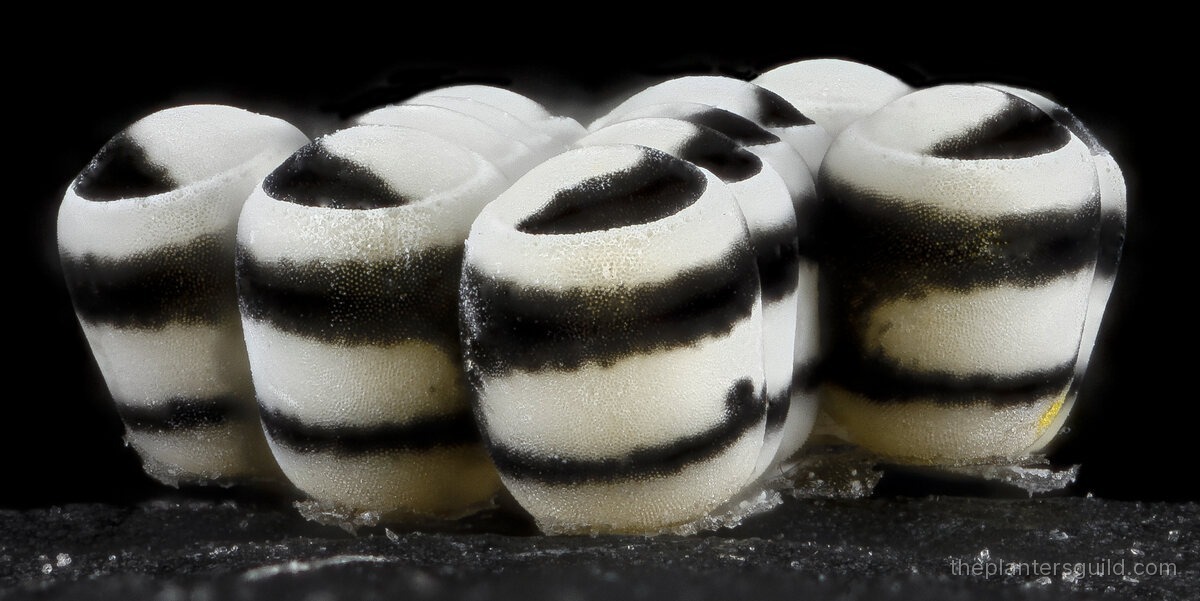
White barrels hooped in black, in tidy double rows under a leaf. Your earliest warning, posted before one leaf shows a mark.
How to tell them apart
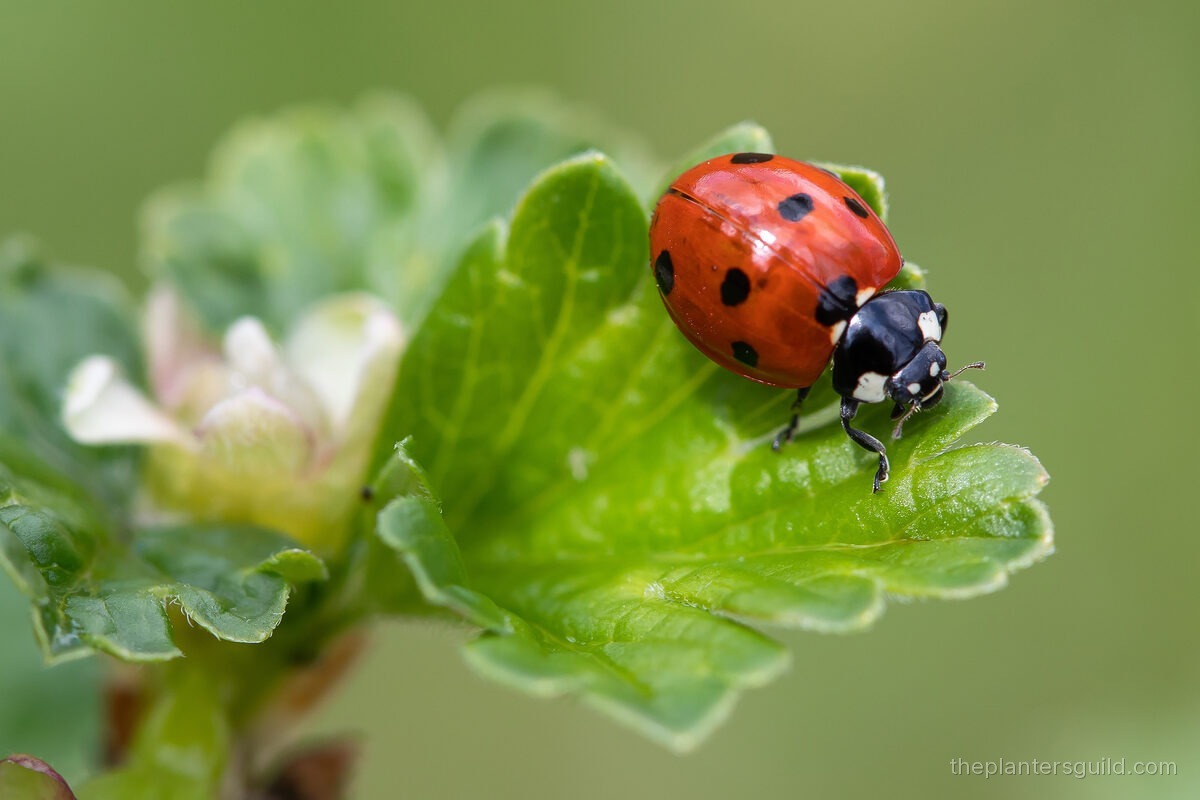
Start with the shape. The Asian lady beetle is round and domed, the exact thing you picture when somebody says "ladybug." The color is all over the place, pale orange through deep red, somewhere between no spots and a couple dozen. Don't bother counting. Spots prove nothing here, not even the bug's age. The tell sits on the little plate behind the head: white, with a black "M" printed on it. Turn the bug around in your mind and the "M" reads as a "W." Same mark, same bug. Native lady beetles go without it (Koch, 2003).
The harlequin bug gives itself up the moment you look closely. Flat, not domed. It's got the shield outline and that little triangle on the back that says stink bug. Bold black, slashed with red-orange. And watch the mouth: a true bug doesn't chew, it stabs in and drinks. Catch one feeding and the beak's sunk into the stem like a syringe.
Half the time you'll meet the young or the eggs before you ever see a grown one, and both are in the case files above: the beetle's spiny "alligator" larva, which looks like trouble and is actually your best free aphid control, and the harlequin bug's eggs, little white barrels hooped in black, stood on end in tidy double rows under a leaf. Learn the eggs and nothing else and you've still gained ground. They're the earliest warning you get, posted before one leaf shows a mark (Wallingford et al., 2011).
The myths, busted
"That orange thing isn't even a real ladybug." It is. Genuine lady beetle, and a serious aphid hunter (Koch, 2003).
"So it's harmless." Not that simple. Come fall it shoulders into houses to overwinter, it'll nip you, and pinch one and it bleeds a yellow fluid from its leg joints that stinks and stains the wall (Koch, 2003). It also crowds native lady beetles out of ground they used to own (Xerces Society, n.d.). Good in the garden, a headache in the house, both true at the same time. That's just the honest answer.
"More spots, older bug." Nope. Spots are noise. The "M" is the signal.
"That spiky alligator is a pest, kill it." That's the larva you've been hoping for. Kill it and you've thrown out your best free pest control.
"It's gorgeous and orange, so it's a friend." This is the one that costs you a harvest. The harlequin bug is a stunner and a flat-out pest. On cabbage, kale, collards, broccoli, mustard, the whole crucifer crowd, it sucks the sap out and leaves pale, stippled blotches behind. Let enough of them work and young plants wilt and die outright (Wallingford et al., 2011).
What to actually do
Asian lady beetle. Outside, hands off, let it hunt. Inside in the fall, vacuum them up and caulk the cracks they're filing in through. Just don't crush them, unless scrubbing yellow stains and smelling them for a week sounds like a good time (Koch, 2003).
Harlequin bug. Flip your brassica leaves and look. Pick the adults and nymphs off into a cup of soapy water, and scrape off every egg row you find, because that's next month's infestation sitting right there (Wallingford et al., 2011). They overwinter as adults in leftover garden litter, so a real fall cleanup, plus pulling the weedy mustard-family plants nearby, knocks the legs out from under next year's wave (Knox, 2025).
Quick reference
- Round, domed, "M" behind the head means Asian lady beetle. Friend outside. Show it the door indoors.
- Spiny orange-and-black "alligator" means lady beetle larva. Friend. Hands off.
- Flat shield, triangle on the back, stabbing beak means harlequin bug. Pest. Remove it.
- White barrels hooped in black, in rows under a leaf means harlequin bug eggs. Pest. Scrape them now.
Knox, M. A. (2025). Harlequin bug, Murgantia histrionica (Hahn) (Insecta: Hemiptera: Pentatomidae) (EENY-025). University of Florida IFAS Extension. [link]
Koch, R. L. (2003). The multicolored Asian lady beetle, Harmonia axyridis: A review of its biology, uses in biological control, and non-target impacts. Journal of Insect Science, 3, 32. [link]
Wallingford, A. K., Kuhar, T. P., Schultz, P. B., & Freeman, J. H. (2011). Harlequin bug biology and pest management in brassicaceous crops. Journal of Integrated Pest Management, 2(1), H1–H4. [link]
Xerces Society. (n.d.). The annual return of the unwanted houseguests. Xerces Society for Invertebrate Conservation. [link]