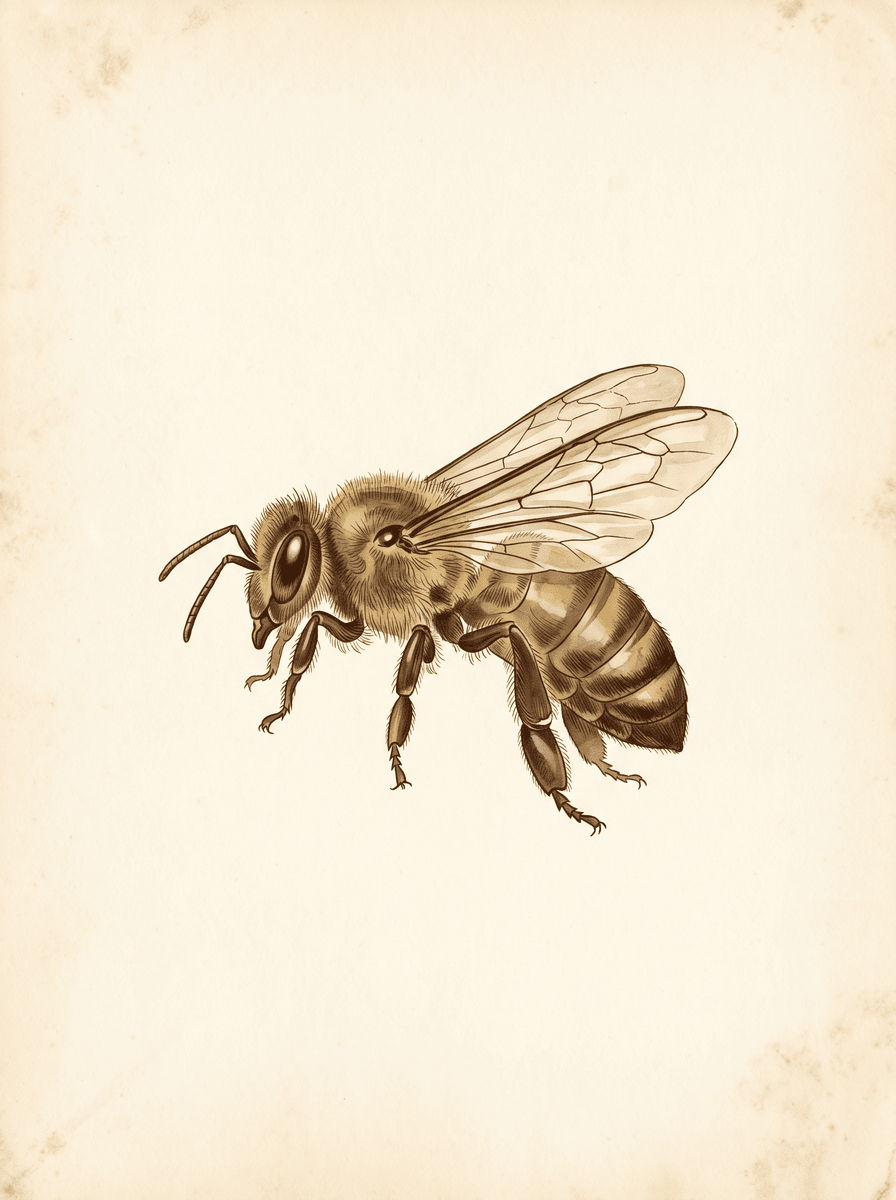
The western honey bee is a newcomer here. It is native to Europe, the Middle East and Africa, and the first known introduction to what is now the United States came in 1622. Here is how to read one at the flower, how to tell a worker from a drone, and what the research says about honey bees and the native bees they share flowers with.
Apis mellifera (AY-pis mel-LIF-er-uh) · Apidae (AY-pih-dee) · about 1/2 in (10–15 mm) long · introduced
Researchers pulled together 80 published surveys of which insects visit which flowers in natural habitats around the world (scientists call these networks). On average, honey bees made about one visit in eight (12.64%), but in a typical survey their share was far lower (a median of 1.56%). They turned up in 54 of the 80 and were the most frequent visitor in 17 (Hung et al., 2018). Even where they were present, they went unrecorded on nearly half of the plant species. The authors argue that a diverse mix of other pollinators matters for most flowering plants in natural habitats (Hung et al., 2018).
§ 01What you'll see, and when
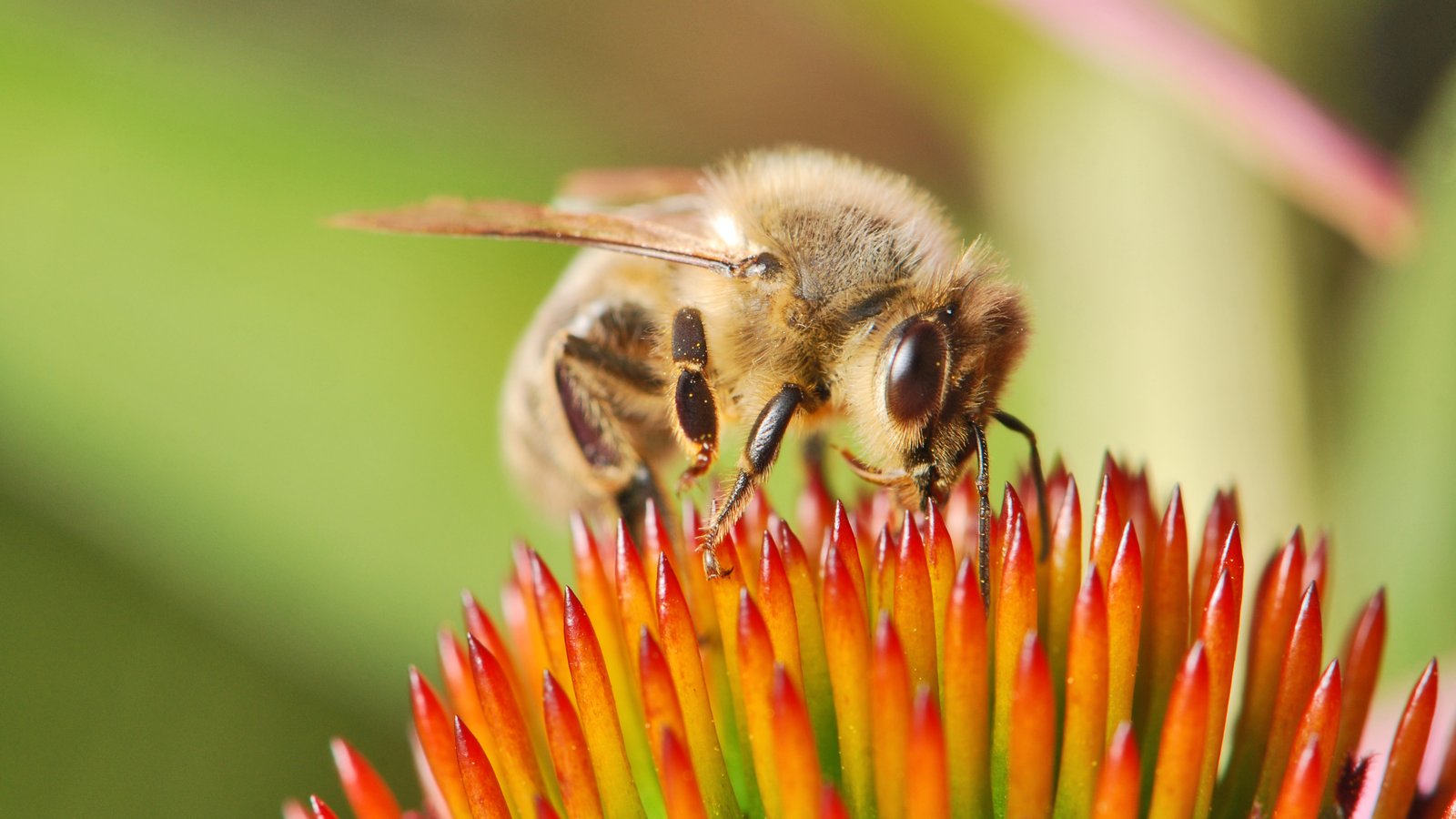
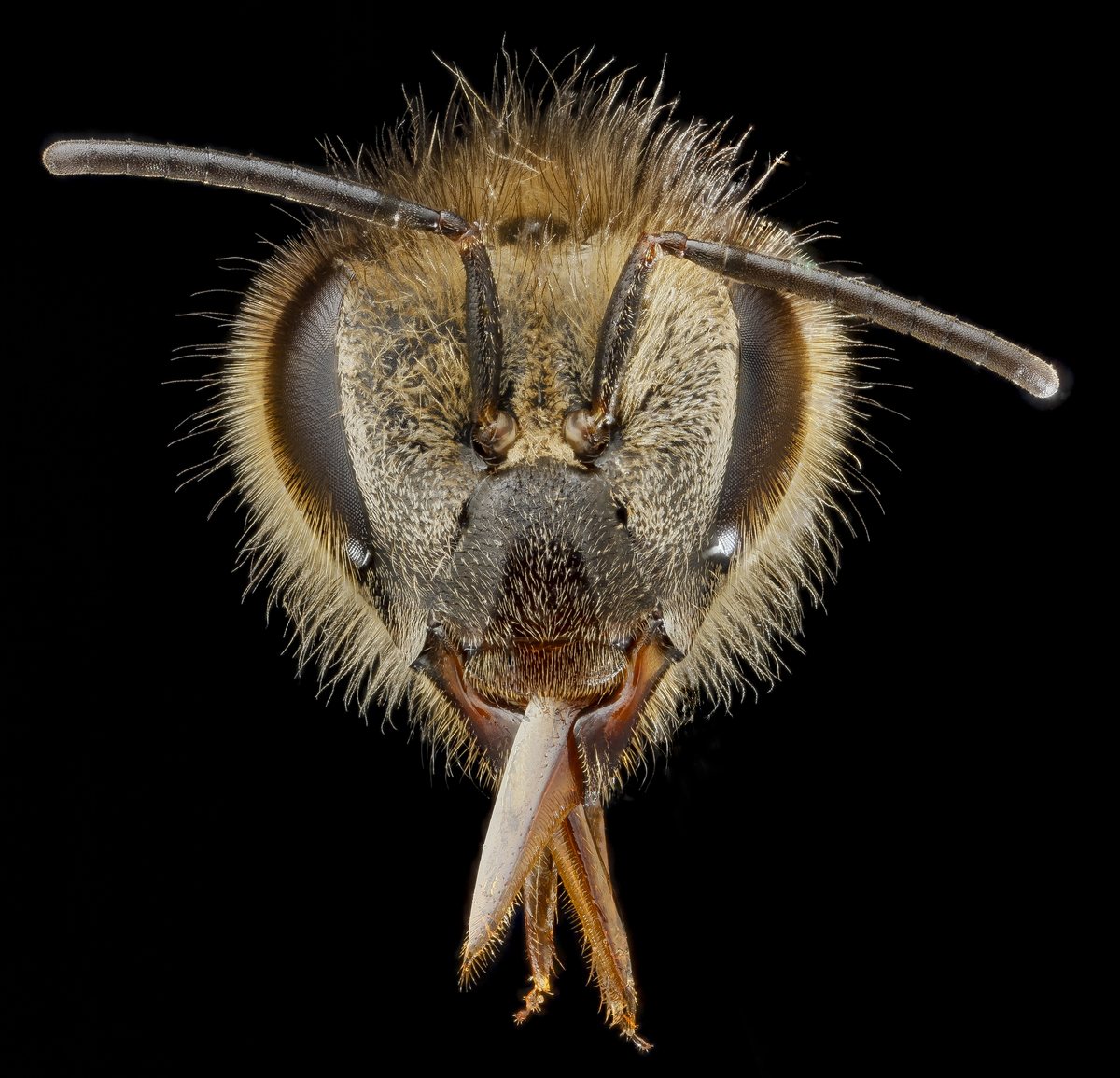
A honey bee is about half an inch long. A Montana State University identification guide gives 10 to 15 mm. Look for a heart-shaped head, hairy eyes, a striped, barrel-shaped abdomen in shades from black to amber-brown, and a pollen basket on each hind leg (Delphia et al., n.d.). Its body is covered in branched hairs (Mortensen et al., 2024). The bees you see on flowers are the colony's oldest workers, the foragers (Mortensen et al., 2024).
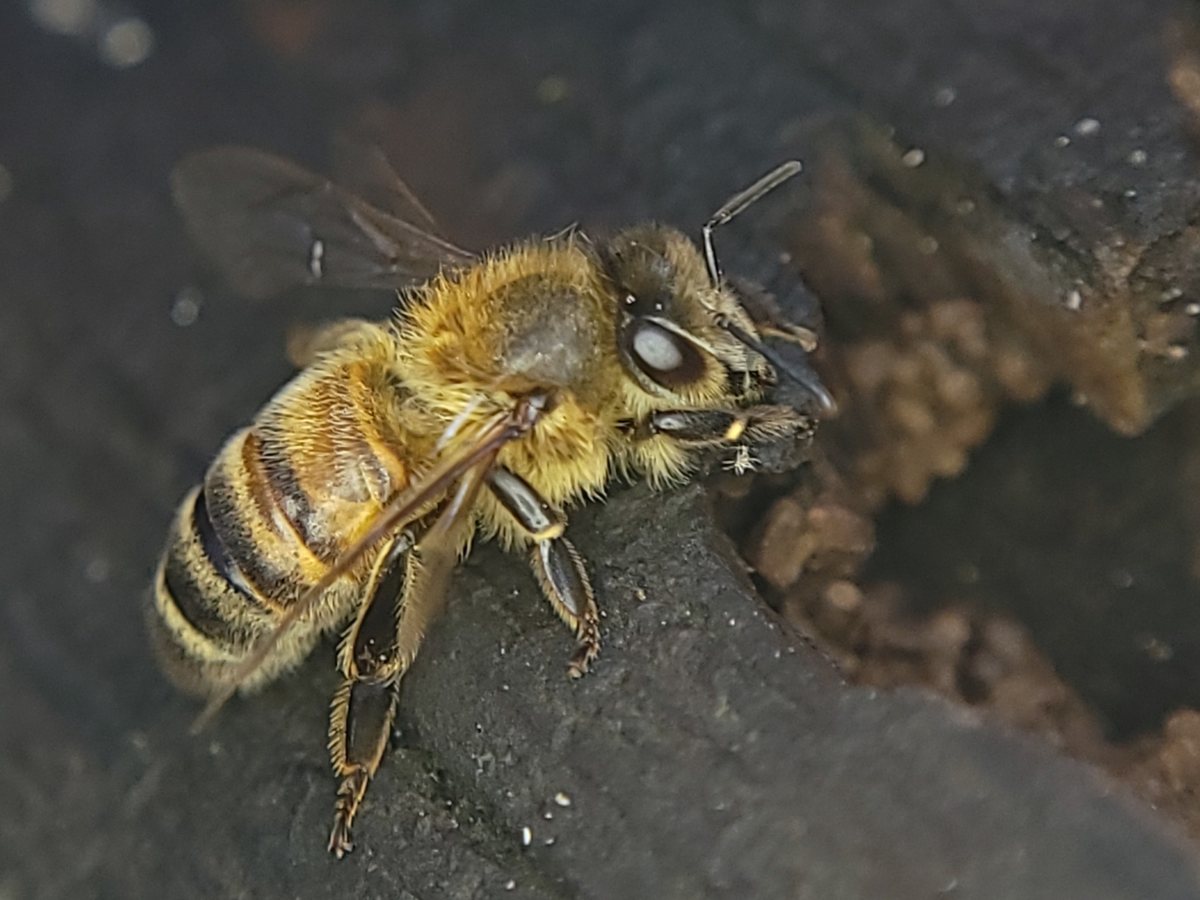
Weather sets the schedule. The University of Maine uses 54°F as a conservative minimum for honey bee flight when timing pesticide sprays; flight is most active from 72 to 77°F and continues up to about 100°F (University of Maine Cooperative Extension, n.d.). The same page notes that rain, or wind over 15 mph, can stop foraging even in good temperatures and sun (University of Maine Cooperative Extension, n.d.).
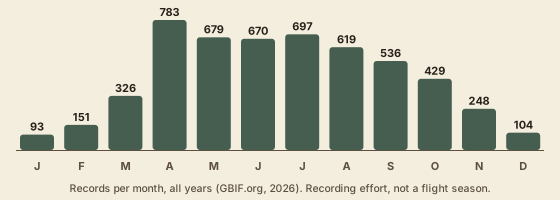
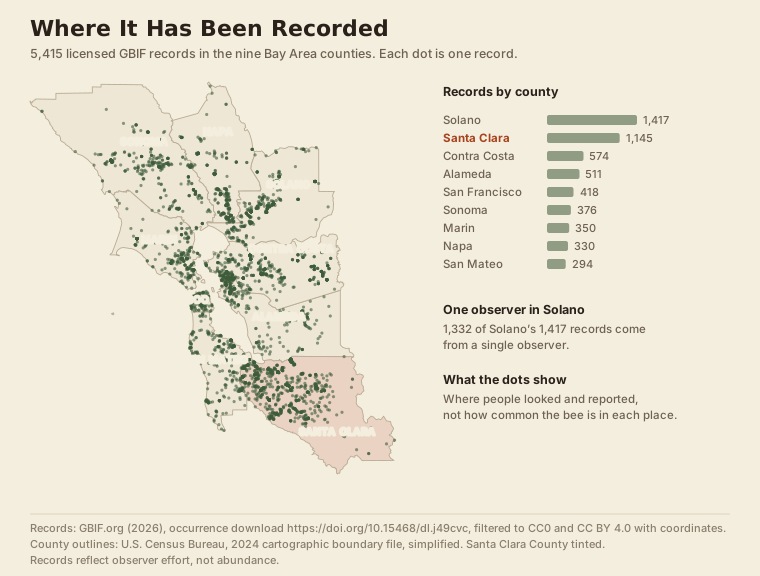
A study that trapped pollen from returning foragers at urban and suburban apiaries (bee yards) in four states sampled colonies in winter in California (the Bay Area and Sacramento) and Florida. In both states, the winter pollen came mostly from trees and shrubs that bloom early (Lau et al., 2019). Bay Area records include every month of the year.
§ 02Workers, drones and the queen
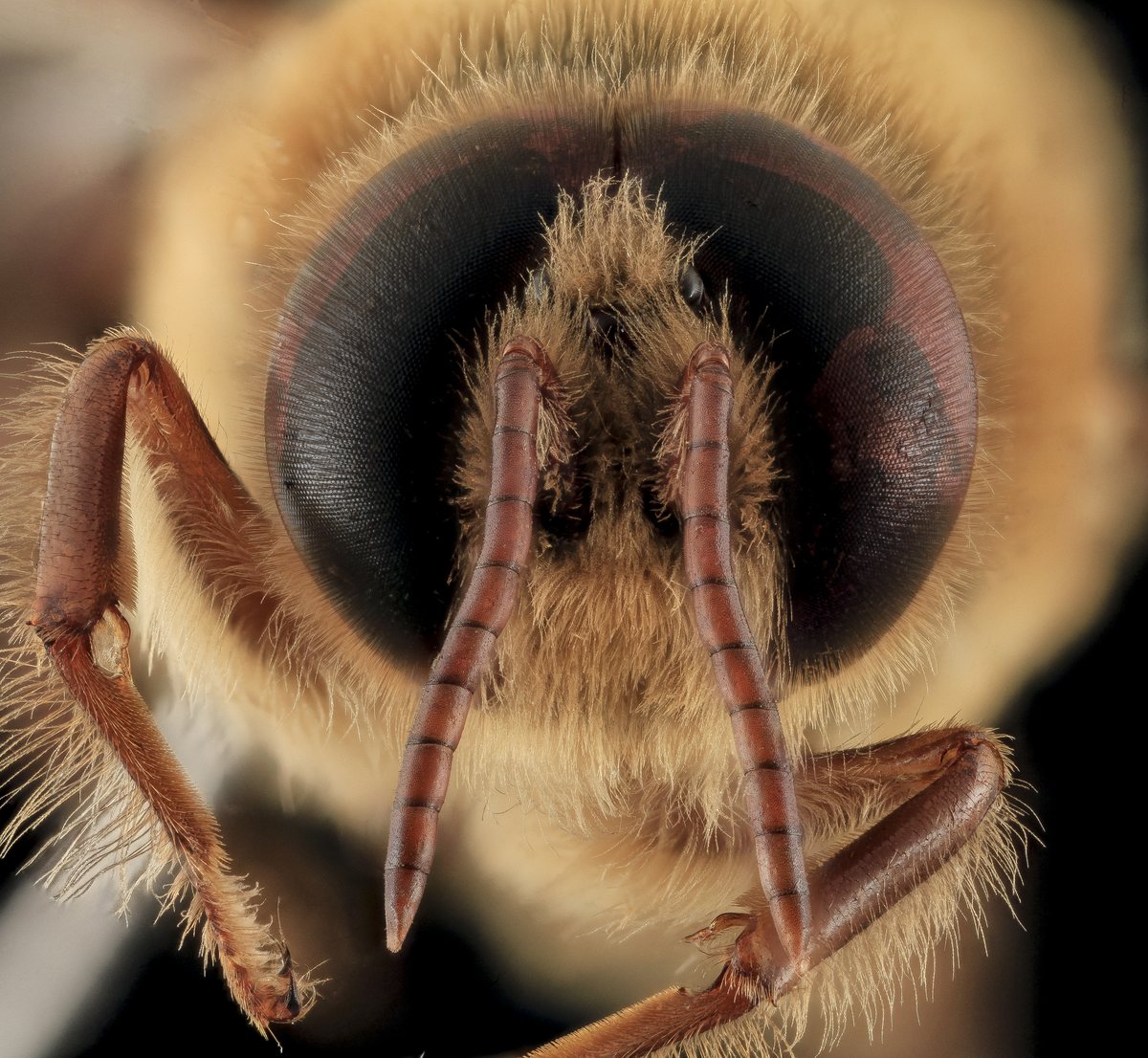
A colony has three castes, or kinds of bee: workers, drones and a queen. Fertilized eggs become females and unfertilized eggs become drones, the males (Mortensen et al., 2024). Workers are females that don't reproduce, and they are the smallest of the three (Mortensen et al., 2024). Larval diet decides which female a larva becomes: larvae raised on pollen, nectar and brood food become workers, while those given a richer diet that includes royal jelly become queens (Mortensen et al., 2024).
The drone is the one to learn first. EDIS (the Electronic Data Information Source), the extension publication library of the University of Florida Institute of Food and Agricultural Sciences (UF/IFAS), describes its eyes as large and "more 'fly-like,' touching in the top center of the head," and its abdomen as thick and blunt at the tip, bullet-shaped rather than pointed (Mortensen et al., 2024). Only females have a sting, because the sting is a modified egg-laying tube, so a drone can't sting (Mortensen et al., 2024). The queen is the colony's only egg layer, with a longer and plumper abdomen than a worker's, and she can lay up to 1,500 eggs a day (Mortensen et al., 2024).
§ 03The flowers its body fits
Workers carry pollen home in a corbicula (kor-BIK-yoo-luh), a pollen basket, on each hind leg (Mortensen et al., 2024). Bumble bees have the same baskets (Moisset & Buchmann, 2011). What a honey bee doesn't do is buzz-pollinate. In buzz pollination, a bee grips a flower and vibrates its flight muscles to shake the pollen loose, which flowers such as blueberries, cranberries and eggplants require (Moisset & Buchmann, 2011). The U.S. Department of Agriculture (USDA) Forest Service guide says plainly that honey bees do not buzz pollinate, and a 2022 review, citing earlier studies, says nobody has seen a honey bee buzz a flower to collect pollen (Moisset & Buchmann, 2011; Vallejo-Marín, 2022).
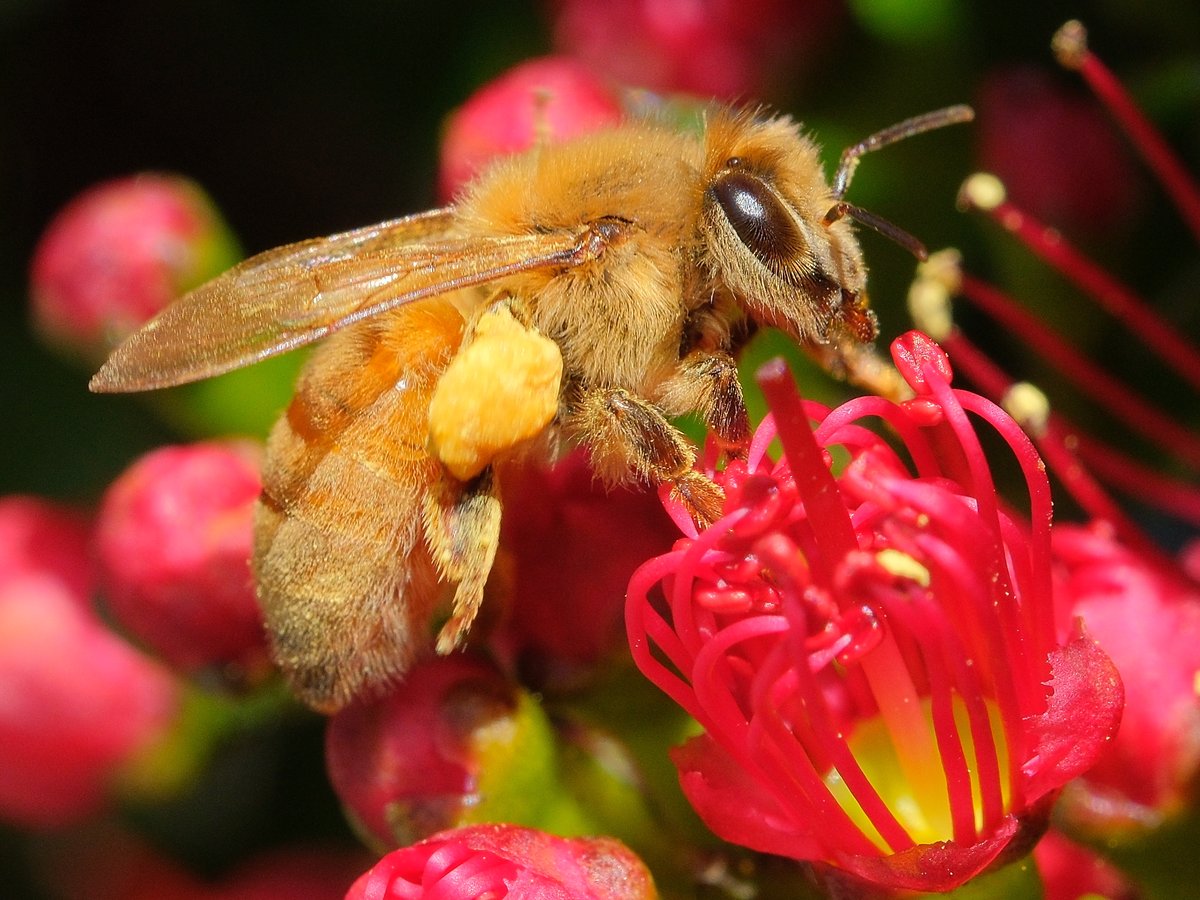
As a species it is a generalist. A worldwide analysis, citing earlier studies, calls it the pollinator with the greatest diet breadth, meaning the widest range of flowers visited, of any studied (Hung et al., 2018). A colony doesn't spread its effort evenly, though. In the California spring samples, the pollen mix was low in what researchers call evenness (a few kinds made up most of it), and the authors took that as a sign that foragers likely favored a few sources in each collection (Lau et al., 2019). In the California apiaries, most spring pollen came from the rose, mustard, myrtle and oak families (Lau et al., 2019). Eucalyptus, in the myrtle family, was collected year-round, though the authors note that its pollen is generally regarded as nutritionally poor (Lau et al., 2019). Crape myrtle was a secondary source in California (Lau et al., 2019).
At 11 coastal sage scrub sites in San Diego County in 2016, 73% of the 13,785 insects recorded at the flowers of 45 plant species were honey bees (Hung et al., 2019). Their share rose with the number of flowers a plant had, so they took the biggest share at the most abundant bloomers, while native insects often outnumbered them on plants with fewer flowers (Hung et al., 2019).
What its young need
Larvae destined to be workers are fed pollen, nectar and brood food; future queens get royal jelly along with pollen and nectar (Mortensen et al., 2024). Nectar is turned into honey inside the colony, through enzymes and drying (Mortensen et al., 2024). Water matters too. An Arkansas extension specialist explains that honey bees need extra water in summer to cool the hive: they spread small drops of water around the hive, then fan their wings, and the moving air evaporates the water and takes heat with it (University of Arkansas System Division of Agriculture, 2022).
Sages, lavender and oregano. For Oregon gardens, Oregon State University Extension recommends shrubs and flowering plants of the bean and mint families, naming clovers, vetches, trefoils, lavender, sages and oregano, and says this habitat serves both honey bees and common native bees (Melathopoulos & Sagili, 2025).
Black sage, white sage and California buckwheat. These were among the most abundant insect-pollinated plants at the San Diego coastal sage scrub sites where honey bees made up most of the flower visitors (Hung et al., 2019). They come from one study's description of the plants that were often most abundant at sites where honey bees made most of the flower visits, not from a list picked to help them.
Our advice is to plant generously and in variety. At wildflower plantings beside almond orchards in California’s Central Valley, the researchers judged that the benefit of adding flowers seems to outweigh the competition between bees, pointing to a separate study at the same sites in which the plantings boosted reproduction of two native bees (Page & Williams, 2023), who cite work by Rundlöf and colleagues.
§ 04Life cycle, and where it lives
From egg to adult takes about two to three and a half weeks, depending on caste (Mortensen et al., 2024). Eggs hatch after 3 days. Larvae feed for 6 days as workers, 6.5 as drones and 5.5 as queens. Pupae take 12 days for workers, 14.5 for drones and 8 for queens. EDIS puts the totals at 24 days for drones, 21 for workers and 15 to 16 for queens (Mortensen et al., 2024), and another UF/IFAS page gives the queen 16 days (Ellis & Ellis, 2025). Africanized honey bees develop faster: UF/IFAS lists 14 days from egg to adult for queens and 19 to 20 for workers (Ellis & Ellis, 2025).
Colonies reproduce by swarming. EDIS explains that swarming is how a colony makes new colonies rather than only new bees. The old queen leaves with about two-thirds of the workers, and the swarm settles while scouts search for a new home, usually something enclosed such as a hollow tree (Mortensen et al., 2024). European honey bees typically swarm in spring and early summer (Mortensen et al., 2024). When honey bees first escaped from colonists’ hives in North America, they swarmed and nested in hollow trees (Moisset & Buchmann, 2011), and a wild colony can also move into a house wall, a mailbox or a similar spot close to people (Mortensen et al., 2024).
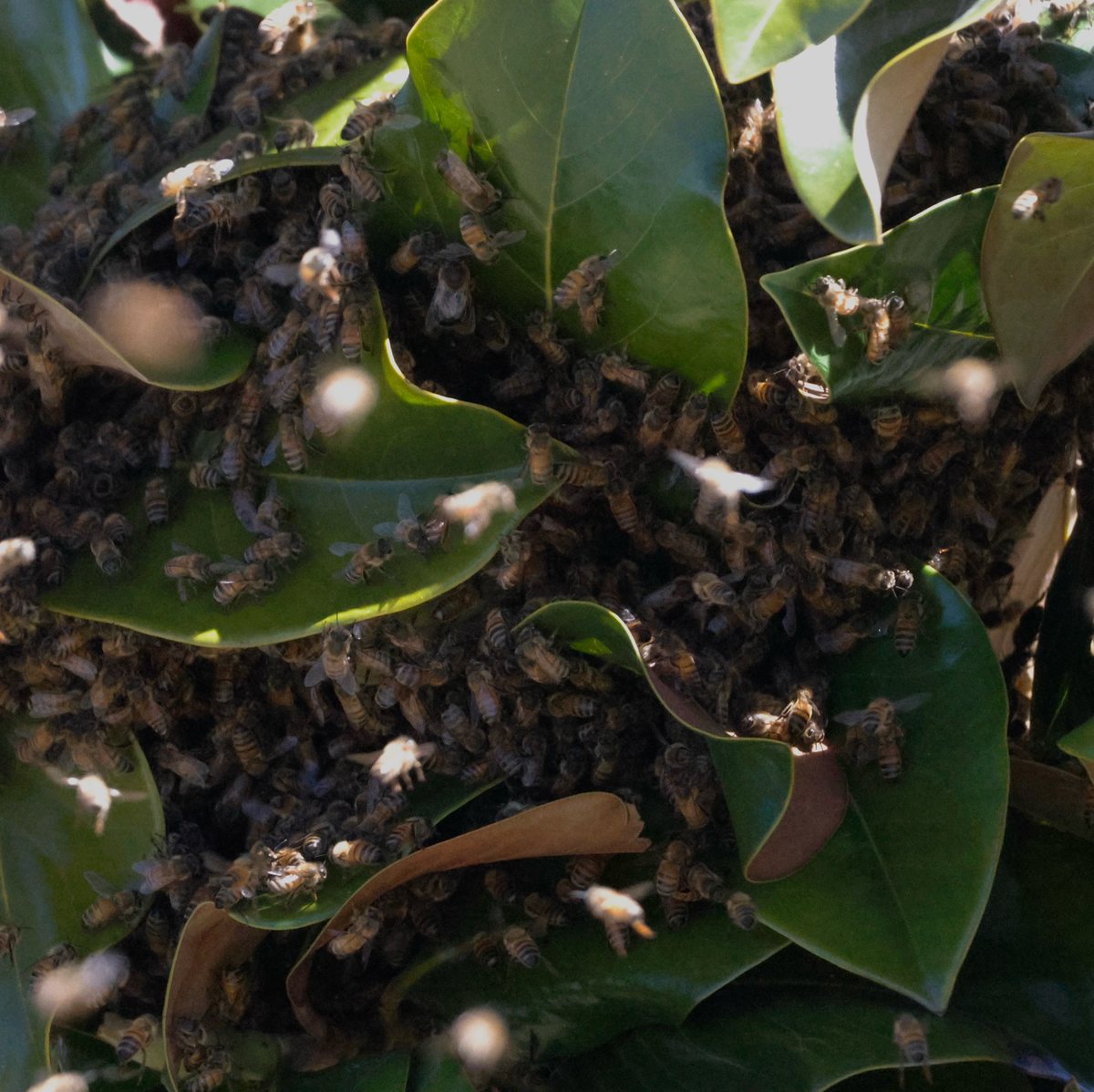
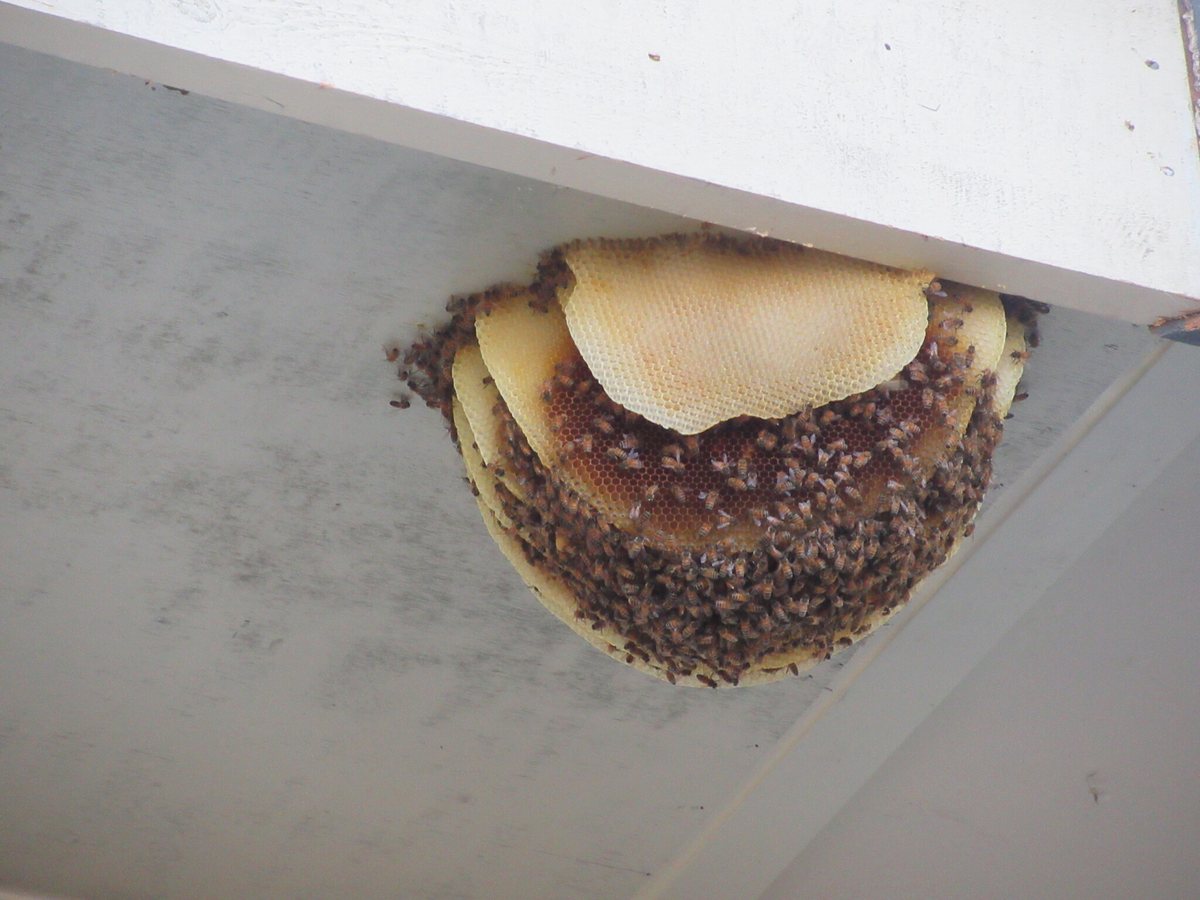
Tennessee's state apiary program says a swarm is very docile for the first 24 to 36 hours after it lands, and usually moves on within 24 to 48 hours; once the new colony starts raising brood, it turns defensive of its home (Tennessee Department of Agriculture, n.d.). NC State Extension calls swarms in North Carolina “pretty docile” because they aren't defending a nest (NC State Extension, 2012). Both pages describe European honey bees. As of 2012, UF/IFAS reported African honey bees from states including Texas, California and Florida (Ellis & Ellis, 2025), and they do occur in the Bay Area (Lin et al., 2018; see § 07). UF/IFAS says swarming bees are docile in both races, European and Africanized (Ellis & Ellis, 2025). Africanized colonies swarm more often with fewer bees in each swarm, so they don’t need a large cavity and are often found nesting in water meter boxes (Ellis & Ellis, 2025; O’Malley et al., 2019).
What to do comes from Contra Costa County’s mosquito and vector control district. If a swarm isn’t an immediate threat, the district says it’s best left alone, and swarms there typically move on in a day or two (Contra Costa Mosquito and Vector Control District, n.d.). Don’t swat at or threaten the bees: the district warns that doing so may make them release a pheromone that turns other bees aggressive in defense of the colony (Contra Costa Mosquito and Vector Control District, n.d.). For collection or removal, it sends residents to a local beekeepers’ association, a colony-removal specialist or a pest control company, and for a stinging incident that needs emergency services, to 911 (Contra Costa Mosquito and Vector Control District, n.d.).
How far a colony forages depends on the season and the setting. Honey bees tell nestmates where they found flowers with a waggle dance (Couvillon et al., 2014). At three observation hives in countryside just outside Brighton, England, the average distance the dances signaled was about 493 m (a third of a mile) in spring, 2,156 m (1.3 miles) in summer and 1,275 m (0.8 mile) in autumn (Couvillon et al., 2014). Oregon State University Extension, summarizing a study of urban honey bees, says 78% of foraging trips stayed within 0.31 miles of the hive and 92% within 0.75 miles, though bees can travel farther (Melathopoulos & Sagili, 2025).
§ 05Range, and where it has been recorded
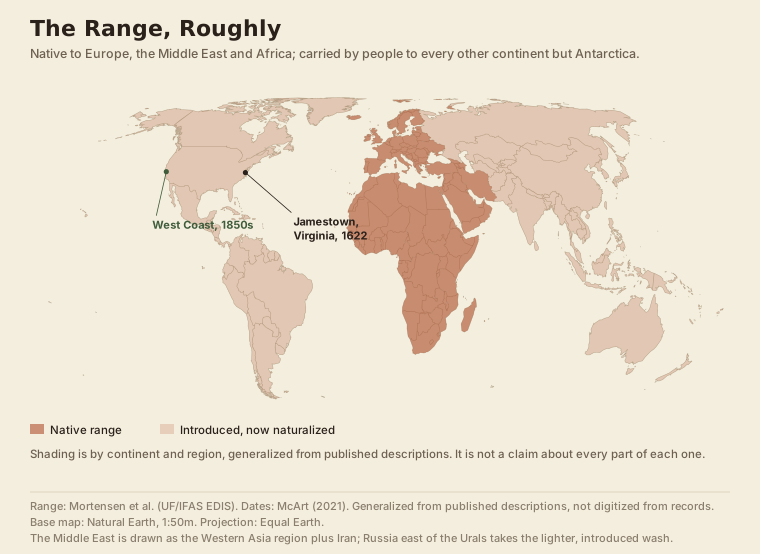
The western honey bee’s natural home is Europe, the Middle East and Africa, and none of its 20-plus subspecies is native to the Americas (Mortensen et al., 2024). European races are now naturalized on every continent except Antarctica (Mortensen et al., 2024). The first known introduction to what is now the United States was at Jamestown, Virginia, in 1622, and numerous introductions reached the West Coast, including California, in the 1850s (McArt, 2021).
§ 06Lookalikes
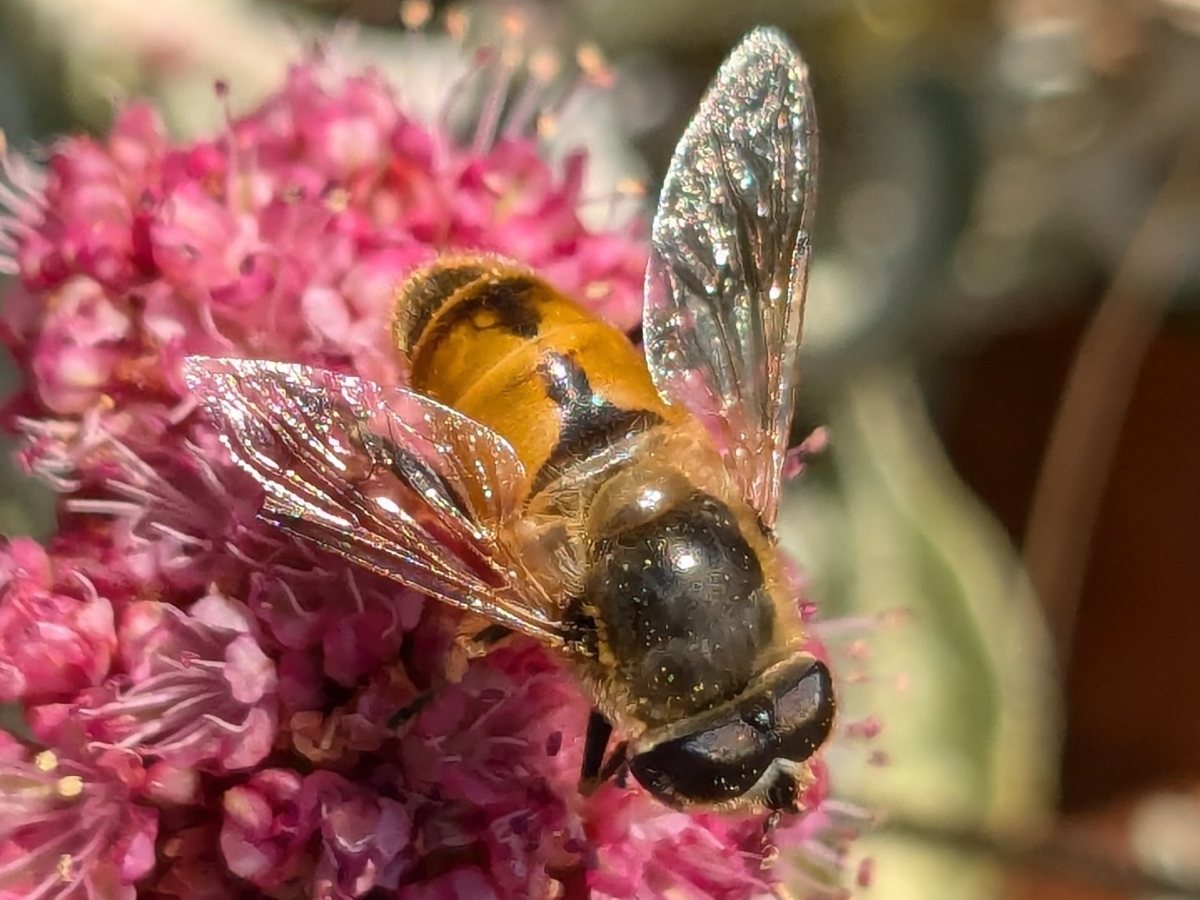
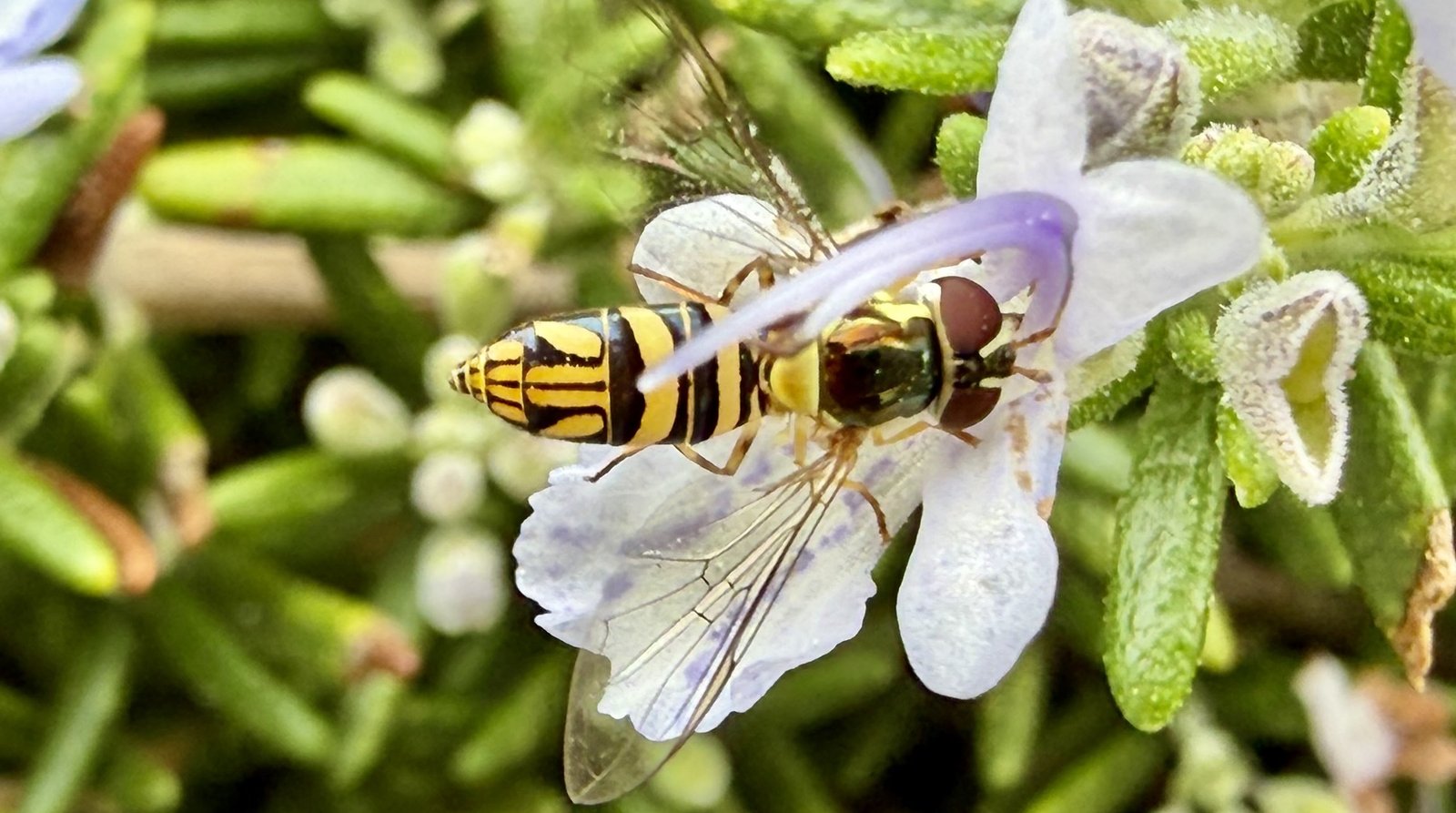
Drone fly (Eristalis tenax, pronounced er-ISS-tuh-lis TEN-ax)
How to tell it apart. The Royal Entomological Society notes that, unlike a bee, it has one pair of wings, large eyes, inconspicuous antennae, no narrow waist and no sting (Royal Entomological Society, n.d.).
Notes. A fly, covered in our hover fly plate.
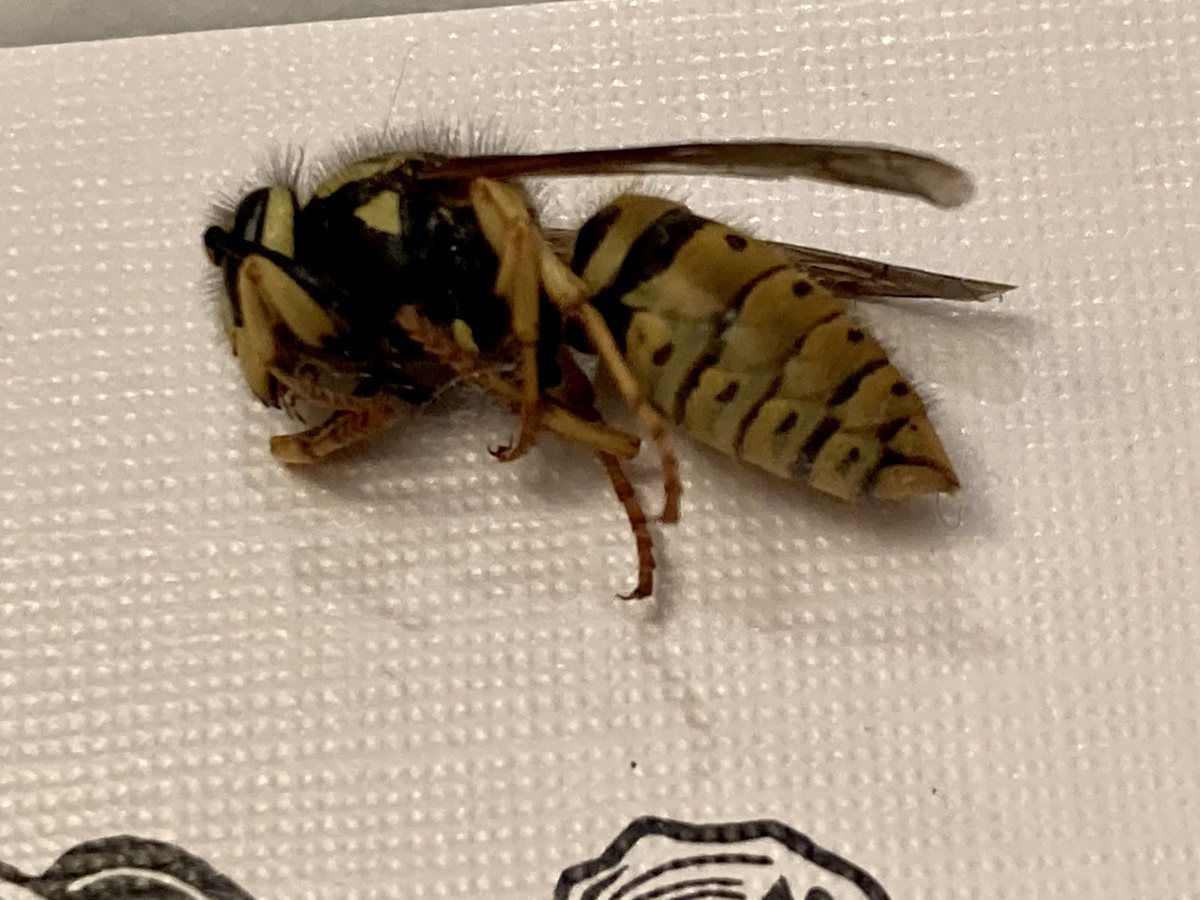
Yellowjackets (Vespula, pronounced VES-pyoo-luh)
How to tell it apart. About the same size, but bright yellow and black where a honey bee is a dull yellow-orange, and mostly hairless where a honey bee is covered in small hairs (University of Illinois Extension, 2021). They aren't seen carrying pollen (Texas Apiary Inspection Service, n.d.).
Notes. Wasps in general tend to be more slender and less hairy than bees (NC State Extension, n.d.).
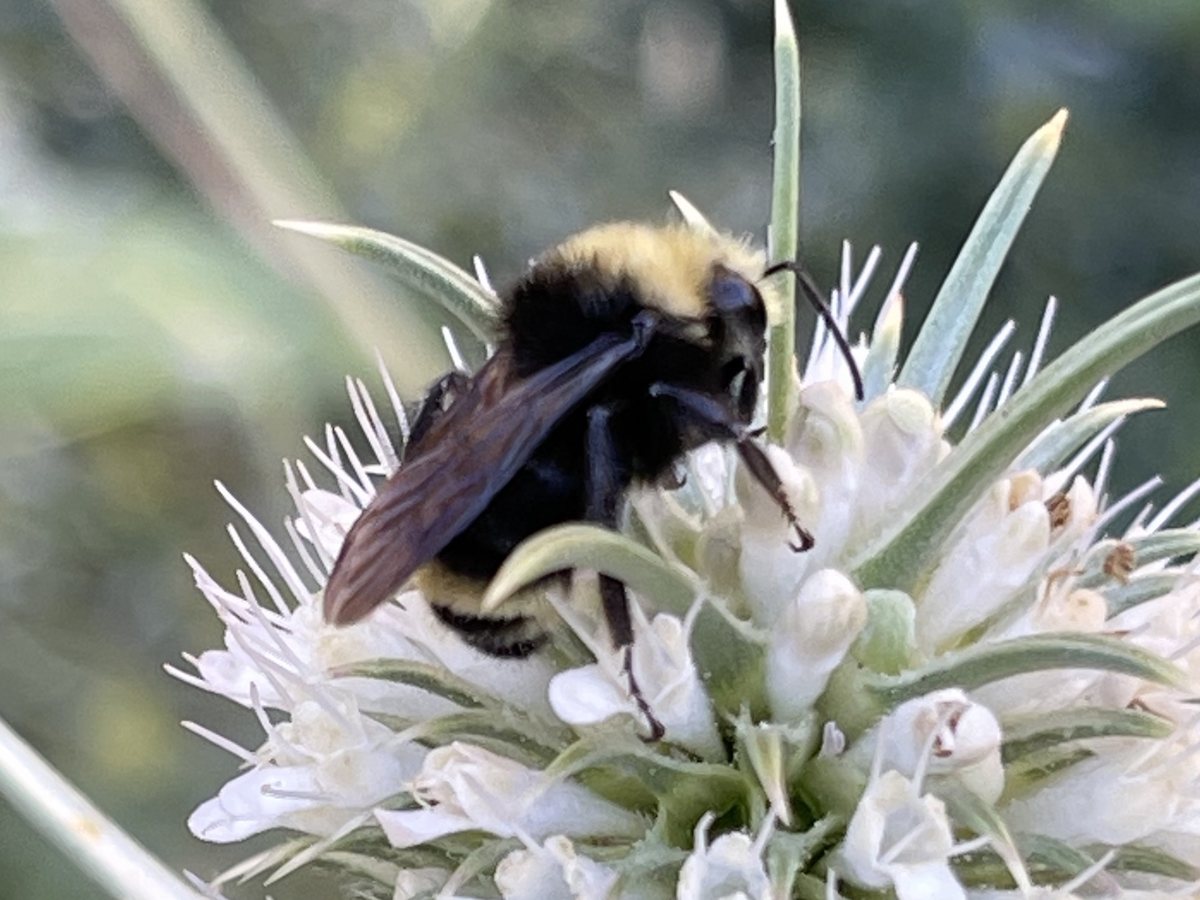
Bumble bees (Bombus)
How to tell it apart. Bigger and furrier, mostly black, banded in yellow, white or even bright orange (Moisset & Buchmann, 2011).
Notes. They carry pollen in baskets too, and unlike honey bees they buzz-pollinate (Moisset & Buchmann, 2011).
§ 07Native or introduced, and the pressures on it
Introduced. The USDA Forest Service guide notes that America had no honey bees until European settlers brought hives (Moisset & Buchmann, 2011), and none of the western honey bee’s subspecies is native to the Americas (Mortensen et al., 2024). A fossil honey bee, Apis nearctica (AY-pis nee-ARK-tih-kuh), is known from Middle Miocene rocks in Nevada (Takahashi & Takahashi, 2025, citing a 2009 description by Engel and colleagues).
Honey bees and native bees
The research on this question has shifted. A 2017 systematic review found that 53% of competition studies reported negative effects on wild bees, 28% none and 19% mixed, and concluded there was little evidence that competition leads to wild bee population declines (Mallinger et al., 2017). An updated 2022 review looked at 79 studies of competition for flowers and found that 68% reported or inferred harm (Iwasaki & Hogendoorn, 2022). Most of that evidence comes from studies of flower visits and foraging. Only 7 studies measured wild bee reproduction, and all but one found negative effects (Iwasaki & Hogendoorn, 2022). The authors conclude that the evidence increasingly suggests managed and introduced bees harm wild bees (Iwasaki & Hogendoorn, 2022).
The clearest California example is a study of wildflower plantings beside almond orchards in the Central Valley and of mountain meadows in the Sierra Nevada. Going from the fewest honey bees to the most, the study predicted that the chance of finding nectar in a flower fell 67% at the plantings and 91% in the meadows. Native bees also shifted which flowers they visited (Page & Williams, 2023). The authors suggest native bees can adapt this way, but that shrinking pollen and nectar supplies point to a limit on how far the two can share a place. They also warn that honey bees, even at moderate numbers, may disturb local ecosystems, so new hives in sensitive habitat call for extreme caution (Page & Williams, 2023). Studies elsewhere point the same way. In a three-year experiment on one plot in Tenerife's Teide National Park, very dense apiaries brought in each season reduced the diversity of wild pollinators (Valido et al., 2019). On the eastern Tibetan Plateau, four of six common native bee species were scarcer near apiaries, and five rare species turned up only in plots far from them (An & Sun, 2025).
What remains unsettled is the long run. Oregon State University Extension notes that no one has yet shown how competition would change which bee species live in an area over time (Melathopoulos & Sagili, 2025), and Page and Williams call the question of whether competition drives extinctions unresolved (Page & Williams, 2023).
The native bees themselves get their own plates on the Pollinator Library shelf.
Africanized honey bees in the Bay Area
Since 1994, Africanized honey bees have spread north in California from the two counties on the Mexican border (Kono & Kohn, 2015). A survey published in 2018 tested bees’ mitochondrial DNA, which is inherited from the mother (Kono & Kohn, 2015), for African origin. It turned up in 3.7% of 191 bees sampled in Santa Clara County, 2.5% of 277 in Contra Costa and 2.3% of 43 in Alameda. In Monterey County the figure was 17.7% of 496. The authors describe San Francisco as well sampled and found none there (Lin et al., 2018). The mitochondrial test can overstate how African a population is. A study that looked across the bees' whole genome found African ancestry tapering to about zero at Davis, its northernmost site, and noted that mitochondrial surveys like these may have somewhat overestimated it (Calfee et al., 2020). A survey published in 2015 had found that north of 35.5°N latitude, just 6 of 233 bees carried African mitochondria (Kono & Kohn, 2015).
Stings
European honey bees rarely sting without provocation, and a sting releases an alarm scent that draws more bees to the spot (Mortensen et al., 2024). A worker's sting is barbed. Stinging a vertebrate can tear it out, and the sting keeps working in the skin for a short time (Ramirez-Esquivel & Ravi, 2023). A worker usually doesn't survive losing it, though earlier studies report that this can take 18 to 114 hours, and the bee may keep defending the hive in the meantime (Ramirez-Esquivel & Ravi, 2023, citing earlier work). The queen's sting has reduced barbs, so she survives using it (Mortensen et al., 2024).
Mites, weather and colony losses
UF/IFAS calls the varroa (VAIR-oh-uh) mite “the world’s most devastating pest” of western honey bees (Ellis & Zettel Nalen, 2010). It is native to Asia, where its natural host is the Asian honey bee (Ellis & Zettel Nalen, 2010). The viruses it carries may do most of the damage (Ellis & Zettel Nalen, 2010). In a USDA survey of U.S. operations with five or more colonies, varroa was the stressor (the survey's word for a problem affecting colonies) that beekeepers reported most in every quarter of 2025 (National Agricultural Statistics Service, 2026). From January through March 2026, those operations lost 454,890 colonies, or 16% (National Agricultural Statistics Service, 2026). On January 1, 2026, those operations held 2.81 million colonies, up 6% from a year earlier (National Agricultural Statistics Service, 2026). A study across the United States links colony losses to parasites, extreme weather and pesticides among other potential drivers (Insolia et al., 2022).
Photo and map credits
Hero: Bernie, Wikimedia Commons, public domain. Pollen baskets: Pseudopanax, Wikimedia Commons, public domain. Worker: Theo Summer, iNaturalist, CC0. Worker and drone faces: USGS Bee Inventory and Monitoring Lab, public domain. Swarm: Ben, iNaturalist, CC0. Colony under an eave: Dorothy Johnson, iNaturalist, CC0. Drone fly: P Holroyd, iNaturalist, CC BY 4.0. Western yellowjacket: Andrew J. Crawford, iNaturalist, CC0. Yellow-faced bumble bee: Barbara Banfield, iNaturalist, CC BY 4.0. Maps and chart: The Planters' Guild, from GBIF.org (2026) records, county outlines (U.S. Census Bureau, 2024) and Natural Earth base data.
An, R., & Sun, S. (2025). Introduced western honeybees dramatically reduce the abundance of wild bees in alpine meadows, eastern Tibet Plateau. Biology, 14(9), 1186. https://doi.org/10.3390/biology14091186
Calfee, E., Agra, M. N., Palacio, M. A., Ramírez, S. R., & Coop, G. (2020). Selection and hybridization shaped the rapid spread of African honey bee ancestry in the Americas. PLOS Genetics, 16(10), e1009038. https://doi.org/10.1371/journal.pgen.1009038 (University of California authors; flagged under the Guild’s source policy.)
Contra Costa Mosquito and Vector Control District. (n.d.). Services and programs. Retrieved October 10, 2026, from https://www.contracostamosquito.gov/services-and-programs
Couvillon, M. J., Schürch, R., & Ratnieks, F. L. W. (2014). Waggle dance distances as integrative indicators of seasonal foraging challenges. PLOS ONE, 9(4), e93495. https://doi.org/10.1371/journal.pone.0093495
Delphia, C. M., O’Neill, K. M., & Prajzner, S. (n.d.). Montana bee identification guide. Montana State University Extension and Pollinator Partnership. Retrieved October 1, 2026, from https://fdn.montana.edu/extension/flathead/documents/ag/spiders-insects/Montana%20Bee%20Identification%20Guide.pdf
Ellis, J. D., & Ellis, A. (2025). African honey bee, Africanized honey bee, killer bee, Apis mellifera scutellata Lepeletier (EENY-429). EDIS, UF/IFAS Extension. https://edis.ifas.ufl.edu/publication/IN790 (Original work published 2022)
Ellis, J. D., & Zettel Nalen, C. M. (2010). Varroa, Varroa destructor Anderson and Trueman (EENY-473). EDIS, UF/IFAS Extension. https://edis.ifas.ufl.edu/publication/IN855
GBIF.org. (2026, October 10). GBIF occurrence download [Data set]. https://doi.org/10.15468/dl.j49cvc
Hung, K.-L. J., Kingston, J. M., Albrecht, M., Holway, D. A., & Kohn, J. R. (2018). The worldwide importance of honey bees as pollinators in natural habitats. Proceedings of the Royal Society B, 285(1870), 20172140. https://doi.org/10.1098/rspb.2017.2140 (University of California authors; flagged under the Guild’s source policy.)
Hung, K.-L. J., Kingston, J. M., Lee, A., Holway, D. A., & Kohn, J. R. (2019). Non-native honey bees disproportionately dominate the most abundant floral resources in a biodiversity hotspot. Proceedings of the Royal Society B, 286(1897), 20182901. https://doi.org/10.1098/rspb.2018.2901 (University of California authors; flagged under the Guild’s source policy.)
Insolia, L., Molinari, R., Rogers, S. R., Williams, G. R., Chiaromonte, F., & Calovi, M. (2022). Honey bee colony loss linked to parasites, pesticides and extreme weather across the United States. Scientific Reports, 12, 20787. https://doi.org/10.1038/s41598-022-24946-4
Iwasaki, J. M., & Hogendoorn, K. (2022). Mounting evidence that managed and introduced bees have negative impacts on wild bees: An updated review. Current Research in Insect Science, 2, 100043. https://doi.org/10.1016/j.cris.2022.100043
Kono, Y., & Kohn, J. R. (2015). Range and frequency of Africanized honey bees in California (USA). PLOS ONE, 10(9), e0137407. https://doi.org/10.1371/journal.pone.0137407 (University of California authors; flagged under the Guild’s source policy.)
Lau, P., Bryant, V., Ellis, J. D., Huang, Z. Y., Sullivan, J., Schmehl, D. R., Cabrera, A. R., & Rangel, J. (2019). Seasonal variation of pollen collected by honey bees (Apis mellifera) in developed areas across four regions in the United States. PLOS ONE, 14(6), e0217294. https://doi.org/10.1371/journal.pone.0217294
Lin, W., McBroome, J., Rehman, M., & Johnson, B. R. (2018). Africanized bees extend their distribution in California. PLOS ONE, 13(1), e0190604. https://doi.org/10.1371/journal.pone.0190604 (University of California authors; flagged under the Guild’s source policy.)
Mallinger, R. E., Gaines-Day, H. R., & Gratton, C. (2017). Do managed bees have negative effects on wild bees?: A systematic review of the literature. PLOS ONE, 12(12), e0189268. https://doi.org/10.1371/journal.pone.0189268
McArt, S. (2021). The genealogy of honey bees in the United States. American Bee Journal, 161(4), 417–420. https://blogs.cornell.edu/mcartlab/files/2021/03/04-McArt-article_April2021.pdf
Melathopoulos, A., & Sagili, R. (2025). The impact of beekeeping on native bees in urban settings (EM 9524). Oregon State University Extension Service. https://extension.oregonstate.edu/catalog/em-9524-impact-beekeeping-native-bees-urban-settings
Moisset, B., & Buchmann, S. (2011). Bee basics: An introduction to our native bees (FS-960). USDA Forest Service and Pollinator Partnership. https://www.fs.usda.gov/wildflowers/pollinators/documents/BeeBasics.pdf
Mortensen, A. N., Schmehl, D. R., & Ellis, J. (2024). European honey bee, Apis mellifera Linnaeus and subspecies (EENY568). EDIS, UF/IFAS Extension. https://edis.ifas.ufl.edu/publication/IN1005 (Original work published 2013)
National Agricultural Statistics Service. (2026, August 3). Honey bee colonies (ISSN 2470-993X). U.S. Department of Agriculture. https://usda.library.cornell.edu/concern/publications/rn301137d
NC State Extension. (2012). Pest alert: Bees. Retrieved October 1, 2026, from https://ipm.ces.ncsu.edu/news/pest-alert-bees
NC State Extension. (n.d.). Non-honey bee stinging insects in North Carolina. Retrieved October 1, 2026, from https://content.ces.ncsu.edu/publication/non-honeybee-stinging-insects-in-north-carolina
O’Malley, M. K., Ellis, J. D., & Zettel Nalen, C. M. (2019). Differences between European and African honey bees (ENY-147). EDIS, UF/IFAS Extension. https://edis.ifas.ufl.edu/publication/IN784 (Original work published 2015)
Page, M. L., & Williams, N. M. (2023). Evidence of exploitative competition between honey bees and native bees in two California landscapes. Journal of Animal Ecology, 92(9), 1802–1814. https://doi.org/10.1111/1365-2656.13973 (University of California authors; flagged under the Guild’s source policy.)
Ramirez-Esquivel, F., & Ravi, S. (2023). Functional anatomy of the worker honeybee stinger (Apis mellifera). iScience, 26(7), 107103. https://doi.org/10.1016/j.isci.2023.107103
Royal Entomological Society. (n.d.). Drone fly. Insect Week. Retrieved October 1, 2026, from https://www.insectweek.org/discover-insects/true-flies/drone-fly/
Takahashi, Y., & Takahashi, J. (2025). A honey bee fossil (Hymenoptera, Apidae) from the Late Pliocene to Early Pleistocene Teragi Group, Hyogo Prefecture, Japan: Bridging a gap in Apis evolutionary history. ZooKeys, 1255, 291–301. https://doi.org/10.3897/zookeys.1255.162389
Tennessee Department of Agriculture. (n.d.). Honey bee swarms. Retrieved October 1, 2026, from https://www.tn.gov/agriculture/animals/apiary/honey-bee-swarms.html
Texas Apiary Inspection Service. (n.d.). Yellow jackets. Texas A&M AgriLife. Retrieved October 1, 2026, from https://txbeeinspection.tamu.edu/public/bee-identification/yellow-jackets/
U.S. Census Bureau. (2024). Cartographic boundary files: Counties, 1:500,000 (cb_2024_us_county_500k) [Data set]. https://www.census.gov/geographies/mapping-files/time-series/geo/carto-boundary-file.html
University of Arkansas System Division of Agriculture. (2022, June 15). Bees need watering too. Retrieved October 1, 2026, from https://uaex.uada.edu/media-resources/news/2022/june/06-15-2022-ark-bee-hydration.aspx
University of Illinois Extension. (2021, August 30). Identifying and dealing with yellowjackets. Over the Garden Fence. Retrieved October 1, 2026, from https://extension.illinois.edu/blogs/over-garden-fence/2021-08-30-identifying-and-dealing-yellowjackets
University of Maine Cooperative Extension. (n.d.). Background: Honeybee flight activity index. Retrieved October 1, 2026, from https://extension.umaine.edu/ipm/?p=15134
Valido, A., Rodríguez-Rodríguez, M. C., & Jordano, P. (2019). Honeybees disrupt the structure and functionality of plant-pollinator networks. Scientific Reports, 9, 4711. https://doi.org/10.1038/s41598-019-41271-5
Vallejo-Marín, M. (2022). How and why do bees buzz? Implications for buzz pollination. Journal of Experimental Botany, 73(4), 1080–1092. https://doi.org/10.1093/jxb/erab428