Issue 03 · September 2026
Issue 03 — September 2026
September in the Bay Area, when the native plants look their worst and the real planting window is still ahead. Plus the hand lens verdict, and the 10× lens everyone recommends came in fourth.
Editor's note
Back on schedule this month, and a day ahead of it. The first Monday is where this letter is supposed to live, but that Monday is Labor Day, and a holiday inbox is where a newsletter goes to be ignored. So you're getting it Sunday.
Issue 02 went out mid-August because I'd buried myself in publishing, and I told you then that the hand lens verdict was sliding to September. It didn't need the whole month. It went up on the 24th, and the 10× that every pest guide recommends came in fourth.
September is the month everything turns over here. The summer beds are winding down, the natives look about as rough as they're going to look, and the planting season is close enough that what you decide now is what you'll be putting in the ground in October and November. Meanwhile the houseplants that spent the summer outside are roughly six weeks from needing to come back in, and that move has an order to it that's easy to get backwards.
If anything in here is useful, or there's something you wish I'd covered, just reply. I read every one.
The night it finally turns cold is a month too late to begin.
This month in your garden
Bay Area, September. Six things worth your attention.
1. Start the houseplant move-in now. The transition takes about a month, so the night it finally turns cold is a month too late to begin. Start with light: over roughly a week, walk each plant from sun to light shade to heavy shade, then indoors (Shaughnessy et al., 2023). Skip that and you'll get yellowing and leaf drop while it adjusts. Temperatures at or below 50°F (10°C) damage a lot of tropicals, and our nights don't reliably get there until October.
2. Do the inspection outside, before anything comes through the door. Lift each plant out of its pot and look at what has crawled in through the drainage holes, then rinse the foliage and let it dry completely (Shaughnessy et al., 2023; Steil, 2025). This is the job the hand lens was bought for. Undersides of leaves, leaf axils (the joint where a leaf meets the stem), the rim of the pot, and the top inch of substrate.
3. Quarantine the returnees for three to four weeks, and stop feeding them. Anything you missed outside shows up within about a month indoors, so keep them away from the rest of the collection until then. Hold the fertilizer through fall and winter, when they aren't putting on much growth anyway, and expect the watering interval to change once they're back in lower light (Steil, 2025).
4. Call the native nurseries now. Last month I said to walk your beds and write the list. This is the month you turn that list into reserved stock, because the good plants get picked over early. The window here is late fall through winter, timed to the rains rather than the calendar (California Native Plant Society, n.d.).
5. Leave the rough-looking native plants alone. Sagebrush, buckwheat, salvia, monkeyflower: they all look half-finished right now, and that's what these plants do in a dry September. California sagebrush drops most of its large leaves as the soil dries, and leaf shedding is how it avoids long-term water stress (Hauser, 2006). Leave it alone, and leave the hose coiled.
6. The flats you started in August go in the ground. Fall brassica transplants (broccoli, cabbage, kale and their relatives) run about four to six weeks from seeding to setting out (University of Maryland Extension, 2023), so a late-August sowing lands right about now. Get them in while the soil is still warm and the roots have time to move before the light drops.
New this month, and built for exactly these calls: the Santa Clara County Planting Calendar. Sow, transplant and harvest windows for 80 crops, derived from measured local climate data rather than a generic frost chart. Every date shows its working.
From the Guild this month
Six from the site: one tool test, two on what's actually in your pots, and three on the autumn planting season.
The Workshop · Tool Test No. 01
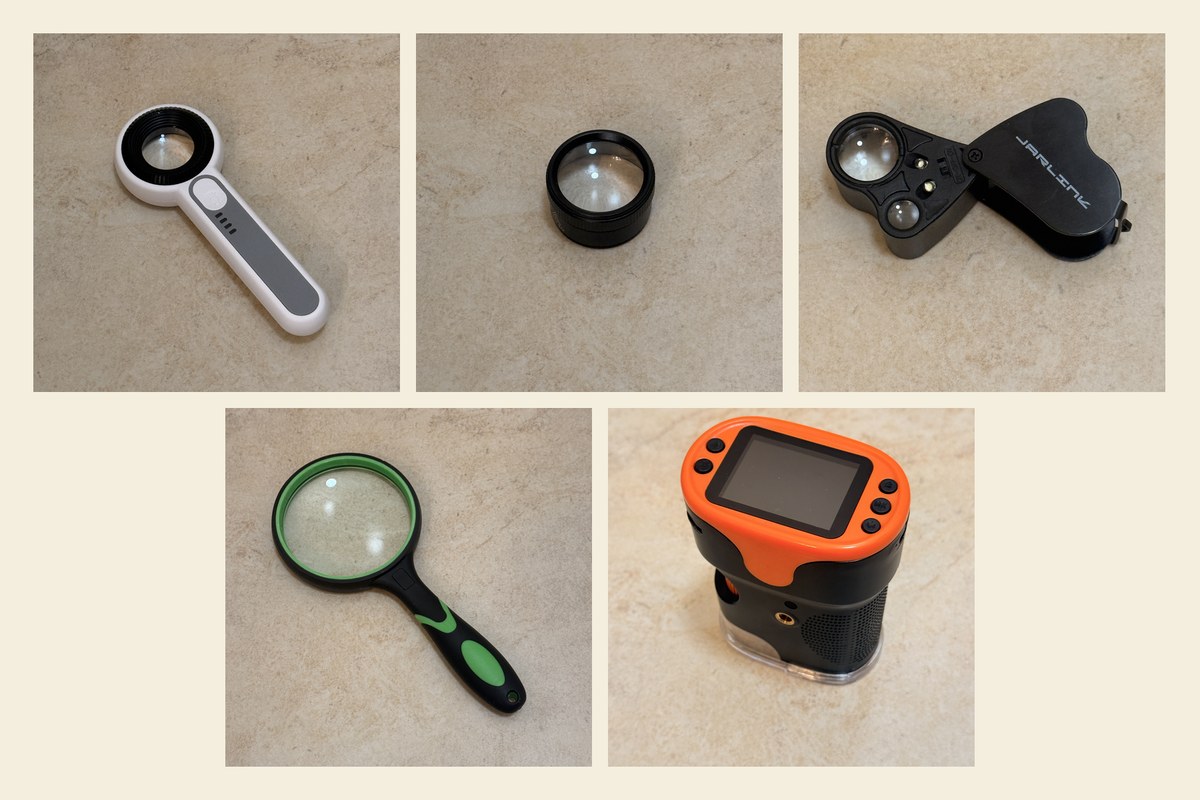
The Best Hand Lens for Pest Diagnosis
Five loupes, $4.98 to $49.99, eighteen scoring sessions against a rubric written before any of them arrived. Neither the cheapest nor the strongest won, and the 10× everyone tells you to buy can't resolve a thrips.
Read the test →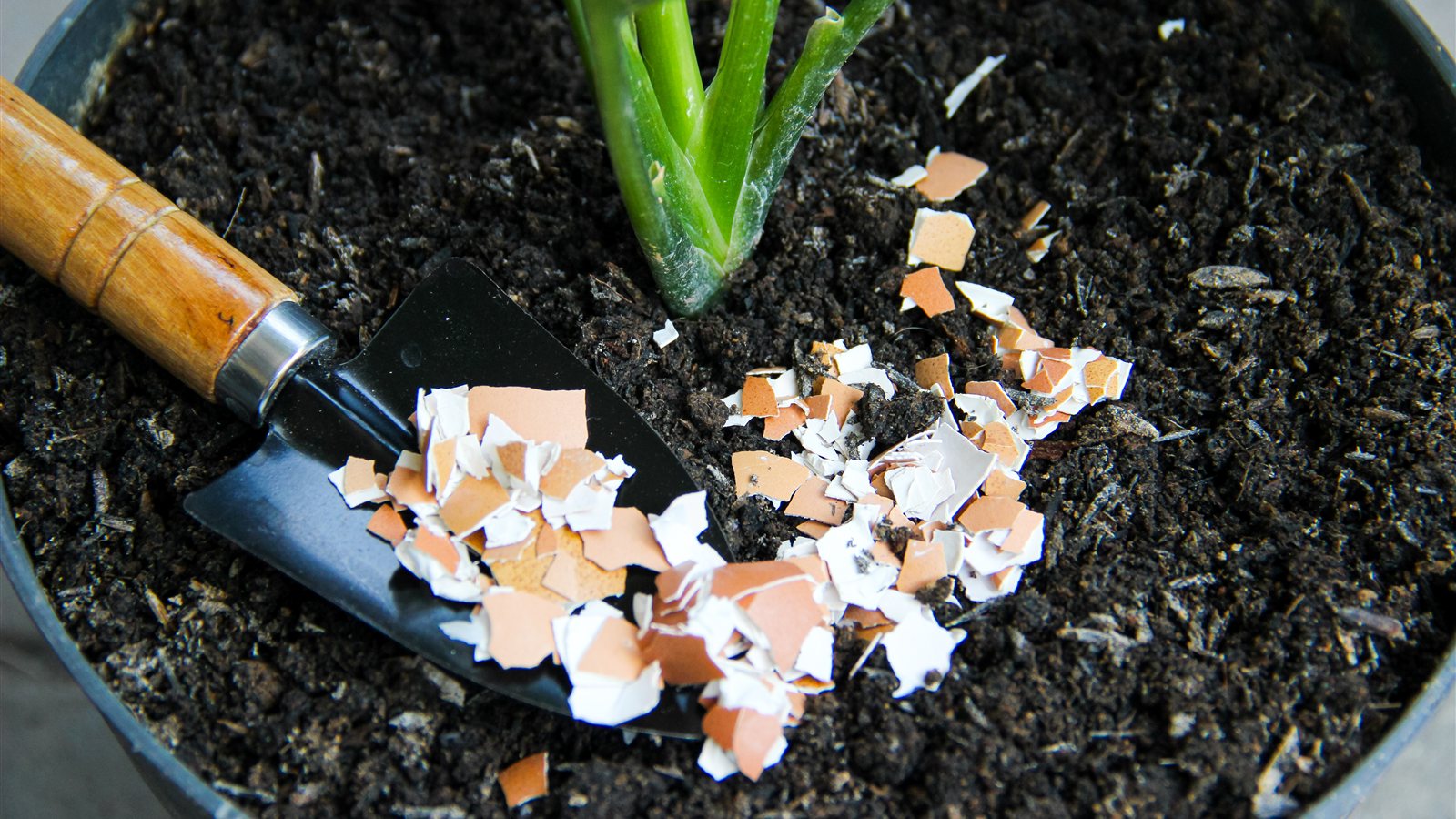
Myths Demystified · No. 07
Do eggshells feed your houseplants calcium?
The shells really are almost pure calcium. Getting it out of them is the hard part: bagged potting mixes already ship with lime in them, and near neutral pH that mineral stays locked up longer than most of us keep the plant.
Read the myth →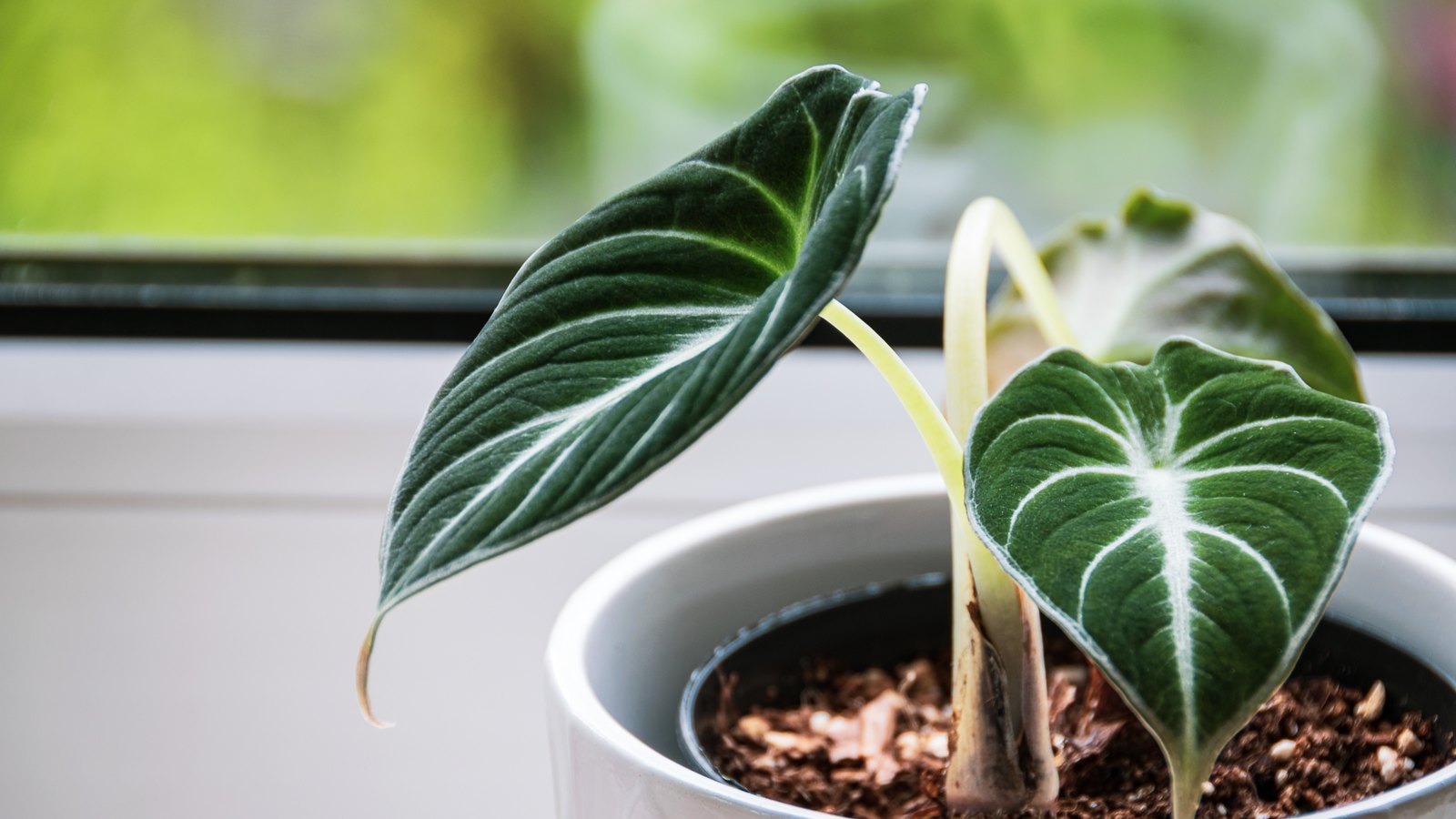
The Substrate Library · Reasoning
Alocasia Is Not a Climber
The chunky aroid mix was engineered for plants whose roots grip tree bark. Alocasia is a forest-floor geophyte, meaning it regrows each season from an underground storage organ, and it inherited the recipe by name association.
Read the entry →California Natives · No. 13 · Season Two
California Sagebrush: The Bare Ground Around It Was Never What We Thought
The plant most responsible for what California smells like after rain, and it sits in a different family from the sages it's named for. Season Two opens with the shrub that makes the clearest case for planting in autumn.
Read the entry →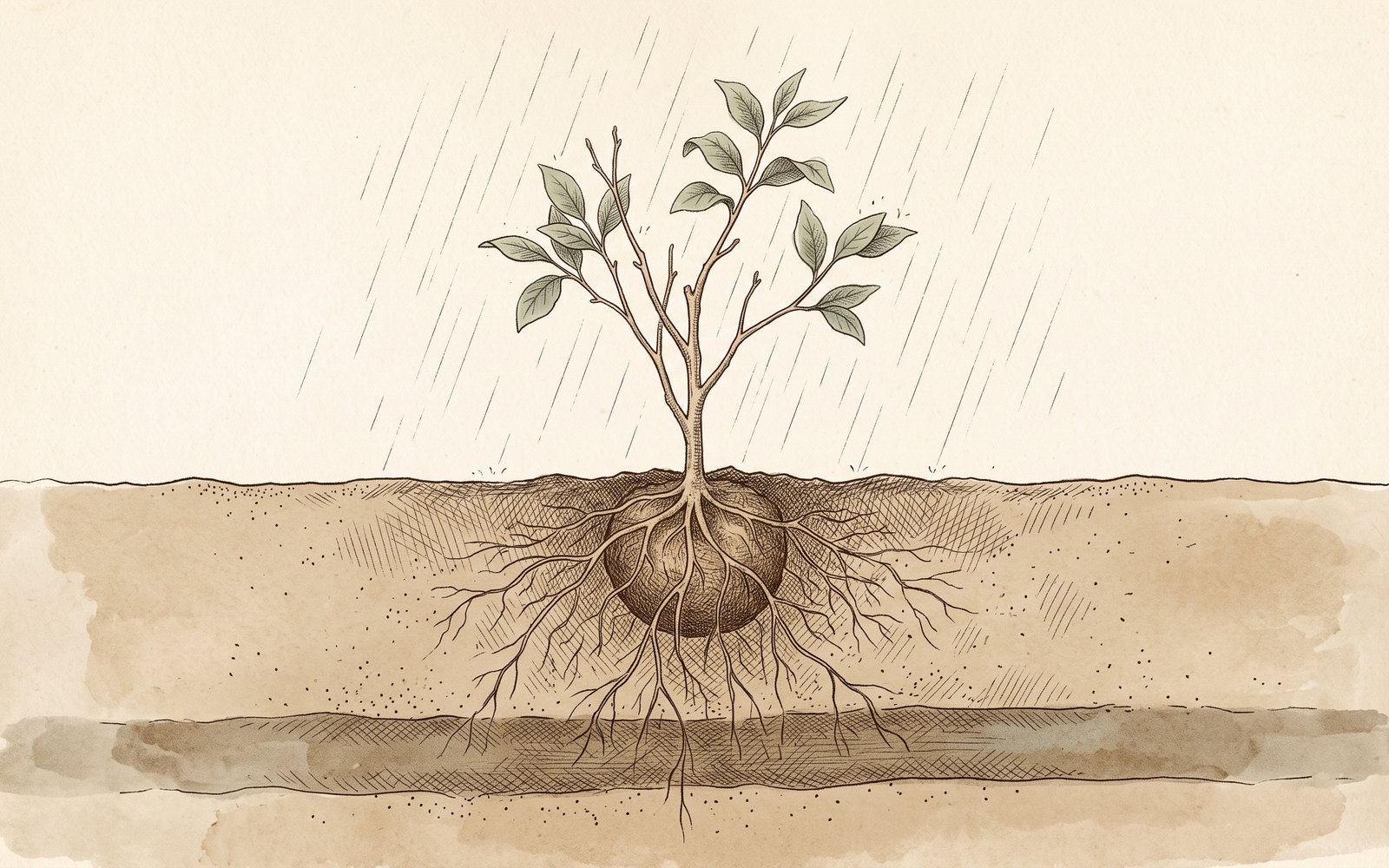
Gardening · Feature
Why Fall Planting Works for Natives, Shrubs, and Trees
Autumn really is the better time to put a native, a perennial, a shrub or a tree in the ground here. The reason usually given for it is wrong at the depth roots actually occupy, and October and November are the months that are on you before the rain takes over.
Read the feature →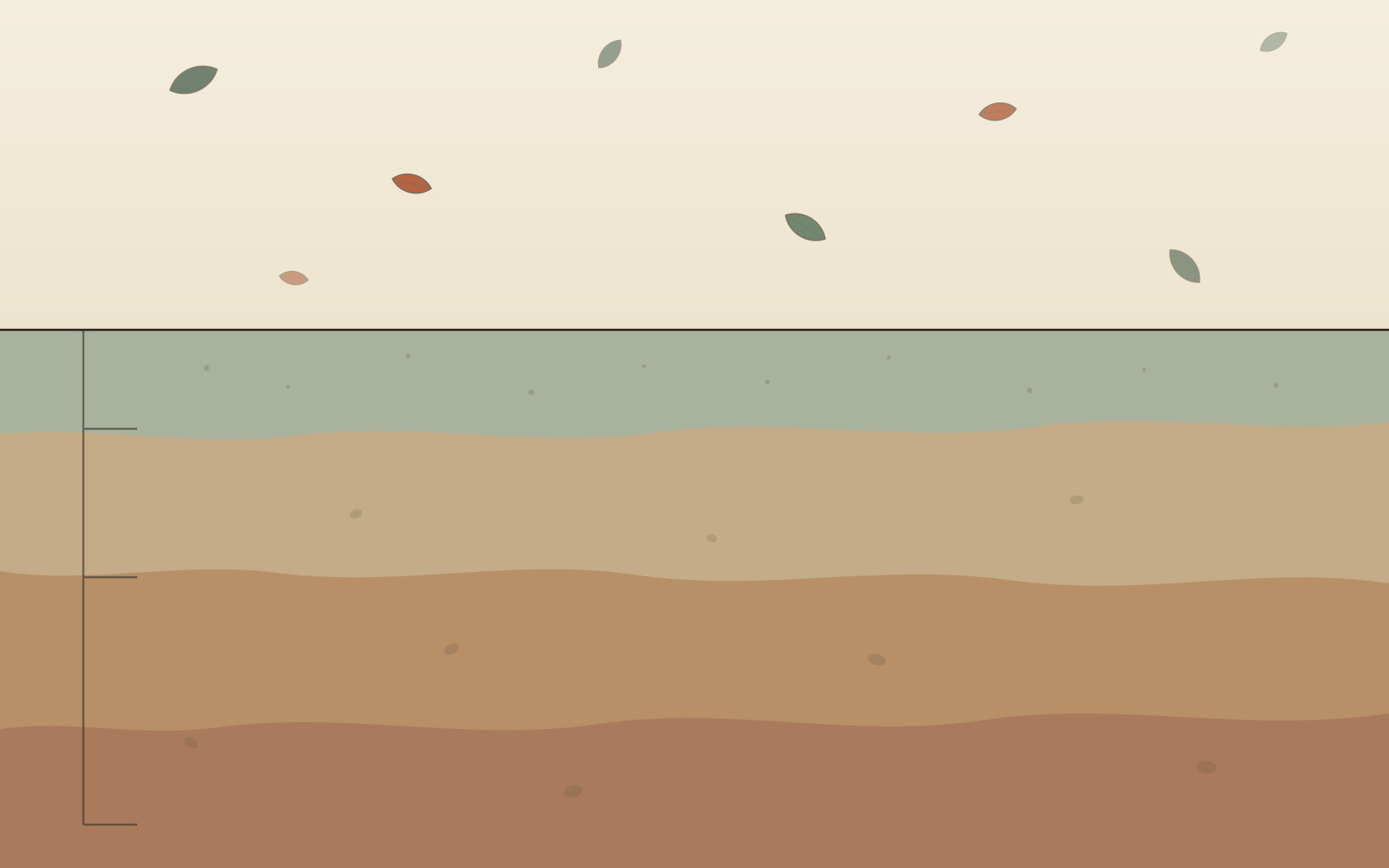
Gardening · Companion
What the Soil Is Actually Doing in Autumn
The writing says soil holds summer's warmth for months. Measured where plants root, the lag is nine days at 8 inches and seventeen at 20. This is the record and the arithmetic under the piece above.
Read the companion →Workshop notes
The hand lens test is up. I told you twice that six lenses were on the bench, and five got scored. Two of the six turned out to be near-identical units, and running the same tool through the rubric twice tells you nothing, so one came out and the lineup went to five genuinely different arguments about what a hand lens should be.
It also took two months instead of two weeks, because the question kept changing on me. Not "what resolves a thrips on a bench under a lamp," but "what do you actually pick up at nine at night when you notice something wrong on a shelf." That's what decided the ranking.
The winner is a 60× handheld with a built-in switchable LED, $18.29, and the light is the entire reason it wins. Four of the five candidates come apart under a single dim lamp. The best value is a Rongon 30× at $9.75, a point and a half behind on the numbers at just over half the price, though you'll want a headlamp with it.
The one I didn't see coming: the cheap 10× shatterproof that every pest-ID guide points you toward, this site included until I ran the test, didn't resolve the features that name the insect. A well-made 10× can do the work. The one most first-time growers actually reach for doesn't. A thrips at about a sixteenth of an inch (1 to 2 mm) sits right at its ceiling. You want 20× to 60× to see the features that name the insect.
What's coming is timed to the season. Tool Test No. 02 is soil thermometers, four probes, and it's on the bench now. Nearly everything in the first section of this letter is a timing call, and timing an autumn planting here is a soil-temperature question more than a calendar one. I'd like to have an answer before you need one.
Plate of the month
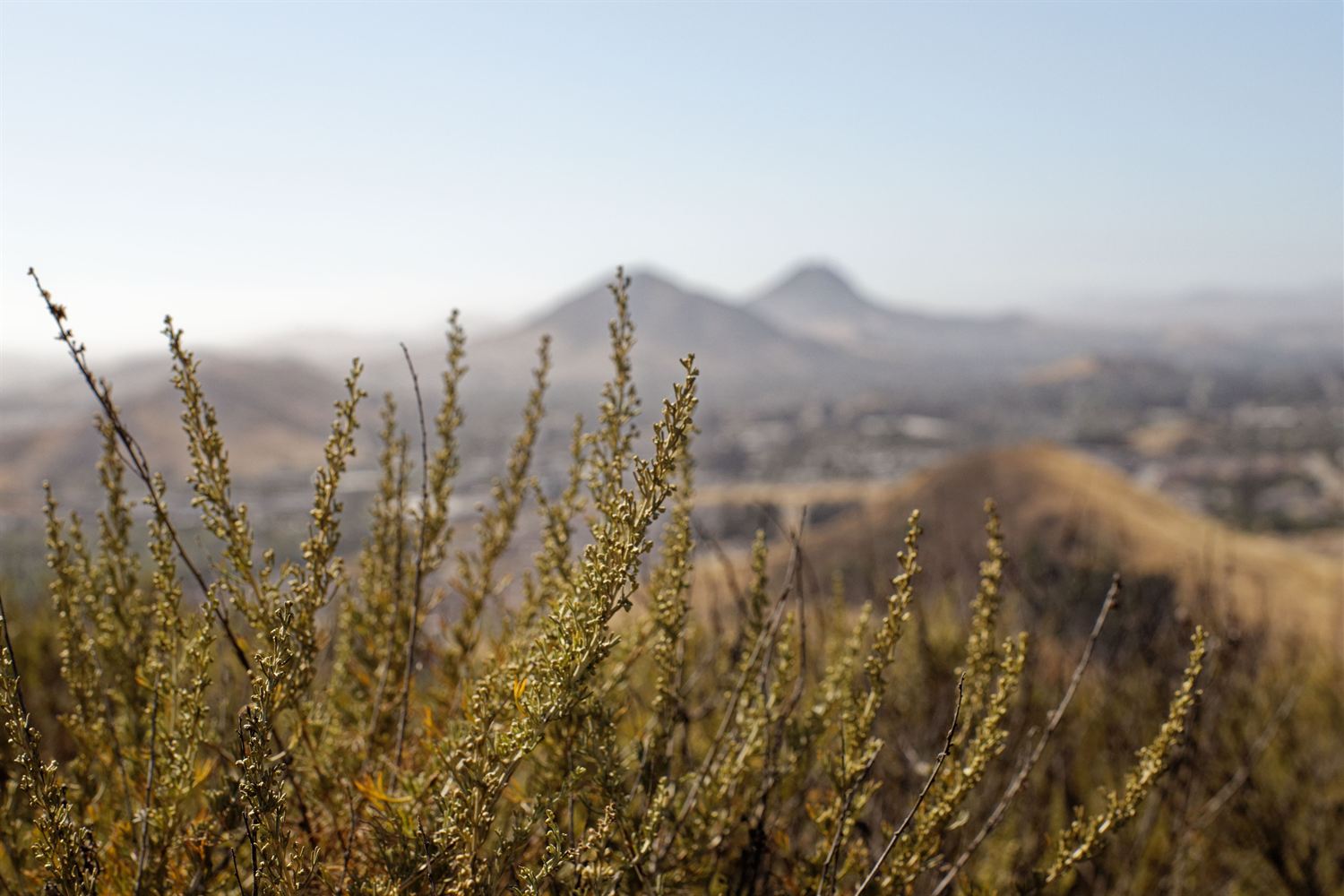
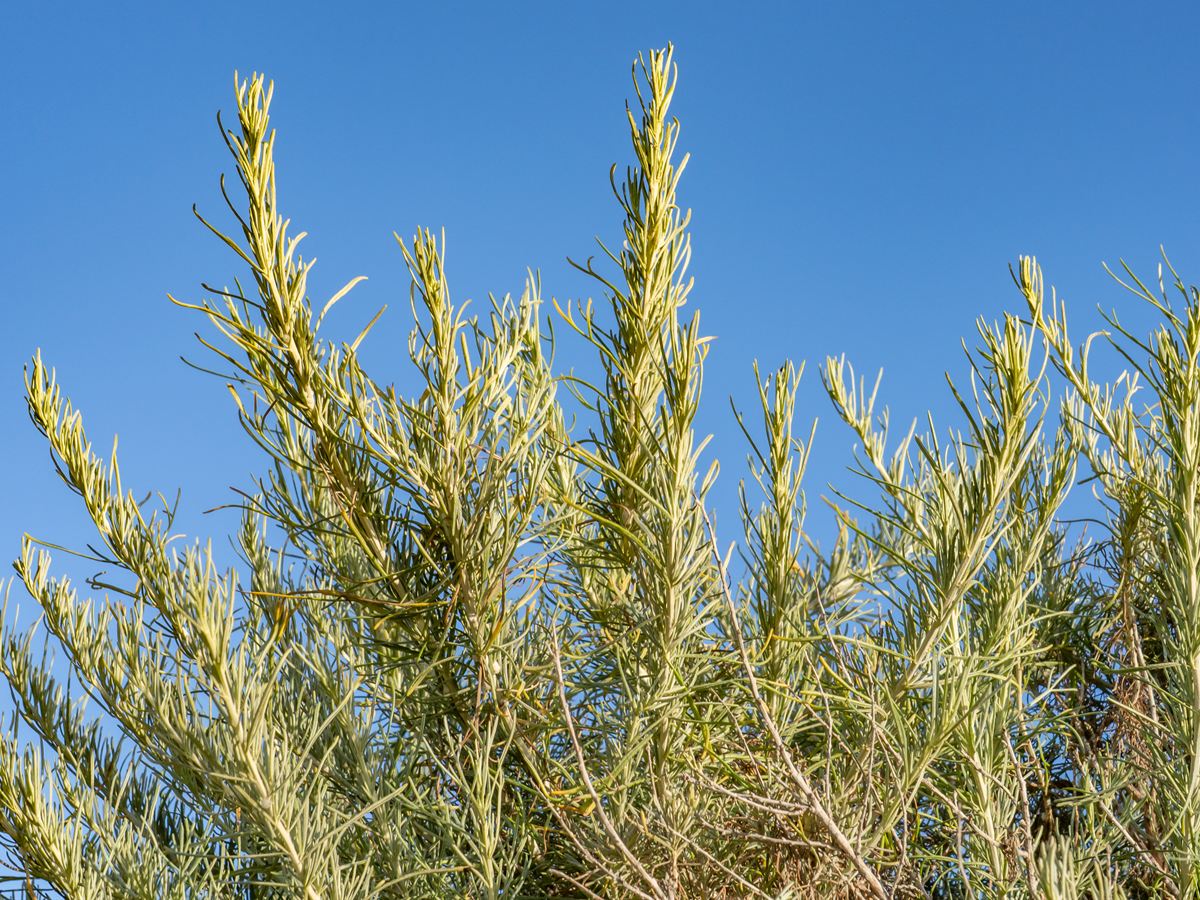
California sagebrush, Artemisia californica, in September. This is the state that sends most gardeners looking for the hose.
Nobody photographs a plant like this. The nursery tag shows you soft silvery gray-green foliage in April, and then you get this in September and assume you've done something wrong.
You haven't. What you're looking at is a shrub running on the rain year instead of the calendar. It grows through the wet months, drops most of its big leaves as the soil dries, keeps a smaller second set, and idles. Westman documented something stranger still in coastal sage scrub, the low aromatic shrubland that covers our dry slopes: leaves on this species can stay wilted for long stretches and rehydrate within hours of a rainfall (Westman, 1982). Wilt a tomato for three weeks and you don't have a tomato. This one treats it as a holding pattern.
So September is the month to do nothing about it. Its seedlings emerge with the November-through-April rains and finish most of their growth by May (Hauser, 2006), which means a container plant going in the ground this autumn gets handed the whole season it's built to use.
One caution, since the timing overlaps. If sagebrush is on your allergy panel, or mugwort is, which is the same genus, site it away from the windows you open.
Know a gardener who'd want this? Send them this page.
Sources
California Native Plant Society. (n.d.). Planting California natives. https://www.cnps.org/gardening/prepping-and-planting/planting-california-natives
Hauser, A. S. (2006). Artemisia californica. In Fire Effects Information System. U.S. Department of Agriculture, Forest Service, Rocky Mountain Research Station, Fire Sciences Laboratory. https://www.fs.usda.gov/database/feis/plants/shrub/artcal/all.html
Shaughnessy, D., Pertuit, A., & Smith, B. H. (2023). Moving houseplants indoors & outdoors (HGIC 1454). Clemson Cooperative Extension, Home & Garden Information Center. https://hgic.clemson.edu/factsheet/indoor-plants-moving-plants-indoors-outdoors/
Steil, A. (2025). How and when do I bring my houseplants back indoors before winter? Yard and Garden, Iowa State University Extension and Outreach. https://yardandgarden.extension.iastate.edu/faq/how-and-when-do-i-bring-my-houseplants-back-indoors-winter
University of Maryland Extension. (2023). Growing broccoli in a home garden. https://extension.umd.edu/resource/growing-broccoli-home-garden
Westman, W. E. (1982). Coastal sage scrub succession. In C. E. Conrad & W. C. Oechel (Tech. Coords.), Proceedings of the symposium on dynamics and management of Mediterranean-type ecosystems (Gen. Tech. Rep. PSW-58, pp. 91–99). U.S. Department of Agriculture, Forest Service, Pacific Southwest Forest and Range Experiment Station. https://www.fs.usda.gov/psw/publications/documents/psw_gtr058/psw_gtr058_2a_westman.pdf