California Natives · No. 02
California Buckwheat: The Native That Feeds the Bees All Summer
A field guide to Eriogonum fasciculatum, the workhorse chaparral shrub that blooms from late spring into fall and quietly supports more pollinators per square foot than almost anything else in your yard.
On this page
12 sections
About the Plant
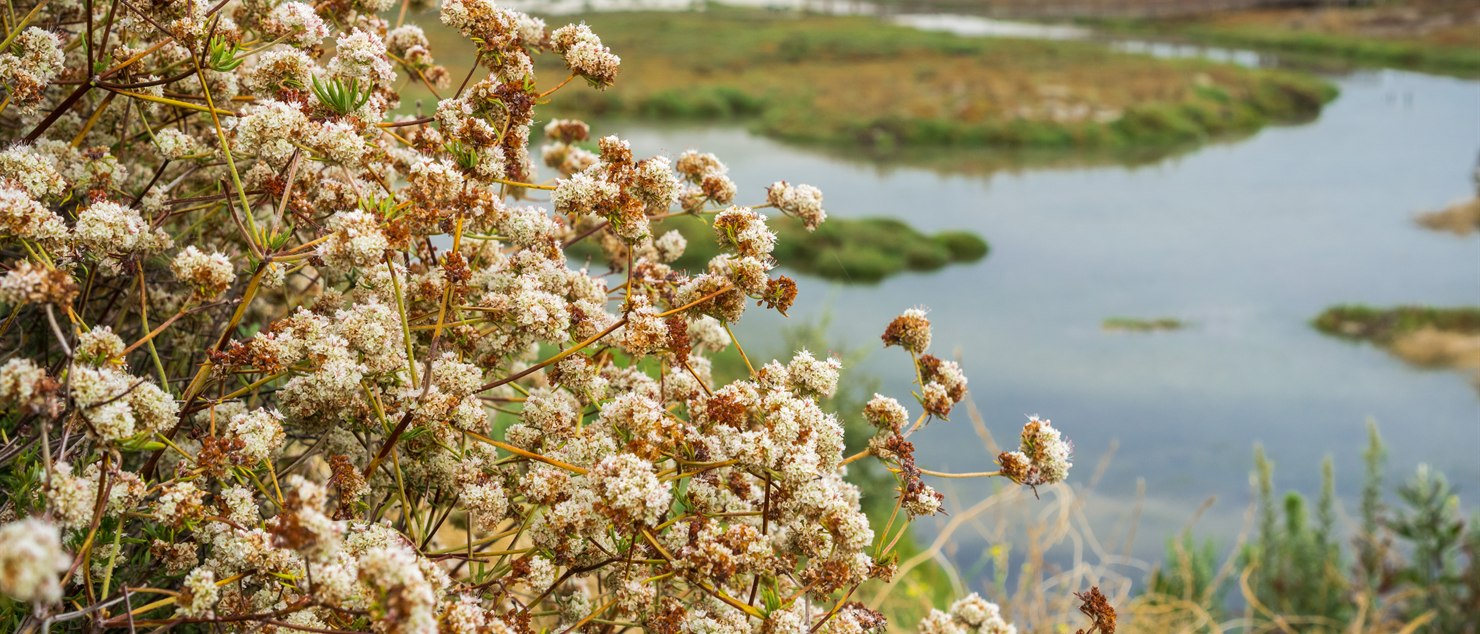
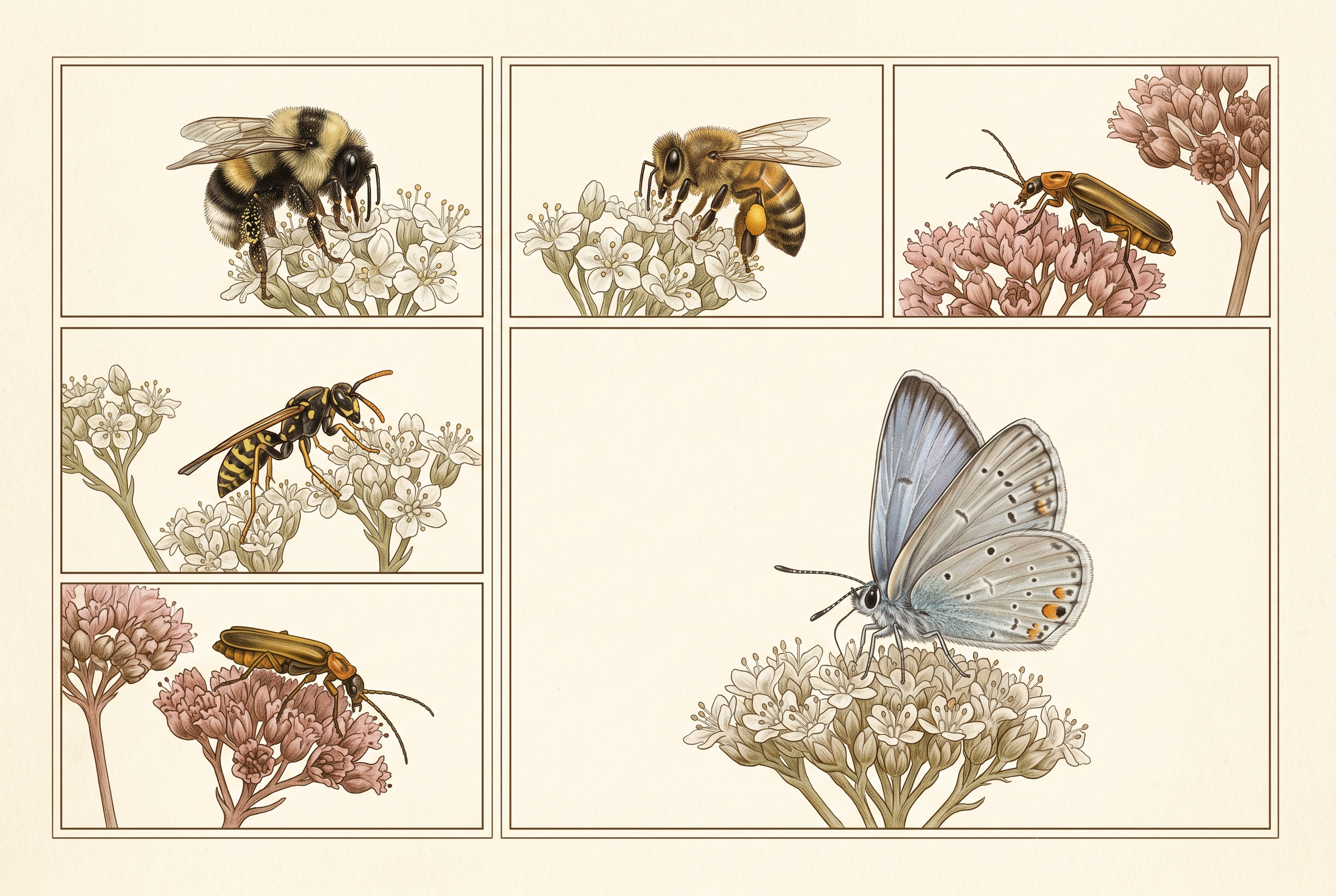
California Fuchsia gets the August spotlight. California Buckwheat is the workhorse that runs the kitchen all summer long. It starts blooming in May, peaks through July and August, and is still pushing fresh flowers in October. By the time most California natives have shut down for the dry season, this shrub is already five months into a nonstop nectar buffet for native bees, honeybees, butterflies, and beneficial wasps.
It's not a kitchen buckwheat. The grain you make pancakes from is Fagopyrum esculentum, an unrelated annual in the same family. California Buckwheat is Eriogonum fasciculatum, a woody evergreen sub-shrub in the knotweed family (Polygonaceae) that's been a dominant plant of California chaparral (the dense, drought-adapted shrubland that blankets most of the state's dry foothills and coastal mountains) and coastal sage scrub for as long as those plant communities have existed.
What makes it worth knowing is the workload. No other shrub in a Bay Area garden hosts this much pollinator traffic for this long on this little water. Plant one and you'll hear it before you see it.
What You're Looking At
A mature California Buckwheat runs two to three feet tall (60 to 90 cm) and three to five feet wide (90 to 150 cm), though coastal forms stay tighter and inland forms can sprawl wider. The habit is rounded and somewhat woody, with a dense interior of small narrow leaves clustered along the stems. The name fasciculatum literally means "in bundles," and that's what the foliage looks like up close: tight rosettes of needle-like leaves, gray-green on top and pale below, well-adapted to dry heat.
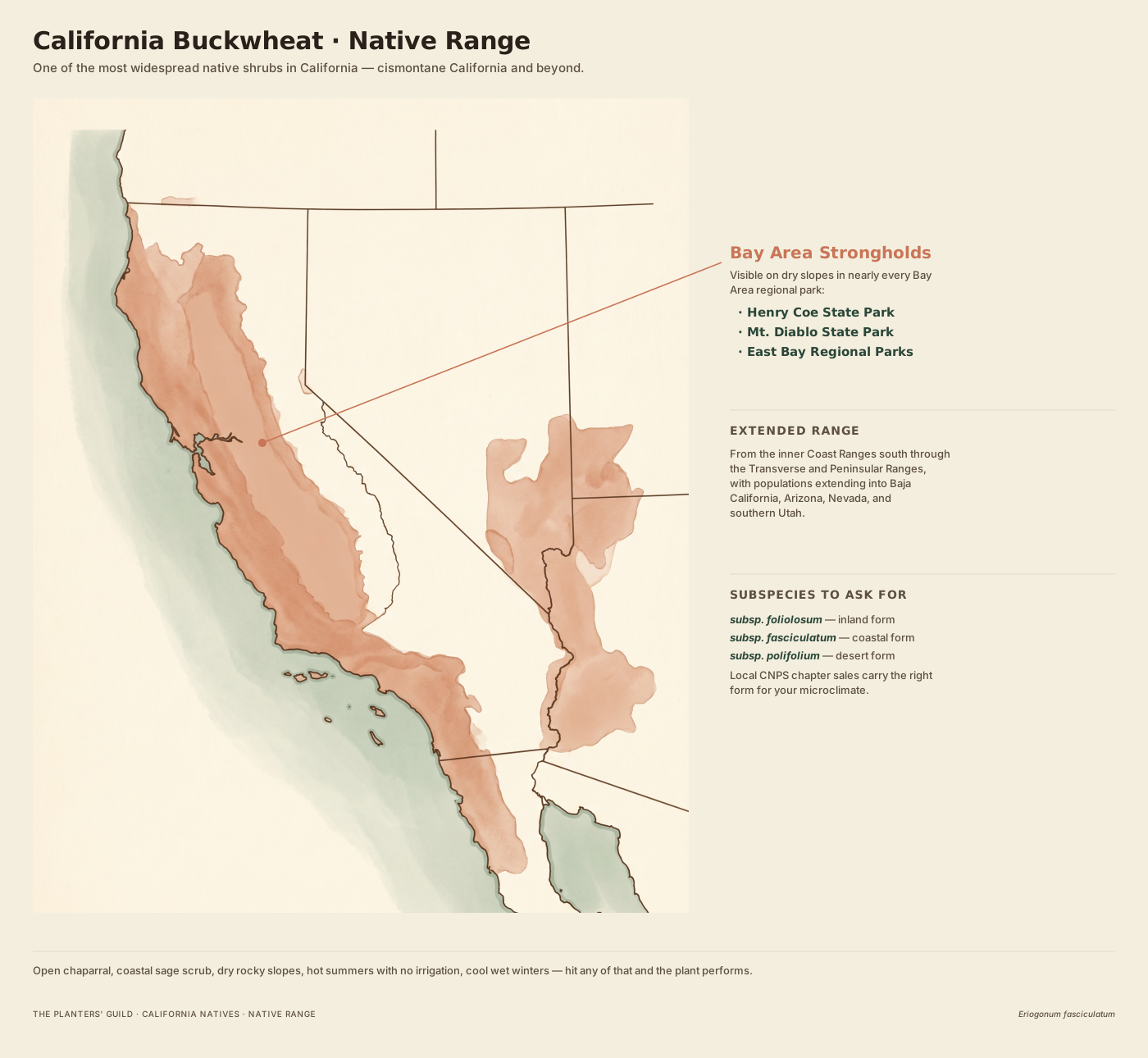
The flowers are tiny on their own and overwhelming in aggregate. Each individual bloom is the size of a pinhead, packed into dense flat-topped clusters about the size of a half-dollar and held just above the foliage on slender stalks. New flower heads open chalky white to pale pink, then age through pink to a deep rust-red that holds on the plant into winter. A well-established shrub in July looks dusted with thousands of pale flower puffs from a few feet away. From up close, it's a hum of activity.
The rust-red aging color is doing real ecological work, which I'll come back to in a minute. Don't reach for the pruners.
Where It Comes From
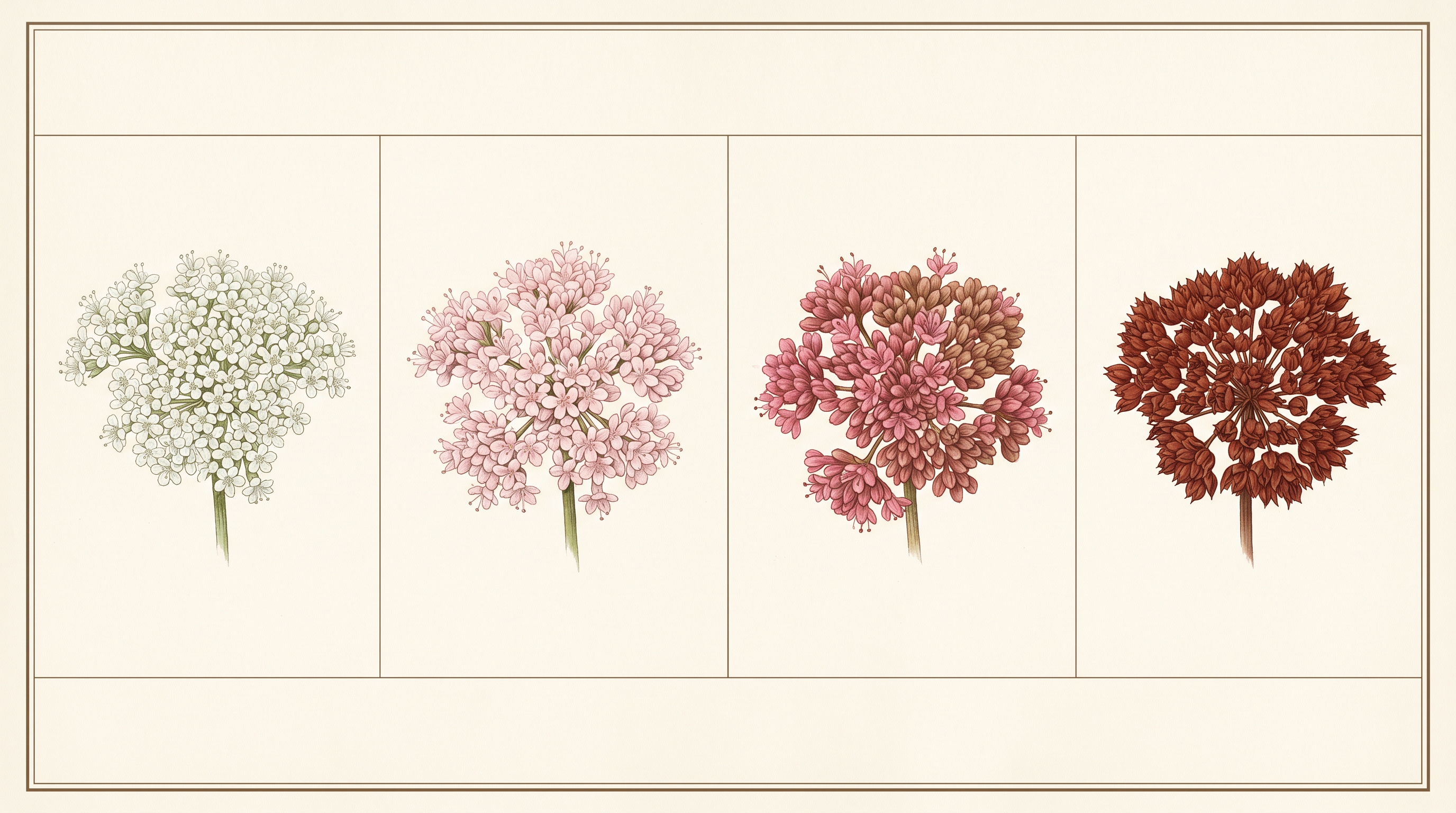
California Buckwheat is one of the most widespread native shrubs in the state. Its range covers most of cismontane California (the Pacific-facing side of the state, west of the Sierra Nevada crest) from the inner Coast Ranges south through the Transverse and Peninsular Ranges, with populations extending into Baja California, Arizona, Nevada, and southern Utah. In the Bay Area you can see it on dry slopes in nearly every regional park, from Henry Coe to Mount Diablo to the East Bay hills.
The habitat tells you what it expects: open chaparral and coastal sage scrub, rocky thin-soiled slopes, hot dry summers with no irrigation, cool wet winters, full exposure. Hit any of that in your garden and the plant performs without thinking about it. Try to grow it like a hydrangea and it dies fast.
Several subspecies are recognized: subsp. foliolosum is the common inland form, subsp. fasciculatum the coastal form, subsp. polifolium the desert form, and subsp. flavoviride a rarer form. For Bay Area gardens the inland and coastal forms are the practical choices, and your local California Native Plant Society (CNPS) chapter sale will carry whichever is locally appropriate.
The Mistake Most People Make
People deadhead it. They see the flower heads turning rust-red in late summer, assume the plant is "done blooming," and reach for the pruners. That tidy impulse costs you the plant's whole second act.
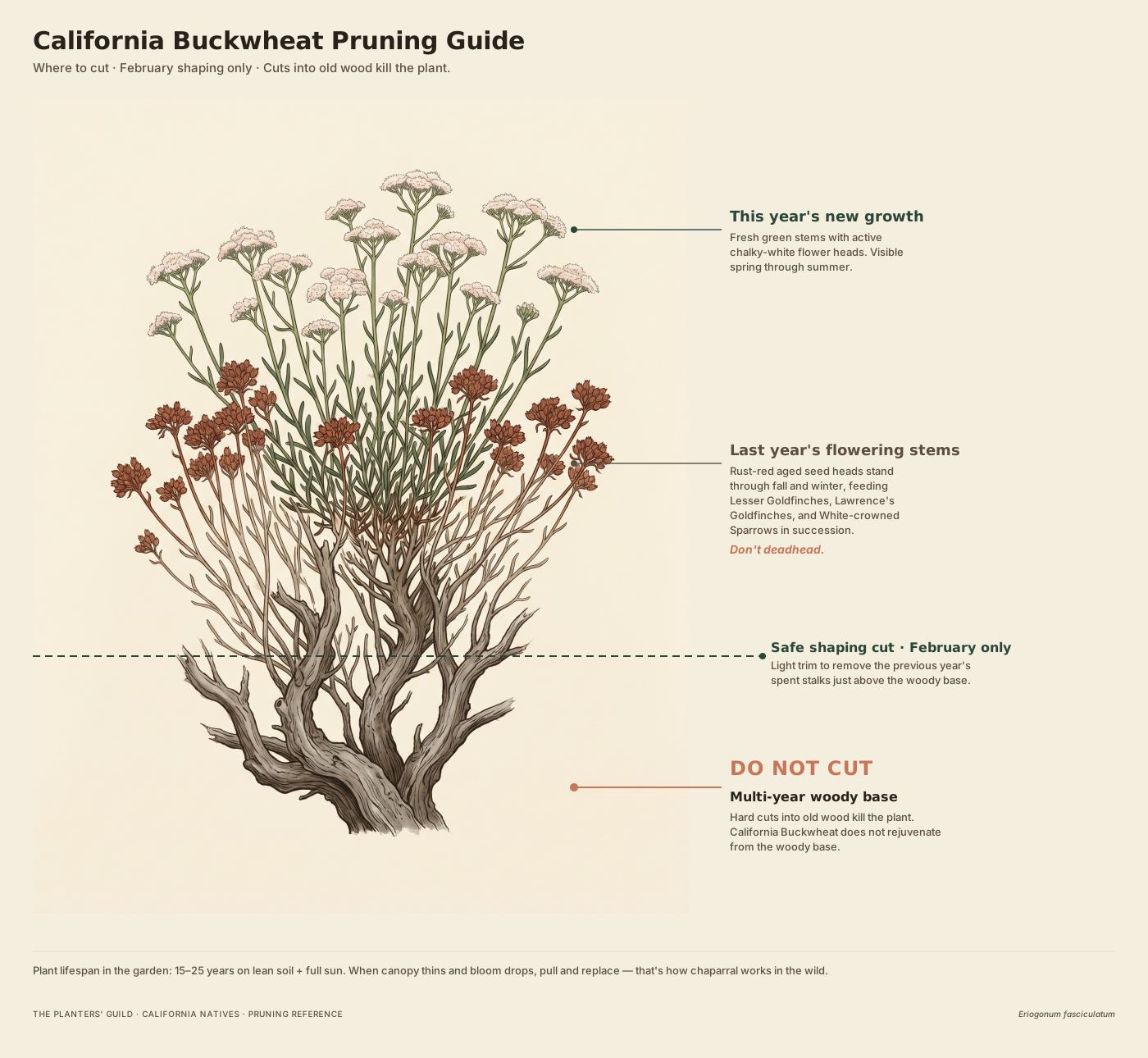
Those rust-red heads aren't dead. They're aged inflorescences (clusters of small flowers held together on one stalk) full of ripening seed, and through fall and winter they feed Lesser Goldfinches, Lawrence's Goldfinches, House Finches, and White-crowned Sparrows in succession. They also keep the plant's structure intact all winter. A warm rust-bronze mound against a wet green background is one of the better off-season visual moments a native garden gets.
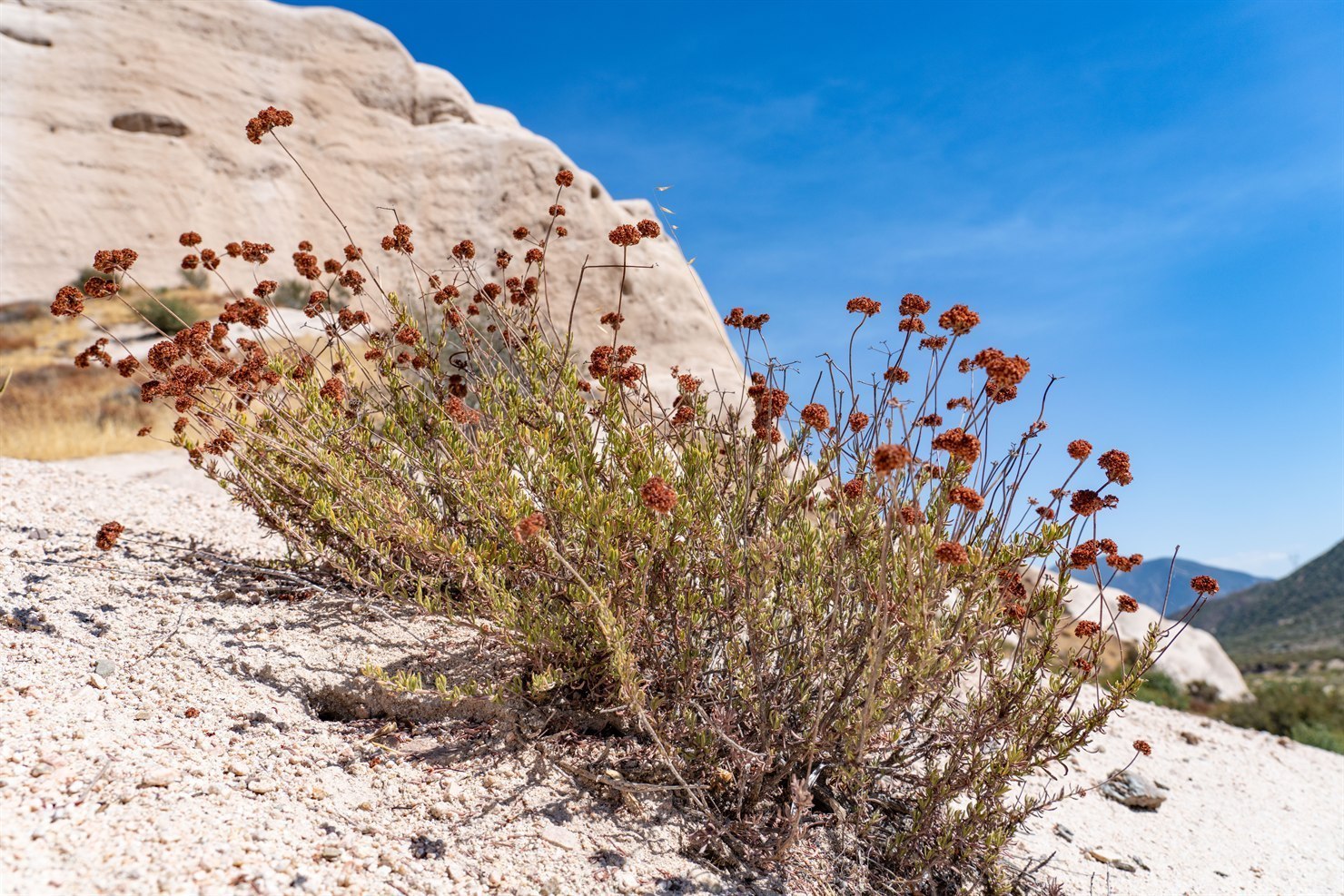
So: stop deadheading. Let the rust-red seed heads stand through fall and winter. In late winter, around February in the Bay Area, do one light trim to shape the plant and remove the previous year's spent flower stalks. That's it. California Buckwheat doesn't respond well to hard pruning into old wood. Cut into the woody base and you can kill the plant. Light, frequent shaping is the move here, not heavy renewal pruning.
Sun: Full Sun, Always
Six to eight hours of direct sun, no exceptions worth talking about. California Buckwheat evolved on open exposed slopes and expects to be in the sun all day. In partial shade it gets leggy, blooms thinly, and is more vulnerable to fungal issues from poor air circulation. If your only available spot is dappled or part shade, pick a different native for that spot. This one wants the wide open.
Water: Less Than You Think
For the first growing season after planting, water deeply once every two to three weeks through the dry months. That's enough to get the root system down without rotting the crown. After year one, this plant wants essentially nothing from you. Established California Buckwheat gets through Bay Area summers on natural winter rainfall alone, and many mature specimens never see a hose again after their establishment year.
The most common way to kill this plant is summer water. Garden irrigation systems set on weekly cycles will rot the crown, encourage root fungi, and shorten the plant's life from twenty-plus years to three or four. If you have a drip system running for other plants, put California Buckwheat outside the irrigated zone or cap the emitters on it.
Soil: Lean and Sharp-Draining
Sharp drainage matters more than any other soil factor. California Buckwheat tolerates rocky, sandy, decomposed granite, serpentine (an unusual greenish, low-fertility, high-magnesium soil derived from California's serpentinite bedrock that kills most non-native plants), and even pure gravel. Soil chemistry is largely irrelevant within normal ranges. What it can't take is heavy clay that stays wet in winter. On Bay Area adobe clay, plant on a slope, in a raised bed, or in a mound where surface water moves through fast. Coarse pumice or decomposed granite mixed into the planting hole helps.
Don't amend with compost or fertilizer. Rich soils make California Buckwheat floppy, weak-stemmed, and short-lived. Lean is the assignment.
Hardiness: USDA Zones 7 to 10
California Buckwheat is hardy across United States Department of Agriculture (USDA) zones 7 through 10, roughly to 0 to 10 °F (–18 to –12 °C) for the most cold-tolerant inland subspecies, and to around 20 °F (–7 °C) for coastal forms. That covers every Bay Area microclimate and most of California. In colder winters the foliage may take some damage, but established plants regrow from the woody base.
One Honest Caveat: It Gets Woody With Age
In my experience, the thing you'll have an opinion about by year seven or eight is the woodiness. California Buckwheat is a relatively short-lived shrub by garden standards. A well-sited plant in full sun on lean soil lives fifteen to twenty-five years, but by the back half of that range it gets noticeably woody at the base, the canopy thins, and bloom drops off. You can't rejuvenate it by cutting it back hard, because hard cuts into old wood kill the plant.
So treat it as a medium-term resident. Plant one. Get fifteen-plus years of pollinator service and winter structure from it. When it starts looking tired, pull it and plant a fresh one in the same spot. That cycle is how chaparral works in the wild. Individual shrubs come and go on a schedule, and the plant community keeps going.
Sourcing and Planting Window
The right time to plant California Buckwheat is October through early December, before the winter rains settle in. Fall planting gives the root system the entire wet season to establish before its first dry summer. Spring planting works, but it commits you to babying the plant through its first summer.
For correctly identified, regionally appropriate material, go to your local CNPS chapter plant sale. In the Bay Area, that means the Santa Clara Valley chapter (typically October), the Yerba Buena chapter in San Francisco, and the East Bay chapter. Sale plants are propagated from regional native stock, and the people staffing the table can tell you whether your spot wants the coastal or the inland subspecies. Specialty California native nurseries also carry it year-round; check current availability before driving anywhere.
Don't collect from wild populations. It's illegal on most public land, wild-dug plants establish poorly compared to nursery-grown stock, and chaparral takes decades to recover from this kind of disturbance.
Quick Reference
- Sun: Full sun, 6 to 8 hours; no meaningful shade tolerance.
- Water: Deep, infrequent first season; essentially none once established.
- Soil: Lean, sharp-draining; tolerates rocky, sandy, gravelly, serpentine.
- Hardiness: USDA 7 to 10; coastal forms less cold-tolerant than inland.
- Bloom: Flat-topped white-to-pink heads, May through October; rust-red aged heads stand into winter.
- Size: 2 to 3 ft tall (60–90 cm), 3 to 5 ft wide (90–150 cm) at maturity.
- Plant in: October to early December for best establishment.
- Prune: Light shaping only, in February. Never cut into old wood.
- Source from: Local CNPS chapter plant sales; California native specialty nurseries.
- What to avoid: Summer irrigation, heavy unamended clay, hard pruning, deadheading the rust-red seed heads.
The Takeaway
California Buckwheat is the plant you put in to make your garden useful to wildlife for half the year on almost no water. Plant it this fall, water it lightly through year one, leave the rust-red seed heads alone, and stop fussing. Year two it pays you back every week from May through October in bee traffic, butterfly visits, and goldfinches working the seed heads into winter. Fifteen years from now, plant another one in the same spot. The chaparral does this for free, and your yard can too.
Sources
Bornstein, C., Fross, D., & O'Brien, B. (2005). California native plants for the garden. Cachuma Press.
California Native Plant Society. (n.d.). Eriogonum fasciculatum (California Buckwheat). Calscape. Retrieved May 20, 2026, from https://calscape.org/Eriogonum-fasciculatum-(California-Buckwheat)
Pratt, G. F. (1994). Evolution of Euphilotes (Lepidoptera: Lycaenidae) by seasonal and host shifts. Biological Journal of the Linnean Society, 51(4), 387–416. https://doi.org/10.1111/j.1095-8312.1994.tb00970.x
Reveal, J. L. (2005). Eriogonum. In Flora of North America Editorial Committee (Eds.), Flora of North America North of Mexico (Vol. 5). Oxford University Press. https://floranorthamerica.org/Eriogonum_fasciculatum