A field guide to Philodendron 'McDowell' — a rhizomatous gloriosum × pastazanum hybrid most people set up wrong. The leaves sell the plant; the rhizome decides whether you keep it happy.
About the Hybrid
Philodendron 'McDowell' is what you reach for when you want gloriosum's hand-sized, silver-veined leaves without its reputation for sulking. It's thought to be a gloriosum × pastazanum cross, and it keeps the best of both parents: the big velvet foliage, and a creeping rhizome that's more forgiving when conditions drift.
The leaves sell the plant. They're also half the story. The other half is the rhizome. Pencil-thick, segmented, and it wants to crawl across the surface of your substrate, not climb a moss pole. Most aroid advice online assumes climber. McDowell isn't one. Set it up on a moss pole and you'll watch a healthy-looking plant keep pushing smaller leaves. Set it up shallow and wide and the leaves keep getting bigger. In my experience, this single decision, horizontal versus vertical, makes the difference between a plant that looks okay and one that actually thrives.
What You're Looking At
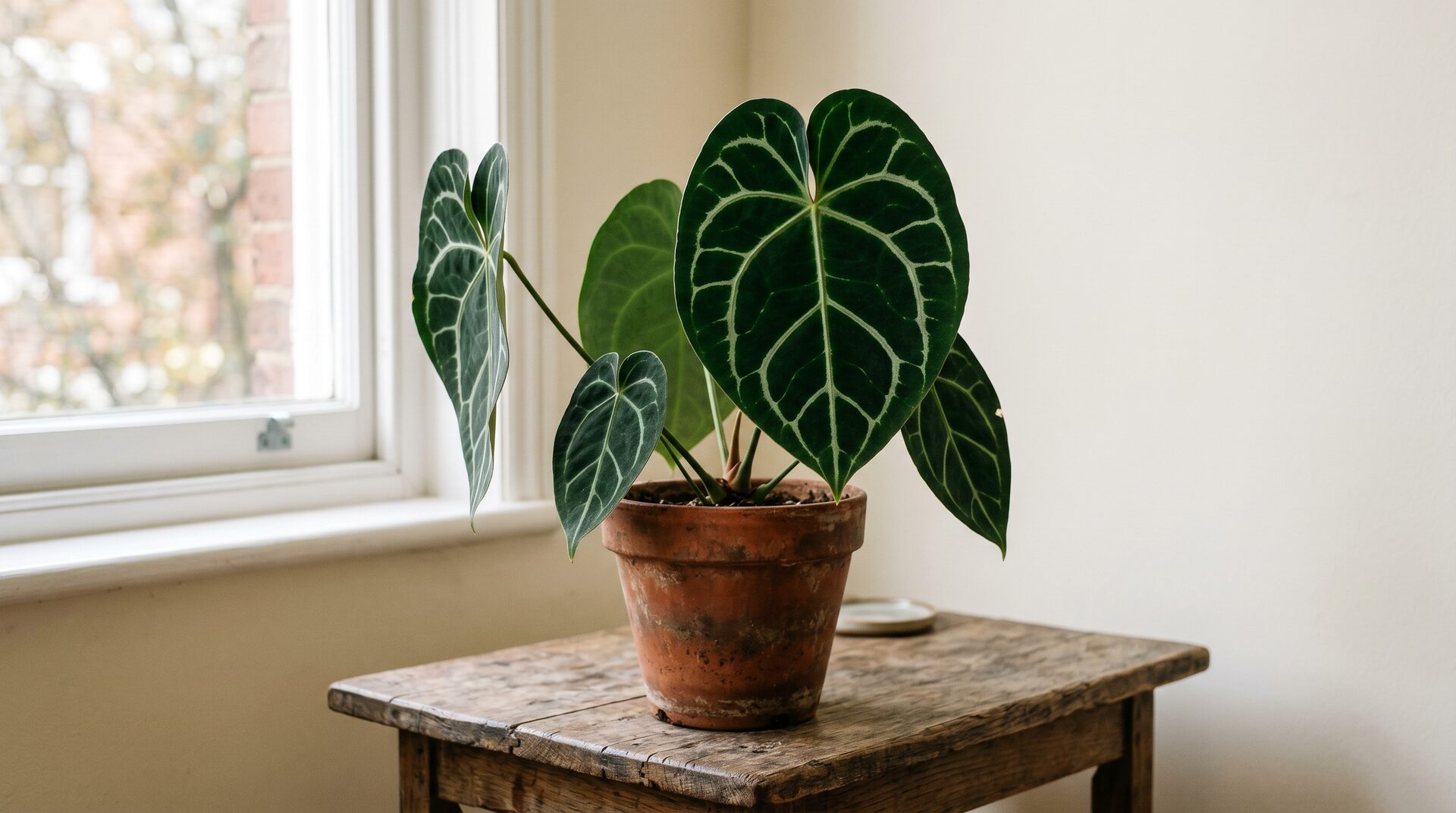
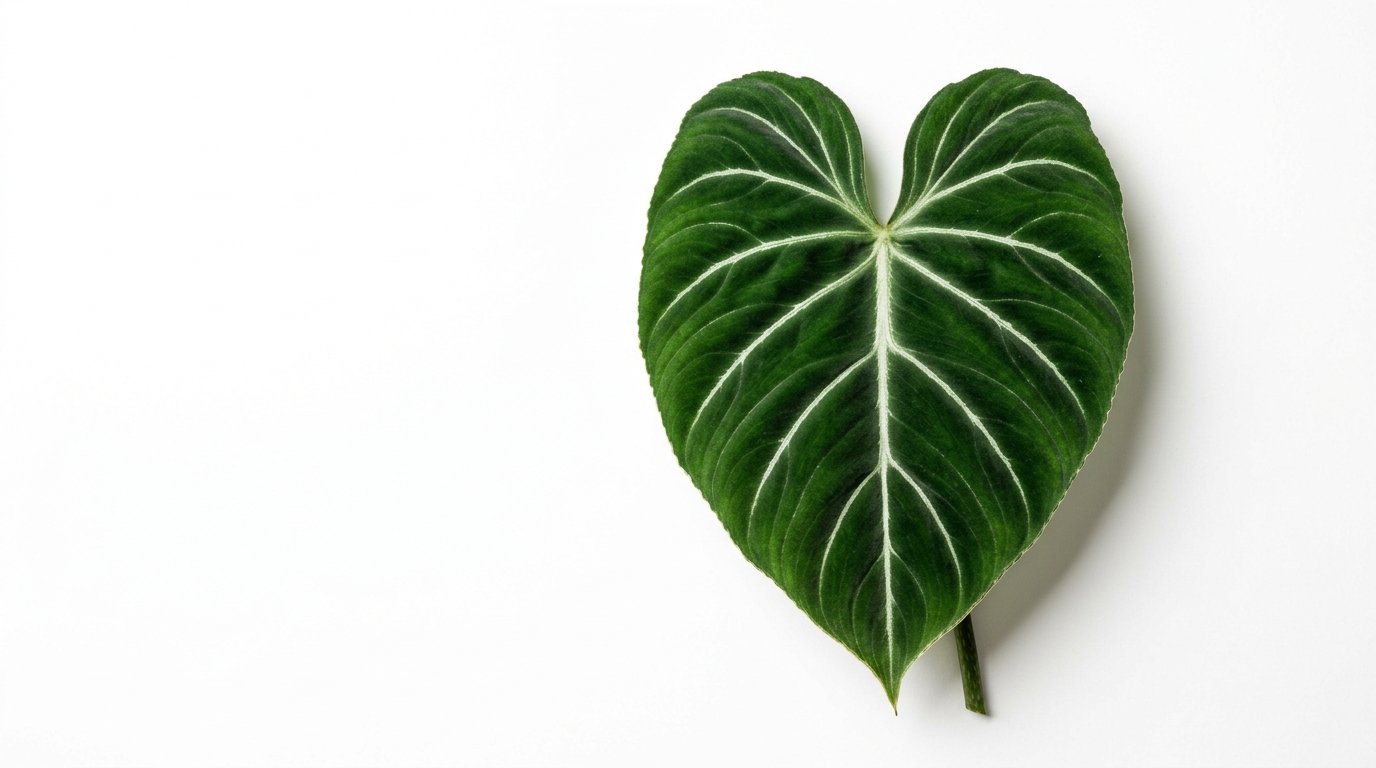
Mature McDowell leaves run hand-sized at the upper end, eight to twelve inches from petiole junction to leaf tip, heart-shaped with deeply lobed bases. The top surface is matte velvet, dark green, and the silver-white veining traces the midrib and lateral veins all the way to the leaf edge. Underneath, leaves are the lighter green of most rhizomatous Philodendron, sometimes flushed with a warm copper tone in good light.
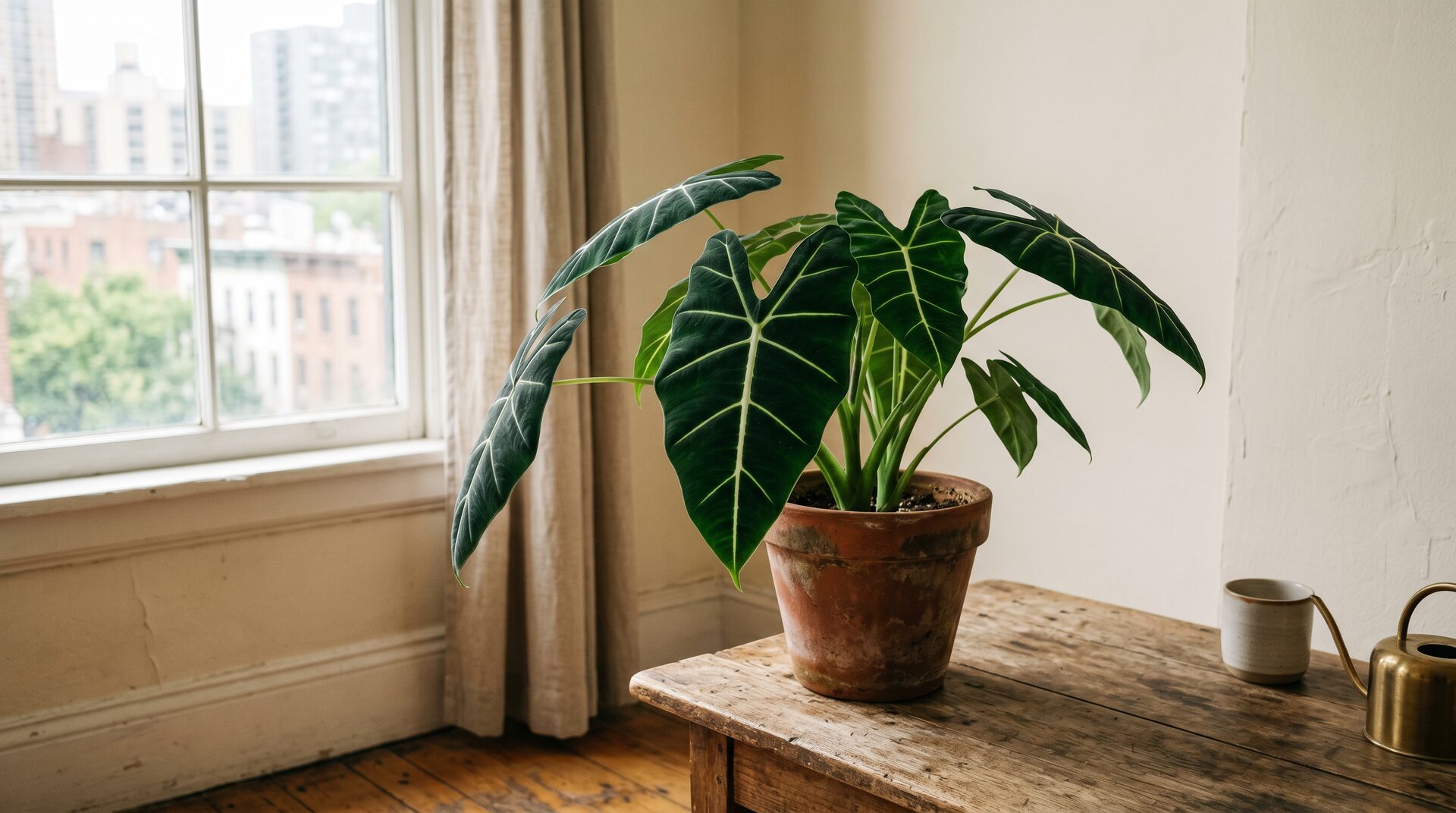
Petioles are smooth and round, holding the leaves out at a shallow angle from horizontal. New leaves emerge from nodes spaced along the rhizome, not from a central crown the way self-heading Philodendron grow. That's the structural giveaway. If you can see distinct nodes spaced along a horizontal stem with leaves popping up at intervals, you're looking at a crawler.
The rhizome itself is the part most beginners don't realize they should be paying attention to. Pencil-thick, slightly woody, with adventitious roots emerging downward and slightly forward as it grows. It's the operating system of the plant. The leaves are what catch your eye; the rhizome is what's actually running the show.
Where It Comes From
McDowell is a hybrid, generally accepted in the trade as Philodendron gloriosum × pastazanum. It's not a registered cross with formal botanical documentation. It's named for the breeder commonly credited with distributing it widely, and the parentage is consistent across what's been written about it. Both parents are crawlers, which is why the offspring is too.
The genetics explain the care. Gloriosum brings the velvet and the silver veining: the visual character that drives demand. Pastazanum brings a more forgiving constitution: easier on humidity, less prone to dramatic collapse when conditions drift. McDowell inherited enough of both that you get the gloriosum look without the gloriosum reputation for sulking.
Tissue-culture labs picked McDowell up in the early 2020s, which is why it's now common at serious aroid vendors instead of going for mother-plant prices on Etsy. The downside of TC propagation is the acclimation window. There's a section on that further down. The upside is you can actually find one.
Why It Wants to Crawl, Not Climb
Almost every general guide to caring for a Philodendron recommends a moss pole. For most of the genus, that's correct. Climbing Philodendron (billietiae, verrucosum, the heart-leaf species, hederaceum) produce bigger, more mature leaves when they have something to grip vertically. Their adventitious roots seek bark in the wild and respond the same way to a moss pole indoors (Croat 1997, Annals of the Missouri Botanical Garden 84(3)).
McDowell is the opposite. Rhizomatous Philodendron evolved on the forest floor, creeping along leaf litter and the surface mat of tree roots (Croat 1997, Annals of the Missouri Botanical Garden 84(3)). Their adventitious roots seek lateral substrate, not vertical grip. Tie a McDowell to a moss pole and the rhizome can't crawl. The lateral roots can't anchor. The plant interprets the situation as bad growing conditions, and the signal it sends back is reduced leaf size. New leaves come in noticeably smaller than they should, and the silver veining looks washed out.
The right setup is shallow and wide. A pot ten to twelve inches across, only four to six inches deep. The substrate level sits low so the rhizome rides on top of the mix, half-buried, with the roots reaching down into the chunky bark below. Leaves come in horizontally, then unfurl forward. Watching a happy McDowell push a new leaf is one of the slowest, most satisfying things in a plant collection. Three weeks from spear emergence to mature leaf, then another two weeks to harden off and develop the silver veining. If you've been growing one vertically and you switch it to a shallow horizontal setup, you'll see the difference in the very next leaf cycle.
Light: Bright Indirect
An east-facing window two to three feet from the glass is the sweet spot for most apartments. North-facing works if the room gets ambient brightness from other directions. Direct sun, especially afternoon sun through a south or west window, scorches the velvet leaves quickly; the matte texture absorbs heat differently than glossy foliage, and brown crisp patches show up within hours of unbuffered exposure.
Under grow lights, McDowell does well at moderate intensity for twelve to fourteen hours a day. It doesn't need the high-output setup variegated plants demand. A budget-tier shelf light eighteen inches above the canopy is enough.
If your McDowell's veining is looking gray instead of bright silver, the first thing to check is light, not nutrients. Underlit McDowells produce smaller leaves with duller veining, in that order.
Water: When the Top Two Inches Dry
Top two inches of substrate dry before the next water. In an active growing season at typical indoor temperatures, that's about every three to five days. Winter or in cooler rooms, expect that to stretch to seven to ten days.
Don't water on a schedule. McDowell signals when it's thirsty. The rhizome looks slightly shrunken, the petioles stiffen, new growth slows. After a few cycles you'll know what dry-but-not-too-dry looks like in your specific setup. Frankly, if you can't tell whether the substrate is dry, lift the pot. A McDowell pot dry enough to water feels noticeably lighter than a wet one. Get used to that weight.
The lethal mistake is overwatering. Rhizomes rot from the underside up, and they don't give the wilt warning thinner-stemmed plants do. By the time you see external trouble, the rot is usually too far in. Let it breathe. These rhizomes rot long before they ever wilt.
Substrate: Chunky and Airy
Chunky aroid mix. The exact recipe matters less than the structure: large air pockets, fast drainage, enough moisture retention to keep the rhizome roots from drying out completely between waterings.
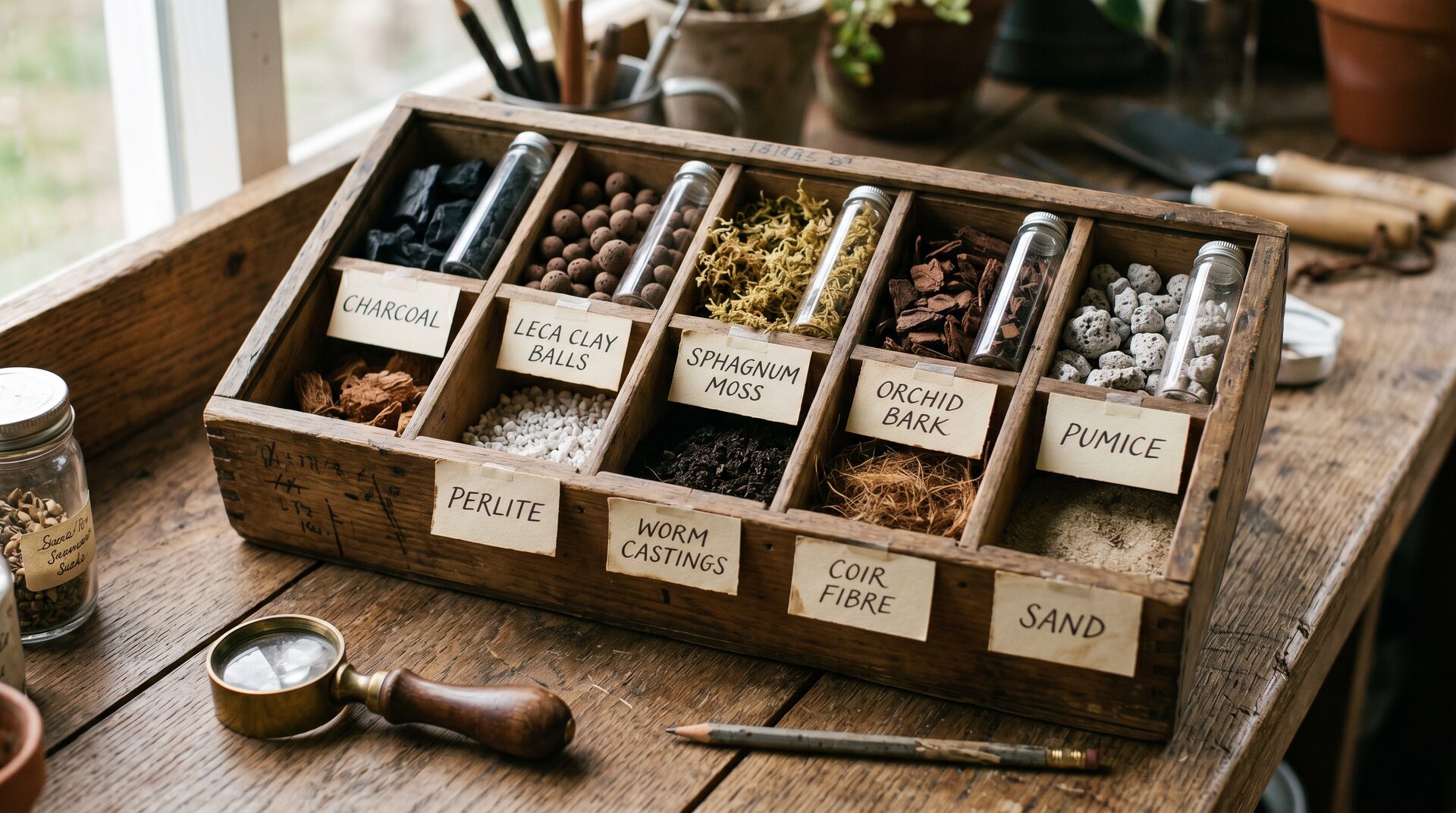
What we use: orchid bark as the base, with perlite for drainage, horticultural charcoal for biological filtration, and a small amount of sphagnum or coco coir for moisture retention. The sphagnum keeps a thin moisture film around the surface where the rhizome roots sit; the bark and charcoal keep oxygen flowing through the root zone. The whole mix should feel airy in your hand, not damp. The rhizome wants to crawl on top of structure, not sink into soup — that distinction changes everything about substrate choice.
From the TPG The Substrate Library: The Aroid Ingredient Glossary breaks down each component and what it actually does for the root zone.
The pot orientation matters as much as the mix. Shallow and wide. Don't repot a McDowell into the same deep nursery pot it came home in just because that's what it arrived in.
Humidity: 60–80%
Sixty to eighty percent is ideal. The plant tolerates fifty percent without obvious damage, but new leaves come in smaller and the velvet looks dull. Below forty percent the leaf edges crisp and the rhizome can shrivel to the point of stalling new growth.
If your space runs dry (most condos with HVAC do, especially in winter), group plants together for a microclimate, run a small humidifier nearby, or set up a grow tent. Pebble trays don't move the needle for a plant this size.
Temperature: 65–80°F (18–27°C)
Sixty-five to eighty Fahrenheit covers the comfortable range. McDowell tolerates a brief dip to fifty-five, but growth stalls under sixty-five and the rhizome stops pushing new nodes. Above eighty-five, increase humidity and water frequency to compensate for faster transpiration.
One Honest Caveat: TC Acclimation
If your McDowell came from tissue culture (most of what's in trade now did), expect the first two or three leaves after intake to look juvenile. Smaller. Less pronounced silver veining. Softer lobing at the base. That's normal and not a sign anything's wrong with your care.
Tissue-cultured plants transition from agar-based growth to atmospheric conditions over roughly four to six weeks, then take another full season to settle into adult leaf form (Chandra et al. 2010, Biotechnology Letters; our TC Acclimation entry covers the underlying physiology). If you stay patient through the first few cycles, the leaves you'll see a year out are the ones the marketing photos promised. The temptation during this window is to overcorrect: assume smaller leaves mean the plant needs more of something, water more, fertilize more, move it to brighter light. Rather than chasing those phantom problems, hold standard care. Let the plant catch up to itself.
Propagation
Stem cuttings with a node root reliably. Cut the rhizome between two nodes, making sure each cutting has at least one mature leaf and one visible growth point. Sphagnum moss works as a rooting medium, but going straight into chunky aroid mix works just as well as long as you keep humidity above seventy percent during root establishment.
Bottom heat helps. In our setup, a heat mat under the propagation tray at seventy-five to eighty Fahrenheit cuts rooting time roughly in half compared to ambient conditions. It's the only specialized equipment that's worth buying for this kind of propagation.
Skip water propagation for this one. The roots that emerge in water are different from substrate roots and don't transition cleanly when you pot up. Half the time they melt during the move, and the cutting has to start over building the right kind of root system. Substrate-to-substrate is more reliable, and it's how the plant actually propagates in the wild.
Quick Reference
- Light: Bright indirect; east window or 2–3 ft (0.6–0.9 m) from a brighter exposure.
- Water: Top 2" dry; every 3–5 days in active season.
- Humidity: 60–80% (will tolerate 50%, struggles below 40%).
- Temperature: 65–80°F (18–27°C).
- Substrate: Chunky aroid mix, bark, perlite, charcoal, touch of sphagnum.
- Pot shape: Shallow and wide; let the rhizome crawl horizontally.
- Propagation: Node cuttings into sphagnum or mix; bottom heat speeds it up.
- What to avoid: Moss poles, deep pots, overwatering, direct afternoon sun.
A note for pet households: Philodendron is toxic to dogs, cats, and humans if ingested — leaves and stems contain insoluble calcium oxalate raphides that cause oral irritation, drooling, and difficulty swallowing if chewed (ASPCA). Keep out of reach of pets and small children.
The Takeaway
The rest is patience. The plant rewards the kind of restraint that beginners find hard and experienced growers find easy — leave it alone for the first four weeks after intake, settle into the rhythm above, and dial in the horizontal setup, and you'll watch the rhizome do what it was designed to do. That's the pleasure of growing something that actually wants to be in your apartment.
Chandra, S., Bandopadhyay, R., Kumar, V., & Chandra, R. (2010). Acclimatization of tissue cultured plantlets: From laboratory to land. Biotechnology Letters, 32(9), 1199–1205. https://pubmed.ncbi.nlm.nih.gov/20455074/