A field guide to Anthurium clarinervium: light, water, humidity, substrate, and the velvet leaf that took a decade to become famous.
About the Species
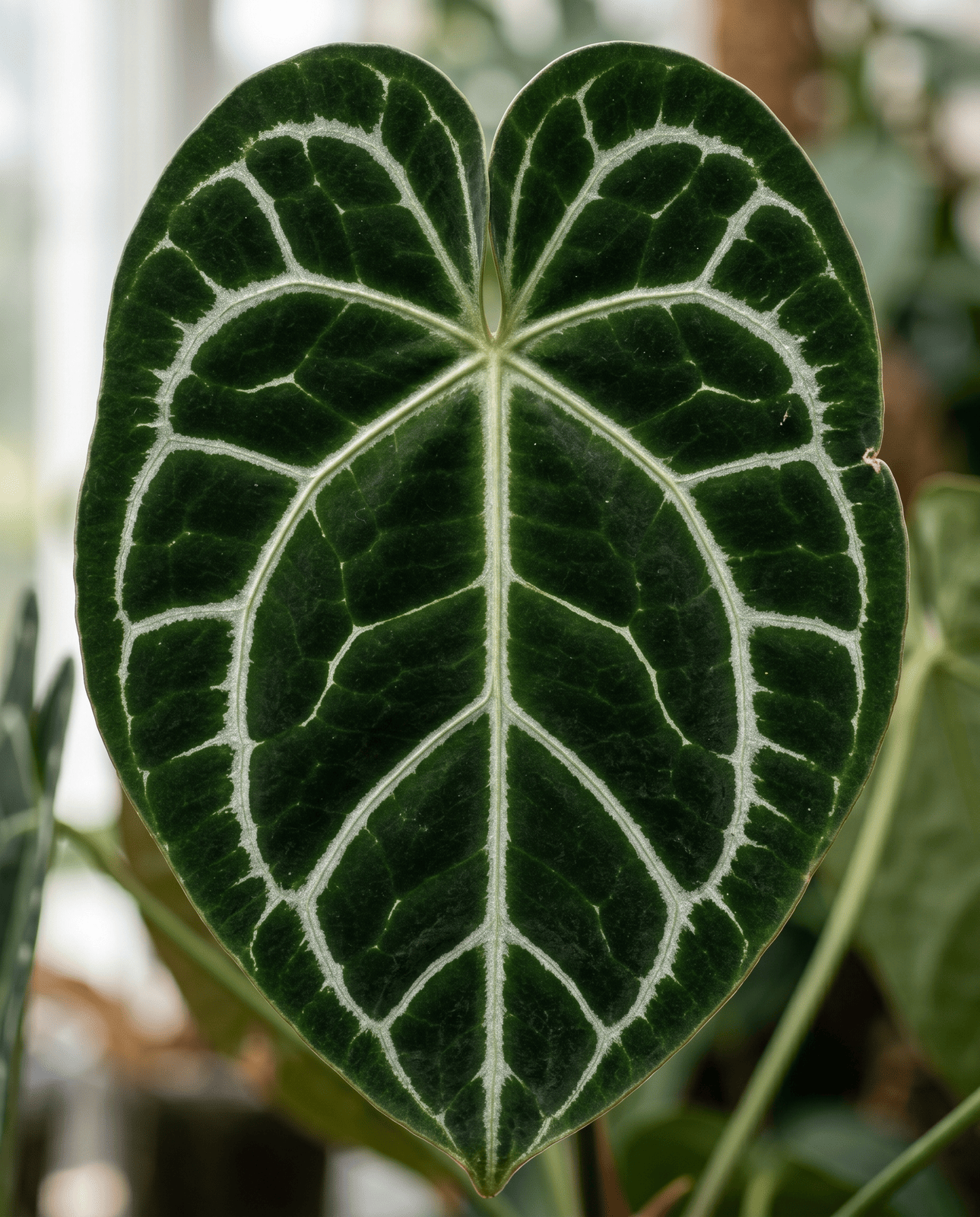
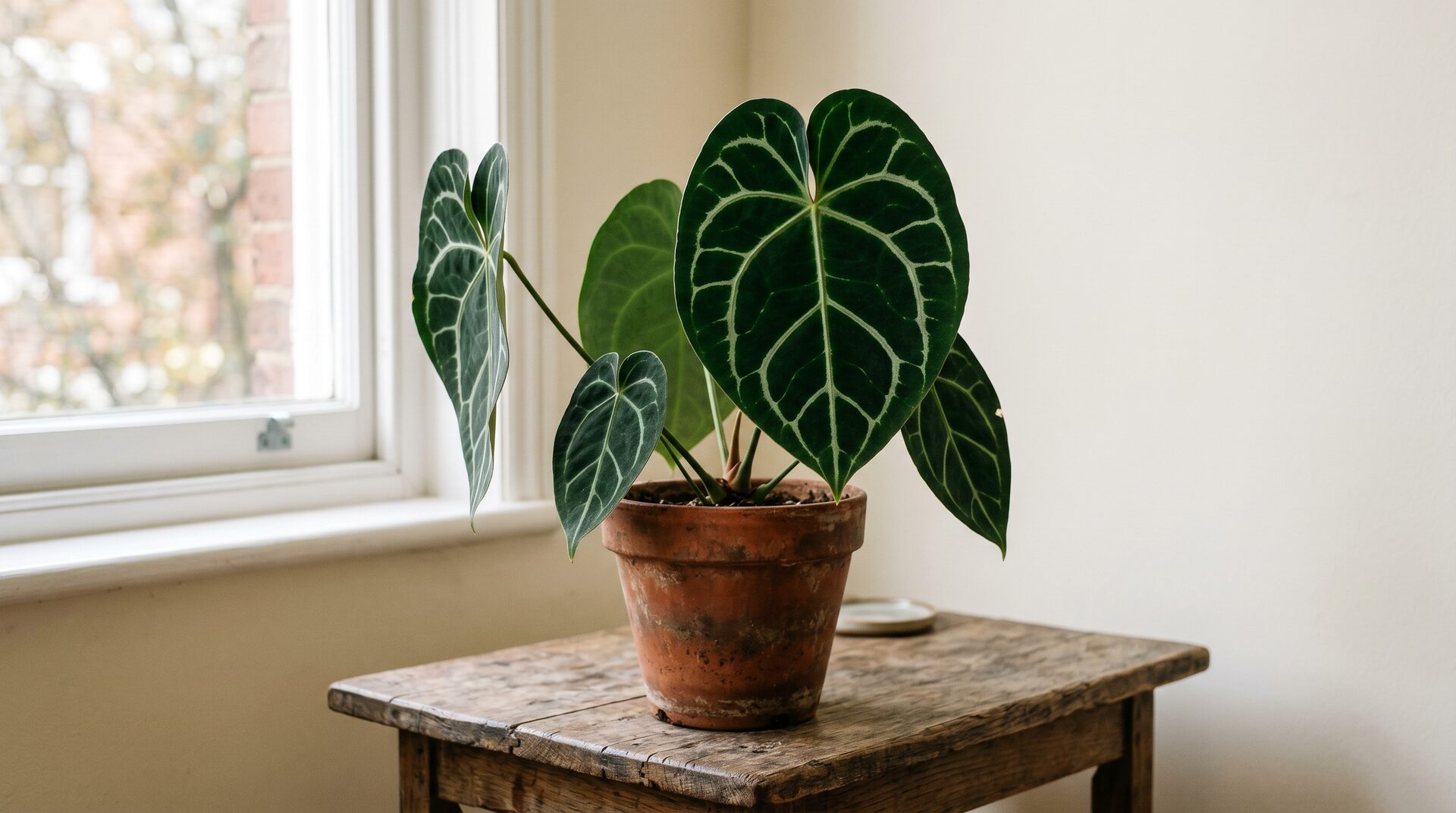
Clarinervium is the watchful one. Heart-shaped leaves in a deep forest green, with bright silver veins running across them like a tiger pelt. Velvet to the touch. Slow to grow. Particular about everything.
It won't tell you it's unhappy until a leaf is already gone. The early signs are subtle: the silver dulls, the tips crisp a little, a new leaf unfolds smaller than the one before. You learn to read those signals or you learn the hard way.
This is what Anthurium clarinervium needs to thrive.
Native Range and Form
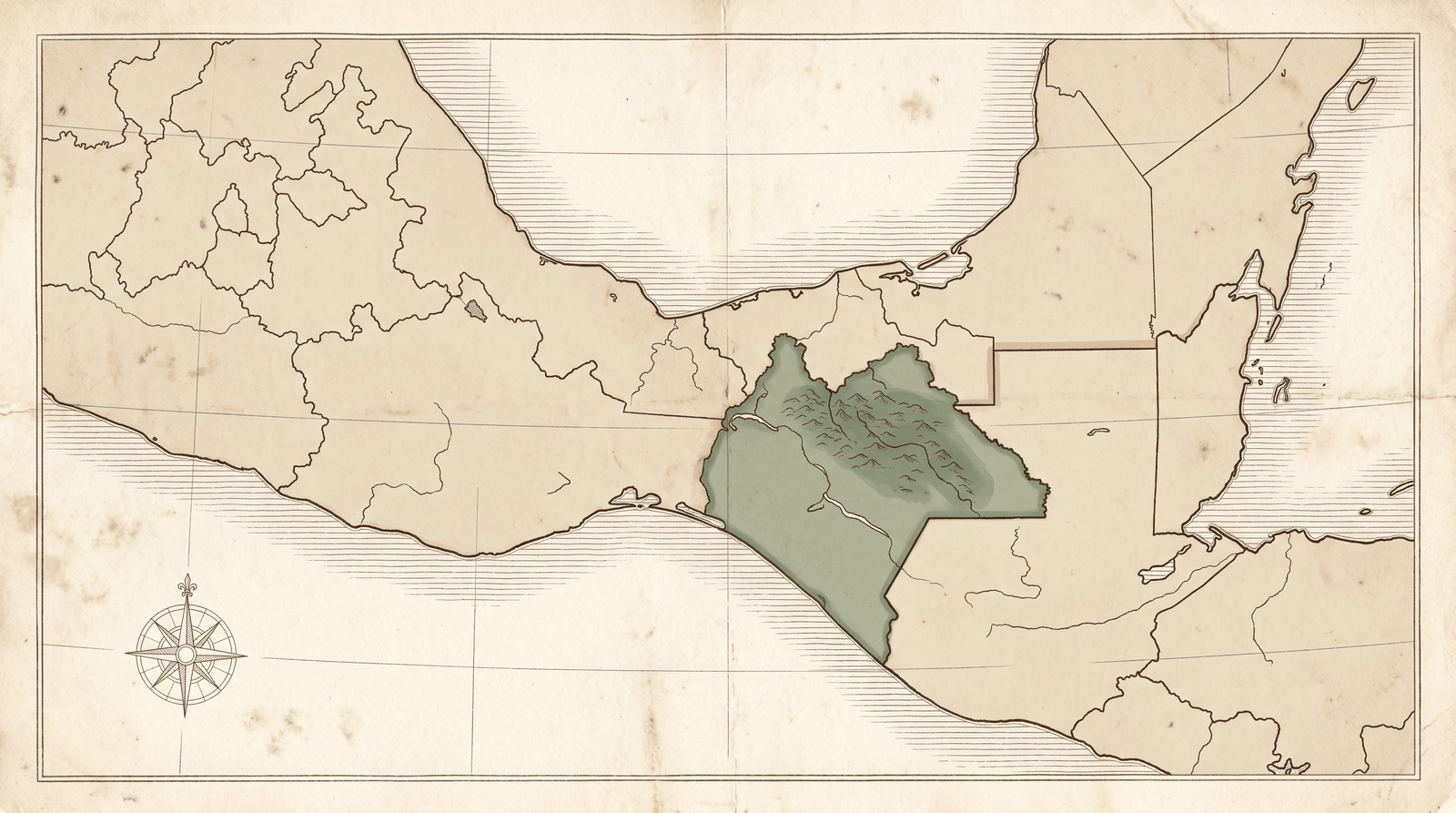
Anthurium clarinervium is a Mexican lithophyte (rock-dwelling, sometimes called epiphytic in trade) endemic to the limestone karst between the Río Grijalva and Río de la Venta in northern Chiapas, at 800–1,200 m elevation (POWO, Royal Botanic Gardens Kew). The leaves are heart-shaped, thick, and velvety. Deep green with prominent silver-white veins that map themselves across the surface. People mix it up with crystallinum constantly. Here's how to tell them apart: clarinervium leaves are stiffer, the veins are bolder, and the overall shape is more heart than oval.
In the wild, this plant grows on rock faces and tree trunks. Its roots grip rather than dig. That distinction matters indoors more than you'd think. The roots want air between waterings. Pack them into dense soil and they suffocate.
Mature plants spread to about 18 to 24 inches across. Most indoor specimens stay smaller. Even with perfect conditions, growth is slow. A new leaf every six to eight weeks is the pace of a healthy plant.
Light: Bright Indirect, Never Direct
Clarinervium wants bright indirect light. An east window is ideal. North windows work if the room stays bright overall. South or west windows need filtering with a sheer curtain or distance from the glass.
Direct sun bleaches the veins and burns brown patches into the leaf surface. Once a leaf is scorched, it stays that way. Too little light is the more common problem indoors. The new leaves come in smaller, the silver veining fades, and growth basically stops.
What to watch for: Pale, washed-out new leaves mean you need more light. Move it closer to the window. Crispy bleached spots mean pull it back from the glass.
Under grow lights: Plenty of apartments don't have a usable window for tropicals, and grow lights cover that gap easily. A Barrina T5 or 2-foot standing strip works well for a clarinervium. Keep the canopy 10–14 inches from a single bar, or 14–18 inches if you've got a dual-bar setup. From overhead, one bar at 12 inches is the floor; two bars run parallel at that same distance gives you better, more even coverage. Run them 10–12 hours a day. Sixteen hours is overkill for a shade plant from broken canopy, and it stresses the leaves.
Water: Often, but Never Standing
Water when the top inch of substrate dries out. Because the mix is chunky and airy, that happens fast. In a warm room with good airflow, expect to water every five to seven days. In cooler seasons, every ten to fourteen.
Water thoroughly. Drench it until water runs from the drainage holes, then let the pot drain completely before putting it back in its decorative cover. A Clarinervium sitting in standing water will rot from the base up within days. Once the rhizome (the thick horizontal stem at the plant's base) turns mushy, there's no coming back.
Use room-temperature water. Filtered or rainwater is best (I use reverse osmosis (RO) or distilled). Anthuriums are sensitive to chlorine and to dissolved-salt buildup from tap water. Both build up in the substrate and burn the leaf tips brown. Fluoride is sometimes named as the culprit, but research suggests salt accumulation is the better-supported diagnosis for tip burn in Anthurium specifically (PNW Plant Disease Management Handbook; the documented fluoride-sensitive houseplants are Marantaceae monocots, Dracaena, and Cordyline).
Humidity: 60% Minimum, 70% Better
This variable breaks most Clarinervium attempts indoors. The plant evolved on humid limestone cliffs in southern Mexico. Your living room is usually around 30 to 40 percent. That math doesn't add up without help.
Aim for 60% relative humidity at minimum. 70% is better. A dedicated humidifier in the same room is the only reliable way to get there in winter. Misting raises humidity for about ten minutes and increases the risk of fungal spotting on the velvet leaf surface. You're better off skipping it.
Get a hygrometer (you can usually find a multi-pack available online for a reasonable price). Measure what you actually have. The difference between 45% and 65% is invisible to your skin's senses but completely visible to this plant.
Substrate: Coarse, Open, Almost Hydroponic
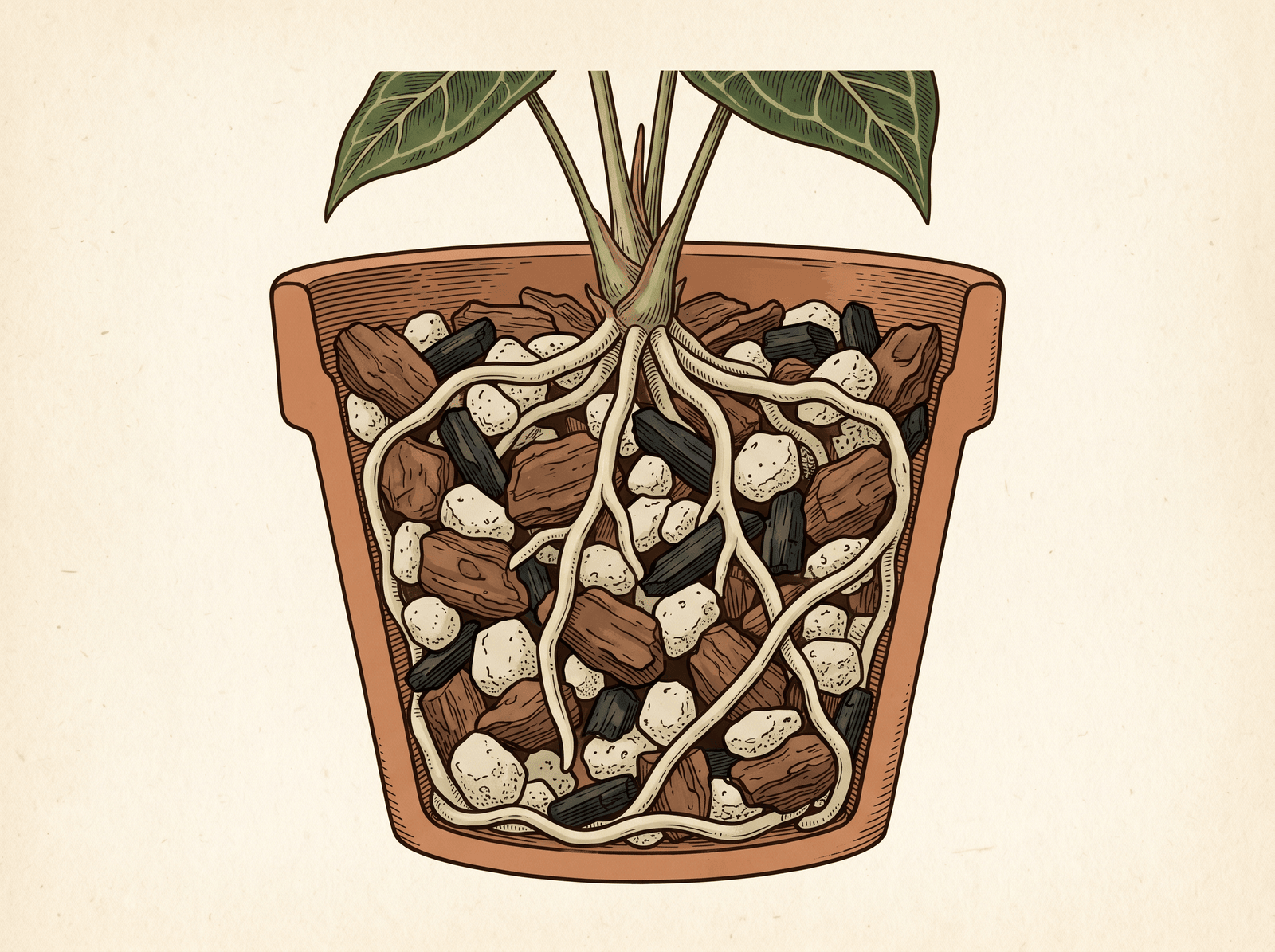
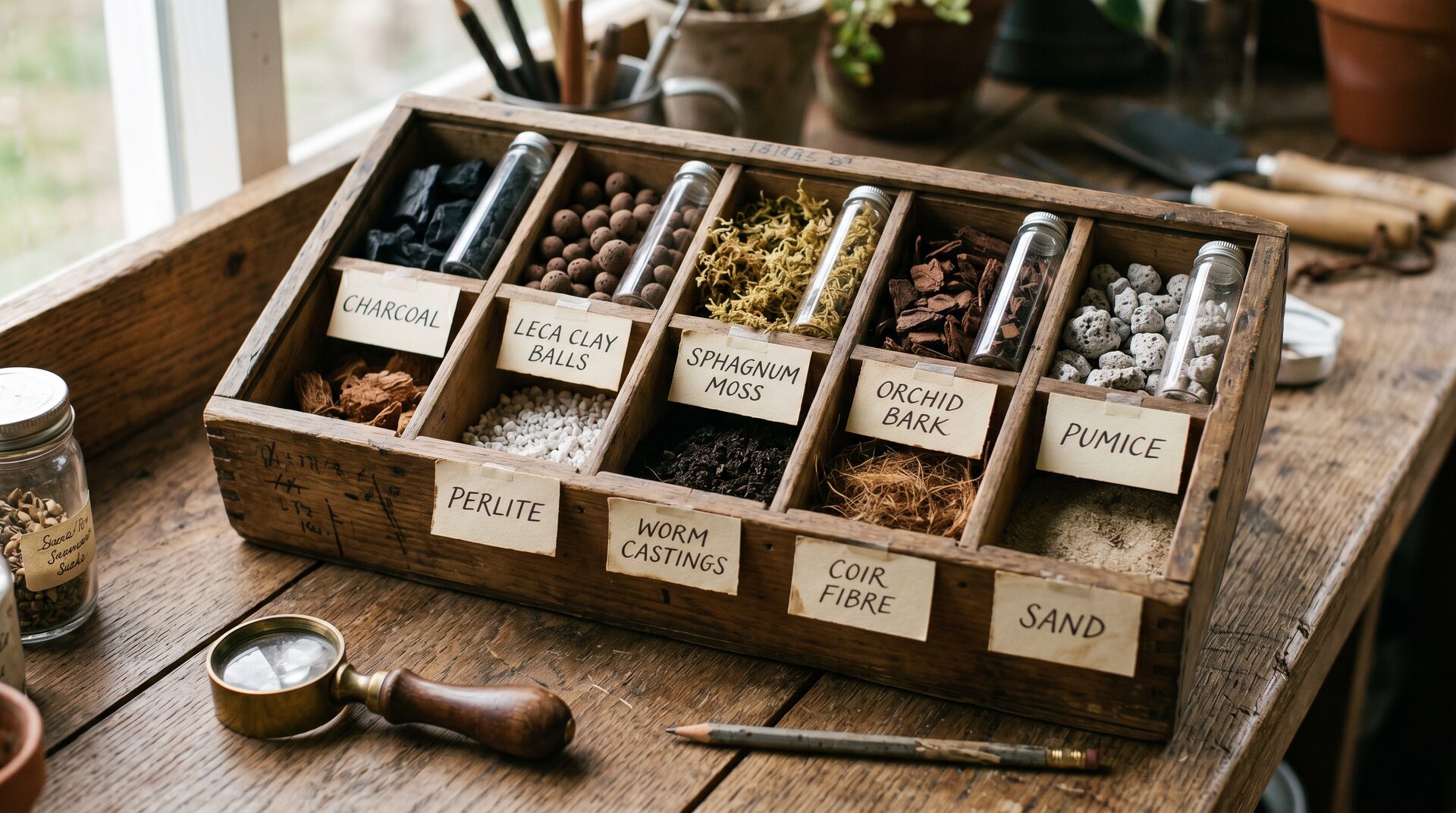
Forget bagged houseplant soil entirely. Clarinervium is a lithophyte (it grows on rock, not in soil), not a true terrestrial. Its roots want oxygen between waterings. A standard mix holds too much water and rots the rhizome. Here's a mix that works:
- 50% orchid bark (medium grade)
- 20% perlite or pumice
- 15% coco chunks or coco coir
- 10% horticultural charcoal
- 5% worm castings
The mix should rattle when you pour it. Water should fall through fast. If your finger comes out muddy a day after watering, the mix is too fine. Repot only when the roots are visibly circling the drainage layer or pushing out the holes.
Temperature & Drafts
Keep Clarinervium between 65 and 80°F (18 to 27°C). Below 60°F it stops growing. Below 55°F you'll start seeing tissue damage that won't recover (UF/IFAS Cultural Guidelines for Commercial Production of Interiorscape Anthurium). A cold draft off a winter window does real damage in a single night.
Skip placement near heating vents, A/C vents, and exterior doors. Hot dry air pulls humidity off the leaves faster than the roots can replace it. The crispy-tip syndrome you see on so many indoor anthuriums almost always traces back to a vent.
Reading Clarinervium's Moods
- Yellowing leaf, soft stem at base: overwatering or compacted substrate. Pull the plant, check the rhizome, and repot in fresh chunky mix.
- Crispy brown leaf tips and edges: low humidity, salt buildup from tap water, or both. Flush the substrate with filtered water and add a humidifier.
- Silver veining looks faded or washed out: needs more light. Move it closer to the window or add a grow light.
- Bleached white patches on the leaf: too much direct sun. Pull it back from the light source (or windowpane).
- New leaf opens smaller than the last: root stress. Usually the substrate has compacted or the pot is the wrong size. Repot.
- Sticky residue on the leaves or nearby surfaces: scale or aphids. Wipe down with diluted neem and check the undersides of leaves (UC IPM Pest Notes: Scale Insects).
- Spider-web tracks or fine stippling on the leaf surface: spider mites. Increase humidity and treat with insecticidal soap (UC IPM Pest Notes: Spider Mites).
Propagation: Division at Repot
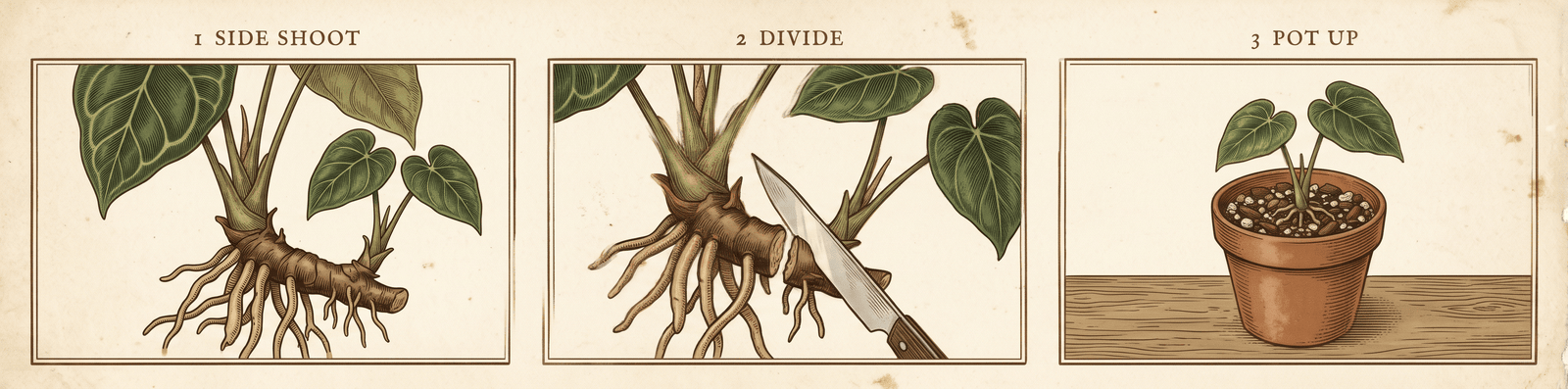
Mature Clarinerviums produce side shoots from the rhizome over time. The cleanest way to propagate is at repot time. Separate a side shoot that already has at least two leaves and its own root system. Use a sterile blade if the rhizome doesn't pull apart easily. Pot the division in the same chunky aroid mix and keep humidity high for the first month.
Stem cuttings without an existing root system rarely root reliably. Seeds are possible if you can get them but extremely slow. Figure two to three years before the silver veining develops on a seed-grown plant. Division is the realistic option.
A note for pet households: Anthurium is toxic to dogs, cats, and humans if ingested. Leaves and stems contain insoluble calcium oxalate raphides (microscopic needle-like crystals) that cause oral irritation, drooling, and difficulty swallowing if chewed (ASPCA). Keep out of reach of pets and small children.
The Takeaway
Clarinervium isn't difficult, it's specific. Get the substrate chunky, get the humidity up, get the light right. It will reward you with one of the most striking leaves in any indoor collection. The silver veining on a happy clarinervium is a thing you stare at.
Skip the standard houseplant soil. Skip the misting routine. Get a hygrometer and a humidifier instead. Treat it like the rock-dweller it is, not the houseplant you'd prefer it to be.
ASPCA Animal Poison Control. (n.d.). Flamingo flower. American Society for the Prevention of Cruelty to Animals. https://www.aspca.org/pet-care/animal-poison-control/toxic-and-non-toxic-plants/flamingo-flower
Plants of the World Online. (n.d.). Anthurium clarinervium. Royal Botanic Gardens, Kew. https://powo.science.kew.org/taxon/urn:lsid:ipni.org:names:15185-2/general-information
UC Statewide IPM Program. (n.d.). Pest notes: Scale insects. University of California Agriculture and Natural Resources. https://ipm.ucanr.edu/PMG/PESTNOTES/pn7408.html
UC Statewide IPM Program. (n.d.). Pest notes: Spider mites. University of California Agriculture and Natural Resources. https://ipm.ucanr.edu/PMG/PESTNOTES/pn7405.html
University of Florida IFAS Extension. (n.d.). Cultural guidelines for commercial production of interiorscape Anthurium (Publication EP159). https://edis.ifas.ufl.edu/publication/EP159